

The 1909-S/Horizontal S Lincoln cent holds a special place in American numismatics. It combines first-year Lincoln cent appeal with a minting blunder that collectors can actually see. As a result, it ranks among the most popular varieties in the entire series.
Collectors know this coin as FS-1502. PCGS also identifies it as RPM-002. While the 1909-S VDB tells a story of public controversy, the 1909-S/Horizontal S tells a very different story. It takes collectors straight into the die shop.
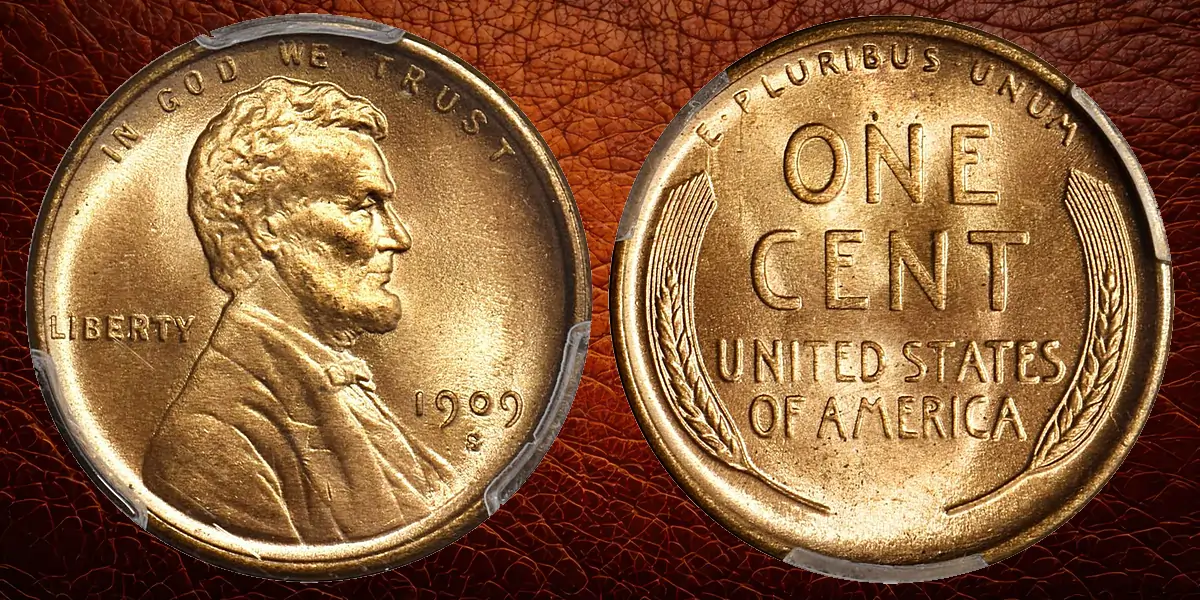
A First-Year Lincoln Cent With Extra Drama
The Lincoln cent debuted in 1909. That launch changed American coinage forever. For the first time, a regular-issue U.S. coin featured a real person rather than a symbolic figure.
Then controversy followed. Victor David Brenner’s initials sparked debate almost at once. Because of that dispute, the Mint removed the V.D.B. from later 1909 cents. That decision created the 1909-S without V.D.B., a key issue with a mintage of 1,825,000 pieces.
Within that important first-year issue, the Horizontal S variety stands out even more. It gives collectors a major variety with a memorable visual twist.
What Makes the Horizontal S So Important?
The answer starts with the way the Mint made dies in 1909. At the time, Mint workers still punched mintmarks into working dies by hand. That process invited mistakes. A worker could misplace the punch. A worker could tilt it. A worker could also strike it more than once.
In this case, the first S went into the die sideways. Then the engraver corrected the mistake and punched a second S in the proper upright position. As a result, the coin shows a repunched mintmark with the first letter turned about 90 degrees from normal.
That simple error created one of the most famous mintmark varieties in the Lincoln cent series.
The Backstory: A Mechanical Mistake, Not a Public Controversy
This coin delivers a great backstory. That matters.
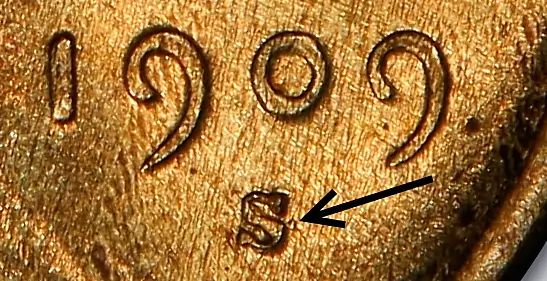
Unlike the 1909-S VDB, the 1909-S/Horizontal S did not come from a design dispute. Instead, it came from a routine mechanical mistake inside the Mint. In other words, the coin preserves a split-second error from the die room and the immediate fix that followed.
That gives the variety real personality. It does not just show a mintmark oddity. It captures a human moment at the Mint.
For that reason, the coin appeals to more than variety specialists. It also attracts collectors who want a conversation piece with a strong story.
How to See the Variety
The diagnostics make this variety popular. On genuine examples, collectors can see parts of the underlying horizontal S around the main upright mintmark. In many cases, the remnants show clearly enough that the variety does not require heroic magnification.
That visibility helps explain the coin’s broad popularity. Many repunched mintmarks demand close study. By contrast, the 1909-S/Horizontal S often announces itself much more clearly.
When Collectors Finally Noticed It
Collectors hoarded 1909 Lincoln cents from the beginning because of the excitement around the new design and the V.D.B. controversy. However, numismatists did not widely recognize this specific repunched mintmark until much later.
That delay makes sense. Early collectors focused on the major story of the day. Decades later, specialists began to study die varieties in far greater detail. Then the Horizontal S emerged as one of the standout discoveries among first-year Lincoln cents.
A Popular Variety, Yet a True Condition Rarity
The 1909-S/Horizontal S enjoys strong collector demand. In lower grades, collectors can usually find examples without extreme difficulty. That availability has helped the variety remain popular for generations.
Yet condition changes the conversation.
Stack’s Bowers has described top pieces as sharply struck coins with satiny texture, silky smooth surfaces, and beautiful pale rose-orange color. The firm also noted an important market reality: most collectors must settle for lower-grade examples because the variety usually appears no finer than MS-65 RD.
Therefore, truly elite coins become something else entirely. They become condition rarities.
Why Superb Gems Matter So Much
At the top end, the 1909-S/Horizontal S turns into a trophy coin. Stack’s Bowers called one MS-67 RD (PCGS) example a highlight of its Lincoln cent offerings. The firm also stressed that the coin ranked among the finest examples certified by either major grading service at the time.
That specific coin came from the Rockford Collection – Part 3. Stack’s Bowers further noted that such a piece should have no trouble finding a home in a leading Lincoln cent collection on the PCGS Set Registry.
In short, collectors can locate lower-grade examples. However, very few collectors can compete for the finest Full Red coins.
Population and Market Performance
Population data helps tell that story. Older auction descriptions listed smaller population totals at the time of sale. Since then, the certified population has changed.
Today, PCGS lists the cited MS67RD example with a population of 9 and 0 finer. That still places the coin at the very top of the variety.
Meanwhile, PCGS also lists an auction record of $32,900, realized on July 28, 2022, for an MS67RD example. This coin was in a Legend Auction sale. That price confirms what Lincoln cent specialists already know: the market pays a major premium for elite color, preservation, and eye appeal.
Why Collectors Want One
Collectors chase this variety for several reasons.
First, it belongs to the inaugural year of the Lincoln cent, one of the most collected series in U.S. numismatics.
Second, the variety offers a visible error. That matters. Collectors love coins that tell their story right on the surface.
Third, advanced Lincoln cent collectors often pursue master sets that include major varieties. The 1909-S/Horizontal S fits that goal perfectly.
Finally, the coin carries real upside in higher grades, especially in Red Mint State.
A Coin With Eye Appeal and Story
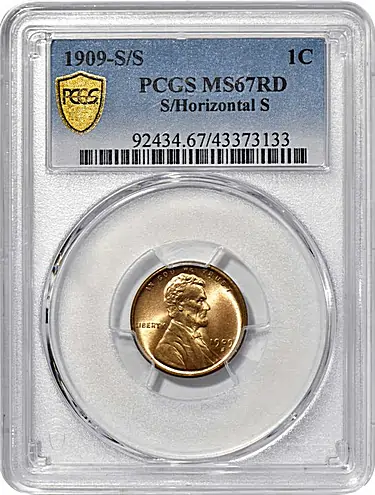
That combination gives the 1909-S/Horizontal S unusual strength. Many coins offer rarity. Others offer visual punch. A few offer a great backstory. This coin offers all three.
Even better, top pieces often display excellent color. Stack’s Bowers described one Superb Gem as showing a pale rose-orange shade with silky surfaces and a razor-sharp strike. That kind of coin brings the variety to life.
Authentication Still Matters
Collectors should still use caution. Scarce 1909-S cents have attracted counterfeiters for years. In many cases, bad actors add an S mintmark to a Philadelphia coin.
Because of that risk, certified examples remain the safest path for most buyers. Knowledge also helps. Genuine San Francisco cents from the period often show streaky “woodgrain” toning, although that trait alone does not prove authenticity.
So, smart collectors study the diagnostics and buy certified coins from respected sources.
The Last Word on the 1909-S/Horizontal S
The 1909-S/Horizontal S Lincoln cent earns its reputation honestly.
It comes from the first year of the Lincoln cent. It features a minting error that collectors can see. Most of all, it preserves a human mistake from the die shop in a way that still feels immediate more than a century later.
This coin does not merely show a sideways mintmark. It shows the Mint at work. And for that reason, the 1909-S/Horizontal S remains one of the most compelling small-cent varieties in American numismatics.
Such nice detail!
Great article!
The Goat of Lincoln Pennies – All in the year 1909 !!
Cool variety!
i doubt i’d ever see that detail even with a microscope!
How unusual!
great article for us Lincoln collectors
Very interesting
Interesting coin. I didn’t even know this variety existed.
It’s cool to see older coins with mintmarks in slightly different positions, reminding me that they were punched by hand into the die. Even better to find a repunched die like the 1909 S.
Never heard of this variety
Nice article. I’m not much of a collector of varieties, but find it interesting.
A good example of human error equaling opportunity for collectors
Interesting!
great article
I have yet to see one of these. Great article.
Cool. First year and mint error!
Nice read. I have 1909 vdb
Would love to have the 1909 S VDB in my collection. Just can’t afford it.
I believe I remember ads asking if you knew what was wrong with this penny and if you did you’d be rich. Or something to that effect. Nice to see an article about what made it so special.
Never would have noticed…with out knowing this article.
I would never have been able to see this flaw without this article pointing it out. Thank you.
Very cool.
Very informative article once again
Very interesting! I had never heard if this one before, Thanks for the info.
I remember when I started collecting coins 60 years ago I could see them. Today, not so much.
Nice error
I would love to own one! I will miss the penny.
Nice article! I wish I could go back in time and stock up on these rare coins!
Love the sheen on that coin!
I pulled out and old s mint penny to compare and I still do not see it.
I want that penny! Good luck on the coin giveaway everybody!
So hard to see that error. Would be a pass for me.
This is why I love this (for me) hobby. I learn something new almost daily.
Nice article and the Lincoln center no matter what variety holds visual appeal.
Great article and a cool error coin! I love learning about these coins and their history. Thanks for sharing
I didn’t know that there was an error coin in the first Lincoln pennies. Even with knowing that it is there and zooming in on the closeup picture, I can’t really tell what the difference is.
great article
Cool
That is so cool!
Beautiful piece
Wow! What a great coin. I would love to have something like this in my collection. Not even in my realm of possibility, though. But 1909 is the year my dad was born, so this would really be a special coin to have!
I save every single wheat penny I get . I actually find some in the need a penny , take a penny buckets in the stores. I do leave on a replacement coin if I find one.
Nice article
Cool history id never heard of before!
Very nice!
Another well researched and explained article. Thanks so much for the visual identification method.
One was selling at my coin shop for $1000 not too long ago.
Love die varieties and error! I could use one of these in my error and variety collection.
I have a 1909 S/horizontal S, but it’s far from mint. It’s closer to a F12. it was sold to me as a 1909 S at a good price, and I’m happy to have it in my collection.
TY
Heck yeah, cool.
I love that a penny can have so much history!
Boy that would be hard to spot. Good thing it is slabbed. Very nice!
So lucky to find a red in that year.
Love the history.
I had not hear about this error until my husband bought me one graded MS 64 Red from ANACs years ago. It is hard to spot even with my coin microscope and the article helps me understand what to look for. I have to admit at first not knowing anything about it, I did not give this coin much thought and actually thought about selling it. Now, after learning its history, I have come to really appreciate this gift and am happy to have it as part of my Lincoln collection.
It’s a different variety and a beautiful coin!
Thanks for the great article!
WOW! Never heard of this one. Thanks for sharing.
A great coin. It would look great in any collection……Especially mine.
Super curious. How do the counterfeiters manage to actually add an S to the surface? I can understand punching one in, but building one up, that’s kinda crazy.
That is an amazing variety, I did not know of it.
It’s a sweet looking coin, I can hardly see the original horizontal S but I can tell the repunched one looks different from a normal mint mark. I was curious if the person punching the dies noticed and fixed it right away, how many got out? Was it the remaining amount processed that year or did they do so many and start new correct ones? Just my curiosity, I like coins
Great article about an unusual variety!
Good information