The Trump Dollar Error Hunt Is On: How Many More Are Hiding in Mint Bags?
Two additional discoveries turn a rare Trump dollar mint error into a nationwide search. CoinWeek will maintain an updated roster as collectors examine their rolls and bags.
What began with one remarkable Trump dollar error has quickly grown into a much bigger numismatic mystery. Two more examples of the 1776–2026 Trump dollar missing a clad layer have surfaced. Now collectors have a compelling reason to revisit their purchases from the United States Mint.
Check your rolls! Check your bags!
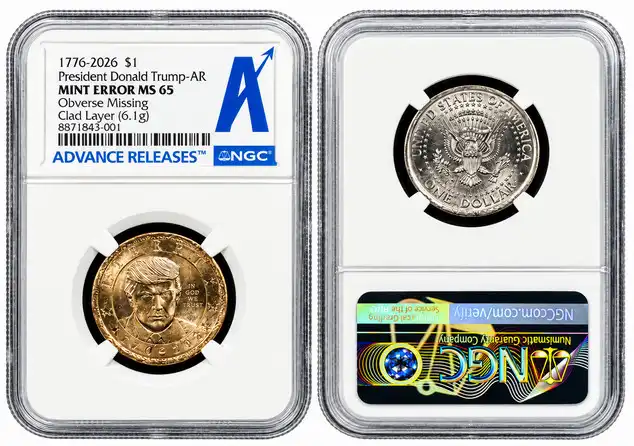
CoinWeek first reported the discovery on October 7, 2026. That coin features an exposed copper obverse and a normal golden-colored reverse. Numismatic Guaranty Company (NGC) authenticated the error and graded it MS 65 with the Advance Releases designation.
Since then, two additional collectors have come forward with coins that mint error specialist Mike Byers has identified as genuine missing-clad-layer examples. Both remain raw and await independent third-party certification.
That brings the current CoinWeek roster to three reported examples.
However, the bigger question remains unanswered: How many more are hiding in rolls and bags that collectors have yet to search?
The Second Discovery Comes From a U.S. Mint Bag
The story took an unexpected turn when Florida collector P. Dolan discovered a suspicious Trump dollar in a 100-coin bag he had purchased directly from the United States Mint.
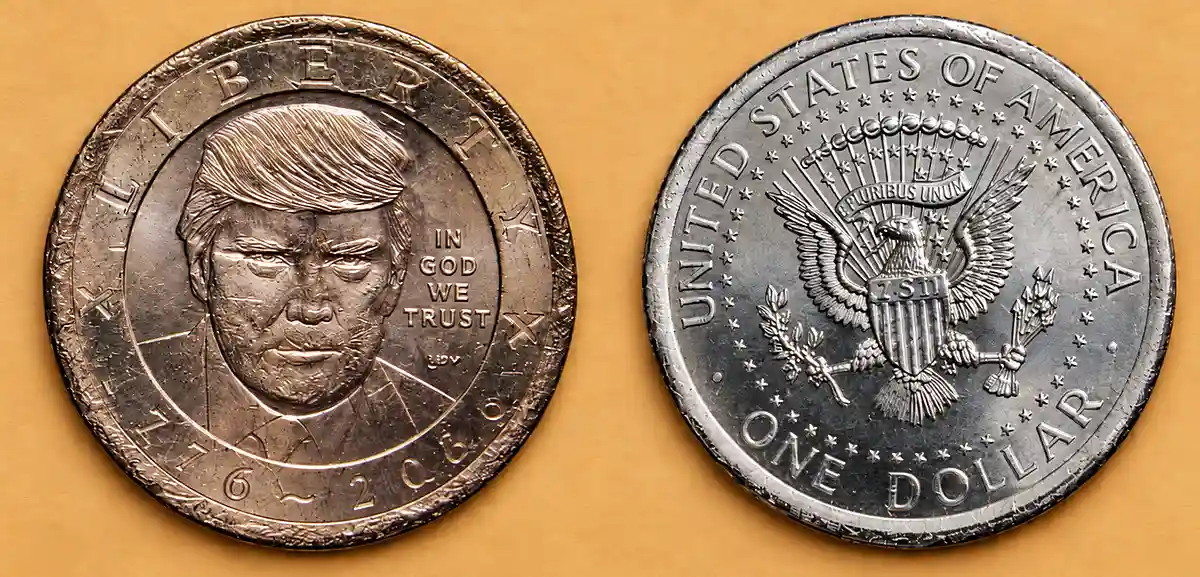
Dolan reported finding the coin on October 10. The bag also contained four examples of the special July 4th privy mark Trump dollar, making an already interesting purchase considerably more exciting.
After reading CoinWeek’s original discovery report, Dolan contacted the publication. On October 11, he posted a comment explaining that his coin weighed approximately 6.0 to 6.1 grams and appeared to match the newly reported error.
His conclusion was simple: “That means there’s at least 2.”
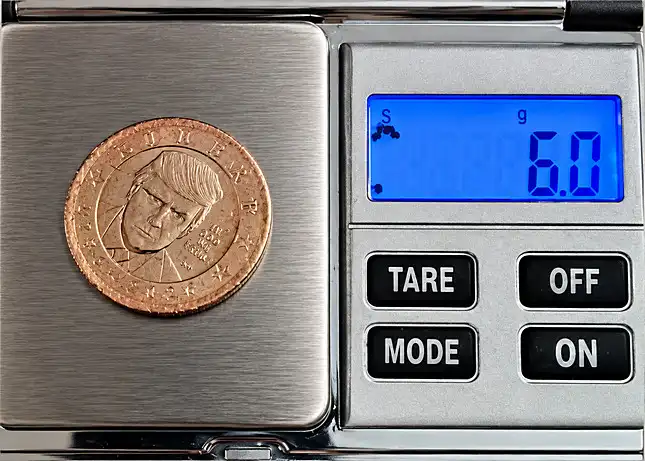
The weight was especially important. A normal Trump dollar weighs 8.10 grams, while the certified discovery coin weighs only 6.1 grams.
According to information supplied to CoinWeek, Byers subsequently reviewed Dolan’s example and accepted it as a genuine missing-clad-layer error.
The coin remains uncertified, and Dolan has not offered it for sale.
Then Came a Third Trump Dollar Error
Before the excitement surrounding Dolan’s discovery had settled, another collector entered the picture.
Tyrone Kemp submitted photographs of a Trump dollar to Mike Byers for examination. According to information Byers provided to CoinWeek, the example also met the diagnostics for a missing-clad-layer error.
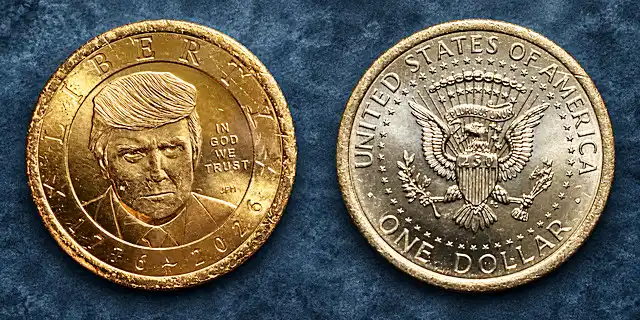
Kemp’s coin becomes the third entry in CoinWeek’s developing roster.
Like Dolan’s example, it remains raw and has not received third-party certification. Kemp has not offered the coin for sale.
The discovery adds another piece to an unfolding story. Three examples have now emerged, but their small number tells us little about how many more might exist.
Modern mint errors often appear individually. However, an isolated manufacturing defect can sometimes affect multiple planchets. Collectors may uncover additional examples months or even years after the original discovery.
For that reason, CoinWeek will continue documenting new reports and updating its roster as additional examples emerge.
How Could the U.S. Mint Produce a Dollar Missing an Entire Metal Layer?
The answer begins inside the coin itself.
Although the Trump dollar looks golden, it contains no gold. Instead, its construction follows the three-layer formula that the Mint introduced with the Sacagawea dollar in 2000.
A pure copper core sits between two outer layers of manganese brass. These outer layers give the finished coin its familiar golden appearance.
Under normal conditions, all three layers remain bonded together throughout production.
However, an imperfect bond or another manufacturing problem can allow an outer layer to separate from the copper core.
That separation may happen before the planchet enters the striking press. Alternatively, a loosely bonded layer may detach after striking. NGC recognizes both possibilities within the missing-clad-layer error category.
If a planchet enters the press without one outer layer, the dies strike a thinner piece of metal than intended. Consequently, the resulting coin may display weak design details, particularly around the rims.
That helps explain the appearance of the original Trump dollar discovery.
Its obverse shows the exposed copper core beneath Trump’s portrait, while the reverse retains its normal golden-colored surface. The missing metal also accounts for the dramatic reduction in weight.
NGC’s Dave Camire, who authenticated the original coin, described its appearance as a particularly striking example of this error type. He also considered its MS 65 grade impressive because the thinner planchet affected the quality of the strike.
The technical explanation is straightforward. What remains uncertain is precisely when the metal separated and why the defective coin escaped the Mint’s normal inspection process.
Did Production Problems Allow More Errors to Escape?
Mike Byers believes the unusually large number of discolored Trump dollars appearing in collector discussions may point to problems during the issue’s production.
Since the coins reached collectors, photographs of copper-colored and bronze-colored examples have circulated through social media and coin-collecting forums.
However, Byers warns that most of these coins are not missing a clad layer.
Many weigh approximately 8 grams, close to the normal specification. Their unusual appearance may reflect improper annealing, surface discoloration, or other manufacturing and environmental effects rather than the loss of an entire metal layer.
Annealing is an essential step in coin production. The Mint heats blanks to soften the metal before striking. It then cleans and dries them before they enter the presses.
Problems during this process can affect a coin’s color and appearance. In fact, NGC has documented improperly annealed Presidential dollars with surfaces ranging from dark brown to copper red.
Byers suspects production and quality-control problems contributed to the unusual number of off-color Trump dollars reaching collectors.
Nevertheless, CoinWeek has not established that the Mint rushed production, used an improper alloy, or experienced a specific equipment failure. Confirming those explanations would require additional technical evidence or information from the Mint.
What we do know is that at least one major missing-clad-layer error escaped production and reached the numismatic marketplace. Two additional examples now appear to have followed the same path.
That raises an intriguing possibility: Other defective planchets may have entered the same production stream and remain undiscovered.
Copper Color Alone Does Not Make a $25,000 Error
Collectors need to understand one critical difference between the genuine missing-clad-layer discoveries and the many copper-colored Trump dollars appearing online.
The missing-clad-layer errors weigh approximately 6.0 to 6.1 grams. Normal Trump dollars weigh 8.10 grams.
The original certified discovery coin weighs 6.1 grams, nearly 25% less than its normal counterpart.
That difference represents approximately two grams of missing metal. It is much more meaningful than color alone.
By contrast, a Trump dollar that weighs approximately 8 grams may simply have developed an unusual surface color. An improperly annealed planchet could explain some examples, although professional examination would need to establish the actual cause.
Byers estimates that some unusual, normal-weight examples might trade in the $50 to $100 range. However, that estimate does not apply to every discolored coin, and an unusual color does not automatically establish a collectible mint error.
The original NGC-certified missing-clad-layer discovery carried a $25,000 asking price through Mike Byers Inc.
That figure represents a dealer’s asking price, not a confirmed auction result.
Byers believes genuine missing-clad-layer Trump dollars could command substantial premiums if the number of surviving examples remains very small. Still, their eventual market value will depend on collector demand, condition, certification, and the number of additional discoveries.
Three reported examples establish an interesting starting point. They do not establish a final population.
CoinWeek’s Trump Dollar Missing-Clad-Layer Registry
Updated October 15, 2026
CoinWeek has established the following roster of reported 1776–2026 Trump dollars missing a clad layer. This list distinguishes the independently certified discovery coin from the two additional examples authenticated through Mike Byers but not yet certified by a third-party grading service.
The Discovery Coin – #1
Mike Byers discovery coin – NGC MS 65, Advance Releases. Missing obverse clad layer. Weight: 6.1 grams. Offered at $25,000.
The Patrick Dolan Example – #2
Found by Collector Patrick Dolan of Florida and Authenticated by Mike Byers. Raw and not yet certified. Reported weight: 6.0–6.1 grams. Found in a U.S. Mint bag. Not for sale.
Tyrone Kemp Example – #3
Mr. Kemp contacted Mike Byers with photographs and weights, The informattion was reviewed and accepted by Mike Byers. Raw and not yet certified. Not for sale.
The roster reflects the examples reported to CoinWeek and Mike Byers as of this update. It should not be interpreted as a complete census of every existing error.
CoinWeek will expand and revise this registry as collectors report additional specimens and new authentication or certification information becomes available.
Check Your Rolls! Check Your Bags! The Hunt Is On
The United States Mint began selling the 1776–2026 Trump dollar in 25-coin rolls and 100-coin bags on September 2, 2026.
The anniversary release also included a special surprise. The Mint struck 250,000 examples with a July 4th privy mark and distributed them randomly among the rolls and bags.
As a result, many collectors originally purchased these products hoping to discover one of the special privy mark coins.
Now they have another reason to examine every dollar.
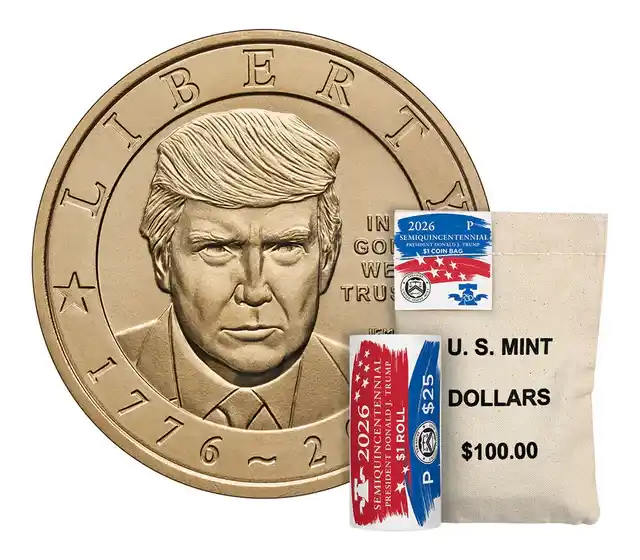
A genuine missing-clad-layer error could still be sitting inside an unopened roll, tucked away in a Mint bag, or resting unnoticed in a collector’s inventory.
If you own Trump dollars purchased directly from the Mint, look closely at both sides of every coin.
Search for a copper-colored obverse or reverse paired with a normal golden-colored opposite side. Next, weigh the coin using an accurate digital scale capable of measuring to at least 0.01 gram.
A reading near 6.0 to 6.1 grams deserves further investigation. However, weight and color alone cannot conclusively establish authenticity.
Also examine the edge for evidence of the coin’s layered construction. Do not clean, polish, scrape, or otherwise alter a suspected error. Preserve the original Mint packaging and any purchase documentation.
Think You’ve Found Another One? Contact Mike Byers and CoinWeek
If you discover a 1776–2026 Trump dollar weighing approximately 6.0 to 6.1 grams with an apparent missing clad layer on either side, CoinWeek wants to hear about it.
Send clear photographs of the obverse, reverse, and edge, along with the coin’s measured weight, to mint error specialist Mike Byers at
- Mike Byers Inc.
- Email: [email protected]
- Website: https://mikebyers.com
Byers will review submitted information to help determine whether the coin merits further examination or professional certification.
Collectors should also notify CoinWeek through its website so the publication can document new discoveries and update the roster.
Please include where you obtained the coin, whether it came from a Mint roll or bag, and any relevant certification details. CoinWeek will identify the owner publicly only with permission.
Three Coins Found. How Many More Are Out There?
The Trump dollar missing-clad-layer story has moved beyond a single remarkable error.
The original NGC-certified discovery attracted attention because of its dramatic appearance, unusual weight, and $25,000 asking price.
Now the emergence of two additional examples presents a different and potentially more important question.
Was this an isolated production mistake affecting just a handful of planchets? Or did additional defective blanks enter the presses and make their way into collector rolls and bags?
No one can answer that question with confidence yet.
In the meantime, the search continues. CoinWeek will follow the discoveries, document new examples, and update the known-piece roster as the story develops.
Somewhere, another collector may already own the next example without realizing it.
Check your rolls. Check your bags. The hunt for the missing-clad-layer Trump dollars is on.
Trump Dollar Coin Specifications
- Official issue: 2026 Semiquincentennial President Donald J. Trump $1 Coin
- Denomination: One dollar
- Date: 1776–2026
- Mint: Philadelphia
- Mintmark: None
- Finish: Circulating
- Normal weight: 8.10 grams
- Reported missing-layer weight: Approximately 6.0–6.1 grams
- Diameter: 26.49 mm
- Normal thickness: 2.00 mm
- Edge: Plain
- Overall composition: 88.5% copper, 6% zinc, 3.5% manganese, 2% nickel
- Core: Pure copper
- Outer layers: Manganese brass
- Obverse designer: Joseph Menna
- Reverse designer: Frank Gasparro
- Special issue: 250,000 coins with July 4th privy mark
- Mint packaging: 25-coin rolls and 100-coin bags
- First public sale date: September 2, 2026
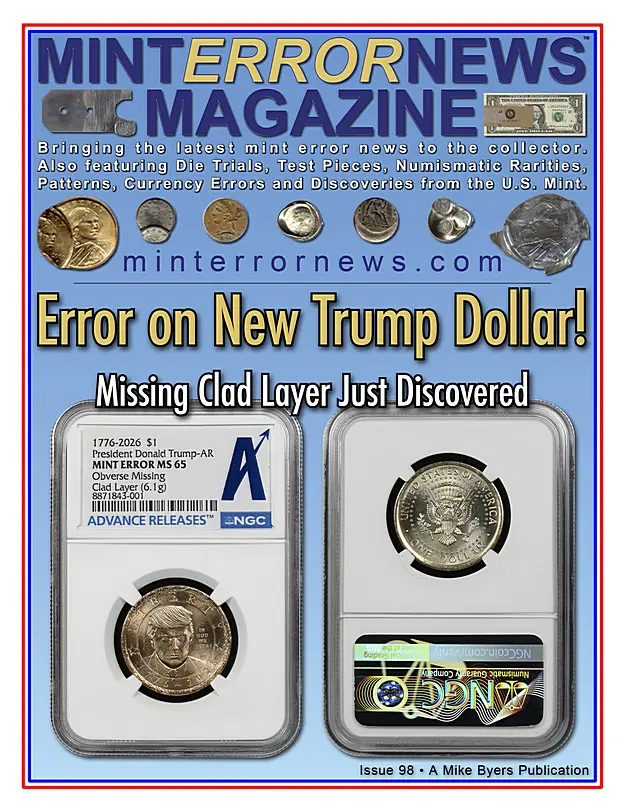
Mint Error News Magazine Issue 98