


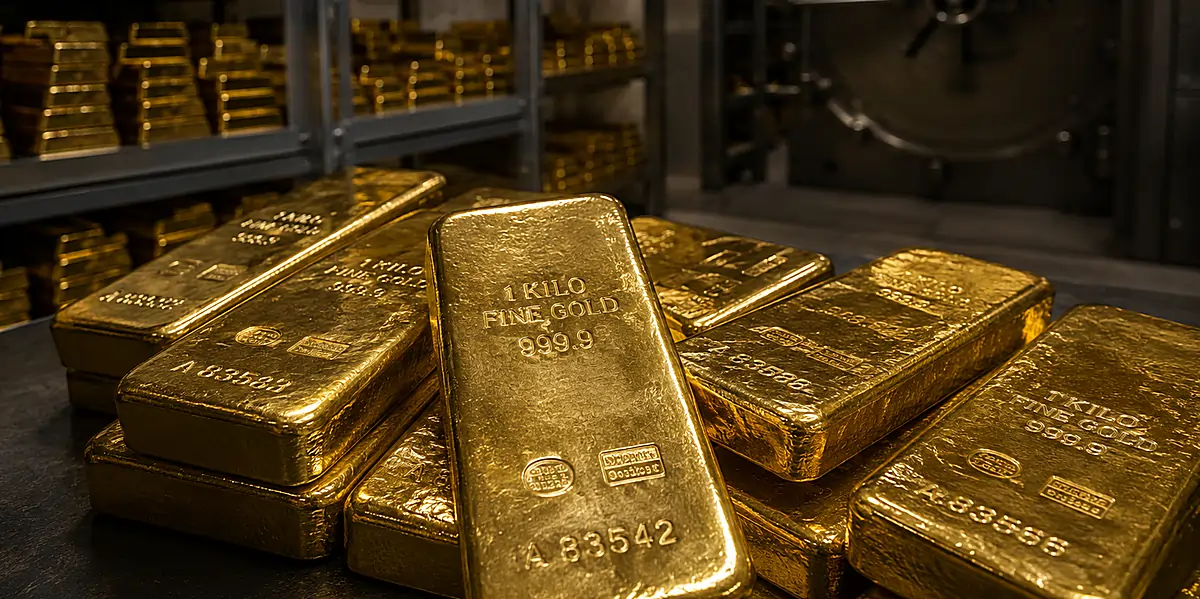
Gold and silver retreated on Tuesday as traders prepared for Federal Reserve’s policy decision.
Spot gold fell 1.18% to approximately $4,027.40 an ounce in late U.S. trading. Meanwhile, spot silver dropped 2.19% to about $57.02. Both metals remained under steady selling pressure despite lower Treasury yields and a sharp decline in crude oil.
That combination usually gives precious metals room to climb. This time, however, the Federal Reserve overshadowed every other market signal.
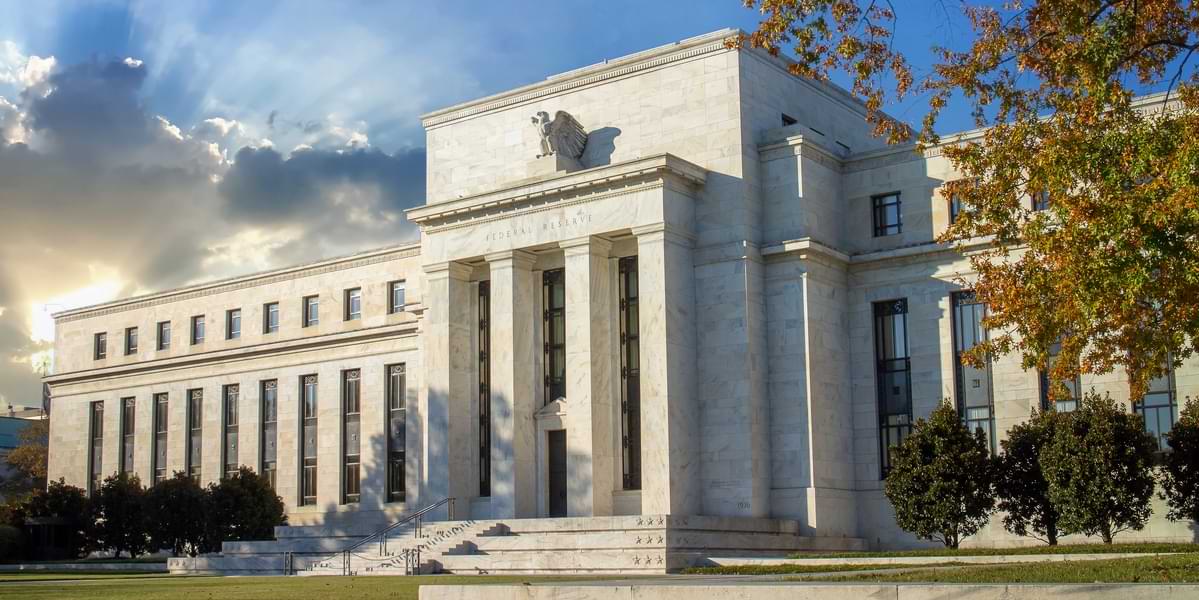
The Federal Open Market Committee concludes its two-day meeting on Wednesday, July 29. Most traders expect the central bank to leave rates unchanged. Still, markets assigned roughly a one-in-three chance to a surprise increase ahead of the announcement. That unusually wide split kept buyers on the sidelines.
Gold Defends the Critical $4,000 Line
Gold traded between $4,011.70 and $4,082.90 during Tuesday’s session.
Sellers pushed the metal toward the lower end of that range. Even so, gold continued to hold above the psychologically important $4,000 level.
That support carries more than technical significance. Gold first had to conquer $4,000. Now the metal must prove that level can serve as a durable floor during periods of monetary-policy stress.
However, buyers failed to reclaim the resistance zone between $4,041.65 and $4,072.40. That failure left bears in control of the short-term chart.
A sustained move above $4,041.65 would reduce immediate downside pressure. Gold could then challenge $4,072.40. Beyond that point, traders would watch $4,166.13.
On the other hand, a break below Tuesday’s $4,011.70 low would expose support at $3,959.80. The next downside target would sit near $3,942.10.
Therefore, the $4,000 region now represents the main battleground. The market will decide whether it marks a buying opportunity or the doorway to a deeper correction.
Silver Again Stalls Below $60
Silver traded between $56.55 and $58.70 before ending near the bottom of its daily range.
More importantly, the metal once again failed to break through the $60 inflection area. That level continues to separate silver’s current correction from a possible return to bullish momentum.
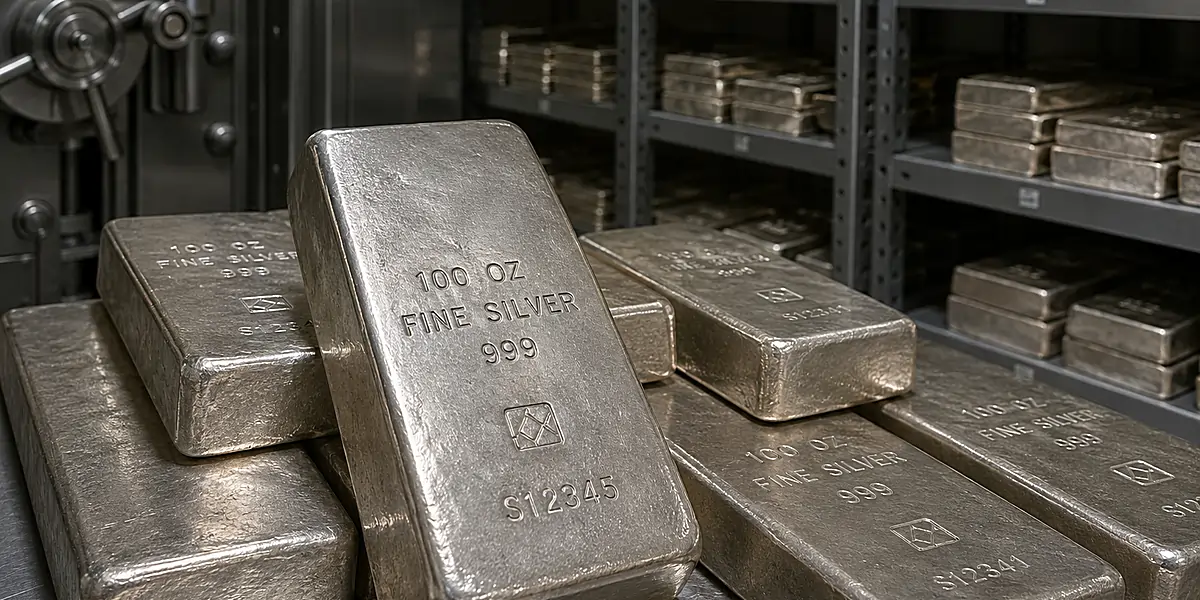
Silver also remained below its declining 50-day and 200-day exponential moving averages. As a result, sellers still hold the short-term technical advantage.
Silver bulls must first push prices above $58.70. A successful breakout would bring $59.44 into view. After that, traders would focus on $60.83.
However, a decline below $56.55 would place $55.21 at risk. Additional selling could then carry silver toward $54.80.
Silver often moves faster than gold in both directions. Consequently, the Federal Reserve decision could produce an outsized reaction in the white metal.
Lower Yields Fail to Rescue Precious Metals
Treasury yields moved lower on Tuesday. The benchmark 10-year yield eased to approximately 4.604%, while the two-year yield slipped to about 4.275%.
Normally, falling yields support gold. Gold pays no interest, so lower bond returns reduce one of the metal’s main competitive disadvantages.
Yet the dollar remained firm. The U.S. Dollar Index held near 101.40. In addition, traders could not agree on what the Federal Reserve would do next.
Therefore, lower yields offered little comfort. Investors wanted clarity, not another clue.
The current rate debate also differs from the simple cut-or-hold discussions that shaped earlier precious-metals trading. Inflation has cooled in several areas. However, stronger retail spending, low jobless claims, and firmer business activity have prevented a clear dovish shift.
That tension explains why gold fell even as bond yields declined.
Consumer Confidence Adds Another Warning
The Conference Board reported that its Consumer Confidence Index fell to 90.8 in July. The organization also revised June’s reading upward to 92.2.
The Present Situation Index dropped for a third consecutive month. Meanwhile, the Expectations Index remained at 74.7, below the level that has historically signaled recession concerns.
Consumers expressed greater concern about business conditions and employment. However, softer confidence alone did not settle the rate debate.
Earlier inflation data showed cooling pressure. Durable-goods orders also weakened. Nevertheless, the economy continues to produce enough firm data to keep a possible rate increase on the table.
For gold, that uncertainty matters more than any single report.
Oil’s Retreat Removes Two Gold Catalysts
Crude oil prices fell sharply on Tuesday as hopes for diplomacy reduced the market’s immediate fear of a wider Middle East conflict.
WTI crude slipped below $80 a barrel. Meanwhile, Brent traded near $82.08 during the late-session window cited in the original market report. The active Brent contract later settled at $84.09, down about 5% for the day.
The Strait of Hormuz remained open to stressed and heavily disrupted transit. Therefore, the situation remained far from normal. Iran also denied that formal negotiations with Washington had resumed, despite public statements that encouraged hopes for a diplomatic opening.
Oil’s decline created two competing effects for gold.
First, cheaper crude reduced the immediate threat of another inflation surge. That development helped pull Treasury yields lower.
However, falling oil also reduced the defensive demand tied to war, shipping disruptions, and energy shortages. As a result, gold lost part of its geopolitical premium.
The market therefore produced an unusual mix: oil fell, yields declined, the dollar held firm, stocks finished mixed, and precious metals weakened.
Wall Street Rotates While Gold Waits
U.S. equities ended Tuesday with mixed results.
The S&P 500 gained 15.60 points, or 0.2%, to close at 7,428.78. The Dow Jones Industrial Average jumped 537.24 points, or 1%, to 52,747.32.
However, the Nasdaq Composite fell 55.17 points, or 0.2%, to 24,876.91. Investors continued to rotate away from heavily owned semiconductor and artificial-intelligence shares. The Russell 2000 added 0.2% and closed at 2,953.80.
That rotation did not represent a broad flight from risk. Instead, traders moved money between sectors while awaiting the Fed.
European stocks also advanced as lower oil prices improved sentiment. The STOXX Europe 600 closed at 646.89, up 0.35%. London, Paris, and Frankfurt also posted gains.
Again, gold received little benefit. The metal’s fate remained tied to monetary policy.
The Fed Now Holds the Trigger
Traders will focus first on the Federal Reserve’s decision and Chair Kevin Warsh’s press conference.
The Fed calendar confirms that the July meeting runs from July 28 through July 29. The market widely expects officials to hold the federal funds rate steady. However, a surprise hike remains possible because inflation continues to exceed the central bank’s target.
Then, on Thursday, the Bureau of Economic Analysis will release its advance estimate for second-quarter GDP. It will also publish June personal income, spending, and Personal Consumption Expenditures inflation data.
Those reports could quickly reshape rate expectations.
Meanwhile, traders must continue to watch the Strait of Hormuz and Red Sea shipping lanes. Any renewed disruption could send oil higher, revive inflation concerns, and restore gold’s defensive bid.
CoinWeek Bullion Report Bottom Line
Gold has not lost the larger argument for ownership. Central-bank demand, geopolitical risk, currency uncertainty, and concerns about government debt still support the long-term case.
However, short-term markets do not trade on the long-term case alone.
Gold must hold $4,011.70 and defend the $4,000 zone. Silver must protect $56.55. At the same time, both metals need a clearer path for interest rates and the dollar.
The next major move may not come from the Federal Reserve’s decision itself. Instead, it may come from Chair Warsh’s explanation.
One phrase about inflation, future hikes, or economic risk could decide whether gold rebounds toward $4,072 or slips below $4,000.
For now, the precious-metals market has entered its most uncomfortable position: strong enough to hold major support, yet uncertain enough to keep buyers waiting.






Sounds like we need some goooooooool-d!
I predict a resurgence of silver price
I’m out!!!
Ha, I failed to check the date before I started reading the article. Hopefully this marks the bottom.