


“You can’t make a silk purse out of a sow’s ear.”
The expression has circulated for centuries. Writers used a recognizable version of it during the 1500s. Its meaning remains clear. You cannot transform poor material into something fine simply by giving it a better name.
Coin collecting offers plenty of examples.
Someone polishes a common coin. Then, the seller promotes it as a “Proof.” Someone else finds a coin that suffered damage in a parking lot. Suddenly, that damage becomes a rare Mint error. Naturally, the promoter just happens to have one for sale at a splendidly inflated price.
However, I want to apply the old proverb in a different way.
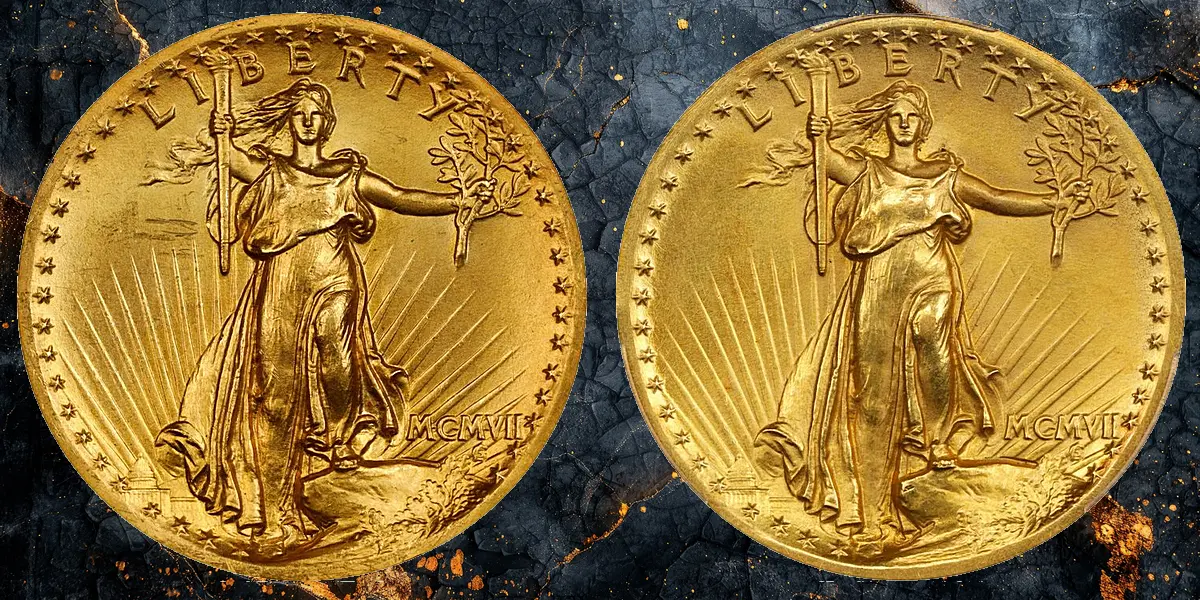
Some authenticators assign highfalutin titles to coins without adequate historical evidence. This practice does not involve ordinary “gradeflation,” which collectors already loathe. Instead, it involves title inflation.
Give a coin an exotic name. Add a mysterious attribute. Place both words on a plastic label. Then, watch the price rise.
The label may sound impressive. Yet the historical evidence may say something else.
Sometimes, ignorance drives the process. Sometimes, wishful thinking helps. Moreover, I suspect that old-fashioned greed occasionally joins the party..
Roosevelt Demands a New American Coin
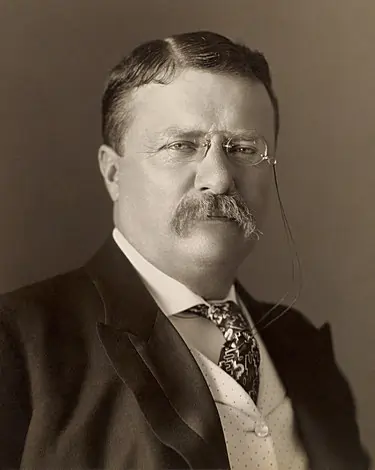
Long ago and not so far away, President Theodore Roosevelt asked sculptor Augustus Saint-Gaudens to redesign American gold coinage.
Roosevelt hated the artistic quality of the nation’s coins. Therefore, he wanted designs that could rival the finest coins of ancient Greece. In 1905, he personally invited Saint-Gaudens to help create them.
Saint-Gaudens then created a magnificent design for the $20 gold double eagle. Liberty strode forward on the obverse. Meanwhile, an eagle flew above the rising sun on the reverse.
The design looked spectacular.
Unfortunately, the Mint could not strike the original relief on a normal production press. The earliest Ultra High Relief patterns required many blows from a medal press. The Mint could not use that method for ordinary mass production.
Saint-Gaudens and the Mint continued to adjust the design. Then, Saint-Gaudens died on August 3, 1907.
Roosevelt took the loss personally. He also lost patience.
The president did not want a few experimental patterns. He wanted real coins. He wanted coins for commerce. He also wanted coins that he could show to political associates, members of Congress, and the public.
In short, Roosevelt wanted trophy coins from his trophy artist.[1]
Charles Barber Makes the Design Work

Philadelphia Mint Chief Engraver Charles E. Barber faced an impossible assignment.
He had to preserve Saint-Gaudens’ sculptural concept. At the same time, he had to create dies that the Mint could use to make actual coins.
Barber reduced the relief. However, his High Relief dies still required three blows from a high-pressure medal press. The Mint also prepared a segmented collar that placed the raised inscription E PLURIBUS UNUM on the coin’s edge.
Mint officials hoped that a small production group might satisfy Roosevelt. Perhaps the president would admire the coins, accept the technical limitations, and allow Barber to lower the relief again.
Roosevelt refused to cooperate with that plan.
On November 18, 1907, he ordered the Mint to “begin the new issue, even if it takes you all day to strike one piece.”
Therefore, the Mint got busy.
Strike, Anneal, Strike Again
The production process required time, heat, pressure, and patience.
Workers struck each High Relief coin once. Then, they removed it from the press and heated it. This annealing process softened the gold after the first blow hardened the metal.
Next, workers struck the coin a second time. They annealed it again.
Finally, they struck it a third time and inspected the result. During the final operation, the segmented collar added the raised edge lettering.
The sequence looked something like this:
- Strike one. Anneal.
- Strike two. Anneal.
- Strike three. Inspect. Count.
- Then repeat.
The Mint processed the coins in batches. That approach gave the pieces time to cool after annealing. It also kept the medal press working.
Mint personnel completed an initial group of 500 coins under the production plan that archival research has reconstructed. Roosevelt liked the results.
In fact, he liked them too much.
He wanted more.
The Mint director could not simply tell the president “No.” Therefore, Barber prepared additional dies and another collar. The Mint continued producing High Relief double eagles at a rate of several hundred pieces per day.
How Many High Relief Double Eagles Did the Mint Make?

Published mintage figures have varied for decades.
Older references often reported 11,250 pieces.
The familiar Guide Book of United States Coins later listed 12,367.
However, my archival research found that the Mint struck 12,867 High Relief double eagles.
The Mint later melted 80 pieces. That left a net total of 12,787 coins.
A 1908 report from Mint Director Frank Leach gave yet another figure: 12,153.
Therefore, collectors should understand that the historical records do not produce one universally accepted total.
Still, every credible total exceeds 12,000 pieces.
The Mint made these coins for issue. Roosevelt wanted circulating coins, even though collectors and government officials quickly absorbed many of them.
One Production Method, but More Than One Die Pair
Here I need to sharpen one point from the original version of this column.
The Mint did not use one literal pair of dies and one collar for every High Relief double eagle. Researchers have identified several die marriages and more than one edge collar.
For example, one company identifies one specific die marriage and collar combination with the coins that it calls Proofs. Other die and collar combinations produced the coins that collectors call Wire Rim and Flat Rim business strikes.
Nevertheless, the central historical question remains.
Did the Mint create a separate Proof issue?
Researchers have found no Mint order that directed workers to make a distinct group of High Relief Proofs. They have found no documented Proof mintage. They have also found no separate production purpose that clearly divided certain coins from the rest.
The Mint used the same basic three-blow and annealing process. It made the coins as part of Roosevelt’s effort to place the High Relief design into circulation.
That distinction matters.
A particular die marriage can create a recognizable appearance. However, appearance alone does not prove that Mint officials intended to manufacture Proof coins.
The Rise of the Attribution Opinion Business
Independent third-party grading transformed the rare coin market during the 1980s.
However, grading holders also gave attribution opinions enormous commercial power.
During the modern certification era, Some grading companies began identifying certain MCMVII High Relief double eagles as Proofs. Other services did not initially follow that practice.
Naturally, the market reacted.
A plastic holder now told buyers that one High Relief represented an ordinary Mint State coin. Another holder said “Proof.”
The coins looked different because dies change during use. Fresh dies may show polish lines, sharp details, and distinctive luster. Later strikes may display cracks, flow lines, and other signs of wear.
That progression occurs during normal coin production.
Nevertheless, a Proof label creates a powerful commercial distinction. It can also create a powerful price difference.
Price, of course, does not always equal value.
Proof, Specimen, or Something Else?
The marketplace eventually added another title: “Specimen High Relief.”
The word “Specimen” sounds impressive. It also offers useful ambiguity.
What does it mean in this case?
Did the Mint prepare special planchets?
Did workers polish the dies for a presentation issue?
Did an official order direct the coining department to make special pieces?
Did the Mint record a separate delivery?
Did the Mint reserve a specific quantity for dignitaries?
Without clear answers, “Specimen” risks becoming a convenient substitute for “Proof.” It preserves the commercial distinction while avoiding the need to prove conventional Proof manufacture.
Thus, the market now uses three principal descriptions:
- “High Relief.”
- “Proof High Relief.”
- “Specimen High Relief.”
The coins share the same historical production program. Yet the labels imply three different classes.
So much for simple, fact-based attribution.
The Plain-Edge High Relief Offers a Warning
One unique High Relief double eagle provides a useful lesson.
The coin lacks the normal raised edge lettering. Earlier researchers and auction catalogers described it as an experimental piece or trial strike.
That title sounded exciting. It also sounded expensive.
Later research reached a different conclusion.
The Mint normally used a plain collar during the first two blows. Then, workers installed the lettered collar for the third blow.
The unique Plain Edge coin apparently missed that final edge-lettering operation. Perhaps the press operator failed to return the coin for its third strike. Alternatively, the operator may have delivered the third blow without installing the segmented collar.
In either case, the evidence points to a production error rather than an intentional pattern.
Stack’s Bowers research associated with Vicken Yegparian helped establish that explanation. The coin remains unusual and unique. However, a dramatic title no longer supplies its importance. The production evidence does.
That episode should remind us to question impressive labels.
Research can turn a “pattern” into an error.
Research can also turn a “Proof” or “Specimen” back into an early strike from fresh dies.
Labels Should Follow Evidence
Attribution companies hold enormous influence.
Their labels shape auction descriptions. They affect registry rankings. They guide price guides. Moreover, they can add substantial premiums to individual coins.
Therefore, attribution requires transparency.
A company should define “Specimen.” It should publish the diagnostic criteria. It should also explain how those criteria demonstrate special Mint intent rather than an ordinary die state.
Collectors can examine those claims and debate them.
That represents a start.
However, no grading label can replace contemporary Mint documentation. A holder can offer an opinion. It cannot rewrite history.
Where Is Numismatics’ Gandalf?
Our leading hobby organizations rarely challenge these attribution problems.
A few collectors ask questions. A few researchers examine Mint records. Still, the broader problem continues to grow.
We have allowed private labels to replace public debate.
Decades ago, collectors argued openly about attributions. They compared evidence. They published competing conclusions. They expected researchers to defend extraordinary claims.
Today, too many people treat the words on a plastic insert as the final word.
That does not serve numismatics.
A grading service may call a coin Proof. Another may call it Specimen. An auction company may add adjectives until the description glows.
Yet none of those words can create a Mint order that never existed.
You cannot make a silk purse out of a sow’s ear.
You also cannot make a Proof or Specimen coin merely by printing the words on a label.
And, unfortunately, no silver-bearded Gandalf appears ready to save us.
By Roger W. Burdette
Updated and reformatted by CoinWeek, July 2026
Notes
[1] Roosevelt collected talented and creative people much as he collected wild-animal trophies. Fortunately for the artists, he did not shoot them.
[2] The unique Plain Edge High Relief double eagle does not represent an intentional trial or experimental strike. The production sequence offers a much simpler explanation. During December 1907, Mint Director Frank Leach also encouraged workers to change the way they upset the blanks. That adjustment nearly eliminated the thin fin, or wire rim, that appeared on many earlier coins. The Mint did not need to change the face dies or the basic three-strike process.
[3] A “looks like” attribution means that someone sees an unusual surface and assigns a special title without first establishing the Mint’s intent. The opinion may prove correct. However, the appearance alone does not constitute proof.
[4] How many collectors remember when the hobby encouraged open discussion and disagreement about attributions? What have we lost during the past 30 years?




We, there’s a time to reap AND sow.
Great points are made in this article
Such a beautiful coin!
Very informative!
very very interesting
I’ve been wanting this coin for like 25 yrs & hopefully someday I will.
Very interesting topic. I never knew so much went into making them.
Nice gold coins. I’d love to own a gold coin of any kind.
The coin used to show wealth and directory, when they were building the rails here in the Adirondacks.
Interesting story.
Another great article!