


By CoinWeek…
The year 1926 holds a distinct place in American numismatic history, characterized by the nation’s celebration of the 150th anniversary of the signing of the Declaration of Independence—the Sesquicentennial. This celebration centered around the Sesquicentennial International Exposition held in Philadelphia.

The coinage struck during this period reflects a complex interplay of high circulating mintage figures and aging production infrastructure, leading to severe quality control issues, particularly at branch mints. These conditional challenges dictate the scarcity and value of Gem Mint State (MS65) examples today.
The Composition of the Complete 1926 Coinage Set
A complete collection of the United States coinage dated 1926 encompasses all standard circulating issues across the three active mints (Philadelphia, Denver, and San Francisco) plus all congressionally authorized commemorative coins bearing the 1926 date.
This comprehensive collection totals 23 distinct issues, categorized as follows:
- Standard Circulating Issues (19 pieces): Denominations ranging from the Lincoln Cent to the Saint-Gaudens Double Eagle.
- Commemorative Issues (4 varieties): The Sesquicentennial Half Dollar, the Sesquicentennial Quarter Eagle, and the two Oregon Trail Memorial Half Dollars (P and S issues).
Gem Condition Coins Will Be a Problem
Any requirement for Mint State 65 coins will prove to be a significant challenge for certain 1926 issues. A coin achieving this grade must exhibit full original luster, possess a sharp strike consistent with the design, and show only negligible, distracting contact marks. For 1926 coinage, which often suffered from weak strikes—especially on certain series like the Buffalo Nickel and Peace Dollar—achieving this Gem designation is a significant hurdle. This conditional rarity transforms otherwise common dates into expensive condition rarities, dramatically increasing the cost of the entire set.
However a complete set of 1926 Coinage can be built at any grade level. Budget minded collectors can put a circulated set together in XF or more likely AU condition. This article is meant as a collecting strategy and not a rigid condition rarity requirement. Have fun putting your own set together!
The Minor Denominations
The Lincoln Cent (3 Coins)
The 1926 Lincoln Cent was produced at Philadelphia (P), Denver (D) and San Francisco (S). The Philadelphia issue, with a mintage of 157 million, is considered generally available in MS65RD and forms a stable base for the set.
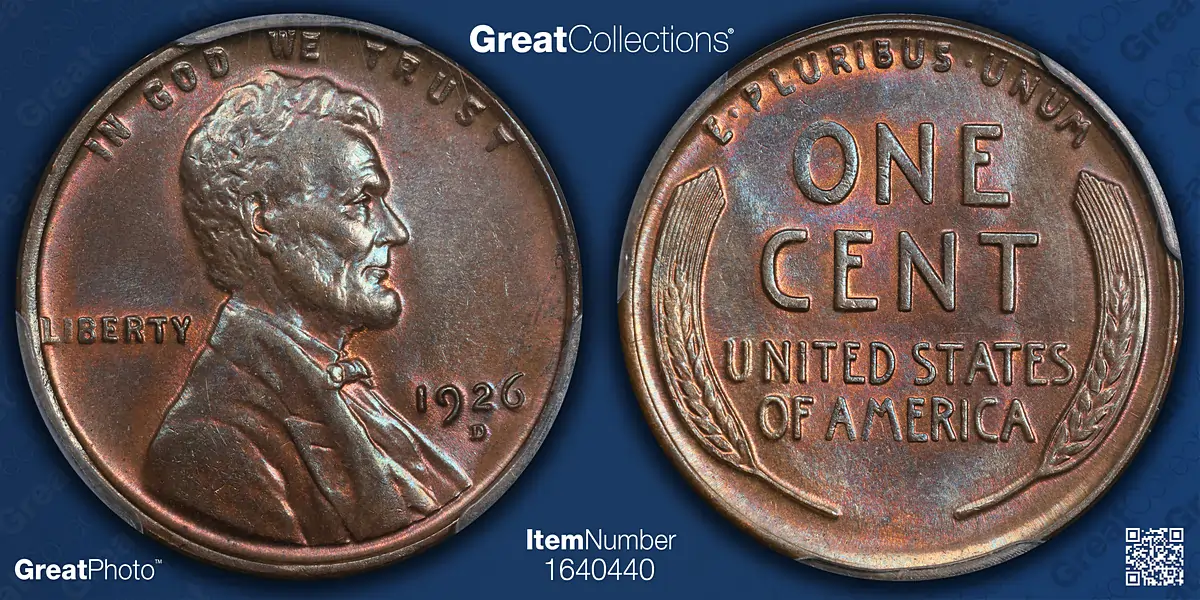
The Denver Mint issue has a healthy mintage of 28 million, but it is conditionally rare in MS65RD, with fewer than 100 PCGS-graded examples. The 1926-S issue, with a significantly lower mintage of 4,550,000 pieces 3, represents a major statistical rarity in MS65RD, with just four known. In MS64+RD, there are three recorded. Expect to pay over $50,000 for 64+RD and $100,000 for a 65RD. Examples in MS64RD trade from $6,000 to $15,000, depending on quality.
The Buffalo Nickel (3 Coins)
The 1926 Buffalo Nickel was struck at all three mints (P, D, S). The 1926-S Buffalo Nickel stands out as arguably the most conditionally challenging circulating coin in the entire 1926 set. Its mintage of 970,000 pieces is the lowest of the series and market evidence indicates that nearly all examples were immediately issued into circulation near the time of striking, leading to minimal unworn survival. Perhaps 500-600 Mint State examples survive. Few are Gem quality.

PCGS CoinFacts shows 16 examples in the PCGS pop report, while NGC counts 14. An NGC MS65 sold at a February 2024 Heritage sale for $40,800. The last PCGS MS65 to cross the auction block sold for $99,000 in 2022. The D Mint is no pushover and will cost $3,000 to $4,000 to acquire. The Philadelphia issue is common and runs just a few hundred dollars for a nice example.
The Silver Coins
The Mercury Dime (3 Coins)
Mercury Dimes were struck at Philadelphia, Denver, and San Francisco in 1926. The 1926 (P) dime had a robust mintage of 32,160,000 and is relatively available in MS65. The 1926-D dime, with a mintage of 6,828,000, is recognized as being less available than its immediate predecessor, indicating worse survival patterns in Mint State. Its MS65 value is approximately $2,500 with Full Split Bands (FB)
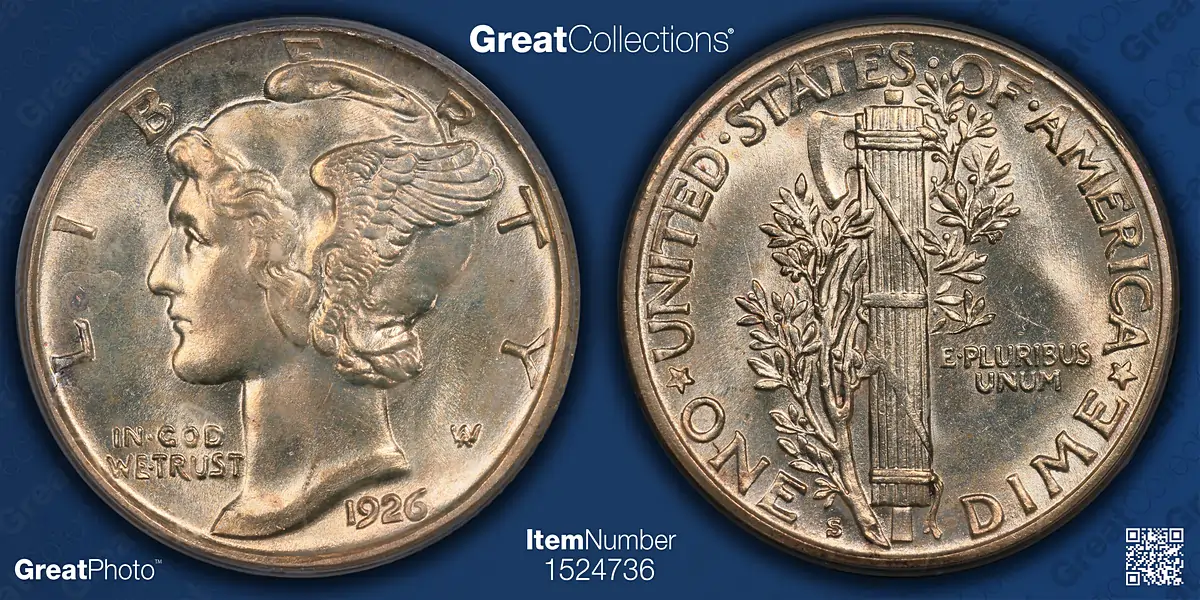
For the Dimes, the true measure of conditional quality lies not just in the Mint State grade, but in the Full Split Bands designation, which certifies a sharp strike on the fasces bands on the reverse. Requiring the FB designation for the Denver and San Francisco (5.52M mintage) issues would necessitate a cost increase of four times for the 1926-D to double the base MS65 price for the Philly and San Francisco Strikes. The San Francisco coin is the toughest of the three and could easily surpass $6,000 for a premium coin.
The Standing Liberty Quarter (3 Coins)
All three mints produced the Standing Liberty Quarter in 1926. The Philadelphia issue (11,316,000 mintage) is valued in MS65 around $450. The 1926-D has the lowest circulating quarter mintage of the year at 1,716,000 pieces. Its MS65 value is approximately $550. The 1926-S (2,700,000 mintage) is also conditionally scarce. In Gem, this will be the toughest of the 1926 quarters and will set you back about $3,500 in MS65.
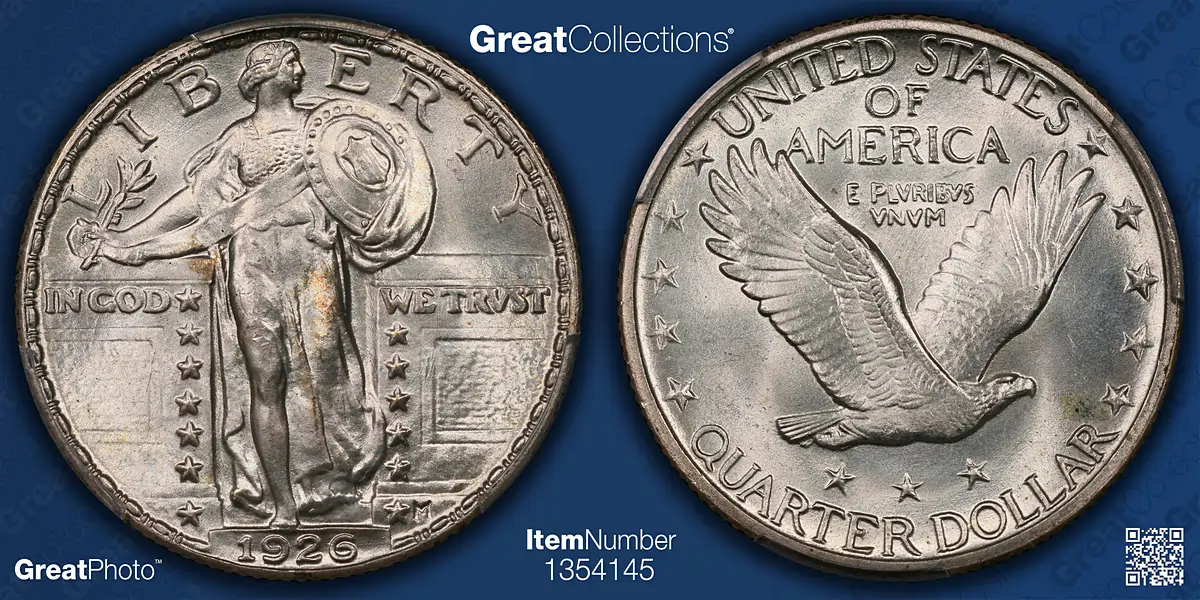
The relatively small price disparity observed between the higher-mintage 1926-P and the low-mintage 1926-D in base MS65 suggests that the market’s highest premium is not purely driven by mintage scarcity but by the even rarer strike designation: the Full Head (FH). Similar to FB dimes, an MS65 FH designation for the 1926-D or 1926-S quarters is exceptionally rare and would introduce another massive premium into the set’s total cost, placing the value of these two coins alone into the tens of thousands of dollars each.
The Commemorative Half Dollars (3 Coins)
Due to low demand, the Walking Liberty Half Dollar was only struck sporadically through the 1920s. No Walkers were struck in 1926; instead, half dollar production was limited to the Sesquicentennial Commemorative Half Dollar and the Oregon Trail Commemorative Half. 1926 was the inaugural year for the Oregon Half, and the program would continue through 1939, although Oregons were not struck every year.
In 1926, Oregons were struck in Philadelphia and San Francisco. Distribution was higher for the San Francisco issues, but neither is rare in Gem Mint State. Expect to pay $300–$350 each. The Oregon Half Dollar is one of the most striking commemorative coins ever issued by the United States Mint, and you won’t regret having to pick up two.
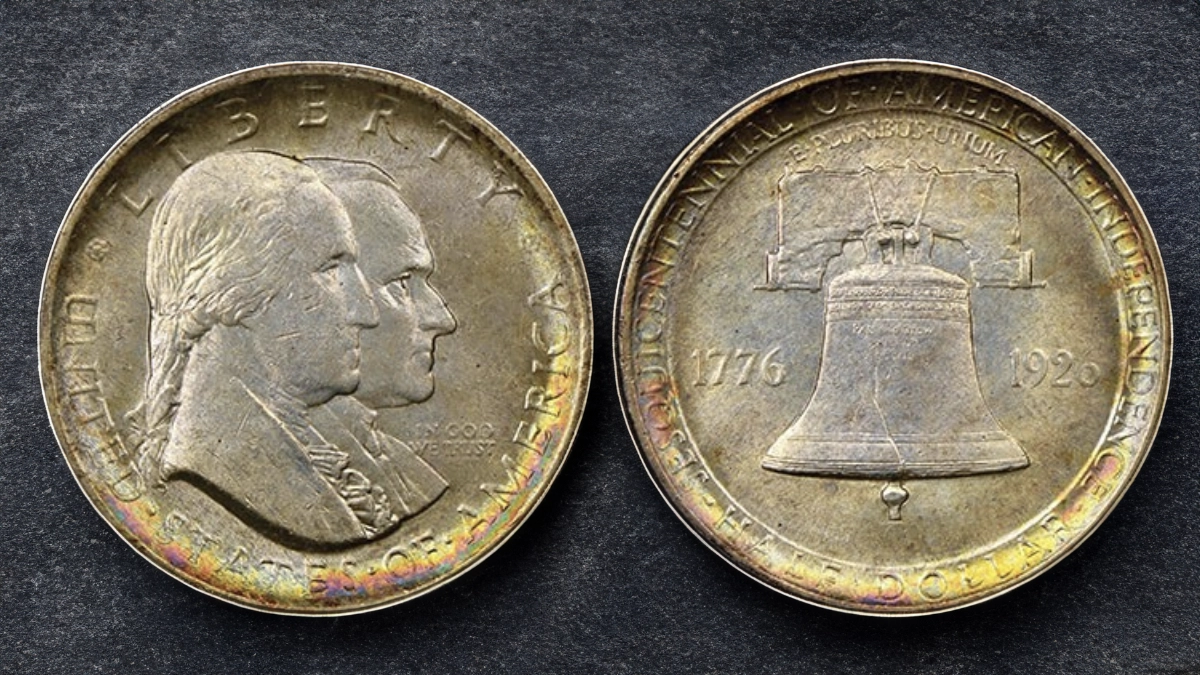
More than a million Sesquicentennial Half Dollars were struck, but demand amounted to just over 10% of that, resulting in a distribution of 141,120. The Mint melted the remainder down. Sesquis aren’t particularly scarce, but they can be a challenge to find with good eye appeal and in Gem condition. Sesquis will cost two to three times the price of the more common Oregon issues.
The Peace Dollars (3 Coins)
For the Peace Dollar, the 1926 (P) coin, with a mintage of 1,939,000, is relatively accessible in MS65 at an approximate price of $500. The 1926-D and 1926-S, however, present more of a challenge.
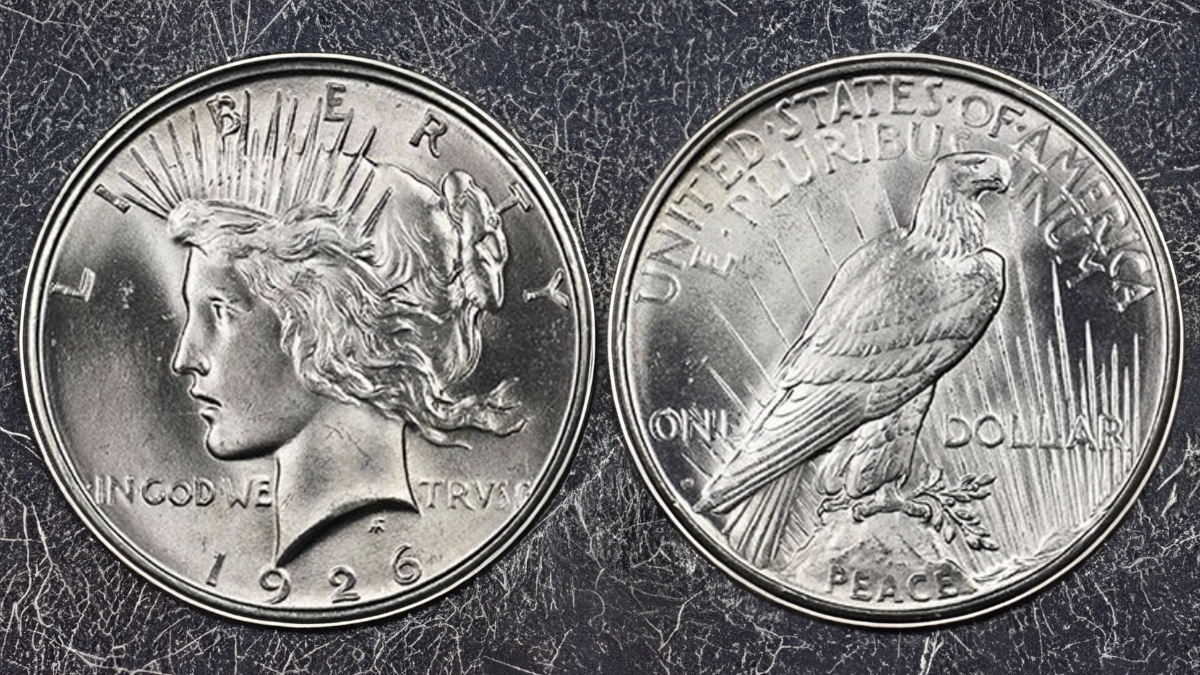
Despite mintages in the millions, only a thousand-or-so Gems have been certified in each issue. Expect to pay slightly more for the 1926-D, as recent sales are approaching $1,000. PQ examples of either issue may cost $1,300 to $1,500.
The Gold Coins
All circulating gold coins dated 1926, with the exception of the Saint-Gaudens Double Eagle were struck exclusively at the Philadelphia Mint. While many gold coins were melted following the Gold Recall of 1933, significant quantities survived through export or bank reserves.
The Quarter Eagles (2 Coins)
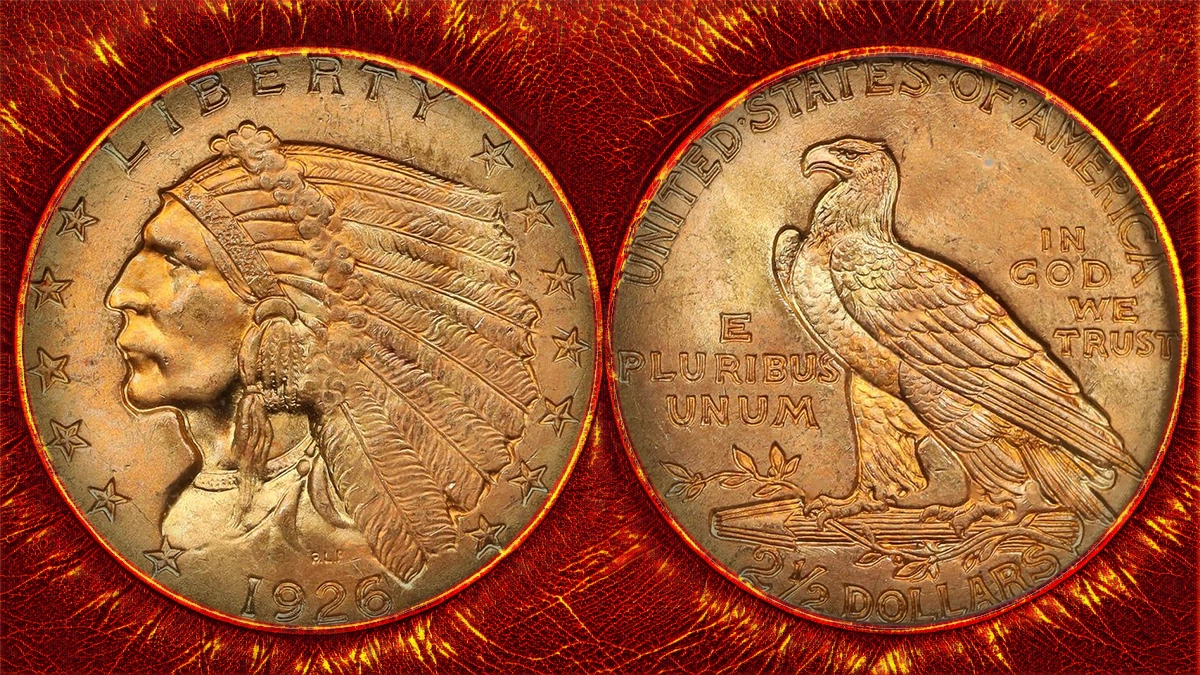
The 1926 Indian Head Quarter Eagle is the most common gold coin in this date set, having a mintage of 446,000. It is described as being among the most common issues for Gem examples in the series by David Akers when he wrote his seminal works on U.S. gold in the 1990s. In the years since, this observation has held true. An MS65 example is currently valued at approximately $2,000. The rising cost of gold is driving the numismatic premium down on this issue, but spot price is at all-time highs.
The Mint also struck a Sesquicentennial Quarter Eagle to go along with the Sesqui Half. The Sesqui Quarter Eagle was the last United States gold commemorative coin struck in the classic era.
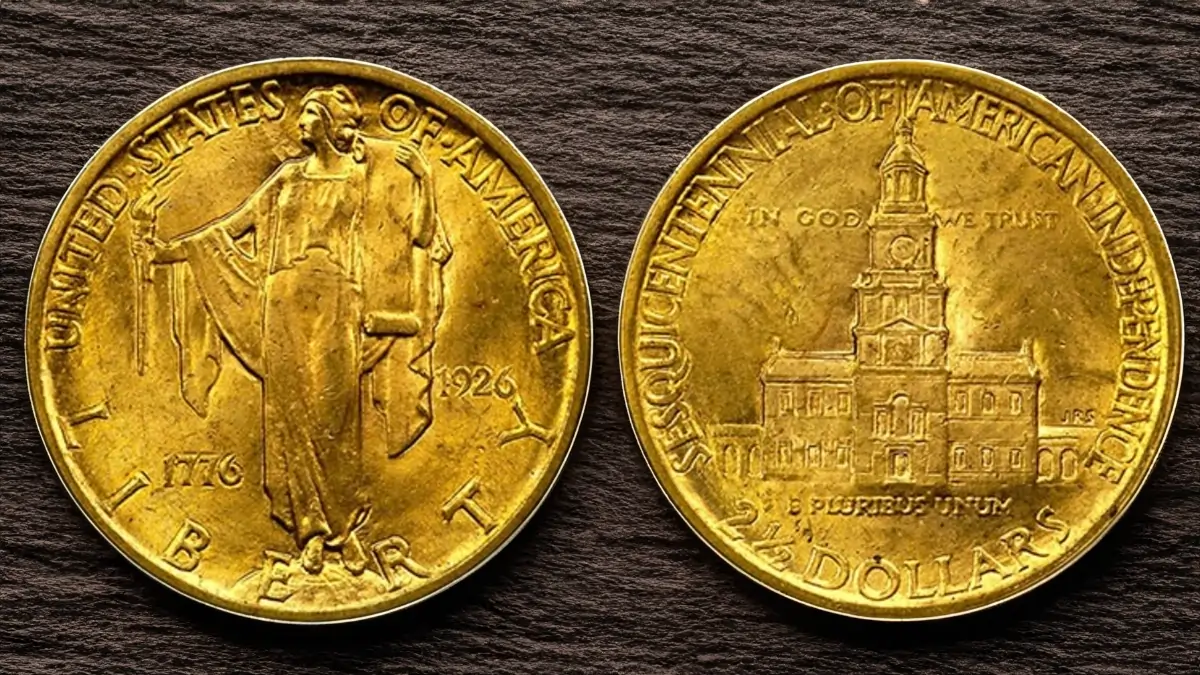
The Mint did not strike another gold commemorative coin until 1984. The Sesqui gold commemorative featured Liberty bearing a scroll and torch. With a mintage of 46,019 pieces, it is not particularly rare for gold commemorative, however, its price is determined by its condition. Gems are half as common as MS64 examples. Expect to pay about $1,250 to $1,500 for a nice example.
The Saint-Gaudens $10 and $20 Gold Coins (4 Coins)
The remaining gold denominations are the $10 Indian Head Eagle, and $20 Saint-Gaudens Double Eagle. No Half Eagles were struck in 1926.

The 1926 Eagle is the second most common issue in the series and is considered a type coin. The coin becomes conditionally scarce at the MS65 grade and conditionally rare in grades higher than that. The price of a Gem 1926 Eagle continues to rise with gold. Expect to pay more than $3,000 for an example at current levels.
The Mint struck Double Eagles at each of the three mints. The 1926-D is a stopper at MS65, with just three certified and prices estimated at $250,000 or more. “Settling” for an MS64 example of the Denver Mint coin lowers that cost to about $50,0000. The 1926-S is comparatively cheap at “just” $25,000 at MS65. The common Philadelphia issue carries some premium over spot, and shouldn’t pose a challenge for those that can pass that hurdle.
* * *


Harder to do than ever with the golden silver prices these days…
cannot wait for the Sesquicentennial next year.
Semiquincentennial next year. You’re a hundred years too late for the Sesquicentennial.
This is a set I would love to accomplish in Ms65 but I’m more likely to go Ms64 or Ms63 for budget reasons. The gold issues would be a problem for me.
Very interesting information. Can not wait to start collecting.
Would be a fun project.
Nice set once complete.
Hard to complete the set but well worth it. Thank you
Good, educational piece.
The Golden Quarters are spectacular
While reading this article my mind started on its own journey. It was trying to comprehend the cost involved if someone was trying to build a COMPLETE US coin set from the first coin till now. I’m sure that is a quest that a few are trying.
Thanks for the article.
Great article 1 I love the incuse indian gold.
Coin collecting is fun. Take every chance you get try to teach the younger gereration.
Would love to have the set but the prices these days are a bit out of my price range.