Coin Dealers Gather in Rome Where Nero’s Port Once Fed an Empire
By Jeff Garrett
The 2026 IAPN Congress in Rome gave the rare coin trade something more than a meeting. It gave dealers a reminder of why numismatics matters.
For four days, members of the International Association of Professional Numismatists met in one of the world’s great historical cities. They discussed the issues facing the trade and strengthened old friendships, along with building new working relationships across borders.
However, Rome added something special. This was not just another industry gathering. The city placed the modern coin trade beside the ruins, ports, mints, and monuments that shaped the monetary history we study today.
Rome Hosts the 2026 IAPN Congress
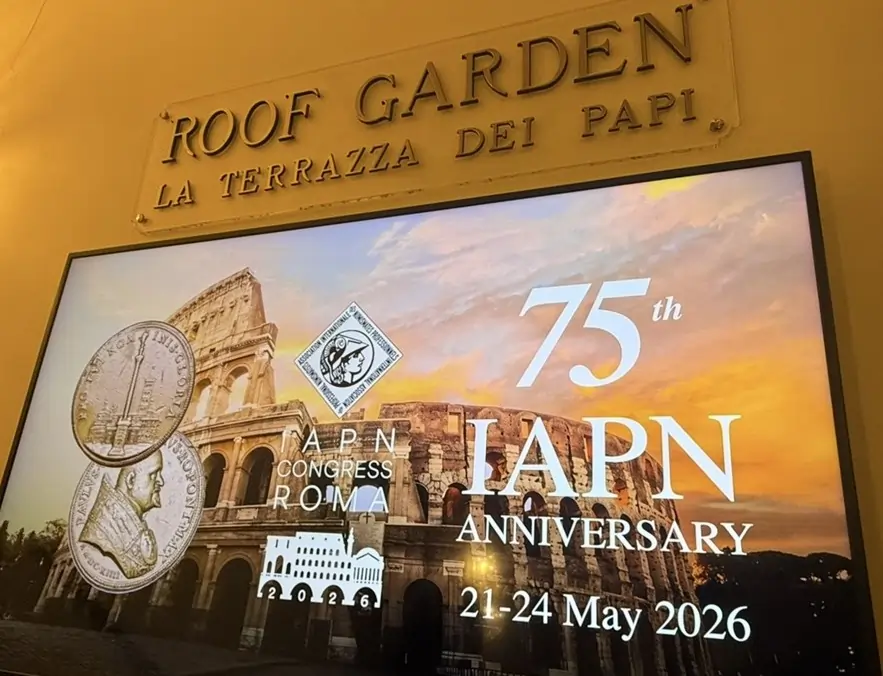
The 2026 IAPN Congress took place in Rome, Italy, from May 21 through May 24. The meeting came during the IAPN’s 75th anniversary year. Officially, the Rome event served as the 74th IAPN Congress.
The annual Congress moves to a different host city each year. A local host then organizes the meetings, meals, tours, and social events. That task requires major planning. In many ways, it resembles staging a wedding for guests who fly in from every corner of the world.
This year, the Italian hosts delivered a spectacular event.
The Congress brought together professional numismatists from around the world. Dealers came to discuss business, ethics, scholarship, authentication, and the future of the coin trade. Yet they also came for something just as important: camaraderie.
What Is the IAPN?
The International Association of Professional Numismatists formed in Geneva, Switzerland, in 1951. Twenty-eight founding member firms launched the organization.
Today, the IAPN includes more than 100 numismatic firms across more than 25 countries. Its membership represents many areas of the coin business. Some members specialize in ancient coins. Others focus on world coins, medals, paper money, or modern issues.
The IAPN does not grant membership to individuals. Instead, membership belongs to numismatic firms or numismatic departments of commercial institutions.
That distinction matters. The group sets a high standard for professional conduct. It also requires careful vetting before admission.
Ethics Sit at the Center of IAPN Membership
The IAPN’s mission centers on a healthy and prosperous numismatic trade. It also promotes high standards of business ethics, commercial practice, scientific research, and the broader spread of numismatic knowledge.
In addition, IAPN members guarantee the authenticity of the coins and medals they sell. That guarantee forms a condition of membership. Therefore, collectors who buy from member firms can do so with added confidence.
If an item later proves counterfeit or not as described, the buyer may return the piece for a refund. The guarantee applies without regard to the date of purchase.
That promise gives the IAPN real weight in the global trade. It also explains why membership carries prestige.
Why I Joined the IAPN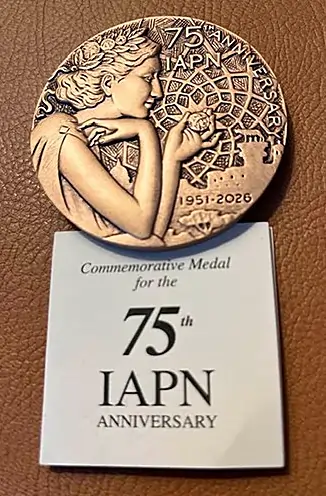
U.S. coinage remains the primary focus of my business. Even so, I applied for IAPN membership a few years ago.
My business has expanded into ancient coins in recent years. Many IAPN members specialize in that field. As a result, the organization offers valuable support for dealers who buy and sell ancient material.
The group also helps members address the many issues that affect the international trade. These issues include authenticity, import rules, provenance, market standards, and professional relationships.
My first IAPN Congress took place in San Francisco a few years ago. My wife, Mary Lynn, and I enjoyed that meeting. We put the Rome Congress on our calendar as soon as the dates became firm.
A Working Congress With a Global Purpose
The IAPN Congress gives dealers a forum to discuss the issues facing the hobby and the trade. Members handle that work during formal sessions over several days.
However, the Congress also offers something that no email or video call can replace. It gives dealers time together.
That time matters. Trust drives the coin business. So do long-term relationships. Over the last few years, my own network of international dealer contacts has grown tremendously because of IAPN meetings.
For many attendees, that network represents one of the Congress’s greatest benefits.
A Roman Welcome Near Santa Maria Maggiore
The Rome Congress opened with a welcome dinner at a restaurant with a rooftop dining room. The room overlooked the Basilica di Santa Maria Maggiore.
That setting gave the meeting an unforgettable start. As the sun set over the city, dealers from around the world mingled and shared stories. Many discussed their numismatic pursuits. Others simply enjoyed the moment.
Rome also gave attendees one of its greatest gifts: food. Any numismatic conference in the city carries the promise of culinary rewards. This trip delivered.
Ostia Antica Brings Ancient Trade to Life
Most of my past trips to Rome have centered on the city itself. That makes sense. A visitor can spend days in Rome and still only scratch the surface.
However, this Congress reached beyond the city. On Saturday, more than 100 attendees traveled to Ostia Antica, the ancient port city of Rome.
The ruins at Ostia Antica are vast. They also offer a powerful reminder of Rome’s reach. Goods from across the known world arrived there. Those goods helped sustain the empire.
For numismatists, the visit carried extra meaning. Ancient coins often show the same world that Ostia once served. Commerce, power, shipping, civic pride, and imperial messaging all come together in that landscape.
One of the most remarkable Roman coins connected to this story is Nero’s bronze sestertius depicting the port of Ostia. The coin shows the harbor from above. It captures ships, architecture, and maritime symbolism on a coin-sized canvas.
That image turns a piece of bronze into a document of empire.
The Museo della Zecca di Roma Opens Its Doors
After lunch, the group traveled to the Italian State Mint and its dedicated museum, the Museo della Zecca di Roma.
The museum opened exclusively for the IAPN group. Attendees toured an impressive collection of numismatic objects. The displays covered centuries of Italian coins and medals.
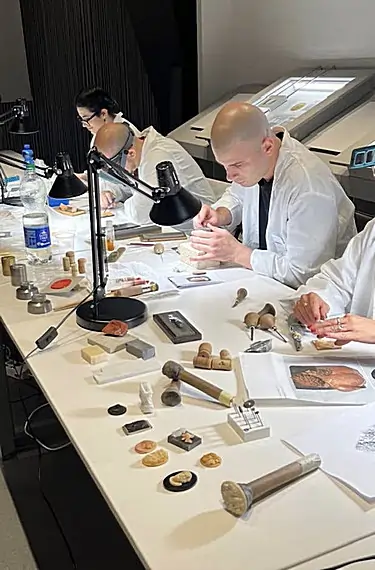
Yet many visitors found the minting tools even more compelling. The museum displayed a wide range of coin- and medal-making instruments. These tools showed how artists and technicians turned ideas into struck objects.
The museum also arranged demonstrations by numismatic artists and engravers. They explained the process from design concept to final striking.
Even for experienced coin dealers, the visit deepened our understanding of the minting process.
Why the Mint Visit Mattered
Coin dealers spend their careers studying finished objects. We judge surfaces, strikes, dies, design, metal, rarity, and history. However, visits like this remind us that every coin begins as a human project.
An artist must imagine the design. An engraver must translate that idea into relief. A mint must solve the technical challenge of making that design work in metal.
Therefore, the Museo della Zecca visit gave the Congress more than a museum stop. It connected the business of numismatics to the craft behind the objects we handle every day.
A Black-Tie Finale at Villa Mondragone
The final event of the 2026 IAPN Congress took place Sunday night. Attendees gathered for a black-tie gala at Villa Mondragone.
The historic setting gave the weekend a fitting close. The elegant venue matched the mood of the Congress. Dealers, spouses, and guests celebrated a weekend of business, history, and fellowship.
As the evening continued, guests danced into the night. At the same time, many already began discussing the next IAPN Congress.
That meeting will take place in Hong Kong in 2027.
A Modern Coin Trade Meets Ancient Rome
The Rome Congress stood out because it placed today’s rare coin trade inside the historical world that created so much of our field.
Dealers discussed modern market challenges. Then they walked through an ancient port that once fed an empire. They studied minting history inside the Italian State Mint Museum. Then they gathered for a gala in a historic villa near Rome.
That combination gave the Congress its deeper meaning.
Numismatics often feels like a bridge between past and present. In Rome, that bridge became real. The same city that once moved grain, silver, bronze, and gold across an empire now hosted dealers who protect, study, buy, and sell the surviving objects of that world.
For collectors, that is the larger story. Coins do not merely record history. They carry it.