


Proof-Only U.S. Gold Coins Struck at Philadelphia (1795–1933)
Between 1795 and 1933, the Philadelphia Mint produced just seven gold coins that were struck exclusively as Proofs. Today, these Proof-only gold issues rank among the most famous and most desirable rarities in all of U.S. numismatics.
Here are those seven coins:
- 1863 $2.50 Quarter Eagle*
- 1875 $3.00
- 1876 $3.00
- 1887 $5.00 Half Eagle
- 1883 $20.00 Double Eagle
- 1884 $20.00 Double Eagle
- 1887 $20.00 Double Eagle
*Many collectors regard the 1841 quarter eagle as the first Proof-only regular-issue gold coin. However, most experts now accept that both business strikes and Proofs were produced for that date. It is an issue that some still debate.
As of 2025, every one of these coins is universally recognized as a major rarity within its respective series. Let’s examine each issue more closely.
The 1863 Quarter Eagle: A Civil War-Era Enigma
With the notable exception of the double eagle, which saw 142,820 business strikes, all Philadelphia gold coins dated 1863 are rare, low-mintage issues.
The 1863 Liberty Head Quarter Eagle is one of the most important Proof gold coins of the 19th century, a legendary issue whose reputation extends far beyond the small circle of advanced gold specialists.
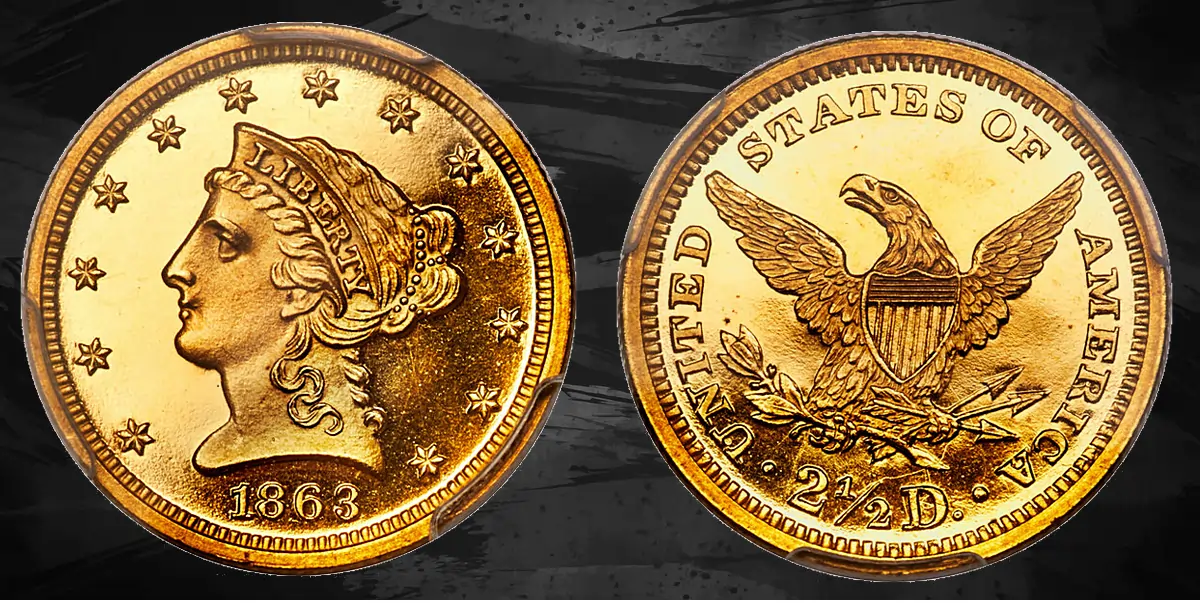
Struck during the height of the Civil War, this Proof-only $2.50 gold piece occupies elite company alongside icons like the 1841 quarter eagle “Little Princess” , the famed 1848 CAL. quarter eagle , and of course 1854-S quarter eagle, however it might be argued, that its true rarity eclipses them all.
Just 30 Proofs were struck, and Mint practices of the era ensured that many unsold examples were quietly melted. Today, numismatists believe that perhaps only a dozen examples survive.
What makes the 1863 Quarter Eagle especially compelling is the contrast between its familiarity and its extreme scarcity. It is widely known, often discussed, and endlessly admired, but almost never available.
The coin’s stature is cemented by its placement in 100 Greatest U.S. Coins by Jeff Garrett and Ron Guth, where it appears alongside other legendary quarter eagles.
Early researchers like Harold P. Newlin recognized its importance, famously calling it the rarest of the series in correspondence with T. Harrison Garrett. More than a century later, that assessment still rings true.
Mintage, Survival, and Market Performance
The 1863 had a mintage of just 30 coins, all of them Proof-only. Within a decade of being struck, collectors already recognized that the 1863 quarter eagle was a major rarity. Today, experts estimate only 16–18 examples have survived.
The current auction record occurred at Heritage FUN 2022 sale where a PCGS PR66DCAM CAC-approved example realized $432,000, more than double the previous high. It remains the finest example sold.
Are 1863 Quarter Eagles Overpriced?
The answer is both yes and no.
On one hand, any coin with 15 or fewer known examples qualifies as a major rarity. Furthermore, most surviving 1863 quarter eagles are choice Proofs, which makes them far more appealing to trophy-coin buyers than the slightly rarer 1854-S quarter eagle.
Nearly all known 1854-S examples grade below EF40 and are, frankly, visually unpleasant. But there are significant exceptions. a PCGS EF-45 with CAC Sticker just sold at the Heritage 2026 Fun Sale for $561,200.00. Impressive!
Understandably, very few collectors pursue high-grade Liberty Head quarter eagle date sets. Many fill the “1863” slot far more economically with an 1863-S.
Viewed strictly as a Proof issue, the 1863 is not unique, but viewed as a date, it remains a recognized major rarity. That perception is unlikely to change.
The 1875 and 1876 Three Dollar Gold Pieces
According to Mint records:
- 1875: 20 Proofs
- 1876: 45 Proofs
However, PCGS population figures tell a very different story, showing 20 graded 1875s and 54 graded 1876s.
So what explains the discrepancy?

Understanding the True Mintages
For the 1875, it appears that 20 Proofs were struck initially, with additional pieces produced later in the year to satisfy collector demand. These should not be considered restrikes, as they were made during the same calendar year.
Given typical survival rates of about 50% for Proof Threes, the true mintage for 1875 was likely 35–40 coins.
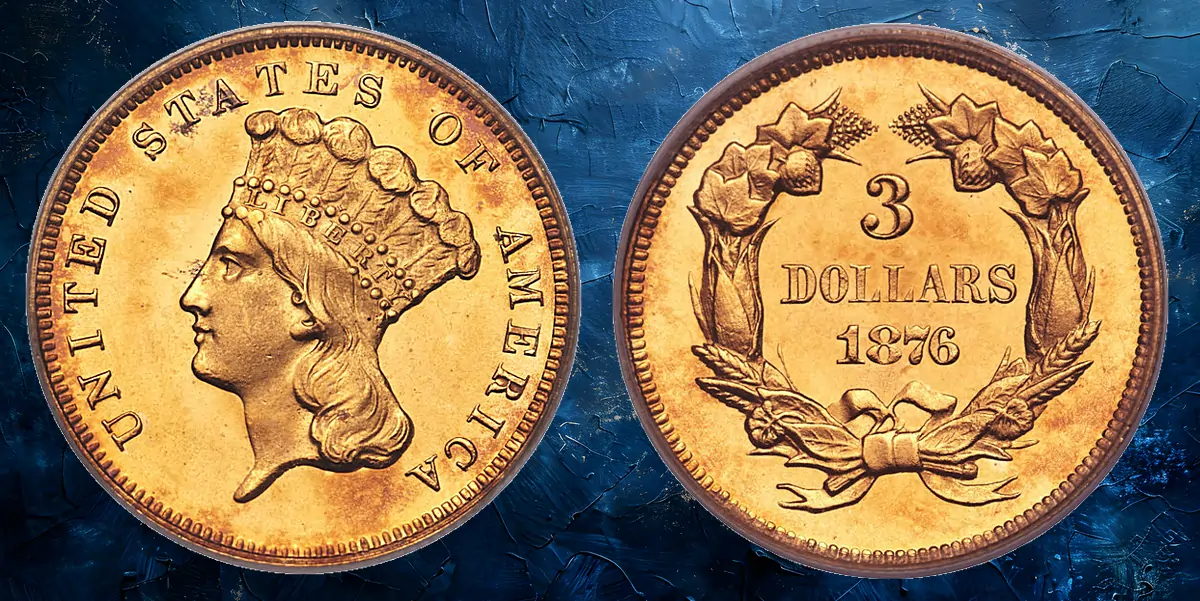
The 1876 is far more confusing. Excessive resubmissions have inflated population figures, particularly in PR64 and PR65DCAM. Even if we reduce the PCGS total to 40 coins, nearly full survival of a mintage of 45 would be implausible.
A more realistic estimate places the original mintage at 65–75 coins, making it the most common Proof Three prior to 1882.
Market Performance and Relative Value
In 1973, an 1875 Proof $3 became the first U.S. gold coin to exceed $100,000. Today, its reputation has softened. Earlier Proof Threes from 1854–1857 have shown stronger appreciation in recent years.
It would not be surprising if, in another decade, a PR65CAM 1856 surpasses a Gem 1875 in value.
Still, the 1875 likely retains the top spot within the series. The 1876, however, deserves a modest premium over other low-mintage proof threes.
The 1887 Half Eagle: A Proof-Only Mystery
The 1887 half eagle stands alone as the only Proof-only half eagle of any design. Why this occurred remains unclear.
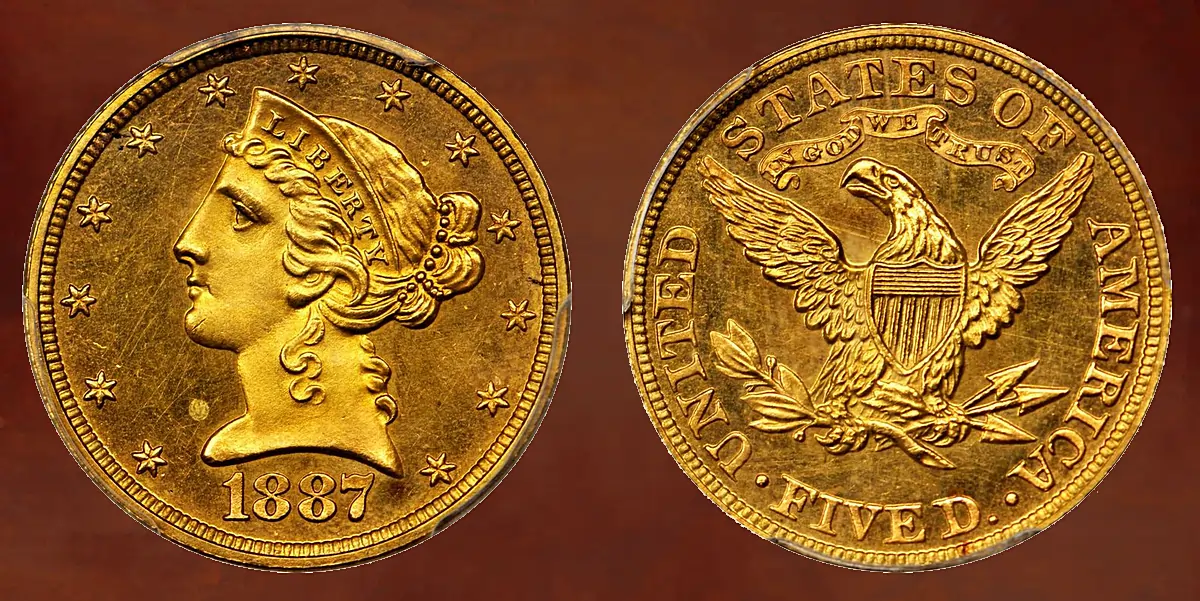
Notably, San Francisco struck record numbers of half eagles in 1886 and 1887, suggesting broader monetary forces, likely the gold vs. silver debate, played a role.
It is no coincidence that the double eagle also lacked a business strike in 1887.
A total of 87 Proofs were struck, with approximately three dozen survivors. Many circulated or were cleaned, indicating the issue was not immediately recognized as a rarity.
Contrast is typically modest, and true DCAM examples are rare. There is no clearly defined finest known specimen.
Despite aggressive price multiples between grades, the 1887 half eagle does not appear grossly overvalued, especially when compared to similar Proof issues from the 1880s.
Proof-Only Double Eagles: The Famous “Triplets”
By a wide margin, the 1883, 1884, and 1887 double eagles, known collectively as the Triplets, are the best-known Proof-only gold issues.
Mintages:
- 1883: 92
- 1884: 71
- 1887: 121
Earlier Proof double eagles had far lower mintages, often just 20–36 coins. Interestingly, the two rarest circulation strikes, 1881 and 1882, have among the highest Proof mintages, almost certainly due to collector demand.
Unlike smaller denominations, many collectors actively pursue Liberty Head double eagle date sets, fueling sustained demand.
A Closer Look at Each Triplet
1883 Double Eagle
The 1883 Liberty Head Double Eagle stands as one of the great quiet rarities of the series, a coin born not of commerce, but of circumstance. While a token number of circulation strikes limped out of Philadelphia in 1882, the Mint abandoned even that gesture the following year.
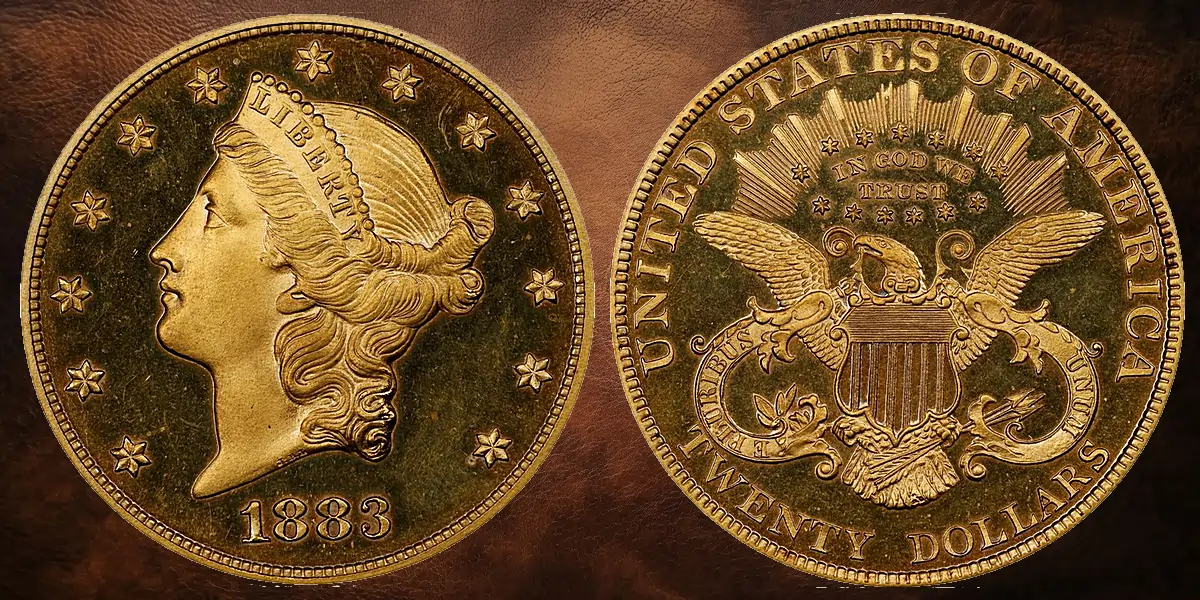
In 1883, double eagle production at the nation’s chief coining facility was limited entirely to Proofs, just 92 pieces struck for collectors. Though it lacks the absolute lowest mintage among the Proof-only issues, its real-world survival rate tells the more important story.
Today, perhaps 30 to 35 examples remain in numismatic hands, a figure that hints at weak contemporary demand and an uncertain fate for the rest. Some were likely spent during hard times, others consigned to the melting pot.
Thankfully, those that survived were often well preserved, spared the heavy hairlining seen on many Proof gold coins. Even so, truly attractive examples surface only rarely, ensuring intense competition whenever one appears.
1884 Double Eagle
The 1884 Liberty Head Double Eagle occupies a special, almost mythic place in the series, a coin struck entirely for collectors during a moment when the Philadelphia Mint had effectively stepped away from producing double eagles for commerce.
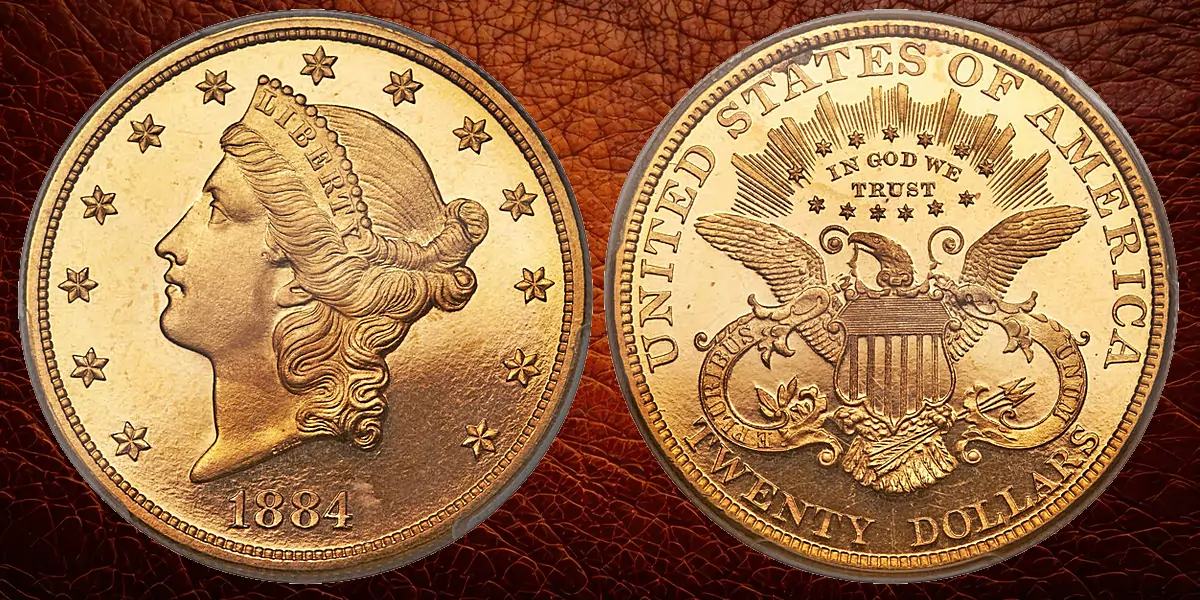
Wedged between the 1883 and 1887 Proof-only issues, the 1884 reflects a broader Treasury policy that favored half eagles and eagles over the nation’s largest gold denomination.
Although Mint records report 71 Proofs struck, survival tells a harsher story. Unsold Proofs were routinely melted without ceremony, and few escaped that fate. Today, no more than 15 to 20 examples are believed to exist in private hands, several of them impaired.
That scarcity alone places the 1884 among the most coveted Liberty Head double eagles. What elevates this example further is its status as a true condition rarity.
As a Gem Deep Cameo, it stands apart from nearly all known survivors, one of just two confirmed examples at this level, making it a defining coin for the advanced gold specialist.
1887 Double Eagle
The 1887 Liberty Head Double Eagle represents both an artistic refinement and the culmination of one of the rarest chapters in American gold coinage.
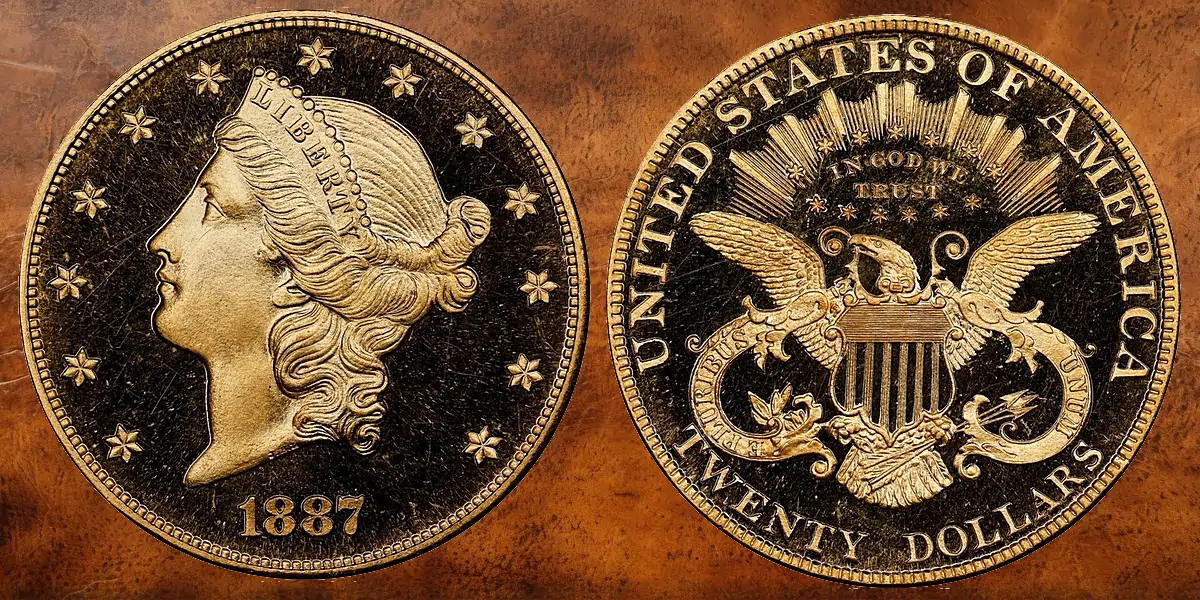
The Type III design, revised by Chief Engraver William Barber late in his career, brought a more upright, centered Liberty and a fully spelled-out denomination, TWENTY DOLLARS, creating a bolder, more confident visual statement.
By 1887, however, the Philadelphia Mint was no longer producing double eagles for circulation at all. That year’s output consisted solely of 121 Proofs, struck for collectors and little else.
As with its Proof-only companions of the 1880s, attrition was swift and unforgiving. Today, perhaps 30 to 40 examples survive in all grades, making the 1887 one of the great rarities of the Liberty Head series.
In higher states of preservation, the coin transcends mere scarcity. It becomes a trophy of both absolute and condition rarity, an object pursued not just for what it is, but for how rarely it can be found.
Final Thoughts on Proof-Only U.S. Gold
Assembling a complete set of Proof-only U.S. gold coins is one of the most challenging, and rewarding, journeys in American numismatics.






Gold coins have the best designs