


By Louis Golino for CoinWeek…
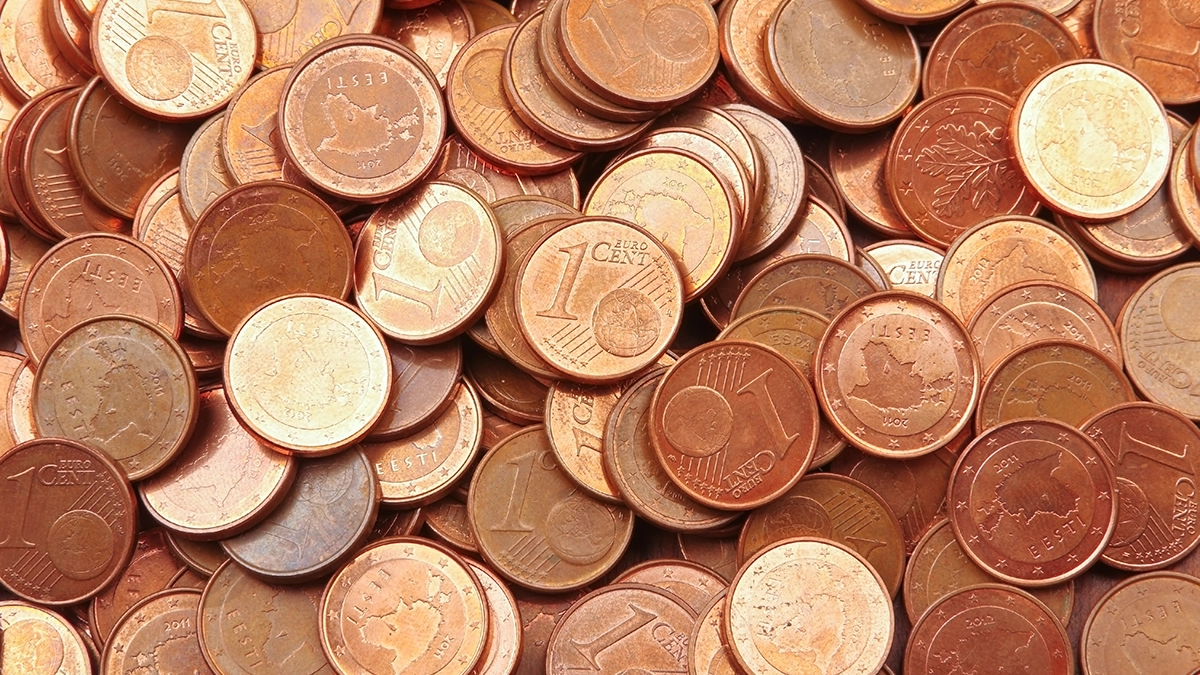
The 17 members that share the euro, known as the Eurozone, are considering eliminating the two lowest denomination circulating euro coins, according to a new report from the European Commission.
The European Commission is the European Union’s executive branch.
The proposals put forth in the May 14 report would need to be crafted into legislation and approved by the member states of the Eurozone before they could be implemented.
The report was requested by two other European Union institutions, the European Parliament, which is an elected body that represents the citizens of the EU, and the Council of Ministers, which represents the member states.
The report examines the costs and benefits of the one- and two-cent euro coins, as well as the public’s attitude toward them. The report identifies a key problem: the coins cost more to produce than their face value, a situation also seen in other countries like the United States.
The report presents four main ways of addressing the issues with these low-denomination coins:
- Continued issuance under unchanged conditions (“status quo scenario”): This involves maintaining the current production and circulation of the coins without any changes to their legal or material specifications.
- Continued issuance at a reduced cost: This option suggests lowering the costs of production and issuance by changing the coins’ material composition or making the manufacturing process more efficient.
- Quick withdrawal scenario: This scenario proposes abolishing and withdrawing the coins from circulation over a short period. This would be accompanied by binding rounding rules for all cash payments.
- Fading out scenario: A variation of the withdrawal approach, this scenario would halt the issuance of new coins while allowing existing ones to remain as legal tender. Rounding rules would still be applied, and the coins would gradually disappear as a result of their high loss rate.
In addition, because people tend to hold on to them and not recirculate them, the coins are in great demand for commerce purposes. That results in millions of euros of negative seigniorage, in fact, 1.4 billion euros have been lost producing these coins since 2002.
Since that time, according to the report, 45.8 billion one and two euro cent coins have been minted, which works out to 137 for each citizen of the Eurozone. That is roughly half of all euro coins issued during the period, though it only amounts to 714 million euros, according to the May 14 report.
A recent U.S. study found that changing the composition of one and five cent coins may not solve the problem of losing money on these coins. That is because most other metals such as steel cost almost as much as the metals currently used and because there are many other costs involved in making the coins such as labor and transportation.
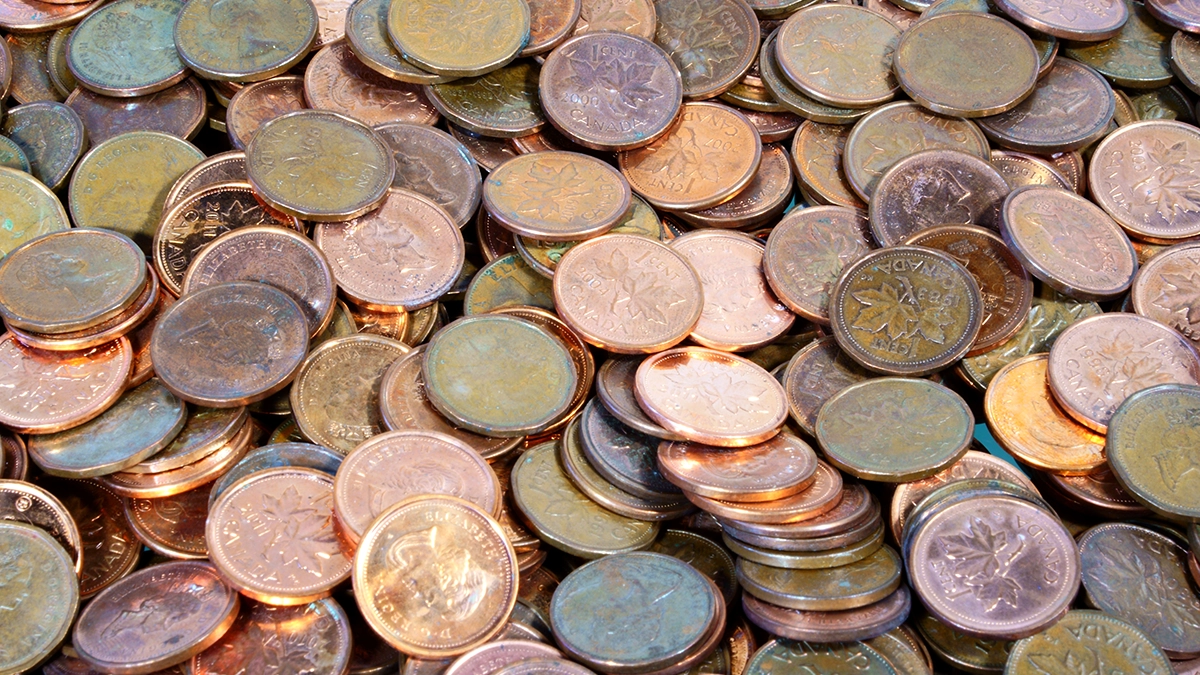
And when Canada announced it would stop making one cent coins in 2011, one of the issues noted by Canadian authorities is that pennies also impose other costs on businesses such as obtaining the coins, the time to count them out, etc.
Public opinion studies of Eurozone citizens have found they have mixed views on these coins. On the one hand, more than 80% of people in recent polls said they favor eliminating them, according to a June 10 article in Coin World, but at the same time, EU citizens are clearly worried that getting rid of the coins will increase inflation, a point which is underscored in the EU report.
Finland and the Netherlands greatly reduced the number of these coins put into circulation years ago, and in those countries transactions are rounded to the nearest five euro cents.
Most economists believe that rounding does not increase inflation. The report states that studies based on the experience in countries that use rounding, including Slovakia, the Netherlands, and Finland, have shown that rounding had only minimal inflationary impacts. However, as was the case when the euro was first implemented, rounding could increase the psychological perception of inflation.
So far the European Commission has discussed the pros and cons of issuing the coins “with business and consumer associations, treasuries, mints, and central banks.”
The next step is to discuss the proposals with stakeholders and Eurozone member states to see if a consensus emerges that could form the basis for a legislative proposal.
The Eurozone was established on January 1, 2002 with 12 members.
Today the Eurozone includes: Austria, Belgium, Cyprus, Estonia, Finland, France, Germany, Greece, Ireland, Italy, Luxembourg, Malta, the Netherlands, Portugal, Slovakia, Slovenia, and Spain.
In addition to the 17 countries that are formal members of the Eurozone, the micro states of Vatican City, Monaco, and San Marino, which are well known for their collector coins, also have agreements to use the euro as their currency. On July 1 Andorra will join that group.
The global financial crisis has resulted in a great deal of pressure on the economies and banking systems of the Eurozone, and Greece in particular has had to seriously consider whether it would be better off leaving the currency union.
But so far that has not happened, and the member states continue to take steps to try to shore up their banking systems and reform their economies.
* * *
This article was revised for context and clarity in September 2025.






Would it not be sensible to announce that the coins will become non-covertible on a certain future date? This way most can be collected back from the public and melted.This would lessen the original cost to make them.Eliminating them would just cause people to still keep them as they would still be convertible.
I think they should phase them out, but keep them as legal tender for the forseable future.