The Boy Who Found a Soviet Spy Message Inside a Nickel Has Died at 86
One ordinary-looking Jefferson nickel concealed a coded Soviet message. Its accidental discovery in Brooklyn helped unravel a Cold War espionage operation and set the stage for one of history’s most famous prisoner exchanges.
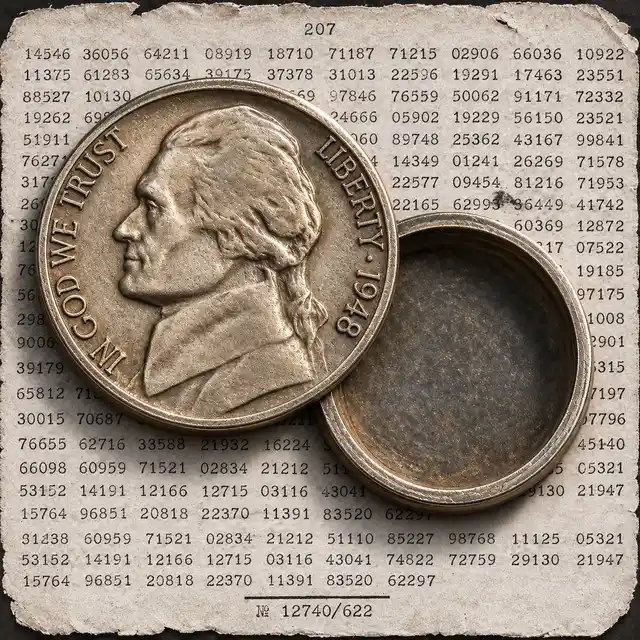
It looked like an ordinary 1948 Jefferson nickel. However, when a Brooklyn newspaper boy dropped it on June 22, 1953, the coin split apart. Inside, he discovered something no coin collector would ever expect: a miniature photograph containing a secret Soviet intelligence message.
That nickel would launch a four-year FBI investigation, expose one of Moscow’s most experienced undercover agents, and help set the stage for a dramatic Cold War prisoner exchange.
The story became famous as the Hollow Nickel Case. Yet the coin itself holds an extraordinary numismatic secret. Its creators combined parts of two different Jefferson nickels, including a reverse from a World War II silver-alloy issue.
A Brooklyn Paperboy Makes an Extraordinary Discovery
On Monday evening, June 22, 1953, Jimmy Bozart was collecting subscription payments for the Brooklyn Eagle. His route took him to an apartment building at 3403 Foster Avenue in Brooklyn.
At one apartment, a customer needed change for a dollar bill. Jimmy lacked enough coins, so he approached two women across the hallway. Together, they provided the necessary change.
After completing the transaction, Jimmy noticed something unusual among his coins. One Jefferson nickel made a different sound. Moreover, it seemed lighter than the others.
Curious, he dropped it.
Instead of bouncing across the floor, the coin separated into two pieces. Inside the hollow compartment rested a tiny photographic image covered with rows of numbers.
Jimmy had stumbled upon a secret communications device that Soviet intelligence had hidden inside American pocket change.
The discovery came during an especially tense moment in the Cold War. Just three days earlier, on June 19, federal authorities had executed Julius and Ethel Rosenberg following their convictions for conspiracy to commit espionage.
However, neither Jimmy nor the police initially understood the significance of his unusual find.
Jimmy told a schoolmate about the coin. The information eventually reached her father, a New York City police officer. On June 24, a police detective mentioned the discovery to an FBI agent.
Two days later, the FBI Laboratory in Washington, D.C., began examining the mysterious nickel.
The 1948 Jefferson Nickel That Wasn’t What It Seemed
For coin collectors, the nickel’s construction adds a fascinating dimension to the story.
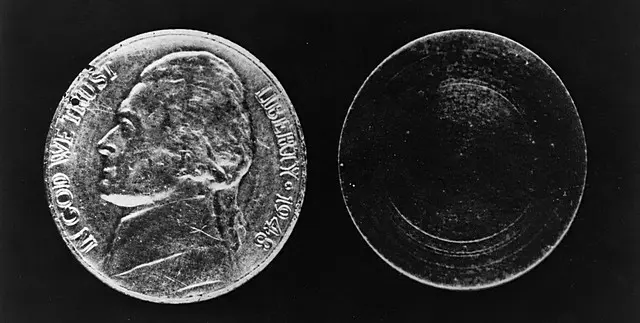
FBI metallurgists determined that its obverse came from a genuine 1948 Jefferson nickel. However, the reverse originated from a different coin struck between 1942 and 1945.
That distinction matters.
During World War II, the United States Mint removed nickel from the five-cent coin’s composition to conserve the strategic metal. Instead, the Mint produced wartime Jefferson nickels with an alloy containing 35% silver, 56% copper, and 9% manganese.
Consequently, the Soviet communications device combined portions of coins with two different metal compositions.
Whoever constructed it carefully hollowed the metal to create a concealed compartment. The outer surfaces retained the appearance of an ordinary Jefferson nickel.
The device also featured another ingenious detail.
A tiny hole pierced the letter R in the word TRUST on the obverse. An operative could insert a needle or similarly pointed tool into the opening and separate the coin’s two sections.
The hole blended into the surrounding lettering. Meanwhile, the coin’s familiar design helped disguise its true purpose.
This was no ordinary altered coin, magic trick, or unusual Mint error. It was a deliberately constructed espionage device.
Hollow Nickel Case: Coin Specifications
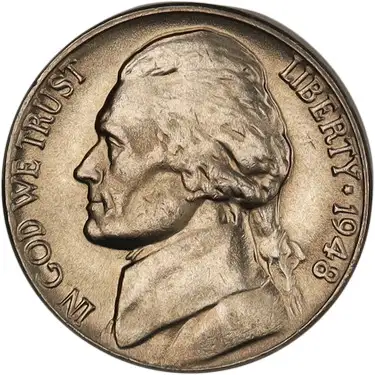
- Denomination: United States five cents
- Coin type: Jefferson nickel
- Designer: Felix Schlag
- Obverse: Genuine 1948 Jefferson nickel, Thomas Jefferson portrait
- Reverse: Jefferson nickel struck during the 1942–1945 wartime silver-alloy period, featuring Monticello
- Standard 1948 composition: 75% copper, 25% nickel
- Wartime reverse composition: 56% copper, 35% silver, 9% manganese
- Standard diameter: 21.21 mm
- Standard weight: 5.00 grams
- Edge: Plain
- Special characteristics: Hollow interior, concealed microphotograph, and a small opening inside the R of TRUST
- Classification: Privately altered composite coin used as a Soviet intelligence concealment device
- Important distinction: The 5.00-gram specification applies to an ordinary Jefferson nickel. The modified spy coin weighed less, according to the discovery account. The FBI’s published history does not establish its exact surviving weight or the specific dates and mintmarks of both original coin components.
Ten Columns of Numbers and Four Years Without an Answer
Inside the nickel, investigators found a microphotograph showing ten columns of typewritten numbers. Most columns contained 21 five-digit groups.
The FBI immediately suspected an encrypted intelligence message.
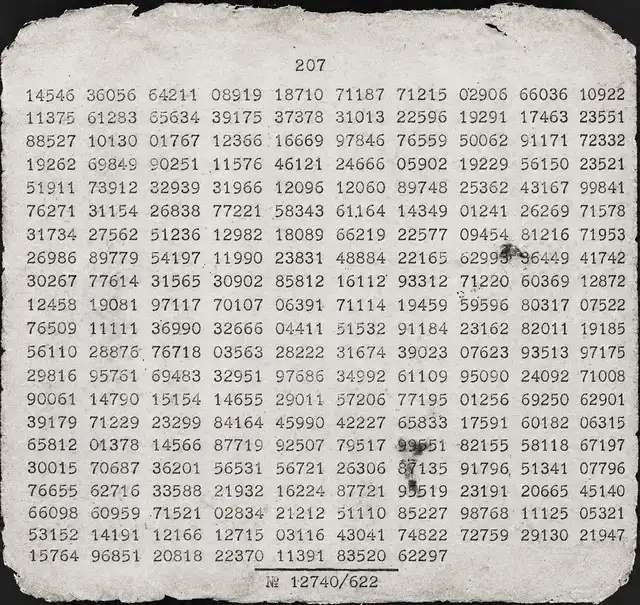
However, identifying the code proved far more difficult than examining the coin.
Investigators interviewed the women who had provided Jimmy’s change. Neither knew anything about the nickel’s unusual construction.
The FBI also contacted novelty dealers and specialists familiar with trick coins. None could explain the device’s origin.
Meanwhile, laboratory experts struggled with the numerical message. They could not identify the typewriter that produced it. Their examination suggested a machine of foreign manufacture.
The investigation continued for nearly four years. Agents examined other hollow coins, modified tokens, and unusual pieces from across the United States.
Still, the message remained a mystery.
The FBI had identified an apparent espionage device. Yet investigators lacked the information necessary to determine who had carried it, who had written the message, or who was supposed to receive it.
Then, in May 1957, an unexpected visitor at the American Embassy in Paris changed everything.
The Soviet Spy Who Became the FBI’s Most Important Witness
His name was Reino Häyhänen.
A lieutenant colonel in Soviet intelligence, Häyhänen had entered the United States in October 1952 under the identity Eugene Nicolai Maki.
Moscow had spent years preparing his cover. His assignment required him to operate secretly in the United States and assist other Soviet intelligence officers.
However, Häyhänen proved an unreliable operative.
His heavy drinking, poor judgment, and repeated security mistakes made him a serious liability. Eventually, his superiors ordered him to return to Moscow.
Häyhänen feared the consequences of returning. Instead, while traveling through Europe, he contacted American officials in Paris and offered to defect.
He arrived back in New York on May 10, 1957. Soon afterward, FBI agents began questioning him about Soviet intelligence operations.
His information quickly transformed the hollow nickel investigation.
Another Hollow Coin Provides the Breakthrough
During their investigation, FBI agents searched Häyhänen’s home in Peekskill, New York.
There, they discovered a hollow Finnish 50-markka coin.
Like Jimmy’s Jefferson nickel, the Finnish piece consisted of two separate coin components. It also featured a tiny opening hidden inside a letter. In this case, the hole appeared in the first letter a of Tasavalta, a Finnish word appearing on the coin.
On May 17, 1957, FBI laboratory specialists examined the Finnish piece and recognized the connection.
Both coins employed essentially the same concealment method.
Häyhänen also described Soviet intelligence’s use of hollow pens, pencils, batteries, screws, and other ordinary-looking containers. Some devices even contained magnets that allowed agents to attach them to concealed metal surfaces.
Moreover, investigators recovered a hollow bolt from a dead drop in Brooklyn’s Prospect Park. A repair crew had unknowingly sealed the hiding place with cement roughly two years earlier.
Now, investigators understood the broader system.
These objects formed part of a clandestine communications network that relied on hiding messages where ordinary Americans would never think to look.
Historians have described Häyhänen’s loss of the nickel as an accidental expenditure. However, investigators never established the complete path that carried it into the Brooklyn women’s change.
The coin had slipped beyond Soviet intelligence’s control.
What the Secret Message Actually Said
With Häyhänen’s knowledge of Soviet cryptographic methods, FBI specialists finally deciphered the nickel’s message.
By June 3, 1957, investigators had recovered its contents.
Surprisingly, the text did not reveal American atomic secrets or describe a military operation.
Instead, Moscow had sent administrative instructions to a newly arrived intelligence officer. The message congratulated him on reaching the United States safely and acknowledged an earlier communication.
It also discussed $3,000 in local currency to help establish his cover identity. Additional instructions addressed photographic materials, encryption procedures, and communication security.
Finally, the message reassured its intended recipient about his family and offered encouragement from his Soviet colleagues.
Investigators concluded that the message apparently belonged to Häyhänen and dated from shortly after his arrival in America.
The revelation answered the central mystery of the hollow nickel.
Yet it also opened a much more important investigation.
Häyhänen could identify the Soviet intelligence officers who had supervised his activities.
One of those men remained in New York.
His code name was Mark.
The Search for Rudolf Ivanovich Abel
Häyhänen explained that an officer known as Mikhail had supervised him from late 1952 until early 1954. The FBI subsequently identified that officer as Mikhail Nikolaevich Svirin, a former Soviet United Nations delegation official.
However, Svirin had already returned to the Soviet Union.
Another officer, Mark, had taken over Häyhänen’s supervision in 1954.
Mark presented a more urgent problem. He operated without diplomatic protection and had spent years building a concealed life in the United States.
Häyhänen described him as an experienced intelligence officer and skilled photographer.
He also recalled visiting a storage area near Fulton and Clark Streets in Brooklyn.
That detail led FBI agents to 252 Fulton Street.
There, an artist and photographer named Emil R. Goldfus maintained a fifth-floor studio.
To neighbors and acquaintances, Goldfus appeared to be a quiet, unremarkable man with artistic interests. In reality, he was a senior Soviet intelligence officer.
FBI agents began watching the building.
On June 13, 1957, surveillance teams followed a man from the studio to the Hotel Latham on East 28th Street in Manhattan. He had registered there under another identity, Martin Collins.
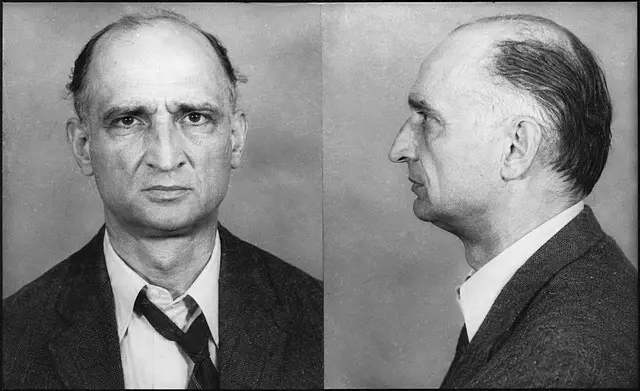
Two days later, investigators showed Häyhänen a photograph of the suspect.
He confirmed that the man was Mark.
On June 21, 1957, federal authorities arrested the suspected Soviet agent.
A Photographer’s Studio Filled With Spy Equipment
Investigators discovered an extensive collection of espionage equipment in the rooms associated with Goldfus.
The items included shortwave radios, cipher materials, miniature photographic equipment, and supplies for producing microdots.
They also found objects that served as concealed storage devices.
Among them were a hollow shaving brush, cuff links, and other modified everyday objects. These containers offered ways to hide messages and intelligence materials without attracting attention.
The evidence revealed the sophistication of the Soviet operation.
Yet the man at its center refused to cooperate with investigators.
Rather than explain his intelligence activities, he identified himself as Rudolf Ivanovich Abel.
That name was another calculated move.
His actual identity was Vilyam Genrikhovich Fisher, also known as William Fisher. Rudolf Abel was the name of a fellow Soviet intelligence officer who had died.
By claiming that identity, Fisher could alert Moscow to his capture through American news coverage without disclosing his true name.
The hollow nickel had helped expose an exceptionally experienced operative. However, the FBI had not convinced him to reveal the secrets he carried.
Conviction, Prison, and an Extraordinary Legal Prediction
The federal government brought Fisher to trial in New York in October 1957.
Häyhänen testified against his former superior, providing information about Soviet intelligence operations and the methods the agents used to exchange messages.
On October 25, the jury convicted Fisher on three conspiracy counts.
His attorney, James B. Donovan, then faced another challenge. His client could receive the death penalty.
Donovan argued against execution. He also offered a remarkable prediction.
The United States might someday capture an opportunity to exchange a living Soviet intelligence officer for an American prisoner held behind the Iron Curtain.
On November 15, 1957, the court imposed a 30-year prison sentence on the most serious count, along with shorter concurrent sentences and fines.
Fisher later challenged his conviction. However, the U.S. Supreme Court upheld it by a 5–4 decision on March 28, 1960.
Only weeks later, an international crisis would make Donovan’s argument look remarkably farsighted.
From a Brooklyn Nickel to the Bridge of Spies
On May 1, 1960, Soviet air defenses shot down a CIA U-2 reconnaissance aircraft near Sverdlovsk in the Soviet Union.
Its pilot, Francis Gary Powers, survived and entered Soviet custody.
The incident created a major diplomatic crisis. It also presented the United States and Soviet Union with an opportunity for a prisoner exchange.
Donovan played an important role in the subsequent negotiations.
On February 10, 1962, American and Soviet representatives met at the Glienicke Bridge, which connected West Berlin with Potsdam in East Germany.
There, they exchanged Rudolf Abel for Francis Gary Powers.
The negotiations also secured the release of American graduate student Frederic Pryor, whom East German authorities had detained. Officials arranged his release at a separate crossing, Checkpoint Charlie.
The exchange became one of the Cold War’s defining moments.
More than five decades later, director Steven Spielberg dramatized the events in his 2015 film Bridge of Spies, starring Tom Hanks as Donovan.
Yet the chain of events that helped bring Abel into American custody began with a humble Jefferson nickel.
Remembering Jimmy Bozart and the Nickel That Changed History
James “Jimmy” Bozart died on October 5, 2026, at age 86, according to an obituary published by Dohanich Ventimiglia Family Funeral Home.
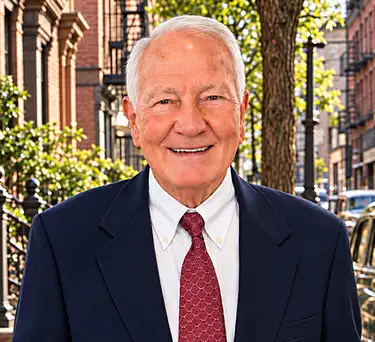
The former Brooklyn paperboy later built a life in business and maintained a wide circle of friends. His obituary remembers him as a generous mentor and loyal friend.
However, his place in history began with a simple observation.
One nickel sounded wrong. It felt too light. Then it fell apart.
Bozart did not decode the Soviet message or identify Rudolf Abel. Professional investigators and a Soviet defector accomplished those tasks years later.
Nevertheless, his curiosity brought a concealed intelligence device to the attention of American authorities.
For numismatists, the Hollow Nickel Case offers a reminder that the history of money extends far beyond mintages, grades, and auction records.
A common 1948 Jefferson nickel became an extraordinary historical artifact because someone transformed it into a secret communications device.
And when it passed into the hands of a Brooklyn teenager, five cents became part of Cold War history.