

A 40-Year Philadelphia Time Capsule Reveals a Lonesome John Error Coin Treasure
A routine search on a digital marketplace led Daniel Sassa to one of the more exciting fresh error-coin finds of the year.
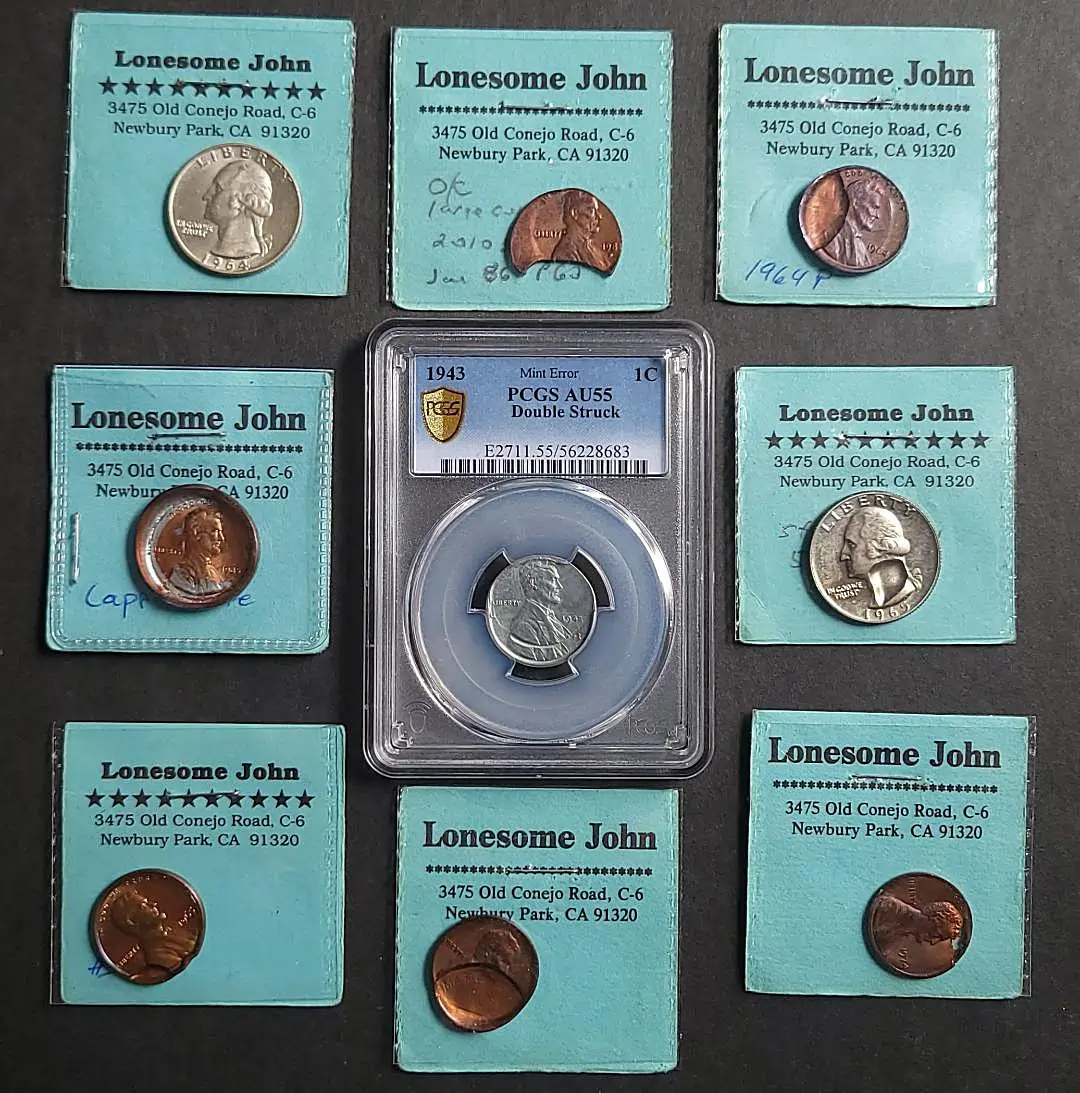
Sassa, a dedicated collector from New Jersey, answered a local inquiry and soon met an older Philadelphia collector. That collector had quietly preserved a major group of mint errors since the early 1980s. More importantly, he had kept many of them in their original blue “Lonesome John” flips.
For error specialists, that detail matters.
These coins did not just survive. They carried a direct paper trail to John Devine, better known in the hobby as Lonesome John. Devine helped shape modern error collecting. He also built one of the best-known mail-order error coin businesses of his era.
“When I first saw what he had kept intact for over forty years, my jaw dropped,” Sassa said. “It wasn’t just the sheer volume of dramatic mint errors. It was the fact that they were still sitting in their original blue Lonesome John flips.”
That moment turned a local meeting into a numismatic time capsule.
A Fresh Error Coin Find With Old-School Pedigree
Mint Error News first reported the discovery as a group of more than 40 raw mint errors. Sassa says the larger Philadelphia group now includes more than 60 Lonesome John error coins, many still housed in Devine’s signature blue flips.
The original Philadelphia collector bought the coins directly from Devine’s historic mail-order service in the early 1980s. Then, he held them for more than four decades.
That long period of private ownership adds to the appeal. Fresh error collections with old invoices, original flips, or early dealer packaging do not surface often. In this case, the flips link the coins to one of the foundational names in the error hobby.
As a result, the coins offer more than dramatic mint mistakes. They preserve a snapshot of the market before third-party grading reshaped the way collectors bought, sold, and certified major errors.
Who Was Lonesome John?

John Devine ranks among the great pioneers of U.S. mint error collecting.
Devine founded the Error Coin Museum. He also helped build the organized error hobby through CONECA, the Combined Organizations of Numismatic Error Collectors of America.
In 1987, CONECA named Devine its first Hall of Fame inductee.
He also became famous for his mail-order business.
At a time when error coins still moved through clubs, shows, mail lists, and dealer networks, Devine brought unusual pieces to a national collector base.
Collectors knew him for dramatic mint errors.
They also knew the blue flips. Therefore, a Lonesome John pedigree still attracts attention today.
CoinWeek wrote a profile on Mr. Devine when he passed away in 2013.
The Star So Far: A 1943 Steel Cent Double Struck on Both Sides
The first major coin Sassa submitted for certification also became the immediate highlight of the find.

The coin is a 1943 Lincoln steel cent with a second strike visible on both the obverse and reverse. Sassa submitted the piece to PCGS. PCGS authenticated it and graded it AU55 Double Struck.
According to Sassa, the coin currently ranks as a Top Pop example for the issue and error type. CoinWeek recommends confirming current population status before publication because population data can change when grading services certify new pieces.
Even without the population claim, the coin stands out.
Major mint errors on 1943 steel cents draw strong collector interest. The reason starts with the coin’s wartime story.
Why 1943 Steel Cents Matter
In 1943, the United States Mint struck Lincoln cents in zinc-coated steel instead of the traditional bronze alloy. The change helped conserve copper during World War II, when the nation needed copper for ammunition, wiring, and other military uses.
The steel cent became a one-year circulating coinage experiment. It looked different. It felt different. It also created problems in commerce. New steel cents looked bright and silvery, so people sometimes confused them with dimes. In addition, the exposed steel along the rim could rust after the zinc coating wore or broke.
Still, the 1943 steel cent became one of the most recognizable U.S. coins of the 20th century.
Common circulated examples remain widely available. However, dramatic errors tell a different story. A major error on a one-year wartime composition carries stronger appeal than a similar error on a routine copper-plated zinc cent.
That is why this double-struck AU55 example matters. It combines three forces collectors understand immediately: Lincoln cents, World War II, and a major mint error.
What Other Errors Came From the Philadelphia Find?
The collection includes several major error types. Sassa reports die caps, clipped planchets, and late-stage brockages among the pieces.
A die cap starts when a struck coin sticks to a die. The trapped coin then strikes other planchets. Over time, it can spread and curl into a shape that resembles a bottle cap.
A clipped planchet occurs before striking. A misfeed in the blanking press leaves part of the blank missing. The coin then enters the press with that missing section.
A brockage forms when a struck coin sticks to a die and transfers a mirrored, recessed image onto the next planchet. Late-stage brockages show the effects of repeated strikes after the stuck coin begins to distort.
These errors appeal to collectors because they show the minting process in motion. They also help explain how modern U.S. coins move from strip to blank, from planchet to strike, and finally into circulation.
Why the Blue Flips Add a Second Story
The coins themselves matter. However, the flips may matter almost as much.
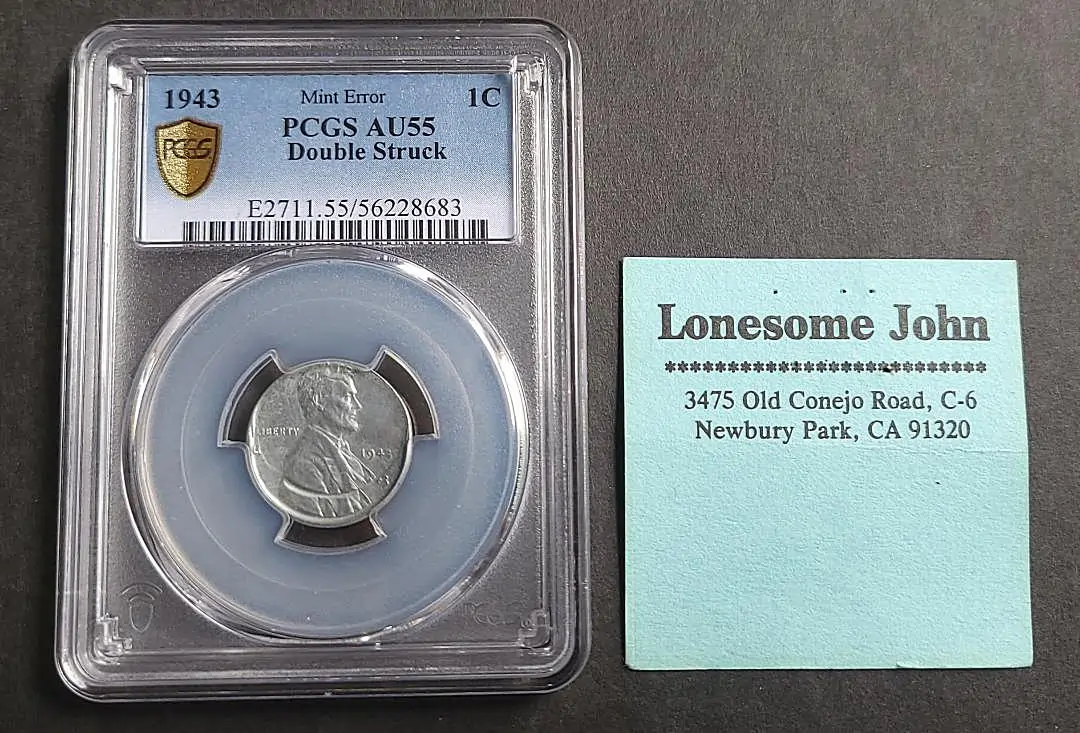
Collectors often talk about “fresh” material. Yet true fresh material needs context. These coins did not simply appear raw in a modern holder. Many still sat in their original Lonesome John flips. That packaging ties the group to Devine’s mail-order era and to the early expansion of organized error collecting.
In other words, the coins tell two stories at once.
First, they document minting mishaps. Second, they document how collectors bought important error coins before today’s online marketplaces, registry sets, and high-resolution certification images.
A New Era for Lincoln Cent Collectors
The timing also gives this discovery extra weight.
The U.S. Mint has suspended production of circulating one-cent coins. However, the Mint says it will continue to strike numismatic collector cents in limited quantities. Therefore, the Lincoln cent has entered a new chapter.
That change does not make common cents rare. Billions still exist. However, it does change the emotional frame around important Lincoln cent errors.
A major 1943 wartime steel cent error now connects two turning points. One came during World War II, when the Mint changed the cent’s metal to conserve copper. The other came when the Mint ended regular circulating cent production after more than two centuries of one-cent coinage.
That bridge gives this AU55 double-struck steel cent a story beyond its grade.
Market Impact and Collector Interest
Sassa notes that common steel cents may trade for modest sums, while major steel cent errors can bring much stronger prices. In his view, serious die caps can exceed $1,500, and rare brockage or double-strike pieces can become centerpiece coins for Lincoln cent and mint error specialists.
CoinWeek adds one caution. Error values depend heavily on the coin’s grade, visual drama, mintmark, certification, and market timing. Therefore, buyers should compare recent auction records and certified populations before placing a value on any single piece.
Still, the collector logic remains clear. Dramatic errors from the 1943 steel cent issue rarely appear with this kind of old hobby pedigree.
What Comes Next?
Sassa plans to submit more coins from the collection for authentication and grading. Additional certified pieces may reveal more about the full scope of the Philadelphia Find.
For now, the AU55 double-struck 1943 steel cent leads the group. It gives collectors a powerful first look at a collection that sat quietly for more than 40 years.
It also reminds the hobby of an old truth. Great coins still hide in private collections, attics, boxes, flips, and envelopes. Sometimes they come with a famous name on the holder. Sometimes they come from a routine local lead.
And sometimes, they bring both.
Editor’s Note
Daniel Sassa discovered this collection of raw mint errors that the original owner purchased decades ago from John Devine, better known as Lonesome John. Mint Error News first shared the find with error collectors. CoinWeek has expanded the story with additional background on Devine, the 1943 steel cent, and the changing market for Lincoln cent errors.
Wow, that’s an amazing double strike error!
It amazes me now how much history was happening around me as I grew up. I surely wish that I would have paid more attention.
Some tremendous examples!
I love learning about “error” coins
OMG,I have a plastic pickle jug full of Cuds,thats my next project,Thanks for the information.
Beautiful piece
I stole a 1932d quarter from his shop in 1982. I was a kid and had good slight of hand. Lol true story
This is the first major steel cent error I have seen – other than the famous wrong-planchet copper strikes. With the switch to steel, there must have been many more examples. Perhaps most were caught at the mint.
I have a few of these coins in my big collection,from 1909 too 1977 and more.looking for buyer for my collection
What an amazing story
How does one NOT love this?
Its only thing in life where mistakes are good.
I have about 50 error coins that i would like to do something with. I can’t find anyone I can get a solid answer from i’ve got quarters that have dye breaks double dyes,mint error cuts,circulation grade.that from what I’ve seen on tv.??? They say dont clean them buyers want original dirty original. Except mine.ha ha.i have pics if anyone interested
What an incredible major mint error to see featured here! As a collector, looking at this 1943 Lincoln “Steel” Cent—a piece already historic as a one-year-only wartime issue minted in zinc-coated steel to save copper—it is fascinating to study such a dramatic Double Strike error. Because the blank failed to eject properly from the coining press, it took a massive second strike from the dies that creates a phenomenal map of the minting mishap. What makes this specific piece an even bigger hobby treasure is its newly revealed pedigree as a legendary “Lonesome John” discovery coin. On the obverse, the secondary, misaligned strike completely transforms the portrait by overlaying a prominent “ghost profile” right along Lincoln’s nose and forehead, while the distinct outline of the top of Lincoln’s head from the first strike and a beautifully faint, ghost-like “LIBERTY” remain visible alongside both a full date and a partial date struck in sharp, high relief on the right side. Flipping to the reverse, the secondary strike clearly shifted south, causing the phrases “E PLURIBUS UNUM” and “ONE CENT” to boldly stamp over themselves in a heavily staggered pattern near the top rim, where a sharp eye can even catch the partial relief of the “E” in “ONE” preserved from that very first strike. Finding a major wartime error like this safely certified at an impressive AU55 grade is an absolute treat for numismatists, serving as a stunning testament to the chaotic speed of WWII-era coin production.
I have a 1940s penny from a small collection my grandfather left me,and I can remember him telling me the story when I was kid.He had gotten it from a San Francisco mint employee he befriended going off to war in 1941. I remember he told me his name was Joseph,and all he talked about was wanting to kill as many Germans as he possibly could,and trained as a tank operator..my grandpa was a cook on one of the ships…before leaving he handed my grandfather a penny that he had engraved on both sides with tank tracks. My grandfather told him he couldn’t take his lucky charm,and Joseph told him … don’t worry…he had made a couple of them.
I was wondering if anyone may have one,or have seen one?!
1976D Lincoln wheat memorial penny my profile [email protected] I don’t have website please help me olso have 1999P quarter Connecticut George Washington phone number+966572094856 Saudia Arabia