


The 1856 Flying Eagle Pattern Cent That Sold Congress on a New Coin
The 1856 Flying Eagle cent ranks among the most famous small cents in American numismatics. It also ranks among the most misunderstood.
Collectors often call it the first year of the Flying Eagle cent series. However, Congress did not authorize the new small cent for circulation until 1857. Therefore, the 1856 Flying Eagle cent began life as a pattern and presentation issue. Even so, collectors have embraced it for more than 160 years as the key to the short Flying Eagle cent series.
That contradiction gives the coin its power. The 1856 Flying Eagle cent sits between two worlds. It ended the large cent era. It introduced the small cent. It helped sell Congress on a new coinage format. Then, almost immediately, it exposed the technical flaws that doomed the Flying Eagle design after only three dated years.
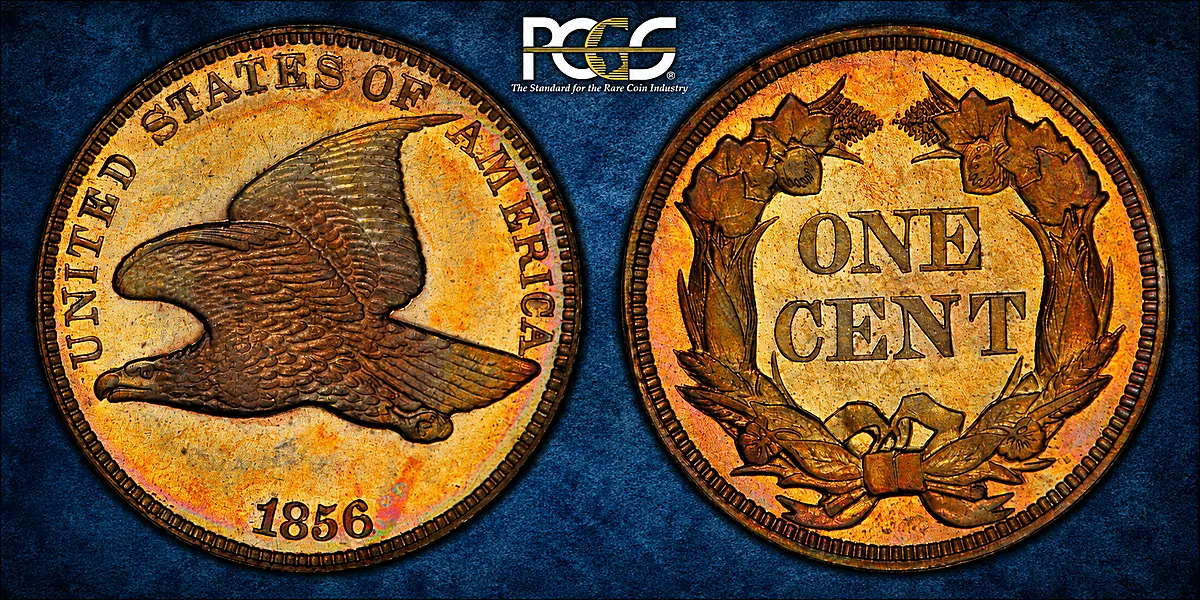
Why the Mint Needed a Smaller Cent
By the early 1850s, the old large cent had become a problem. The coin contained pure copper and measured much larger than the modern cent. In addition, the rising cost of copper made the denomination expensive and awkward to produce.
The United States Mint had already explored smaller cents for several years. Experimental small-cent patterns appeared as early as 1850. However, the Mint still needed the right combination of size, weight, alloy, and design.
Mint Director James Ross Snowden pushed for a smaller cent. The Mint also studied copper-nickel alloys. The final format used 88% copper and 12% nickel. The new cent weighed about 72 grains, or roughly 4.67 to 4.70 grams, and measured 19 millimeters.
This alloy mattered. Nickel gave the coin a pale color. As a result, Americans later called these copper-nickel cents “white cents.” More importantly, the harder alloy helped create a durable small cent. Yet that same hardness created striking problems almost at once.
James B. Longacre’s Flying Eagle Design

Chief Engraver James B. Longacre created the Flying Eagle cent design. However, he did not invent every element from scratch.
The eagle in flight drew inspiration from Christian Gobrecht’s earlier silver dollar work. The reverse wreath also had roots in Longacre’s gold dollar and three-dollar gold designs. The result looked fresh to the public, but the design carried deep Mint DNA.
The obverse shows an eagle flying left. UNITED STATES OF AMERICA arcs above. The date sits below. The reverse places ONE CENT within an agricultural wreath. The wreath includes crops that symbolized the American economy, including corn, wheat, cotton, and tobacco.
The design looked bold. It also looked distinctly American. Therefore, it gave Snowden and the Mint a powerful sales tool.
The 1856 Cent That Sold Congress
In 1856, the Philadelphia Mint struck examples of the Flying Eagle cent for distribution to influential people. These coins helped promote the pending small-cent legislation. Heritage Auctions notes that the Mint struck close to 1,000 examples of Longacre’s Flying Eagle design type for this purpose.
The most important group centers on the Snow-3 die marriage. Specialist Rick Snow has suggested that Snow-3 may include most or all of the 634 specimens originally distributed to Congress. Those coins helped lawmakers see the new cent, hold it, and understand why the country needed it.
That physical experience mattered. America still used large cents and old foreign silver in commerce. The small cent promised a modern solution. Then, in 1857, Congress authorized the new cent and abolished the half cent.
The change created a public event. People exchanged old copper cents and worn foreign silver for the new small cents. At the Philadelphia Mint, a booth even handled exchanges. Banks distributed 1857 Flying Eagle cents in $5 cloth bags.
Then a remarkable thing happened. Nostalgia for the old large cents helped fuel a new collector culture. The 1856 Flying Eagle cent quickly became the trophy coin of the new small-cent era. According to Rick Snow, demand became so intense by the late 1850s that examples reached $2 each. That was an astonishing price for a one-cent coin.
Why the Flying Eagle Cent Lasted Only Three Years
The Flying Eagle cent carries dates from 1856 through 1858. However, only the 1857 and 1858 issues entered regular circulation. In practical terms, the design lasted just two circulation years.

The problem came from the design and the metal.
The copper-nickel alloy struck harder than bronze. In addition, the eagle’s high points faced heavy reverse design elements. Metal could not flow well into both sides at once. Therefore, many coins show weakness on the eagle’s breast, head, tail, and wing tips.
The Mint tried to fix the problem. In 1858, it modified lettering and experimented with new patterns. Yet the Flying Eagle motif still created trouble. So, in 1859, the Mint replaced it with Longacre’s Indian Head cent.
That change did not end copper-nickel cents. The Indian Head cent used the same basic copper-nickel alloy through early 1864. However, the Flying Eagle design itself had failed the Mint’s production needs.
The Proof vs. Mint State Debate
The 1856 Flying Eagle cent creates one of the great format debates in U.S. small cents.
PCGS and NGC generally certify many 1856 Flying Eagle cents as Proofs. That makes sense for coins with reflective fields and special handling. However, Snow-3 examples complicate the issue.
Walter Breen’s 1977 research placed Snow-3 early in the sequence. He called it Die Pair #2 and described examples from the dies as “usually non-proofs, proofs rare.” Later, Rick Snow refined the die-pair system and strengthened Snow-3’s status as a major original issue.
Q. David Bowers also addressed the question in his 1996 guide to Flying Eagle and Indian cents. Grading experts gave opinions on which 1856 varieties qualified as Proofs and which did not. They did not reach a consensus.
That lack of consensus still matters. It explains why an 1856 Flying Eagle cent can show Prooflike fields and still qualify, in the eyes of specialists, as a circulation strike.
Snow’s view gives collectors the key. Many Snow-3 coins show non-Proof traits. They may show weak breast feathers, rounded leaves, and satiny surfaces. Early die states can still show flashy, Prooflike fields. In other words, surface reflectivity alone does not settle the question.
Snow-3: The Congressional Die Pair
Snow-3 has become the star die marriage for many advanced collectors.
The diagnostic feature appears in the date. Collectors can identify Snow-3 by repunching on the 5. Heritage descriptions note repunching on the left side or upright of the 5, sometimes described as southwest repunching.
The die pair matters because specialists link it to the original 1856 distribution period. It may represent the coins struck for Congress. It may also represent trial press work at normal speed. That point makes sense. The Mint had to test a new size, a new alloy, and a new design before launch.
Therefore, Snow-3 examples often tell two stories at once. They can look refined. Yet they can also show the practical weakness of a coin struck on production equipment.
This is why Snow-3 commands a premium. It offers the strongest connection to the political birth of the small cent.
The Simpson PR67+ Snow-3: A Record Proof Designation
One of the most important modern auction records belongs to the 1856 Snow-3 Flying Eagle cent graded PR67+ by PCGS and approved by CAC. The coin, ex Bob R. Simpson, sold through Heritage on November 21, 2024, for $312,000. The same coin had sold through Heritage on September 17, 2020, for $240,000.
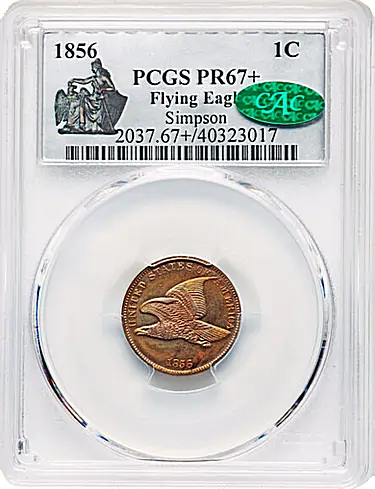
PCGS certified the coin with a Proof designation. Its PCGS certification number is 40323017. Heritage described it as the single finest 1856 Flying Eagle cent seen by PCGS at the time of cataloging. Heritage also noted that PCGS CoinFacts pictured the coin.
The coin shows why the Proof question can get complicated. Heritage described flashy, Prooflike fields and moderately frosted devices.
Those qualities suggest an early impression from the dies. Yet the breast feathers show slight rounding, a characteristic that specialists often associate with original Snow-3 strikings.
The color also lifts the coin beyond a technical discussion. Heritage described bronze-gold surfaces with accents of copper-orange, magenta, powder-blue, and mint-green. CAC confirmed the high-end quality within the grade.
As of Heritage’s August 2024 population reference, PCGS reported two examples in PR67, including one in PR67+, with none finer. CAC reported one in PR67 and none finer.
That coin now stands as a landmark for the Proof-designation side of the market.
The MS66 Snow-3 Coins: Original Circulation Strike Royalty
The Mint State side of the debate carries equal importance.
A Snow-3 1856 Flying Eagle cent graded MS66 by PCGS sold through Heritage on November 21, 2024, for $192,000. It carried an old PCGS certification number of 09949371. Heritage described it as an original 1856 circulation strike and tied for finest certified.
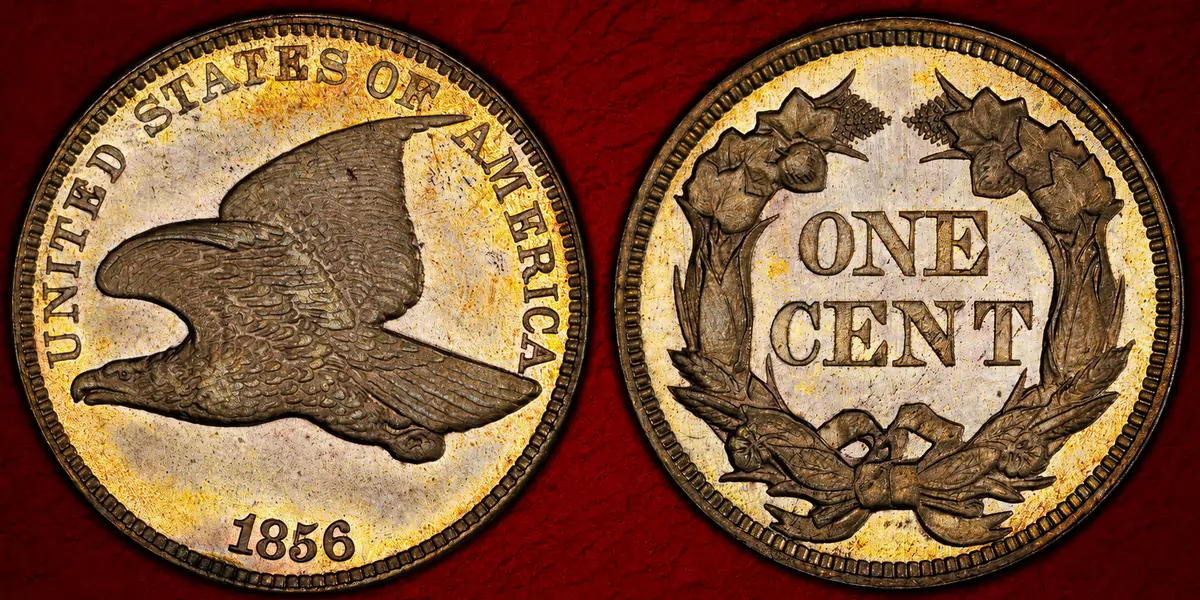
This coin shows the classic Snow-3 Mint State profile. It has slight weakness at the highest breast feathers and at the eagle’s left wingtip. It also shows Prooflike tendencies at the obverse margins and across the reverse. However, satiny surfaces support its non-Proof status.
Heritage also emphasized its clean honey-brown surfaces. The catalog noted no noticeable marks or blemishes. That matters because high-grade original Snow-3 circulation strikes rank as rare as the great Proofs.
The coin also carried a notable pedigree. It came from the Joseph P. Gorrell Collection, offered by Heritage at the 2003 FUN Signature Sale, and later from The Greensboro Collection, Part XI.
The Eagle Eye MS66 Snow-3: A Landmark Photo Seal Coin
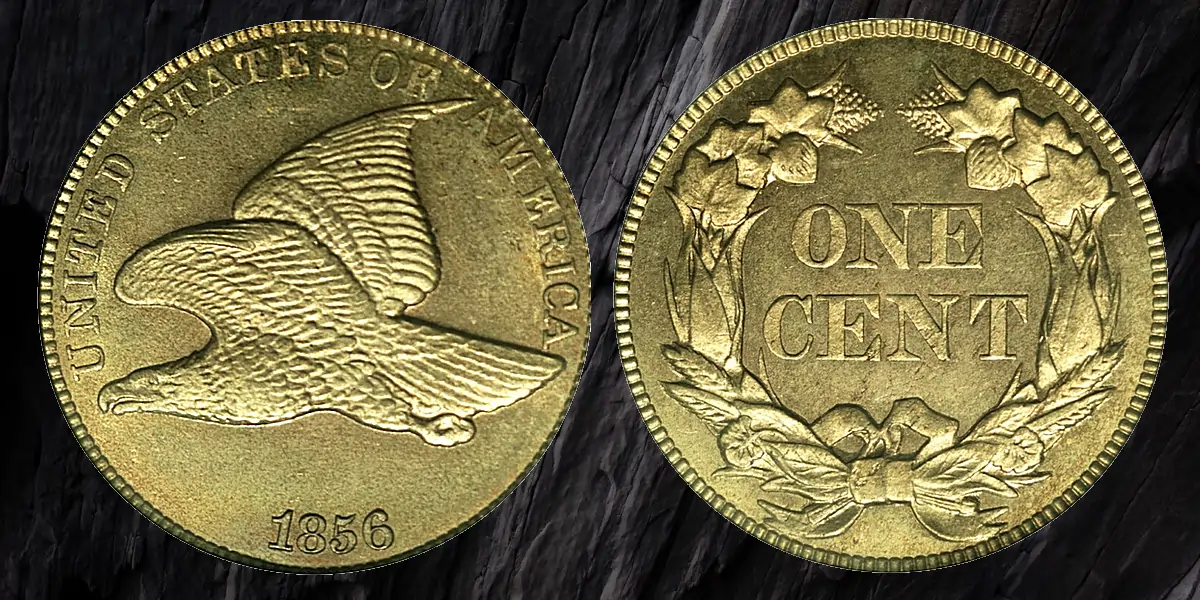
Another great Snow-3 MS66 appeared in Heritage’s January 7, 2004 sale. It realized $172,500. PCGS certified it as MS66, and Rick Snow attributed it as Snow-3 on the Eagle Eye Photo Seal. Its PCGS certification number was 81467176.
At that time, Heritage reported only two 1856 Flying Eagle cents graded MS66 by PCGS. The other was the Paul R. Gougelman example, a Snow-5 coin that sold for $83,375 in Superior’s June 2000 sale.
The Eagle Eye coin held special importance for another reason. Heritage described it as the first coin photo sealed by Eagle Eye during the initial promotion of that second-opinion service.
The coin showed the same traits that specialists expect from a Snow-3 Mint State example. It displayed satiny surfaces, honey-brown color, and slight striking incompleteness at the highest breast feathers and left wing tips. In that case, weakness became evidence. It supported the coin’s status as a true business strike rather than a Proof.
Originals, Restrikes, and the Collector Premium
The 1856 Flying Eagle cent did not end with the congressional distribution.
The Mint struck other 1856-dated examples later in the 1850s and even into the 1870s. Collectors often classify the earliest Snow-3 coins as “originals.” They often call later pieces “restrikes.” Snow-9 appears more often than Snow-3 and tends to represent the more commonly encountered later Proof-style coins.
This distinction drives market behavior. Collectors want the coin closest to the moment of decision. Snow-3 offers that connection. It links the buyer to Congress, the Mint’s press trials, and the transition from large copper cents to the first federal small cents.
That is why Snow-3 has become more than a die marriage. It has become the historical core of the issue.
Why the 1856 Flying Eagle Cent Still Matters
The 1856 Flying Eagle cent changed American coinage before it ever entered regular circulation.
It helped convince Congress to approve the small cent. It helped end the large cent and the half cent. It also helped trigger a wave of collector interest in obsolete copper coins. In that sense, the coin did more than introduce a new denomination format. It helped create the modern American coin hobby.
Yet its own design could not survive. The hard copper-nickel alloy and difficult relief created weak strikes and production problems. The Mint moved on after 1858. The Indian Head cent took over in 1859.
Still, the Flying Eagle cent left a legacy far larger than its short run suggests. It represents a national turning point. It captures a Mint experiment in real time. It also forces collectors to study more than the label.
Proof or Mint State? Original or restrike? Snow-3 or Snow-9? Those questions keep the 1856 Flying Eagle cent alive.
That is the magic of the coin. It is not just rare. It is unresolved, debated, and deeply connected to the moment when America’s cent became modern.
1856 Flying Eagle Cent Specifications
- Designer: James B. Longacre
- Mint: Philadelphia
- Composition: 88% copper, 12% nickel
- Weight: About 4.67 to 4.70 grams
- Diameter: 19 millimeters
- Edge: Plain
- Status: Pattern and presentation issue; collected as the key date of the Flying Eagle cent series
- Major specialist variety: Snow-3
- Snow-3 diagnostic: Repunching on the 5 in the date






Very informative article on the 1856 Flying Eagle cent.
Always interesting to read how things that are part of everyday life for my entire life, were not always that way – this being the prototype of our current penny.
I have always liked the design of flying eagle. Should have been in production longer.
As always a very interesting article from CW
This is a very nicely designed coin. It is very rich in history with the flying eagle and all the symbols.
Having an 1856 Pattern Flying Eagle Cent would be a dream come true. History….Rarity….Value….It has it all!!!
Wonderful informative Article. The 1856 Pattern Flying Eagle Cent is a Classic Rarity on everyone’s Want List.
Interesting to learn about the development of the flying eagle cent. I possess an 1858 eagle but did not know it’s history.
When the 1856 Flying Eagle cent came out, the hobby of coin collecting in the US received a major boost.
Proof or Mint State? Original or restrike? Snow-3 or Snow-9? The collector has to decide which way to go. Rarity or Beauty. I choose BEAUTY.