


What Are Proof-Only Regular Issue Coins? Here’s What You Need to Know
Let’s get clear before diving in. A Proof-Only Regular Issue Coin must meet four key criteria, with no exceptions.
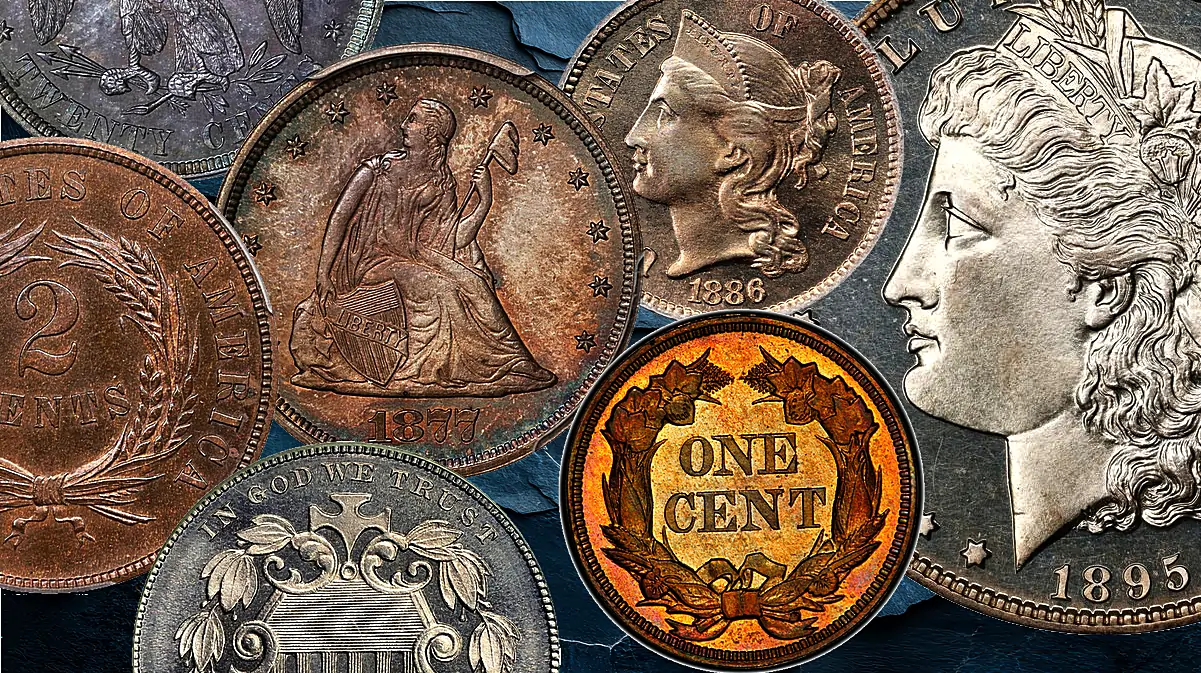
It must:
- Belong to a standard circulating coin series
- Come from an official U.S. Mint production
- Appear only in proof format for that specific year
- Be released for public acquisition
It can not:
- Be a commemorative, bullion coin, or pattern
- Be an unauthorized strike (like the 1913 Liberty Nickel)
- Have both business and proof strikes in that year
That’s the bar we have set for this collecting stategy. Only eight coins minted before 1964 meet it. Each one carries weight, tells a story, and demands respect. Let’s break them down.
1856 Flying Eagle Cent
America’s First Small Cent, and It Soars in Demand

The Mint scrapped bulky large cents and introduced the Flying Eagle Cent in 1856. This coin marked a bold transition to a copper-nickel small cent.
Although technically a pattern, the Mint struck 1,500–2,500 coins, sent them to lawmakers and collectors, and sparked a new era.
This coin defines crossover status. Collectors treat it as the first regular-issue small cent because its reach and impact made it legendary.
Why it matters: No circulation strikes exist. Every example tells the origin story of America’s modern cent.
1873 Two-Cent Piece (Closed 3)
The Final Breath of a Forgotten Denomination

The two-cent piece faded out in 1873. The Mint struck just 600 to 1,100 proofs, no business strikes.
Why did it disappear? Utility had vanished, and other denominations had taken over its role. Still, the Mint gave collectors one last chance to own it.
This issue serves as the coin’s eulogy. It wraps up the shortest denomination in U.S. coinage with quiet dignity, and extreme rarity.
Why it matters: Only the Closed 3 variety exists. Completing a two-cent collection starts, and ends, here.
1877 Shield Nickel
The Nickel That Skipped Circulation Entirely
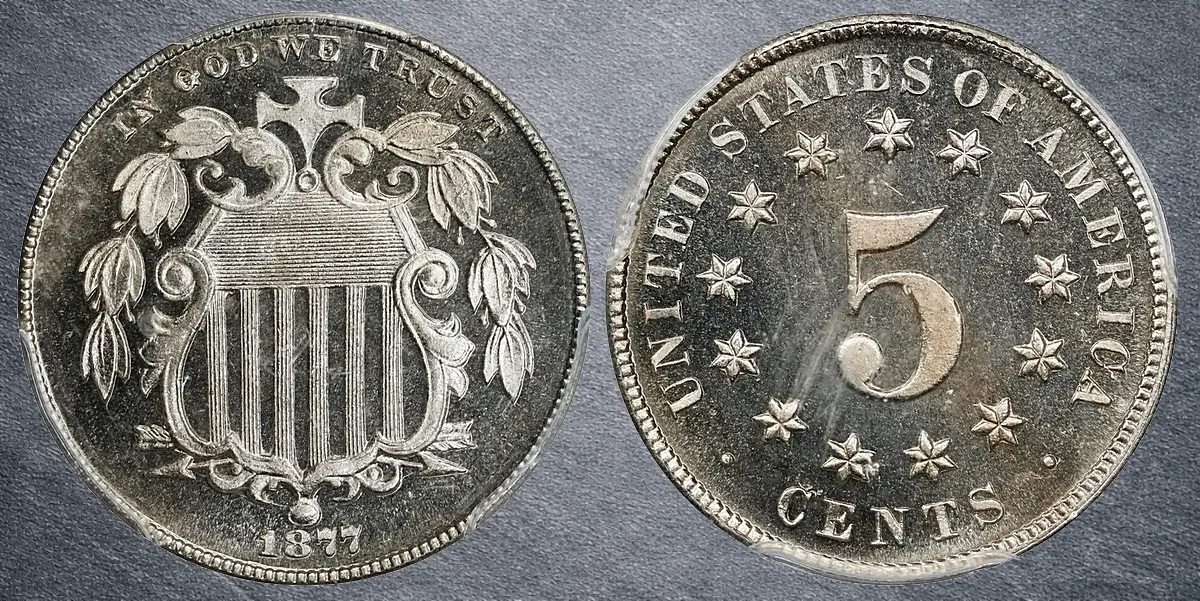
The Mint made a sharp decision in 1877: skip business strikes and issue just 900 proofs of the Shield nickel.
That decision turned this coin into a titan. It doesn’t just fill a slot, it anchors an entire series.
Collectors chase it for its significance. You won’t finish a Shield nickel set without facing this gatekeeper.
Why it matters: One of the lowest proof mintages in U.S. history. No Shield nickel collector skips it.
1878 Shield Nickel
The Grand Finale Before the V Nickel Era

In 1878, the Shield nickel took its final bow. The Mint struck only proofs, around 2,350 total, and closed the book on the series.
This wasn’t just another year, it marked the end of a design and the start of something new. The Liberty Head “V” nickel took over five years later.
Collectors appreciate the 1878 not only for its rarity but also for its clean, sharp strikes and rich luster.
Why it matters: You’re holding the last word in Shield nickel history, crisp, rare, and beautifully preserved.
1877 Twenty-Cent Piece
The Denomination That Disappeared Overnight
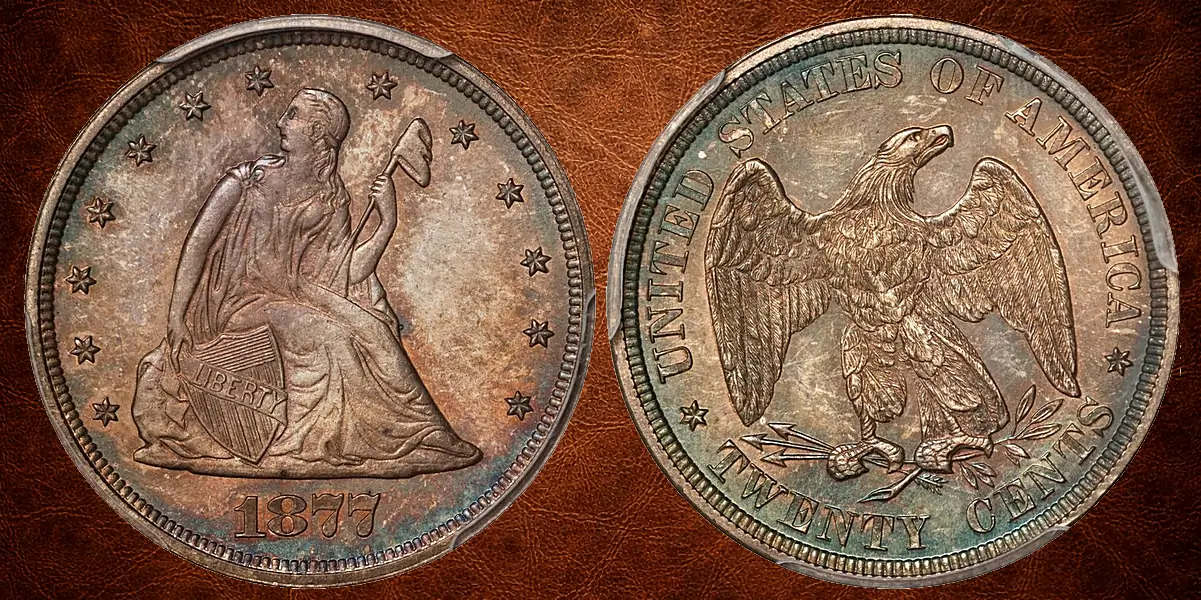
The twenty-cent piece bombed in circulation. Americans didn’t want it. By 1877, the Mint halted business strikes and released only 350 proofs.
That tiny mintage catapulted the coin to legendary status. Today, it ranks among the rarest of all regular issue U.S. coins.
Its deep mirrors and full strikes make every surviving example a visual treat.
Why it matters: Ultra-low mintage. Collectors compete fiercely for every known specimen.
1878 Twenty-Cent Piece
An Encore Strike That Ended It All

One year later, the Mint gave the twenty-cent piece one last appearance. It struck only 600 proofs, then killed the denomination for good.
Collectors often overlook the 1878 in favor of the 1877. Big mistake. It’s rarer than most realize and features superb eye appeal.
Its clean devices and frosty mirrors make it a showcase coin.
Why it matters: The series ended here. No more twenty-cent coins ever followed.
1886 Three-Cent Nickel
The Penultimate Strike, Proof-Only and Pristine
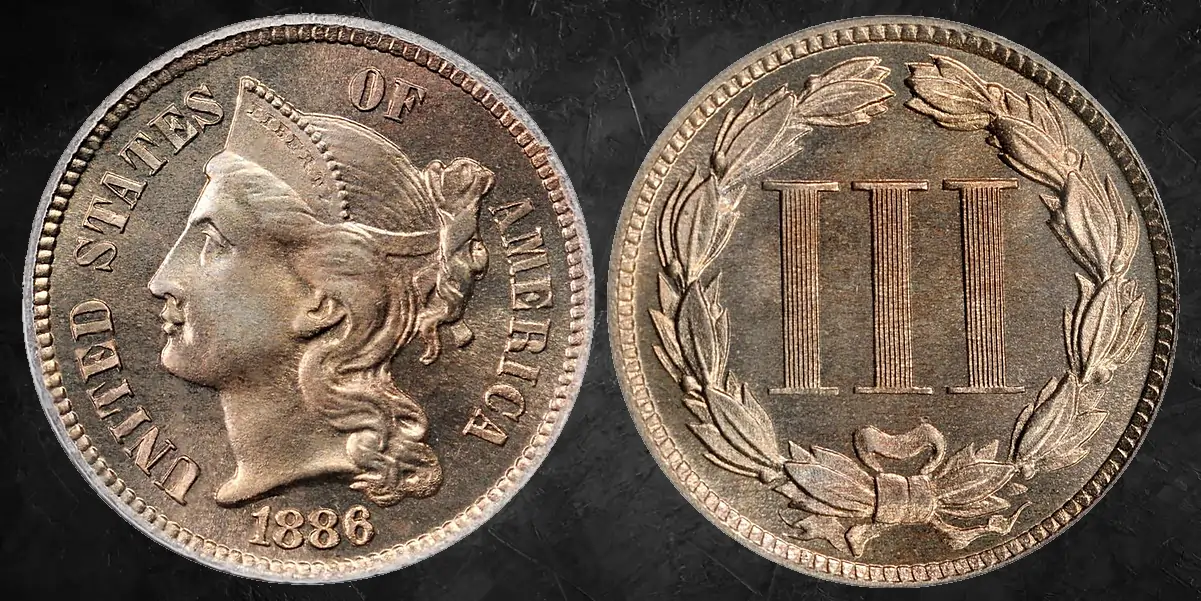
The three-cent nickel had one foot in the grave by 1886. The Mint knew it. That year, it struck 4,290 proofs, skipping circulation entirely.
Most collectors miss this coin’s proof-only status because of its modest mintage. But smart buyers know this is a sleeper key.
It’s accessible in lower grades but stunning in PR-65 or higher.
Why it matters: Proof-only, official, and stunning. Every advanced type set needs it.
1895 Morgan Dollar (Philadelphia)
The Crown Jewel of Morgan Dollars

Ask Morgan collectors their holy grail. They’ll all say: 1895 Philly. The Mint recorded 12,000 business strikes, but none surfaced. All 880 known examples came as proofs.
Why? Most likely, the Mint melted the business strikes under the Pittman Act. That twist launched the 1895 into numismatic stardom.
This coin completes the Morgan dollar series. Without it, your set stays unfinished.
Why it matters: It reigns as the proof-only regular issue silver dollar, and one of America’s most valuable coins.
Final Thoughts: These Eight Coins Wrote the Book on Rarity
Each of these coins came out of transition, decline, or innovation. The Mint made them for collectors, but not as commemoratives. These were real coins from real series, just never made for daily use.
They aren’t optional. They’re essential.
If your goal is to build a U.S. collection that tells the full story, start here. These eight coins capture the quiet moments where history changed, denominations died, and designs faded, leaving behind only proofs.
Coins That Don’t Make the Cut (And Why) ….
- 1884 & 1885 Trade Dollars Unauthorized, clandestine issues
- 1913 Liberty Nickel Fantasy piece, not officially sanctioned
- 1965–67 SMS coins Special finish, not proofs
- Modern commemoratives Not regular circulating series





Wonderful set of coins. If only I could afford them.
Great coins, something to look at for times past , would be fun to
Have ability to travel backwards in time to acquire anyone of
These, and returning to present with small fortune?
Such interesting coins. Never knew that the U.S. had 2 and 3-center pieces.
Gotta get that Morgan somehow!
Interesting article.
very informative article
The flying eagle cent is perfect
Great and enlightening article! I love the history of our coins and appreciate learning all I can. Owning one of these would be amazing!
I’m guessing these are VERY hard to come by.
Best coin ever made is the flying eagle. thanks
Awesome details.
High current silver prices are causing some dealers to peg proof coins at or very near spot, but not these I bet.
Love the old designs
I learned a lot to keep an eye out for
I’ve had 2 of these
Neat article. Thanks.
Out of my price range.
What a set of coins!
Love them, but I don’t think I have to worry about ever having one.