


by CoinWeek…
The field of numismatics, the study and collection of currency, is a discipline driven by a unique blend of history, artistry, and the timeless thrill of discovery. While the vast majority of U.S. coins serve their utilitarian purpose and hold only their face value, a select few have transcended their monetary function to become legendary artifacts. These pieces, whose stories are steeped in historical context, political controversy, and accidental creation, have captivated the public imagination.
The resulting widespread fascination has propelled them into a pantheon of American numismatic icons. In this article, CoinWeek has assembled the ten most popular U.S. coins to illuminate the profound narratives that underpin their enduring appeal.
Accidental Legends: Anomaly, Error, and Narrative
Rarity is not always intentional. Sometimes, the most famous coins come about due to improbable circumstances. Part of the enduring popularity of these pieces is the potential, no matter how remote, that additional examples will turn up in change or in estate sales, or hidden collections.
The 1943 Copper Lincoln Penny: A Wartime Anomaly of Immense Value

The story of the 1943 Copper Lincoln Penny begins not at the mint but on the far-flung battlefields of World War II. During this period, copper was a vital material for war supplies, particularly for the production of shell casings. To conserve this strategic metal, the United States Mint shifted the composition of the one-cent coin from its traditional copper alloy to a zinc-coated steel planchet. This change, authorized by a 1942 law, resulted in the familiar gray “steelies” of 1943, with over a billion minted across Philadelphia, Denver, and San Francisco.
The error that created one of the most famous coins in numismatic history was a simple, yet profoundly consequential, mechanical oversight. A few leftover copper planchets from the previous year’s production were mistakenly left in the tote bins and fed into the coining presses alongside the new steel blanks. This accidental occurrence created a handful of off-metal errors that were visually distinct from the standard issue. Their presence went largely undetected until they found their way into circulation, instantly becoming one of the rarest and most sought-after coins in American history.
Fewer than 20 examples of the 1943 copper penny are known to exist. Estimates confirm approximately 15 to 20 from the Philadelphia mint, six from San Francisco, and a single, unique coin from the Denver Mint. The narrative surrounding this coin is as valuable as the coin itself. The legend of the first confirmed discovery by a 14-year-old collector in 1944 sparked a nationwide treasure hunt. This was followed by decades of denial from the U.S. Mint, which maintained that such coins did not exist. The government’s eventual admission in the 1960s only served to deepen the coin’s mystique. Public fascination was also fueled by a persistent rumor that the Ford Motor Company was offering a new car in exchange for a genuine 1943 copper penny, a legend that, while unsubstantiated, transformed the hunt for this coin into a national treasure hunt that transcended the traditional numismatic community.
The market for this coin reflects its legendary status. The unique 1943-D (Denver) copper penny holds the auction record for the series, selling for $1.7 million in 2010 and in 2021 for $840,000.
A 1943-S (San Francisco) copper cent, graded PCGS MS63, recently sold for $500,000, while a Mint State Red example is valued at over $1.5 million.
The widespread public knowledge of this value has paradoxically created a thriving market for counterfeits. Authentication of a 1943 copper cent is critical, as many fakes are created by copper-plating a steel cent or by altering the dates of 1945, 1948, or 1949 pennies. The easiest way to spot an altered coin is to use a magnet; the steel coin will stick to it, whereas the copper one will not.
The 1943 Copper Cent and the unusual 1943 Steel Cent have played a huge role in popularizing the collecting of Lincoln Cents for generations. The closest most collectors will come to a genuine copper strike is on display at a coin show or in a museum. As for the Steel version? Uncirculated examples are plentiful and only cost a few dollars.
The 1937-D “3-Legged” Buffalo Nickel: An Accidental Masterpiece of the Mint
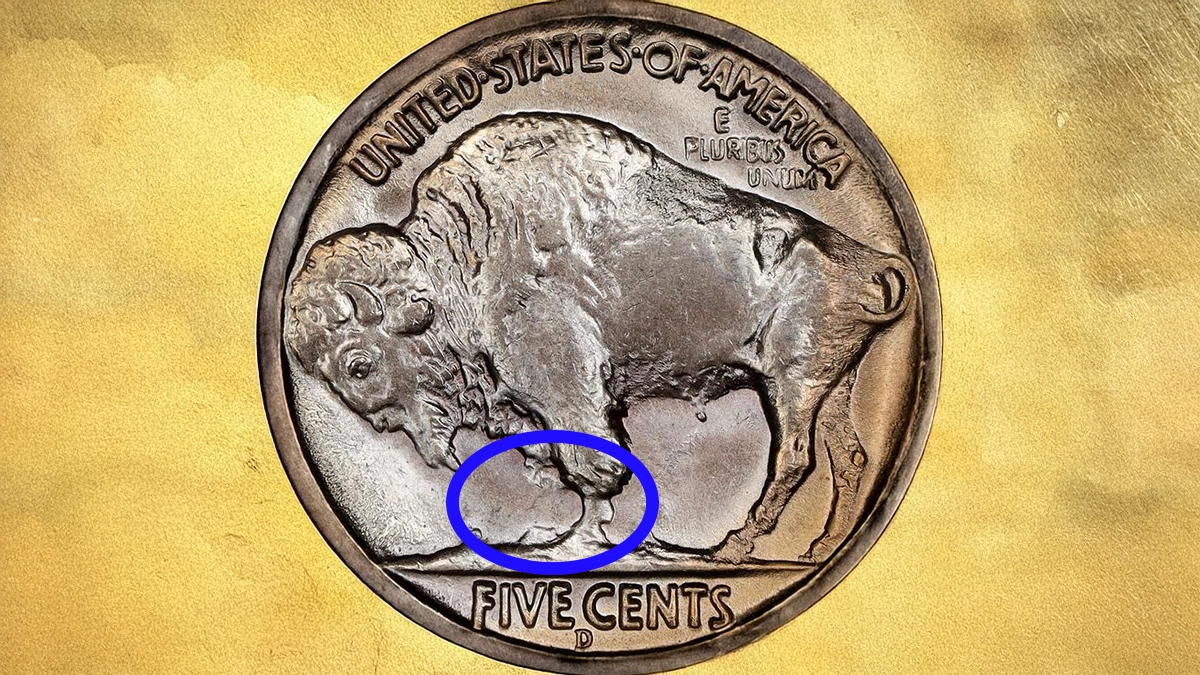
The 1937-D “3-Legged” Buffalo Nickel is a prime example of how human error and the die repair process can create a numismatic icon. This famous error coin was created at the Denver Mint due to a die clash, an event where the obverse and reverse dies of the coin press collided without a blank planchet between them. Instead of replacing the damaged dies, a mint employee, under pressure to keep production going, attempted to salvage them by using an emery stick to polish away the clash marks. Die repairs like this are not unusual at America’s money factories. In doing so, he accidentally polished away the front right leg of the buffalo on the reverse die. The accident created the illusion of a three-legged buffalo, and all coins struck from this die thereafter carried this distinctive error.
The fame of the three-legged nickel is not limited to dedicated collectors; it is recognized by “many non-collectors” as well. This widespread recognition, which is a primary driver of its public interest and search volume, also created a strong market for counterfeits and altered versions of regular 1937-D nickels. Therefore, professional certification is paramount for this coin. Authentic specimens can be identified by key markers, such as a “mushy” or weak appearance on the bison’s belly due to the over-polishing, as well as the clear, well-defined Denver “D” mintmark.
The value of the coin varies by condition, with uncirculated specimens fetching six-figure prices. A PCGS MS66+ example sold for nearly $85,000 in a 2021 auction, demonstrating strong market demand for museum-quality pieces. Circulated examples sell for about $1,000.
The appeal of this era of five-cent coin extends far beyond the famous 1937-D Three-Legged Nickel. James Earle Fraser’s Buffalo design is one of the most iconic coins in U.S. history and is a collector favorite!
Part II: American Icons of Numismatic & Historical Significance
Some coins become legends due to their profound connection to American history, exceptional artistry, or their foundational role in the collecting world.
The 1913 Liberty Head Nickel: The Coin That Shouldn’t Exist
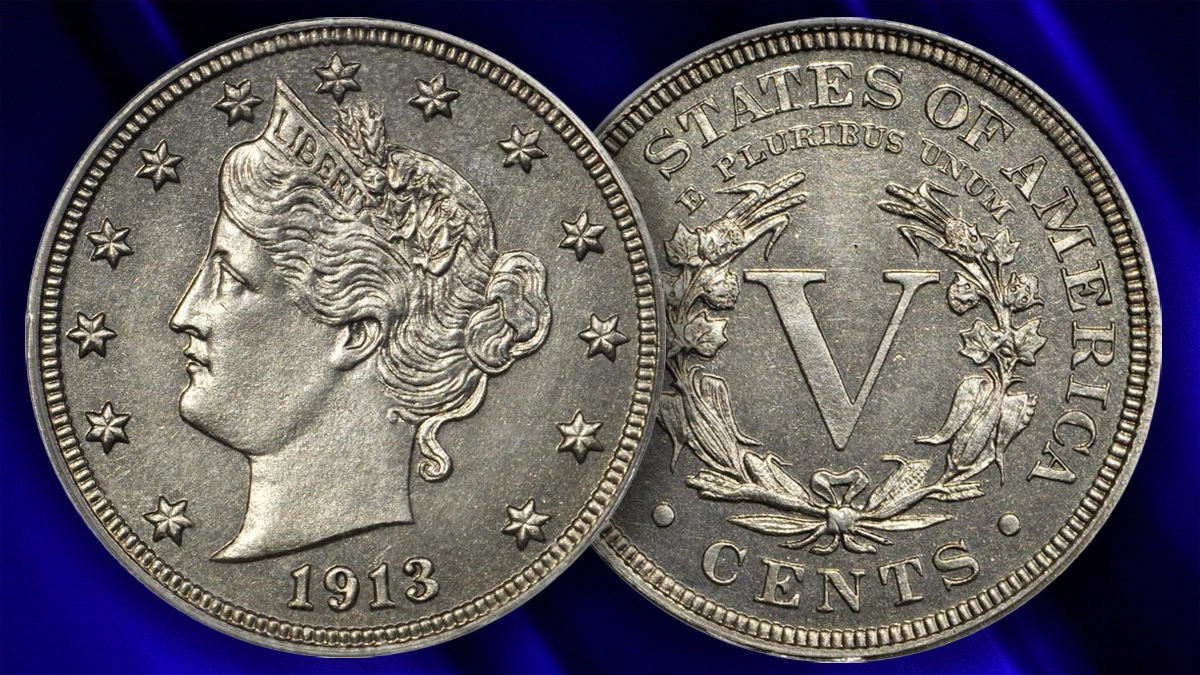
The 1913 Liberty Head Nickel is a coin shrouded in mystery and intrigue. Its legendary status is rooted in the fact that it was never officially authorized for production by the U.S. Mint. All five known specimens are believed to have been illegally struck and removed from the facility by a former Mint employee, Samuel W. Brown. This corrupt origin is a primary driver of its extreme value, making it a numismatic legend and a popular subject for news media and popular fiction.
At the beginning of 1913, the U.S. Mint was transitioning from the Liberty Head Nickel design to the new Buffalo nickel. While dies had been prepared for the 1913 Liberty Head nickel, the mint had decided to stop production and begin striking the new Buffalo design instead.
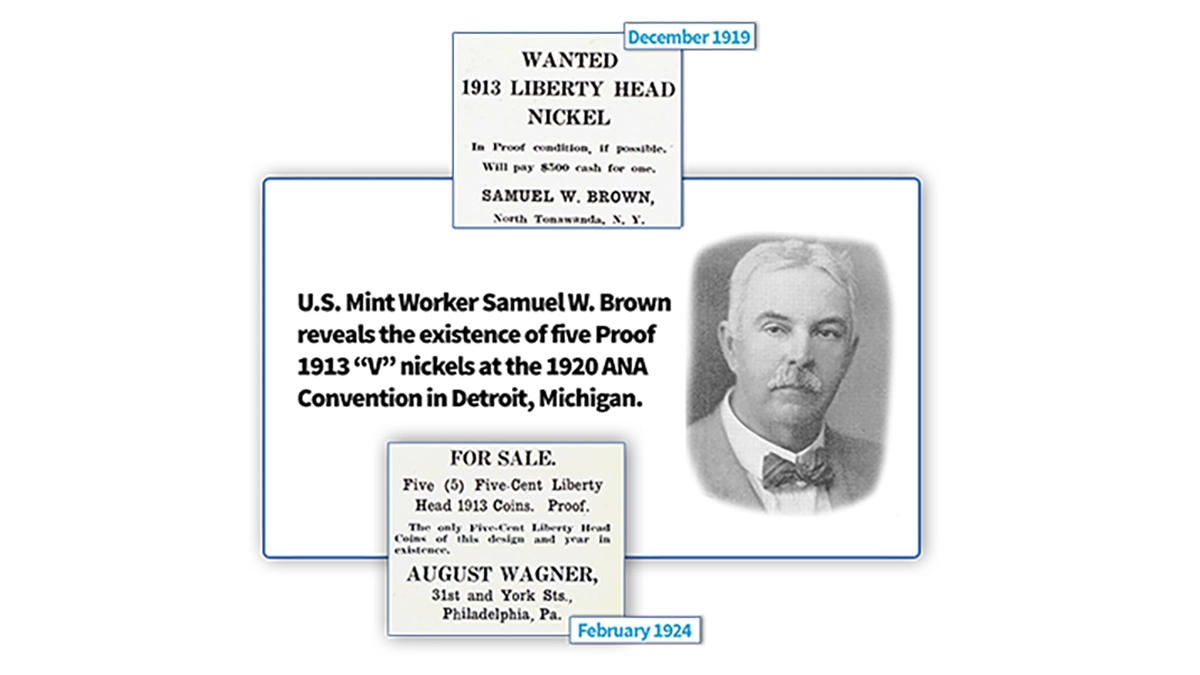
Mint employee Samuel W. Brown, seeing an opportunity to enrich himself, likely secretly produced, or had produced for him, five Proof strikings of from the unused 1913 Liberty Head “V” Nickel dies. In December 1919, after Brown had left the Mint’s employ, he inserted an add in The Numismatist, offering $500 in cash for 1913 Liberty Head Nickels. At the time, the coin’s existence was completely unknown to the coin collecting community. Also unknown to the community is that Brown already had all five of them.
Brown attended the 1920 American Numismatic Association convention, where he put the five coins on display. It’s interesting to note that this was seven years after the coins were supposedly made, the exact time when the statute of limitations for theft would have expired.
Not all are convinced that Brown had the coins produced illicitly. One theory, supported by numismatic experts like Lee F. Hewitt and Q. David Bowers, suggests that a small striking of the coins would have been legal for “cabinet purposes.” The new Buffalo nickel design was facing production delays, so a few Liberty nickels could have been legitimately minted in early January 1913 before the new design was officially released.
Regardless of how they were created, the five 1913 Liberty Head nickels have become one of the most sought-after rarities in the world.
The Five Famed 1913 “V” Nickels
For decades, the coins passed through the hands of prominent collectors, including “Colonel” E.H.R. Green, an eccentric super-collector who also owned a sheet of the famous “Inverted Jenny” postage stamps. After his death, the coins were sold, eventually finding their way into the possession of several renowned numismatists.
In 2003, a team of experts, including numismatist John Dannreuther, authenticated all five coins. By studying subtle differences in the details of the coins’ reverse, Dannreuther was able to determine the order in which they were struck. He concluded the production order was: the Smithsonian, Olsen, Eliasberg, Walton, and McDermott specimens.
Each coin has a unique and storied history.
- The Smithsonian Specimen (PR60) was once owned by King Farouk of Egypt before being donated to the Smithsonian Institution.
- The Olsen-Hawn Specimen (NGC PR64) has had a long list of notable owners, including Fred E. Olsen and King Farouk.
- The Eliasberg Specimen (PCGS PR66) was part of the renowned Louis E. Eliasberg, Sr. collection, the only complete collection of U.S. coins ever assembled.
- The McDermott-ANA Specimen (NGC PR55) was once owned by J.V. McDermott and later Aubrey and Adeline Bebee, who donated it to the American Numismatic Association.
- The fifth and final coin, the Walton Specimen, has arguably the most captivating story. George O. Walton bought the coin in 1945. After his death in a car crash in 1962, the coin was lost. His heirs, unaware of the coin’s value, had been told it was a forgery. It sat in a family closet for over 40 years before a public campaign launched by a public relations consultant prompted the heirs to bring the coin to the 2003 ANA Convention. There, it was authenticated and later sold at auction in 2013 for a staggering $3,172,500.
The 1913 Liberty Head nickel remains one of the most mysterious and valuable coins in the world, a testament to the enduring allure of numismatic history.
The 1933 Saint-Gaudens Double Eagle: A Condemned Coin’s Unparalleled Saga

The 1933 Saint-Gaudens Double Eagle is arguably the most famous and valuable coin in the world, a status it owes entirely to a unique legal history. Its saga began in the depths of the Great Depression, when President Franklin Roosevelt, in an effort to stabilize the American economy, issued Executive Order 6102 which took the U.S. off the gold standard and prohibited private gold ownership. As a result, all 445,500 1933 Double Eagles that had been minted were condemned to be melted down.
However, a small number of these gold coins mysteriously escaped destruction. It is believed that at least 20 were stolen from the Philadelphia Mint by a cashier and a jeweler, setting off a decades-long legal and historical drama. One such specimen, the “Farouk” coin, was seized by the United States Secret Service during an attempted sale in 1996. This event triggered a five-year legal battle that culminated in a landmark legal settlement, which, for the first and only time, authorized a single 1933 Double Eagle for legal private ownership. Later, in 2004, ten more specimens surfaced when discovered by the daughter of one of the original thieves. However, a jury and, ultimately, the Supreme Court ruled that because the coins had never been officially issued, they remained government property and are now stored at Fort Knox.
The coin’s value is a direct result of its rarity and its notoriety as a “forbidden” coin. The single legal specimen sold for nearly $7.6 million in 2002 and for a record-breaking $18.872 million in 2021.
Between the two sales it was held in the collection of shoe magnate Stuart Weitzman. Since its record-smashing auction appearance the coin has appeared on the popular show Pawn Stars (although, we doubt it was seriously up for sale).
Part III: The Modern Numismatic Ecosystem: Valuation, Technology, and Trends
The coin market is not just driven by history and rarity. A third major factor that cements the popularity of coins is a coin’s bullion value. A coin’s bullion value is its intrinsic worth, determined by the market price of the precious metal from which it is made.

The American Silver Eagle, the most popularly-collected silver coin of all-time, has a value, that is directly tied to the daily spot price of silver. In contrast, a coin’s numismatic value is its worth as a collectible. For scarce and rare coins, this value often far exceeds its metal content. The 1913 Liberty Head Nickel, mentioned earlier, has a bullion value of just 6¢, making a generic American Silver Eagle 1,857% more valuable as a bullion play. Of course, the 1913 nickel’s numismatic value can reach into the millions, making the comparison a little silly.

The most popular coins often embody both value concepts. The Morgan Silver Dollar, with its high silver content and rich historical narrative, appeals to both precious metals investors and traditional hobbyists. This duality attracts a wider audience, which generates a broader market and sustained public interest that is reflected in online search queries. The Silver Eagle is another example of this hybrid model, with key-date rarities and subtle die varieties commanding significant premiums.
The eternal popularity of these two series demonstrates a long-standing shift in the market where collectors are interested in high-end professionally graded coins and modern mint-made rarities as much as they are in historical artifacts.
A foundational understanding of these two valuation models is the first step for any collector, as it allows for a nuanced assessment of a coin’s true worth.
Looking Forward: The Emerging Trends of Tokenization and Fractional Ownership

Historically, rare coins were highly illiquid assets. A buyer would need to purchase the entire coin, a transaction that could cost millions of dollars and require a specialized buyer. A new trend is emerging to address this challenge: the tokenization of rare, non-fungible numismatic assets. Tokenization is the process of representing ownership rights to a physical asset as a digital token on a blockchain. While this is a well-established practice for precious metals like gold and silver, its application to rare coins is a new and significant frontier.
By tokenizing a coin, it can be divided into millions of fractional shares, or tokens, which can be bought and sold individually. This process “unlocks” liquidity for assets that were once confined to a small, private circle of collectors. The technology provides a transparent and secure record of ownership, making a new class of investment available to a wider range of collectors. This emerging trend is a direct causal factor in the projected value appreciation for trophy coins, like the 1804 Dollar, 1893-S Barber Dime, and the 1913 Nickel.
Tokenization of rare coins is happening right now on a small scale and is no longer a hypothetical concept, and will soon be a direct market influence. This fusion of traditional numismatics with decentralized finance has the potential to fundamentally alter the market by democratizing access to the world’s most expensive coins.
The Enduring Appeal of American Coins
The enduring popularity of America’s most popular coins is a testament to the powerful convergence of art, history, and market dynamics. Whether a coin is born of an accidental wartime error, a piece shrouded in a legal drama that spanned a century, or a modern bullion standard, each coin’s unique narrative is what drives its value and its place in the public imagination. In the modern era, the high search volume for these coins is a clear indicator that the treasure hunt is alive and well, democratized by online marketplaces, standardized by professional grading, and primed for a new frontier with the advent of asset tokenization. The appeal of coins lies not only in their physical presence but in the rich, compelling stories they tell about the nation that created them.




I think the idea of tokenizing a coin is not great for the hobby. It seems like it would cheapen the accomplishment of collecting coins.
Definitely not a fan of tokenization. Essentially trying to turn coins into crypto is ridiculous
Really good article. I’m not sure what to think about tokenizing coins…
I have came across 2 1943 copper Penny’s. But unfortunately the 2 pennies where not authentic, one was a 1943 steel penny that was coated in copper and the second penny was altered by having the date of a 1948 penny with the 8 altered to look like a 3. Maybe one day I will have the privilege of actually finding a true authentic 1943 copper penny to add to my coin collection.
Love the Article!
Can someone please explain to me why Tokenizing rare coins with Crypto is more attractive than making it into a a Security of some sort, or Mutual Fund of a whole bunch of rare coins, or an ETF, other than the anonymity of Crypto, which seems to only benefit criminals, money launderers, gangsters, mobsters and other tax evaders?
No matter how many books and articles I read about US coins, the only ones I really care to own I already have. I just don’t see the “enduring appeal” in most of them.
There are millions of hobbies people have had, but I think coin collecting is unique in that you can be a wealthy collector with amazing collections, OR a young kid just getting into the hobby with pocket change. Its a hobby that’s been around a very long time
The Indian Head is one of my favorites !
Who doesn’t love pre-1933 gold coins? The look and the unknown use history is so amazing! Can’t get enough of them.
As a new collector any tidbits I can read further the growing passion I have for numismatics. Please keep providing interesting articles I truly thank you.
If I only had one of these unicorns in my collection.
Love the 13 stars
I guess tokenization would make sense for museums and galleries displaying the coin if it couldn’t be purchased or donated outright
Very informative article, I enjoy this website.
I love all of these. But being a person of limited means I would have to let the ’33 Double Eagle go for the price it would fetch. Of course IF I had an illegal specimen I would HAVE TO simply keep it as a collectible… ;)
The Saint Gaudens Double Eagle is one of the most beautiful 20 dollar gold coins. I like to one day own one myself. But love to have you talk about rarest gold coin the US Mint produce the 4 dollar “Stella”.
I learn something new each time I read one of these articles. I love this page!
Very interesting piece on a topic I was not familiar with. Thanks for all the facts.
I have an old penny collection given to me by a family member that I need to go through!