


The 1914 “Horse Blanket” $20 That Launched Modern Money
A century ago, the American $20 bill looked nothing like the one in your wallet.
It was larger. It was bolder. And, more importantly, it marked a turning point in the nation’s financial history.
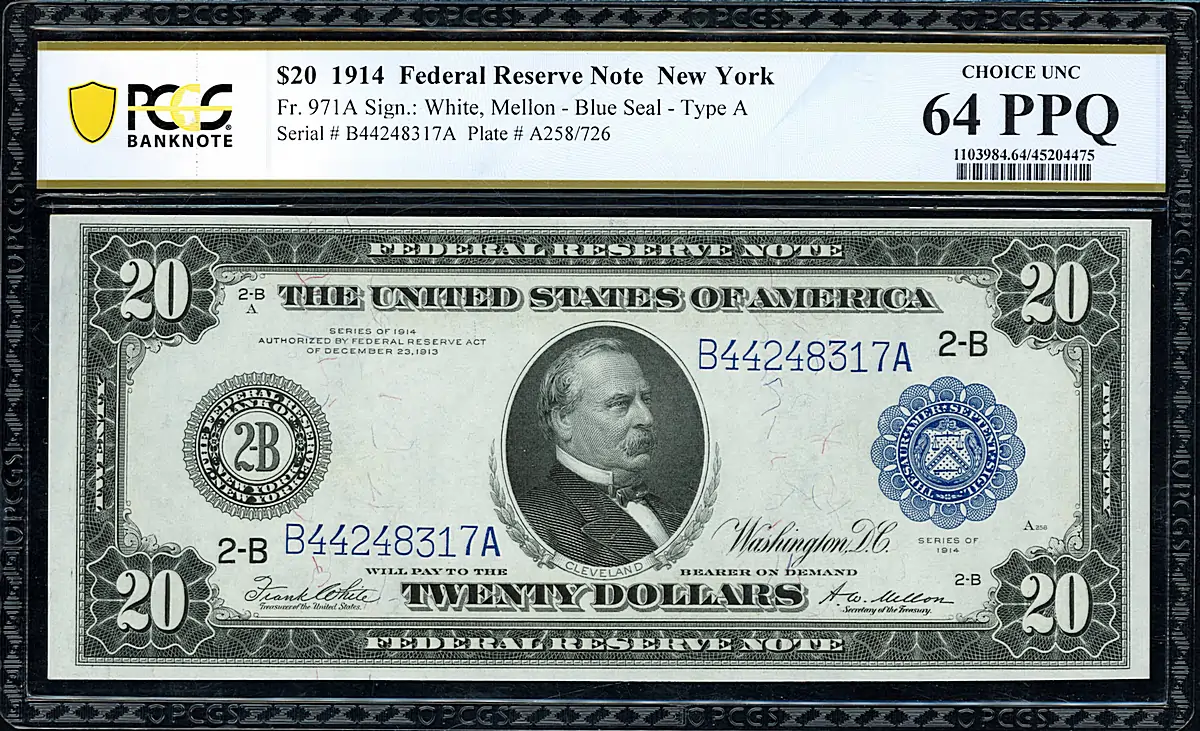
The Fr. 971a 1914 $20 New York Federal Reserve Note represents the first generation of Federal Reserve currency. This example, certified by PCGS Banknote as Choice Uncirculated 64 PPQ, carries the White / Mellon signature combination. It also belongs to the New York Federal Reserve district, one of the most important banking centers in the new system.
Now, this historic large-size note has appeared in a GreatCollections auction. For collectors, the appeal goes beyond grade. This note comes from the moment when America began building the modern money system still in use today.
A Banknote Born From the Federal Reserve Act
Congress passed the Federal Reserve Act on December 23, 1913. The law created the Federal Reserve System and reshaped American banking.
Before this reform, the nation used a mix of federal and bank-issued paper money. Collectors know many of these earlier types well. They include National Bank Notes, Gold Certificates, Silver Certificates, Legal Tender Notes, and other large-size issues. However, the new Federal Reserve Notes introduced a different idea.
They tied paper money to a national banking framework. They also reflected the needs of a growing industrial economy.
The Series of 1914 notes became the first major public face of that change. As a result, this $20 note does more than represent a collectible type. It represents the opening chapter of Federal Reserve currency.
The Big “Horse Blanket” Format
Collectors often call large-size U.S. paper money “horse blankets.” The nickname fits.
The 1914 $20 Federal Reserve Note measures 7.375 by 3.125 inches. That makes it much larger than modern U.S. currency. In 1929, the government reduced the size of U.S. notes to the format still used today.
Because of that change, these earlier notes offer a very different visual experience. The larger canvas gave engravers more room for portraits, seals, district information, and back designs. It also gave the note a stronger presence in hand.
For collectors, that size matters. It gives the 1914 $20 Federal Reserve Note the look and feel of a different era.
New York District: A Key Financial Identity
This example comes from the Federal Reserve Bank of New York.
That district identity matters. Federal Reserve Notes from this era carried district information tied to the regional bank of issue. The New York district served one of the nation’s central banking and financial markets. Therefore, a New York $20 note from the first Federal Reserve series connects directly to Wall Street, national credit, and early 20th-century finance.
The GreatCollections listing identifies this note as Fr. 971a. It also lists the series as Federal Reserve Note New York. The note carries the White / Mellon signature combination.
Here, “White” refers to Frank White, Treasurer of the United States. “Mellon” refers to Andrew Mellon, the Secretary of the Treasury. Andrew Mellon remains one of the most important Treasury figures of the 1920s. His signature places this note in the post-World War I financial world of Harding, Coolidge, and the early Hoover era.
Grover Cleveland on the Front
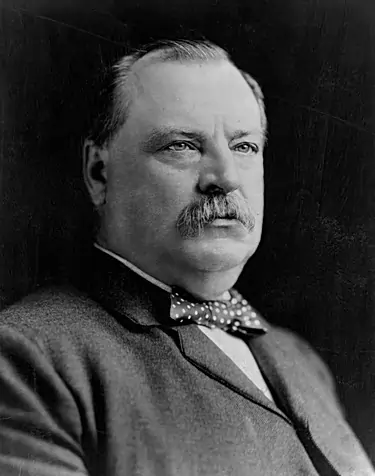
The front of the 1914 $20 Federal Reserve Note features President Grover Cleveland.
Cleveland served as the 22nd and 24th president of the United States. He became the first president to serve non-consecutive terms. That history gives the note an added layer of political interest.
However, Cleveland’s portrait also fits the monetary story. During his presidency, debates over gold, silver, credit, and sound money shaped national politics.
By 1914, the country had moved into a new monetary age. Yet the Cleveland portrait still linked the new note to earlier fights over confidence, redemption, and federal authority.
That contrast gives the design much of its backstory. The face of the note looks backward to the 19th century. The issuing system points forward to the modern economy.
The Reverse: Land, Sea, and Air
The back of the 1914 $20 note delivers the “wow” factor.
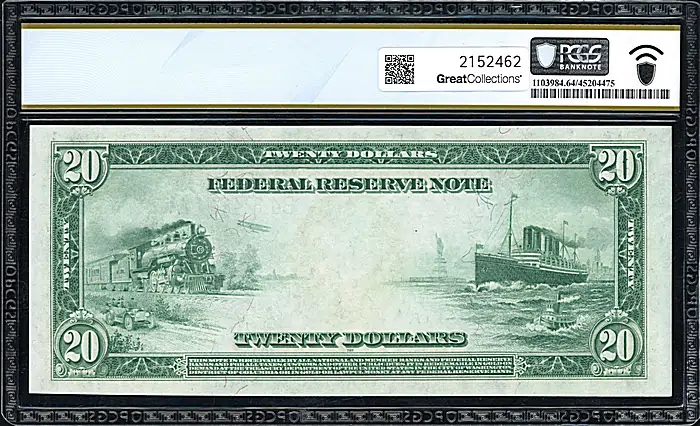
The official U.S. Currency description calls the design a Transportation vignette. Collectors often know it by the more dramatic phrase “Land, Sea, and Air.”
The scene captures the energy of the early 20th century. A steam locomotive represents rail power and land transport. A large ship evokes overseas commerce and industrial reach. An early airplane points to a new technology that had only recently entered public imagination.
Together, these images tell a powerful story. America wanted a currency system that could serve a faster, larger, and more connected economy. The back of the note illustrates that ambition in engraved form.
This is why the 1914 $20 Federal Reserve Note remains so visually memorable. It combines banking reform, industrial confidence, and the machine-age future on one piece of paper.
Why the PCGS 64 PPQ Grade Matters
Condition plays a major role in paper money value.
This note earned a PCGS Banknote grade of Choice Uncirculated 64 PPQ. The “64” grade places it just below the Gem level. More importantly, the PPQ designation adds a key quality marker. PPQ stands for Premium Paper Quality.
That matters because paper money can suffer from many forms of impairment. Notes may show folds, handling, washing, pressing, repairs, pinholes, stains, or other problems. High-grade large-size notes with strong paper quality stand apart.
For a 1914 $20 Federal Reserve Note, that distinction carries extra weight. These notes entered a working economy. Many circulated hard. Others disappeared through redemption, replacement, or attrition. Therefore, a Choice Uncirculated example with PPQ offers collectors a much sharper view of the original design.
It also preserves the note’s intended character. The paper, ink, margins, and embossing all help tell the story.
A First-Generation Federal Reserve Collectible
Collectors can approach this note from several directions.
U.S. paper money specialists see it as an important large-size Federal Reserve Note. Type collectors value it as the first $20 Federal Reserve design. New York district collectors recognize its regional appeal. Meanwhile, history-minded collectors see a note tied to the birth of the Federal Reserve System.
That mix gives the Fr. 971a 1914 $20 New York Federal Reserve Note broad crossover interest.
It is not just a banknote. It is a document from the moment when America standardized modern central banking currency
Auction Information
The note is certified by PCGS Banknote as Choice Uncirculated 64 PPQ. GreatCollections lists it as GC Item ID 2152462. The listing also identifies PCGS certification number 45204475.
Bidding is scheduled to end Sunday, June 7, 2026, at 8:05:03 PM Pacific Time.
Why This Note Stands Out
The best collectibles tell more than one story.
This 1914 $20 Federal Reserve Note tells several. It marks the first $20 Federal Reserve design and reflects the early structure of the Federal Reserve System. It carries the portrait of Grover Cleveland, with a dramatic Transportation vignette on the back. Finally, it survives in a high-grade PCGS Banknote holder with Premium Paper Quality.
For collectors, that combination creates the appeal.
The note is large, historic, attractive, and deeply connected to the rise of modern American money. More than 100 years later, it still looks like a financial system announcing itself to the world.




Absolutely fascinating – thanks for the information.
Great looking note
I wish U.S. currency was different sizes per denomination like the euro. That would be cool
very cool
I agree – this note is outstanding. I love the size – although it’s less practical.
I would like to own this horse blanket!
Nice collectors item!
Did know they made a bill that big, IT looked really Great and thanks for the info.
I don’t have any of the horse blankets……yet
Lovely, very informative story. I wish US currency was still “horse blanket” size. I believe a country’s currency should reflect things about its people and their cultures.
I never seen one before very cool
Very cool never heard of that before
I like the history and form factor. Cleveland not so much…