


 Only 500 Will Exist: ANA Unveils Striking ‘Flame of Freedom’ Silver Medal for America 250
The American Numismatic Association will mark America’s 250th anniversary with a limited-edition silver medal that carries a warning as well as a celebration.
The ANA will launch its America 250 fundraising campaign during the 2026 World’s Fair of Money in Pittsburgh. Qualifying donors will receive an exclusive “Flame of Freedom” commemorative medal designed by acclaimed medallic artist Heidi Wastweet.
The World’s Fair of Money will take place August 25–29, 2026, at the David L. Lawrence Convention Center. The show will bring dealers, collectors, educational programs, and major numismatic displays to downtown Pittsburgh.
However, the new medal does more than commemorate an anniversary. Its imagery asks collectors to consider what freedom requires after 250 years of American independence.
A Medal Created for America’s 250th Anniversary
The ANA created the fundraiser to support its work as a congressionally chartered nonprofit educational organization. The association promotes the study and collection of coins, paper money, medals, tokens, and related objects.
Through its museum, library, publications, conventions, webinars, and educational outreach, the ANA introduces collectors and the public to the history of money.
In return for donations at specific levels, supporters will receive one of two limited “Flame of Freedom” silver medal options.
Wastweet designed the medal as a tribute to the ideals of freedom and resilience expressed through the Declaration of Independence.
“I was thrilled to be invited to create this special medal for the ANA, and I hope it resonates with the membership as it does with me,” Wastweet said. “I’m looking forward to seeing everyone at the World’s Fair in Pittsburgh.”
Two Donation Levels, Two Limited Medal Options
Collectors can participate at ANA Table 97 during the convention.
A donation of $250 will qualify the donor to receive the standard ANA “Flame of Freedom” silver medal. The ANA will limit this version to 400 pieces.
Meanwhile, a donation of $500 will qualify the donor to receive the medal professionally encapsulated by Numismatic Guaranty Company. Each holder will carry a special America 250 certification label. The ANA will limit this version to only 100 pieces.
NGC provided the special labels for the fundraiser. The company has served as the ANA’s official grading service since 1995.
The ANA will limit each household to one standard medal and one special-label encapsulated medal. Therefore, a household may qualify for no more than one example of each version.
Donations remain tax-deductible to the fullest extent permitted by law. However, donors may generally deduct only the portion of a contribution that exceeds the medal’s fair market value. Donors should consult a qualified tax professional regarding their individual circumstances.
When Collectors Can Donate at the Show
The ANA plans to accept donations at Table 97 during the following periods:
- Tuesday, August 25: 2–4 p.m.
- Wednesday, August 26: 10 a.m.–noon and 2–4 p.m.
- Thursday, August 27: 3–5:30 p.m.
- Friday, August 28: 10 a.m.–noon and 3–5:30 p.m.
- Saturday, August 29: Tentatively scheduled for 10 a.m.–3 p.m.
The fundraiser’s schedule fits within the ANA’s published convention hours. The show will open from 1–5:30 p.m. Tuesday, from 10 a.m.–5:30 p.m. Wednesday through Friday, and from 10 a.m.–3:30 p.m. Saturday.
Liberty Guards the Flame
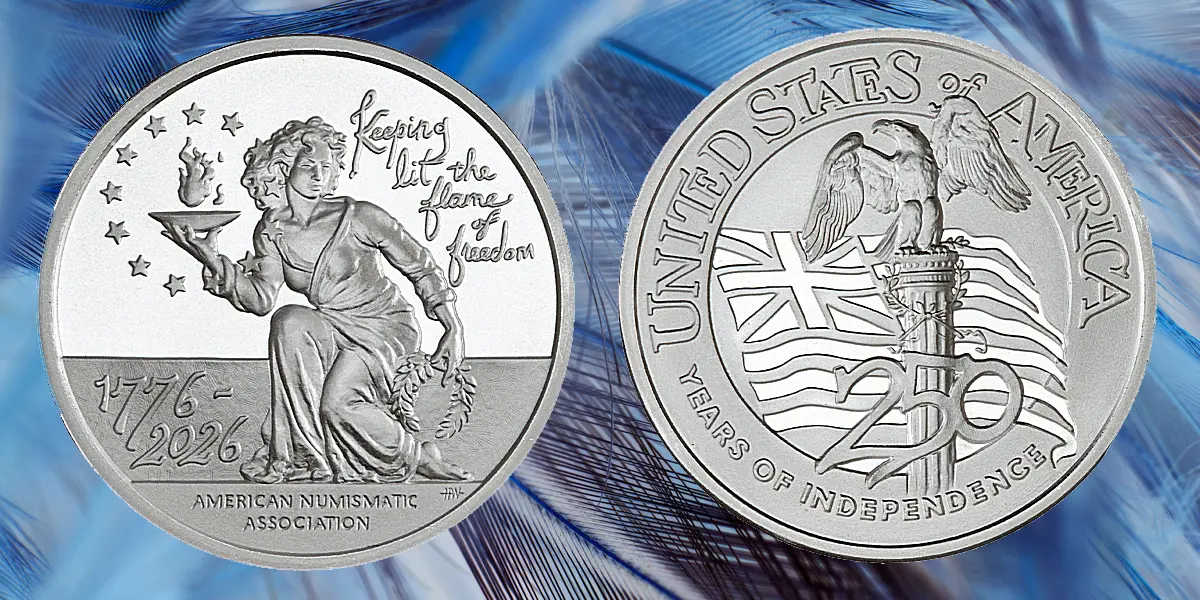
The medal’s obverse presents Liberty as an active guardian rather than a distant symbol.
Wastweet depicts an allegorical figure of Liberty carrying a laurel wreath. The wreath represents victory in the Revolutionary War. At the same time, Liberty shields an eternal flame from danger.
The flame’s light reveals 13 stars, which represent the original American colonies. The inscription KEEPING LIT THE FLAME OF FREEDOM completes the composition.
The scene gives the medal its central message. Liberty may endure, but it cannot protect itself.
“This beautiful medal serves as an enduring reminder that liberty survives only through constant vigilance,” ANA Executive Director Kim Kiick said. “By participating in this fundraiser, donors help the ANA continue to provide a vast array of educational programs, including its museum, library, and publications.”
A Colonial Eagle and America’s First National Banner
The reverse pairs a powerful colonial-style eagle with the Grand Union Flag of 1776.
The choice carries considerable historical weight.
The Grand Union Flag displayed 13 alternating red and white stripes with the British Union flag in its canton. American forces used it during the opening stages of the Revolutionary War. George Washington’s army raised the banner near Cambridge, Massachusetts, in early 1776. The Continental Navy also flew it aboard its ships.
Historians sometimes call it America’s first national flag or the Continental Colors. However, its British canton also reflected a complicated moment. The colonies had united in resistance, yet many Americans had not completely abandoned hopes of reconciliation with Great Britain.
That tension makes the flag a particularly thoughtful choice for an America 250 medal. It represents a nation still forming its identity rather than one looking back from a position of certainty.
Moreover, the device rarely appears on American numismatic objects. As a result, the reverse gives collectors an unusual visual connection to the unsettled opening chapter of the American Revolution.
Wastweet Chose Quiet Optimism Over Spectacle
Wastweet said that nearly four decades of studying American coinage shaped her approach to the project.
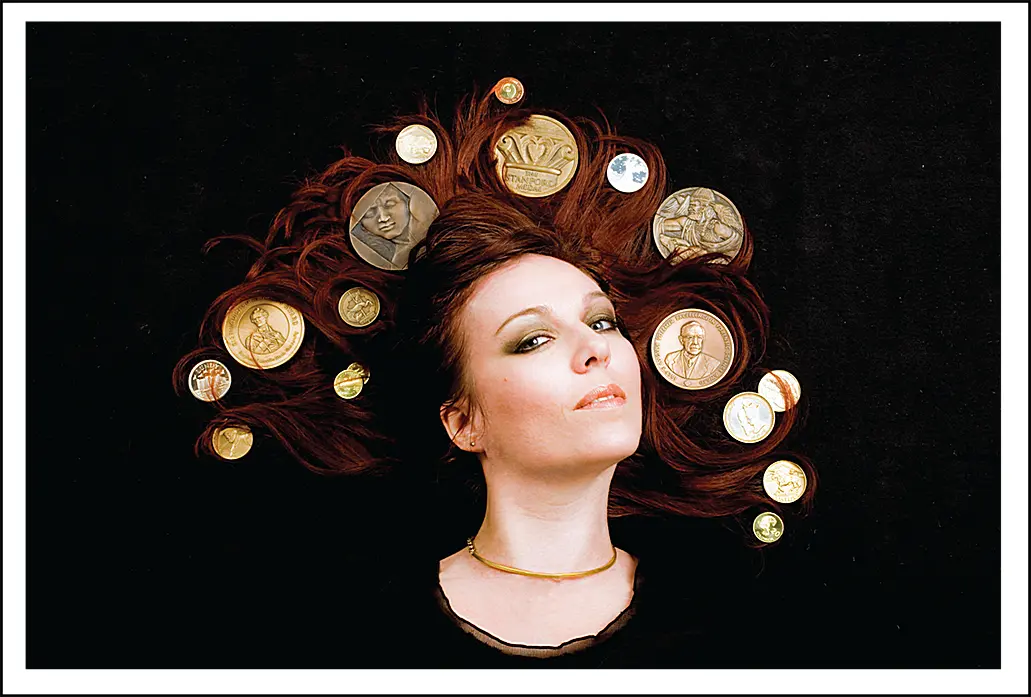
“For someone who has spent thirty-nine years working with, and thinking about, the iconography of American coinage, it has been fascinating to watch the wide range of designs created for the Semiquincentennial,” she said.
Wastweet noted that America 250 designs have ranged from open nationalism to sharp political satire. Instead, she pursued what she described as a more “quietly optimistic” approach.
That decision gives the medal its strongest artistic element.
The design does not treat freedom as a completed victory. Instead, Liberty physically protects the flame. The imagery turns an abstract civic ideal into something fragile, visible, and dependent on human action.
“After 250 years of independence, we have learned that freedom is not self-sustaining,” Wastweet said. “There is no finish line where its work is complete. Freedoms won are not freedoms guaranteed.”
She compared liberty to a flame that survives only through constant vigilance.
“I believe this flame is worth preserving not only for ourselves, but for our neighbors and future generations,” she added.
About Heidi Wastweet
Heidi Wastweet ranks among the most accomplished American medallic artists working today.
She has sculpted and designed more than 1,000 coins, medals, and tokens since beginning her medallic career in 1987. Her work spans privately issued medals, commissioned sculpture, public monuments, and numismatic art.
Wastweet previously served in the United States Mint’s Artistic Infusion Program. She also served on the Citizens Coinage Advisory Committee and led the American Medallic Sculpture Association as its president.
In 2024, the ANA presented her with its Numismatic Art Award for Excellence in Medallic Sculpture.
That experience makes the “Flame of Freedom” medal more than convention memorabilia. It places the piece within the longer tradition of American medallic art, where artists use Liberty, eagles, flags, stars, and other national symbols to interpret the ideals of their own era.
A Limited Medal With a Lasting Message
The ANA will distribute no more than 500 “Flame of Freedom” medals across the two donation levels. Only 100 will carry the special America 250 NGC label.
Those limits will likely attract collectors. Still, the medal’s deeper appeal rests in its message.
At the nation’s 250-year mark, Wastweet presents freedom not as a relic preserved behind glass, but as a living flame. Liberty protects it. Thirteen stars emerge through its light. On the other side, an eagle stands beside a flag from the uncertain months before the United States adopted the Stars and Stripes.
Together, the designs look backward and forward at the same time.
For collectors attending the Pittsburgh World’s Fair of Money, the “Flame of Freedom” medal will offer a limited America 250 keepsake. More importantly, it will ask a question that reaches far beyond numismatics:
Who will keep the flame lit for the next 250 years?




Very beautiful and meaningful design on the medal. I hope to own one someday.
Beautiful!