


Most $2 bills move from one wallet to another. This one traveled through the Space Race.
RR Auction now offers Gene Cernan’s Series 1953 $2 United States Note, serial number A10241591A, in its Space Exploration, Aviation, and Meteorites sale. The lot carries a $30,000-plus estimate, and the auction closes April 23. Cernan signed and flight-certified the portrait side with the inscription: “Flown on Gemini 9A, Apollo 10, Apollo 17—Landed on Moon, Gene Cernan.” PMG graded the note Choice Fine 15, and the holder cites provenance to Eugene A. Cernan and the Jefferson Space Museum Collection.
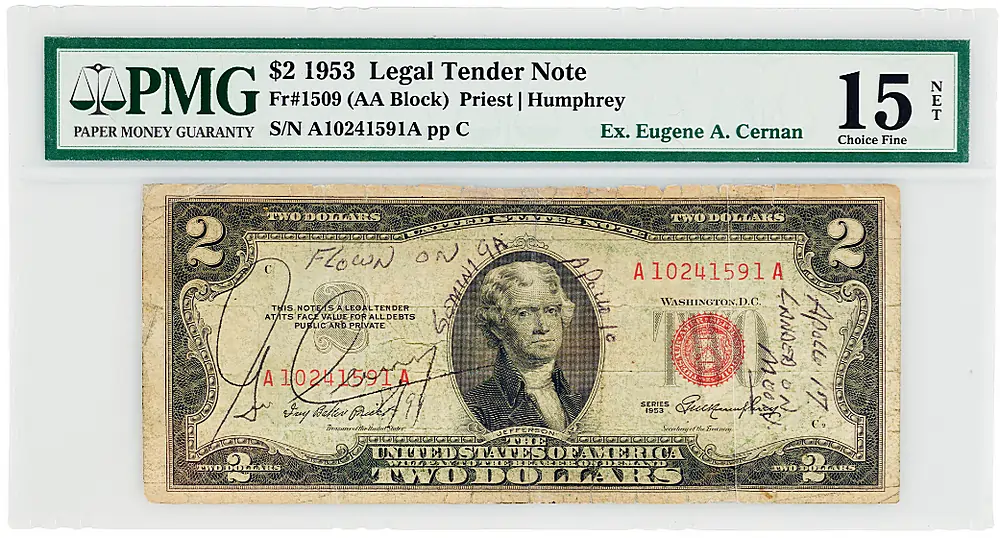
Yet the grade and certification tell only part of the story. The real power comes from the bill’s history. This small note linked one astronaut, one family memory, and three landmark missions of the American space program.
A Lucky Bill with a Personal History
According to RR Auction and Cernan’s signed provenance letter, the bill first belonged to his father. He carried it for years as a good-luck charm. Later, Gene Cernan took the note on Gemini 9A as a gesture to him.
Then tragedy changed the meaning of the piece. After his father died in January 1967, Cernan kept the bill with him for luck and in memory of him. That decision transformed an ordinary 1953 $2 note into a deeply personal relic of the Space Age.
Gemini 9A Took the Note into Low Earth Orbit
The bill’s first journey came on Gemini 9A. NASA launched Thomas P. Stafford and Eugene A. Cernan on June 3, 1966, on the seventh crewed Gemini mission. Two days later, Cernan carried out a spacewalk that lasted 2 hours and 7 minutes.
In his provenance letter, Cernan says he tucked the $2 bill with his personal items during the mission. He also says the note entered low Earth orbit and faced exposure to the vacuum of space during his EVA.
Cernan described Gemini 9A as his first spaceflight, the 13th manned American flight, and the 23rd spaceflight of any kind when X-15 flights above 100 kilometers enter the count. That alone would have made the note remarkable. However, its story had only begun.
Apollo 10 Carried It Around the Moon
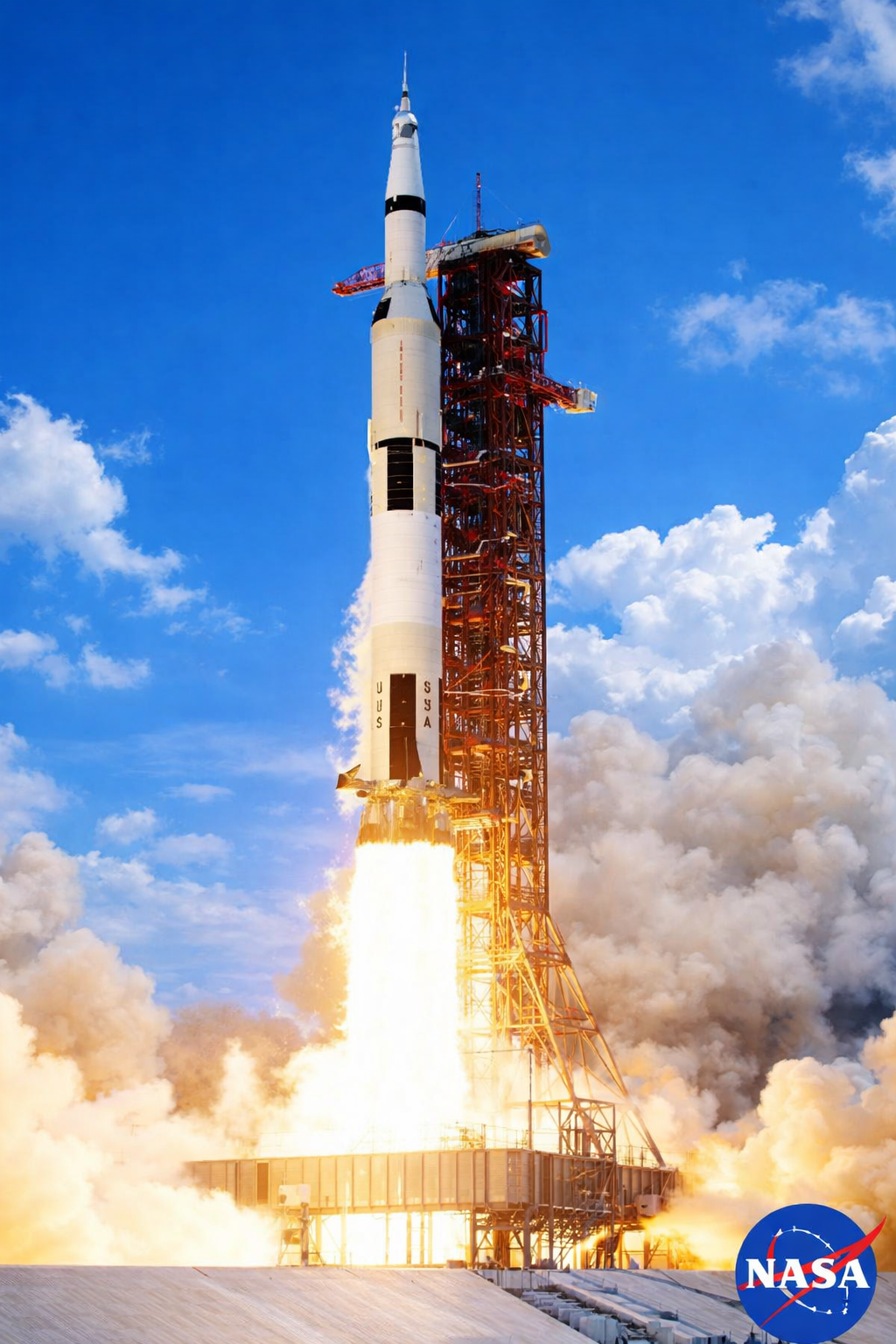
Cernan took the bill back into space on Apollo 10 in May 1969. NASA describes Apollo 10 as the full dress rehearsal for the Moon landing. The mission tested nearly every major element of a lunar landing except the landing itself.
Cernan’s provenance letter adds the crucial numismatic detail. He says the bill spent 2 days, 13 hours, and 37 minutes in lunar orbit. He also states that the lunar module came within 8.4 nautical miles of the Moon’s surface.
That distinction matters. The note did not simply leave Earth. It traveled to lunar orbit and nearly reached the Moon’s surface just weeks before Apollo 11 made history.
Apollo 17 Brought the Bill to the Lunar Surface
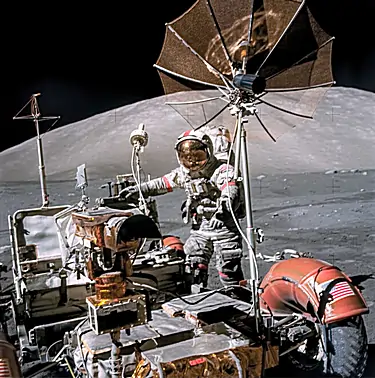
Apollo 17 gave the note its greatest distinction. NASA identifies Apollo 17 as the final lunar landing mission of the Apollo program. The agency also notes that the mission launched on December 7, 1972, and landed in the Taurus-Littrow Valley. Historians also recognize Apollo 17 as the first night launch in the American human spaceflight program.
In his provenance letter, Cernan says he carried the bill aboard Challenger to the lunar surface. He adds that the note remained there for 3 days, 2 hours, and 59 minutes. NASA’s mission timeline aligns with that account.
Now the bill claimed something almost no artifact can claim. It had reached low Earth orbit on Gemini 9A, lunar orbit on Apollo 10, and the lunar surface on Apollo 17.
Few Artifacts Can Match This Flight Record
That three-mission path gives the note its extraordinary status. RR Auction argues that very few artifacts can document all three milestones across separate missions. The lot also includes several photographs of Cernan with the note, a copy of the Apollo 17 inventory that lists the “2-dollar bill” as part of a package also flown on Gemini 9 and Apollo 10, and a DVD titled The $2 Bill Documentary.
The Backstory Gives This Note Its Real Weight
RR Auction’s feature on the bill places it at the top of the space-flown currency category. That view reflects the auction house’s opinion, not a formal NASA designation. Even so, the underlying facts remain extraordinary.
This note started as a father’s lucky charm. Then Gene Cernan carried it across three of the most important missions of the Space Race. He took it into Earth orbit. He brought it around the Moon. Finally, he carried it to the Moon’s surface.
A Small Note with a Giant Story
RR also notes that Apollo 10’s return to Earth tied the bill to the mission that set a human speed record during reentry from the Moon. That detail adds another layer to an already exceptional piece.
Still, the speed record does not define the lot. The true appeal lies elsewhere. Cernan did not carry a random souvenir. He carried a keepsake from his father through three missions that traced the arc of America’s push from Earth orbit to the Moon.
That journey makes this $2 bill far more than space-flown currency. It makes it a compact, deeply human artifact from the Great Space Race, one that now stands ready to capture attention far beyond the space memorabilia market.





I’ve always been fascinated by special bills too in my collection.
this bill should be in the aeronautic and space sector of the Smithsonian
Great example,
Very cool
A great history!!!
Very cool story! That note would be an amazing part of anybody’s collection.
This is so neat.
Fascinating story.
Always liked a good &2 bill!! This takes the cake!
I am very impressed with the provenance of this $2 bill. It is fantastic.
This has to be the coolest note in history!