


Gold’s $4,000 Line in the Sand: Why Silver’s $60 Test Matters Too
Gold and silver entered Thursday’s session with a simple question on the tape.
Would buyers defend the big round numbers?
For gold, that line sits near $4,000 per ounce. For silver, it sits near $60. Both levels matter because traders watch them. However, collectors should watch them, too. Bullion prices set the mood for modern precious metals coins. They also shape demand for gold and silver issues across the marketplace.
This week, that mood changed fast.
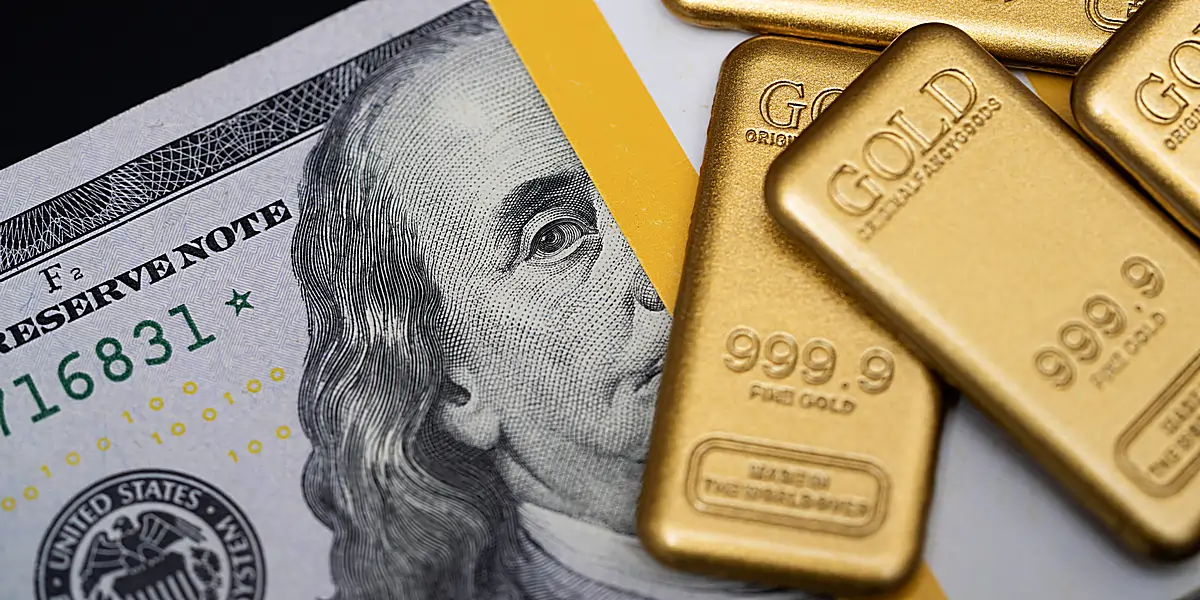
Gold fell to a fresh six-month low on Thursday. August gold futures touched $4,046.20, their lowest level since November. At one point, futures traded at $4,111.10, down 0.5% on the session. Gold also stood 6.3% lower for the week. That put the metal on pace for a second straight weekly loss. It also marked its worst week since mid-March, when gold dropped 9.62%.
Still, gold did not break down cleanly. Spot gold later turned positive and traded at $4,089.45, up 0.43% on the session.
That snapback matters. It shows that buyers still respect the $4,000 area.
The Fed Changed the Story
Gold usually draws buyers during periods of uncertainty. It also acts as a hedge when inflation rises. However, gold pays no yield. As a result, it often struggles when real interest-rate expectations rise.
That is where this week’s story becomes complicated.
Inflation has moved back to the center of the market. U.S. consumer inflation rose in May at its fastest pace in three years. Energy-related prices drove much of the increase. The war involving Iran, now in its fourth month, has pushed energy costs higher. As a result, investors now fear that inflation may stay hotter for longer.
The May jobs report added to that pressure. It came in stronger than expected. Together, the inflation data and labor-market strength raised the odds that the Federal Reserve may need to raise rates later this year. At a minimum, traders expect the Fed to keep rates steady for now.
Next week, the Federal Reserve should hold its benchmark lending rate at 3.50% to 3.75%. The meeting will also mark Kevin Warsh’s first meeting as Fed chair.
Earlier this year, many economists expected several rate cuts. Now, most expect rates to remain unchanged through 2026. Traders have moved even further. They currently price in a roughly 67% chance of a Fed rate hike by December, according to CME FedWatch.
That shift matters for gold. Higher rates can make Treasury securities and other dollar-denominated assets more attractive. Therefore, gold has had to fight a stronger yield story even as inflation has risen.
A Strange Break in the Old Gold Pattern
Market analyst Christopher Lewis of FX Empire noted a strange move in gold this week. Gold gapped lower, tried to rally, and then gave back gains as headlines moved the bond market.
Yet the usual relationship between rates and gold looks less reliable now. For years, higher rates often pressured gold. Lower rates often helped it. However, gold has slipped in recent sessions even as rates fell.
That tells us the market may have shifted from a simple rates story to a cash story. In plain terms, traders want U.S. dollars. When that demand rises, gold can struggle, even when bond yields ease.
Lewis sees $4,000 as the next major support level. He also expects that number to attract psychological buying. However, he warned that a move back toward $3,500 would not destroy the longer-term trend. In his view, that kind of drop would still count as a pullback inside a much larger advance.
After the powerful 2025 melt-up, gold can now fall hundreds of dollars and still remain inside a historic bull-market structure. That is not normal market behavior. It shows how far precious metals have moved. It also shows why volatility now feels so extreme.
The 200-Day Moving Average Flashes a Warning
The technical picture has weakened.
Gold recently broke below its 200-day moving average for the first time since September 2023. Citigroup flagged that break as a major negative signal. The bank has held a cautious near-term view since the war escalated in March. Higher energy costs, tied in part to the closure of the Strait of Hormuz, have fed inflation fears and raised pressure on gold.
Even so, Citi remains more constructive over the long term. Its analysts expect gold to rebound when the Strait situation deescalates.
JPMorgan takes a more cautious view. The bank argues that retail and institutional investors have backed away from the so-called debasement trade. That trade rests on the belief that the U.S. dollar will keep losing value over time. JPMorgan points to gold ETF outflows and weaker futures positioning as signs of that retreat. It also ties the move to concern over government debt, inflation, and geopolitical risk.
In short, investors still worry about the dollar. However, many no longer want to chase gold at any price.
What Happens If Gold Breaks $4,000?
The $4,000 level now carries real weight.
If gold breaks below it, Lewis sees room for another $500 decline. That would put $3,500 in play. However, if gold bounces from this zone, traders may treat the move as a short-term rebound. He does not expect a full trend reversal without a major outside headline.
That creates a narrow path for gold bulls.
They need $4,000 to hold. They also need a catalyst. That could come from a geopolitical headline, a shift in rate expectations, or signs that inflation pressure has peaked.
Until then, gold may stay choppy.
Silver Faces Its Own Line in the Sand
Silver also tested a major support zone on Thursday.

The metal dropped sharply early in the session. Then buyers stepped in. Spot silver last traded at $64.147, up 1.13% on the day.
That bounce came near the $60 area, which traders have watched for some time. Lewis called $60 a crucial level. If silver holds it, the metal could work back toward its 200-day exponential moving average and a nearby resistance zone.
However, silver carries more risk than gold. It often moves faster. It also reacts to both monetary demand and industrial demand. Therefore, rate expectations, risk appetite, and headlines around Iran and the United States can all move the price.
Lewis sees silver as somewhat oversold. So, a bounce over the next few sessions would make sense. Still, he warned that a decisive break below $60 would create a major technical problem. In that case, silver could open the door to $50.
He also sees a wider trading range forming. Under that view, $60 may become the lower boundary, while $90 may act as the ceiling.
Silver’s Supply-Demand Story Still Matters
Silver has one bullish factor that gold does not share in the same way.
Demand for silver remains much higher than available supply, according to Lewis. That imbalance can create value at lower price levels. However, it does not remove short-term risk.
Silver still depends on investor appetite. It also depends on interest rates. If traders fear higher rates and a stronger dollar, silver can fall even when the physical story looks supportive.
That dual identity makes silver difficult. It acts like a monetary metal during crises. Yet it also behaves like an industrial metal when growth and risk appetite dominate.
Why Coin Collectors Should Pay Attention
Coin collectors do not trade bullion screens every minute. However, they should not ignore them.
Gold and silver coins carry more than one kind of value. A classic rarity draws strength from history, condition, and scarcity. A modern bullion coin draws more direct support from metal value. Many coins sit somewhere in between.
Therefore, a sharp move in gold or silver can change buyer behavior quickly. It can pull new money into the market. It can also make buyers more selective when prices fall.
That is why the current battle around $4,000 gold and $60 silver matters. These are not just numbers on a chart. They are confidence lines.
If they hold, metals may regain momentum. If they fail, the market may need more time to repair the damage.
For now, the precious metals market has entered a new phase. Inflation still supports the long-term story. Geopolitical risk still adds urgency. However, rate-hike fears now challenge the trade.
Gold and silver have not lost their backstory. They have only hit a tougher chapter.





Is there number where I can and show what I have .that give to me by elder gentleman . Ms.S A.Wright call 843-751-1167 or my email Thank you.
How can I show u my collection and more coins. I was bless with these coin .
Good Article. Now is a good time to stock up on Gold and Silver.
Could be a while until prices stabilize