The “Father of Cameos” Taught Collectors to See Frost — Now His Collection Heads to Auction
Before “Cameo,” “Deep Cameo,” and “Ultra Cameo” became market language, collectors had to learn the look.
They tilted proof coins under a lamp, searched for frosted devices, then studied mirrored fields. And if they had the patience, they hunted proof sets that looked different from all the rest.
Val Webb understood that difference early.
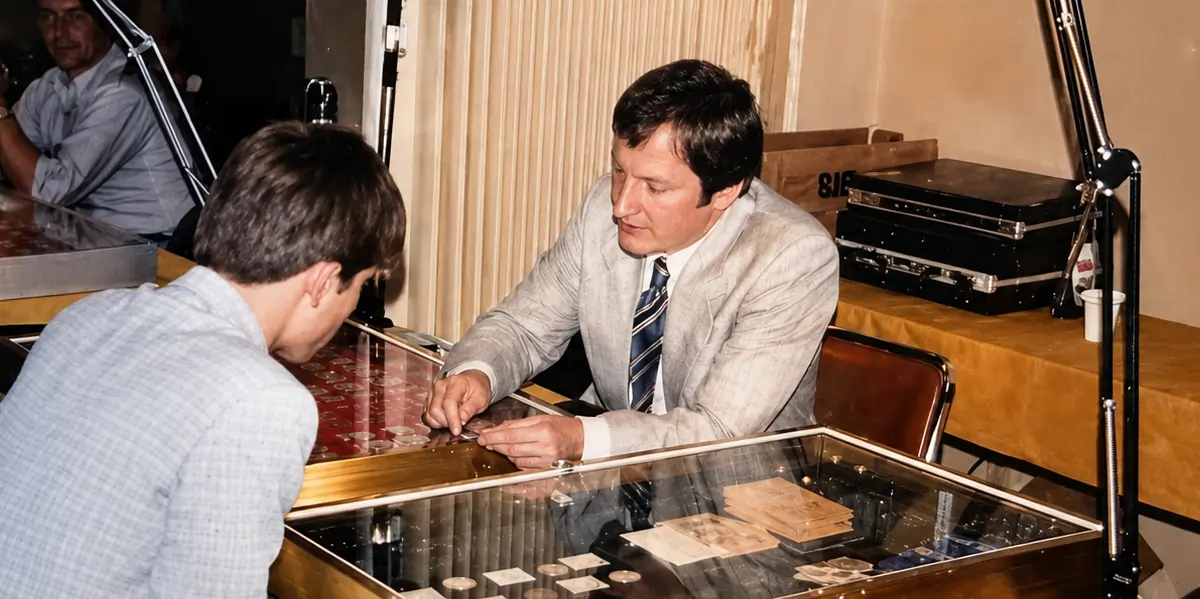
GreatCollections will offer The Val Webb Cameo Collection on Sunday, July 5, 2026. The collection includes 54 PCGS-certified coins and one NGC-certified coin, with one coin approved by CAC. It is not a massive cabinet. However, it carries the name of a dealer who helped teach the market how to see one of modern coinage’s most dramatic visual effects.
For many specialists, Webb earned his nickname: “The Father of Cameos.”
The Man Who Saw the Frost First
Cameo proof coins deliver a simple thrill. The fields look dark and glassy. The portrait, lettering, and devices appear white with frost. That contrast creates the “cameo” look that collectors prize.
Today, third-party grading services identify cameo contrast on holders. However, that system grew out of decades of collector study, dealer experience, and market education. Webb stood near the front of that movement.
In 1984, Webb published Cameo Proofs: 1950–1964, a specialized reference that focused on an area many collectors still treated as secondary. Modern proofs looked common. Proof sets sat in closets, albums, and dealer boxes. Yet Webb saw something else inside those cellophane packs.
He saw scarcity hiding in plain sight.
Why 1950–1964 Proofs Matter
The 1950–1964 proof era has a special place in U.S. numismatics.
After a wartime pause, the United States Mint resumed proof coin production in 1950. The Philadelphia Mint produced the proof sets of this period. The silver dime, quarter, and half dollar also carried the classic 90% silver composition through 1964.
However, cameo contrast did not appear evenly. Fresh dies produced stronger frost. As dies aged, the frost faded. As a result, many proof coins from the era show bright, brilliant surfaces but little contrast. True cameo coins require more.
That is why the hunt became so addictive.
A collector could open a 1957 proof set and find five attractive coins. Yet only one might show real cameo contrast. Another set might deliver a frosted Franklin half dollar but a brilliant quarter. Then, every so often, a set produced the look that made the hunt unforgettable.
Webb turned that search into a field of study.
The Book That Changed the Hunt
Webb’s 1984 book did more than describe pretty coins. It gave collectors a framework.
A 1985 notice in The Currency Dealer Newsletter, preserved by the Newman Numismatic Portal, called Cameo Proofs: 1950–1964 a comprehensive study and described it as a standard reference for collectors, investors, and dealers. It also noted that the work included rarity and pricing information for cameo proof Franklins, Washington quarters, Roosevelt dimes, Jefferson nickels, and Lincoln cents.
That was the turning point.
Webb helped collectors understand that cameo proof coinage had structure. Some dates appeared with contrast more often. Others required serious searching. Some denominations delivered cameo frost more easily than others. Therefore, the market needed more than a casual glance. It needed a trained eye.
James Sego, PNG Past President and a longtime modern coin specialist, remembered Webb as a pioneer in modern cameo coinage. Sego also credited Webb’s book with prompting collectors to search their proof sets for elusive cameo and deep cameo coins.
That influence spread.
Rick Tomaska later published Cameo and Brilliant Proof Coinage of the 1950 to 1970 Era in 1991. Tomaska’s work expanded the field and helped bring cameo proof coinage to a larger audience. Over time, the market’s language changed. Cameo contrast moved from dealer shorthand to holder designations, registry competition, television presentation, and advanced modern collecting.
Webb helped light that path.
The GreatCollections Offering
The Val Webb Cameo Collection now brings that story back to the marketplace.
GreatCollections identifies the 1937 Buffalo Nickel PCGS Proof-66 Cameo with CAC Green approval as one of the collection’s highlights. The coin makes sense as the headline piece.
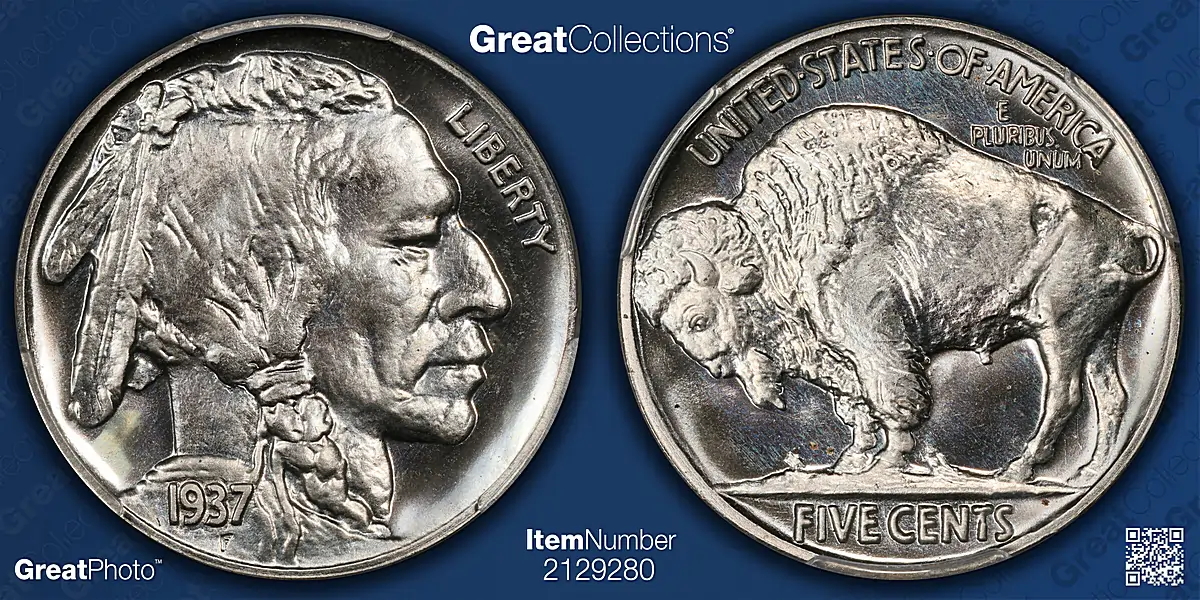
The 1937 Proof Buffalo Nickel came from a tiny proof mintage of 5,769 coins. James Earle Fraser designed the Buffalo Nickel, and the Philadelphia Mint struck the 1937 proof issue in the standard 75% copper and 25% nickel alloy. The coin measures 21.2 millimeters and weighs 5 grams.
Yet the grade and designation tell only part of the story.
Proof Buffalo Nickels from the 1930s usually show brilliant surfaces. Strong cameo contrast appears far less often. So a Proof-66 Cameo with CAC approval fits the Webb name perfectly. It is not just a proof coin. It is a proof coin with the visual contrast that Webb spent a career teaching collectors to value.
More Than a Dealer
Still, Webb’s story does not end with frost and mirrors.
Those who knew him describe a man who built community everywhere he went. He belonged to organizations such as FUN, the ANA, and CCE and worked coin shows for decades. He mentored younger dealers while building deep friendships outside the bourse floor.
Friends and family remembered him as “Santa Val” in his community. They remembered his poker games with college friends. They remembered his adopted tribe, including three daughters and six grandchildren. They also remembered his range. Webb was an Eagle Scout, a performer, a singer, a wrestler, a University of Georgia student, a psychology and philosophy double major, and a master diver.
That range matters because it explains the dealer.
Webb did not treat coins as metal alone. He treated them as objects that carried beauty, patience, and human connection. Cameo proofs fit that personality. They reward careful looking. They demand judgment. Most of all, they ask the collector to notice a quality that others may miss.
“The Papa Spirit”
Sego described Webb as a consummate professional who attended national and regional coin shows month after month. He also said Webb mentored him and played an important role in his decision to become a full-time coin dealer.
That kind of legacy rarely appears on a holder label.
A collection can preserve grades, pedigrees, and certification numbers. However, a name collection can also preserve a way of seeing. In Webb’s case, that way of seeing changed how collectors approached modern proof coinage.
WRBL reporter and neighbor Chuck Williams captured the personal side best when he wrote that Webb understood “the value of precious things” and placed his value on love and family.
That line belongs in this story because Webb’s specialty depended on the same instinct. He knew that value often hides beneath the obvious surface.
A Final Cameo
The Val Webb Cameo Collection gives bidders a compact but meaningful look at a numismatic life.
It also reminds collectors how quickly the market can forget the people who built its categories. Before labels made cameo contrast easy to identify, specialists had to argue for its importance. They had to publish, teach and show coin after coin until other collectors saw the same thing.
Val Webb did that.
Now his collection heads to auction with the kind of coins that made his name. The mirrors still flash. The frost still speaks. And for collectors who know the history, the cameo effect now carries one more layer of contrast.
It reflects the man who helped define it.