

Workers Open a Belgian Cellar Wall, and Find $10 Million in Gold
A routine sewer project in Belgium has turned into one of the most remarkable gold discoveries in recent memory.
Construction workers renovating a historic property in Sint-Gillis-Dendermonde uncovered a hidden cache estimated at roughly €9 million, or more than $10 million. The workers found thousands of gold coins and dozens of gold bars inside a cellar wall. Police quickly took custody of the fortune.
However, this story offers much more than an eye-catching dollar figure.
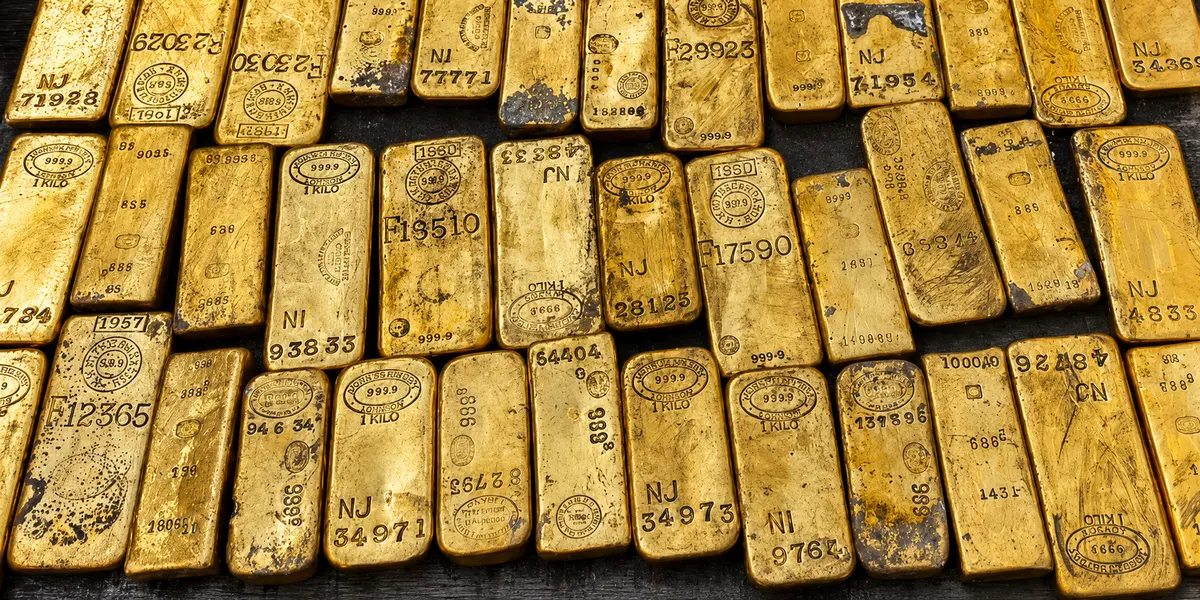
A closer look at photographs released by Dendermonde police reveals a miniature history of the international gold market. The cache includes British Gold Sovereigns and vintage bullion bars from refiners that once stood at the center of London’s gold trade. Even better, markings on those bars may help investigators determine when someone assembled and concealed the treasure.
For collectors, that makes the Belgium gold hoard as much a numismatic mystery as a legal one.
A Summer Job Turns Into a $10 Million Discovery
The extraordinary discovery began on Tuesday, August 11.
An 18-year-old summer worker named Kobe and his colleagues were removing part of a cellar foundation so they could install drainage and sewer piping. Then they noticed what looked like coins.
At first, Kobe thought the pieces were ordinary €1 coins.
Then the crew saw gold.
Workers continued digging and uncovered more coins and bars. Site manager Mario, who has worked in construction for 33 years, told Belgian media that he had never encountered anything remotely similar.
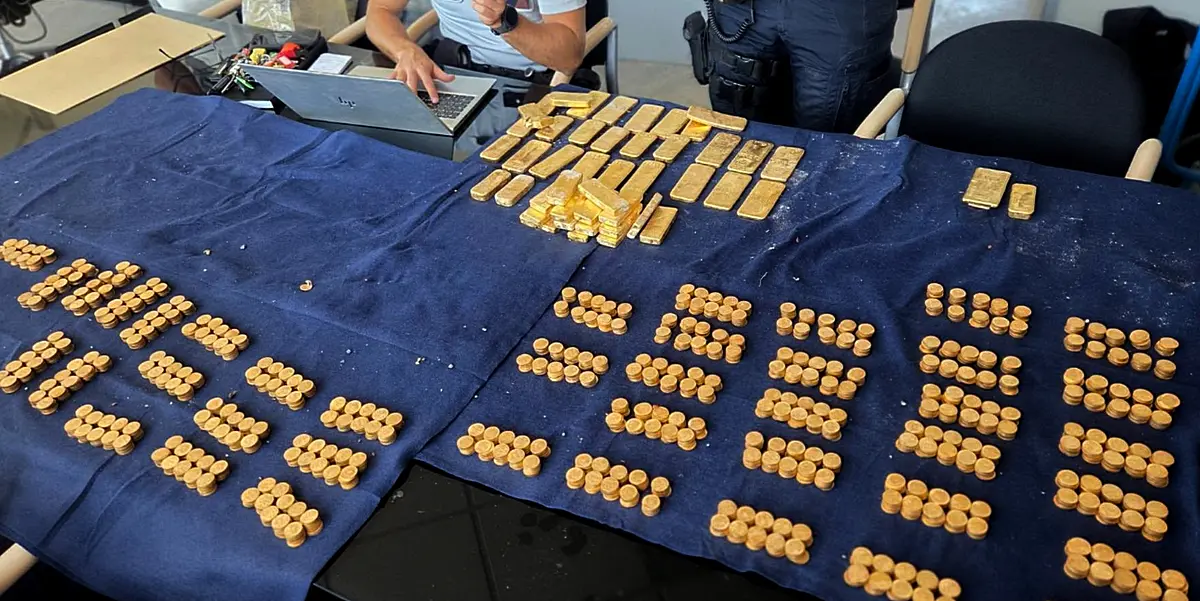
The final count remains subject to the official investigation. However, reports indicate at least 4,000 gold coins and more than 40 bars. Police photographs show 49 gold bars. Authorities inventoried the material and moved it to a high-security government facility.
The East Flanders public prosecutor’s office now wants to answer two basic questions.
Where did the gold come from?
And who owns it?
The Gold Was Hiding in a Brewer’s House
The location adds another layer to the mystery.
The workers found the treasure at Van Langenhovestraat 20 in Sint-Gillis-bij-Dendermonde. Today, CAW Oost-Vlaanderen, a social welfare organization, uses the property. Yet the building began life as the home of a successful brewer.
The Flemish government’s architectural heritage inventory identifies the property as a historic brewer’s residence. Brewer Theophilus Van Assche opened his brewery on the newly created Van Langenhovestraat in 1899. He then established the residence around 1900 or during the opening years of the 20th century.
Brewing continued at the property until 1970. The house still retains reminders of the Van Assche family, including wrought-iron gates bearing the initials “VA.”
That history immediately raises an obvious possibility. Did the brewing family hide part of its wealth inside the building?
Perhaps.
However, investigators have not established any connection between the Van Assche family and the gold. Authorities must also determine whether theft, fraud, money laundering, or another crime played any role.
For now, the brewer connection remains an intriguing lead rather than a conclusion.
The Coins Reveal Another Clue: British Gold Sovereigns
The police photographs provide CoinWeek readers with another important detail.
They show containers filled with what gold-market specialists identify as British Gold Sovereigns. Holland Gold examined the photographs and identified the coins as Sovereigns, while other European reports also describe more than 4,000 British Sovereigns in the cache.
That makes historical sense.
The modern Sovereign dates to 1817. Britain introduced it following the Napoleonic Wars as part of a major monetary reform. Over time, the coin became one of the most widely recognized gold coins in international commerce.
Its classic reverse shows St. George killing the dragon, a design by Italian engraver Benedetto Pistrucci. Different monarchs appear on the obverse depending on the date.
The Royal Mint gives the traditional Sovereign these specifications:
- Denomination: One Sovereign (£1)
- Composition: 22-karat gold
- Weight: 7.98 grams
- Diameter: 22.05 mm
- Fine gold content: approximately 7.32 grams
- Classic reverse: St. George and the Dragon by Benedetto Pistrucci
If the cache truly contains more than 4,000 standard Sovereigns, those coins alone contain more than 29 kilograms of pure gold.
Yet the coins may ultimately prove more interesting than their bullion value.
Dates, monarch portraits, mintmarks, and varieties could establish when the owner accumulated the group. They could also identify coins from London or former Royal Mint branches in places such as Sydney, Melbourne, Perth, Ottawa, Bombay, and Pretoria.
Authorities have not yet released a numismatic inventory. Therefore, CoinWeek cannot confirm individual dates, mintmarks, or varieties from the available photographs.
That inventory could become one of the most fascinating parts of this investigation.
The Gold Bars May Date the Hidden Fortune
The bullion bars provide an even stronger chronological clue.
A detailed review of the police photographs by Holland Gold identified bars from famous refiners including N M Rothschild & Sons’ Royal Mint Refinery and Johnson Matthey. Some bars reportedly show dates including 1957 and 1960.
That matters.
N M Rothschild & Sons operated the Royal Mint Refinery for more than a century. The London Bullion Market Association dates Rothschild’s operation of the refinery from 1852 until 1967. The refinery’s “RMR” mark enjoyed worldwide recognition in the professional gold market.
Johnson Matthey also played a central role in London’s bullion trade. In fact, Johnson Matthey and the Royal Mint Refinery later served as technical referees for the London Good Delivery system.
Here, the dates create an important clue.
If the police photographs indeed show a bar dated 1960, then whoever assembled the complete hoard could not have sealed it inside the wall before 1960.
That observation dramatically changes the story.
This probably does not represent a fortune hidden when Van Assche first built the residence around 1900. Instead, the evidence points toward a much later concealment, potentially during the postwar decades.
Moreover, the brewery continued operating until 1970. Therefore, the visible bullion dates and the brewery’s final decade overlap in a particularly interesting way. That does not prove who owned the gold, but investigators now have a much narrower historical trail to follow.
Nearly 80 Kilograms of Monetary History
The scale also deserves some perspective.
The photographs show 49 kilogram-sized bars, according to Holland Gold. That represents about 49 kilograms of bullion. Meanwhile, 4,000 standard Sovereigns contain more than 29 kilograms of fine gold.
Together, those two groups account for more than 78 kilograms, or about 173 pounds, of fine-gold equivalent, before considering any additional coins or pieces in the cache.
Suddenly, the €9 million estimate no longer sounds surprising.
More importantly, the composition of the hoard resembles an old-fashioned private gold reserve. Whoever assembled it did not rely on a single form of wealth. Instead, the owner combined highly liquid bullion bars with internationally recognized gold coins.
That strategy would have made the fortune relatively easy to transport, divide, sell, or exchange without relying on a bank account.
Then, for reasons nobody yet understands, someone put it behind a wall and apparently never returned.
Who Gets the Gold?
The workers immediately contacted their employer, the property owner, and police.
That decision may prove important.
Belgian property law generally requires someone who finds property to report the discovery and make a serious effort to locate its owner. Under Article 3.74 of Belgium’s modern property law framework, an original owner can reclaim qualifying found property during a five-year period. The exact rules that apply to this extraordinary case will depend on how courts classify the property and what investigators learn about its history.
Therefore, reports suggesting that the construction workers automatically receive a share of the treasure move too quickly.
Kobe and his colleagues hope for a finder’s reward. However, prosecutors first need to establish whether someone can prove legal ownership. They must also rule out any criminal origin.
CAW Oost-Vlaanderen also has a substantial interest in the outcome. The organization says that, if it ultimately gains the right to the fortune, it wants to expand services and housing capacity for homeless and vulnerable people across East Flanders.
Police Have One Message for Would-Be Treasure Hunters
Predictably, news of the discovery brought would-be gold hunters to the property.
Dendermonde police quickly discouraged that idea.
Authorities stressed that they had removed the entire known cache. They also warned that the fenced construction site contains dangerous excavations and pits.
So the physical treasure hunt may have ended.
The historical one has only begun.
Investigators now have serial numbers, refinery marks, dates, thousands of coins, a century-old brewer’s residence, and a fortune that somebody deliberately concealed.
For numismatists, the next question may prove just as interesting as who owns the gold.
What exactly are those 4,000 Sovereigns?
A detailed catalog of their dates and mintmarks could reveal when someone accumulated the fortune, where the coins traveled, and perhaps even how a massive private gold reserve ended up behind a cellar wall in Belgium.
That is when this $10 million discovery could turn from an extraordinary news story into an extraordinary numismatic one.

Hope the finders get a piece of that!
Can you imagine the looks on their faces when they first saw this gold cache?
and the moral of the story – don’t tell anyone
Keeping it would have caused a world of problems for him. Unless he was very smart, and very patient.