


From a 1976-S Ike to a 1943 Steel Cent: CAC Coins Turn Heads at August Auctions
August 2026 gave collectors an unusually clear look at how the rare coin market can price third-party quality approval.
Across GreatCollections, David Lawrence Rare Coins, Heritage Auctions, and Stack’s Bowers, CAC-approved and CACG-encapsulated coins repeatedly brought more than nearby examples at the same numerical grade without CAC approval. In several cases, the difference proved dramatic.
A CACG MS68 1976-S silver Eisenhower dollar brought $715. Meanwhile, several non-CAC examples in the same grade sold for little more than $100. A CAC-approved 1858 Large Letters Flying Eagle cent realized $14,030. A comparable non-CAC example had brought $6,875 just weeks earlier.
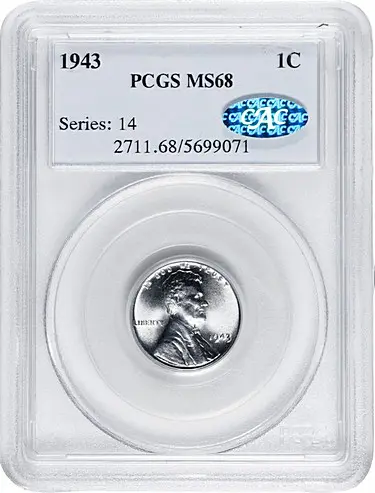
Then came two 1943 steel cents in successive Stack’s Bowers lots. Both carried the same PCGS MS68 grade. The CAC-approved coin brought $5,612. The other realized $2,684.
Those numbers demand attention.
However, auction results never function as a laboratory experiment. No two coins look exactly alike. Strike, color, luster, surfaces, provenance, holder generation, auction timing, and bidder competition can all influence price.
Still, August produced a pattern across four major auction companies and coins dating from 1832 through 1976. That makes the results worth examining as a market story rather than a simple list of prices.
GreatCollections: Modern Silver Meets Classic American Dollars
GreatCollections produced three of August’s most interesting CACG results. Moreover, the coins could hardly have been more different.
The first involved a Bicentennial dollar that millions of Americans recognize.
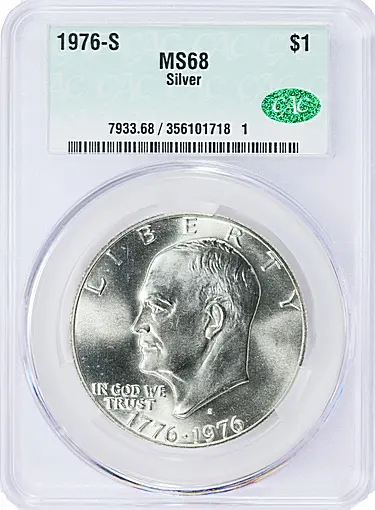
On August 2, GreatCollections sold a 1976-S 40% silver Eisenhower dollar graded CACG MS68 for $715.
Later that month, GreatCollections sold two PCGS MS68 examples without CAC stickers. One brought $143.28 on August 16. Another realized $136.27 on August 23.
Heritage added three more August comparisons. PCGS MS68 examples without CAC approval brought $104 on August 12, $89 on August 19, and $134 on August 26.
Therefore, the CACG coin brought roughly five times the highest price among those five non-CAC comparisons.
That result becomes more interesting when collectors consider the coin itself. The San Francisco Mint struck 11 million of these uncirculated Bicentennial dollars in a special silver-clad composition. Each weighs 24.59 grams and measures 38.1 mm. The coin contains about 0.3161 troy ounce of silver.
Frank Gasparro’s Eisenhower portrait appears on the obverse. Dennis R. Williams created the Bicentennial reverse, which pairs the Liberty Bell with the Moon.
The issue remains common overall. However, the market can become far more selective at very high Mint State levels. That distinction helps explain why individual MS68 coins can attract intense scrutiny.
A 1923 Peace Dollar Nearly Doubles Its Recent Comparisons
One week later, GreatCollections moved from modern silver to one of America’s most famous classic silver dollars.
On August 9, the firm sold a 1923 Peace dollar graded CACG MS67 for $6,600.
The comparison was striking.
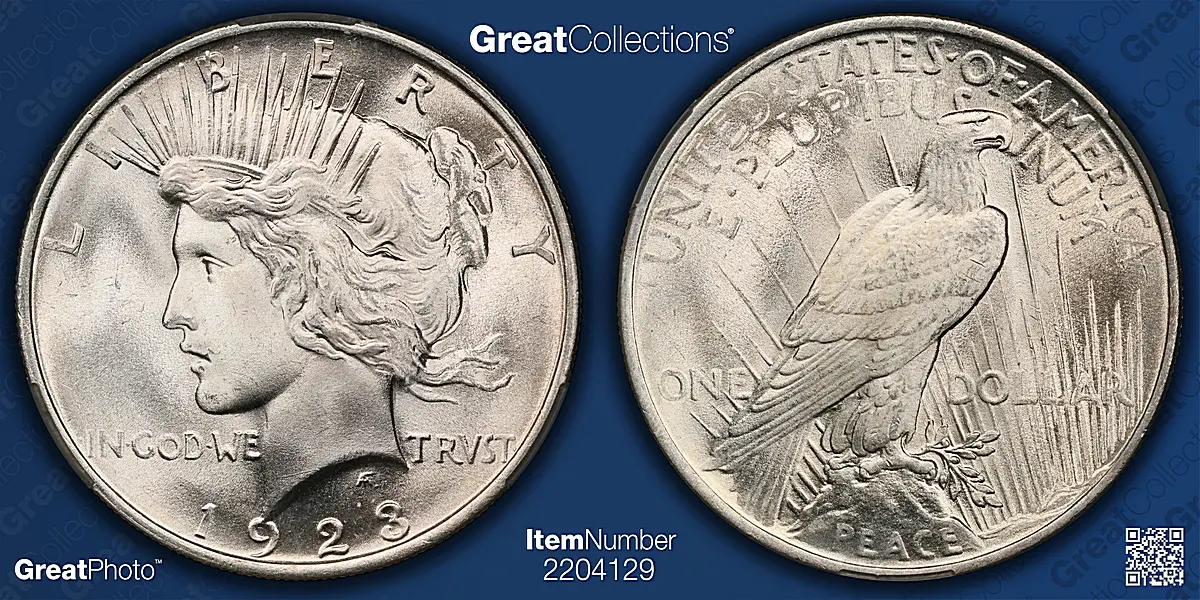
GreatCollections had sold a PCGS MS67 1923 Peace dollar without a CAC sticker for $3,410 on July 26. Heritage also sold an NGC MS67 without CAC approval for $3,416 on July 18.
Thus, the August CACG coin brought nearly twice either recent comparison.
The 1923 Peace dollar has a large original mintage of 30.8 million coins. Yet lofty grades change the equation. Anthony de Francisci designed the Peace dollar, which carries one of the most evocative themes in American coinage. Liberty dominates the obverse, while an eagle and the word PEACE anchor the reverse.
The coin contains 90% silver and 10% copper. It weighs 26.73 grams and measures 38.1 mm.
For collectors, that combination creates a familiar market dynamic. A common date can become a very different coin when exceptional preservation enters the picture.
Color Adds Another Dimension to an 1892 Columbian Half Dollar
GreatCollections delivered another sharp comparison on August 23.
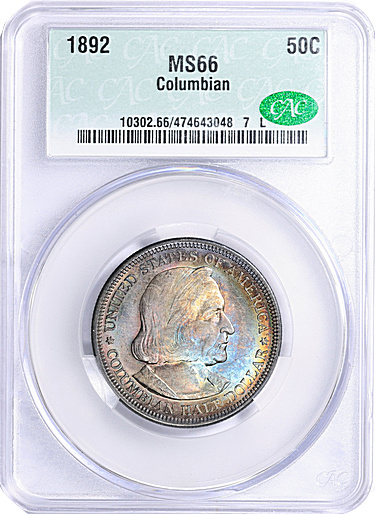
A CACG MS66 1892 Columbian Exposition half dollar sold for $2,365. On July 20, Heritage had sold a PCGS MS66 example without a CAC sticker for $1,037.
Importantly, the published photographs of both coins show strong, colorful toning. Therefore, this was not simply a comparison between a colorful coin and a bland one.
The historical backdrop gives the issue even greater appeal.
The U.S. Mint identifies the 1892 Columbian Exposition half dollar as its first commemorative coin. Congress authorized it for Chicago’s World’s Columbian Exposition, which marked 400 years since Christopher Columbus’s 1492 voyage.
The Mint released the first pieces in 1892. It followed with the Queen Isabella quarter in 1893.
The 1892 issue had a mintage of 950,000 pieces. Each coin contains 90% silver, weighs 12.5 grams, and measures about 30.6 mm.
Consequently, the Columbian combines several markets in one coin. It attracts classic commemorative collectors, type collectors, toned-coin specialists, and buyers who simply want an important piece of U.S. numismatic history.
David Lawrence Rare Coins: Small Coins Produce Large Differences
David Lawrence Rare Coins produced three more August comparisons. Two involved 19th-century denominations that no longer exist.
That alone gives this group considerable numismatic character.
An 1869 Three-Cent Nickel More Than Doubles an Earlier Result
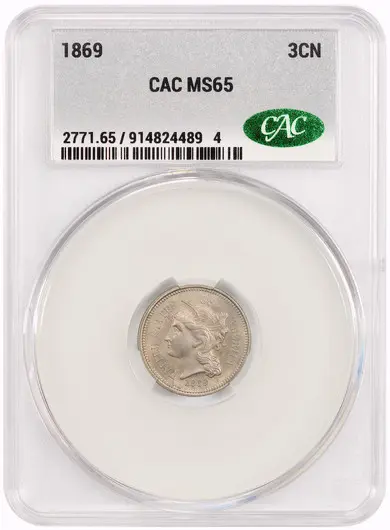
On August 9, DLRC sold an 1869 Three-Cent Nickel graded CACG MS65 for $1,700.
Heritage had sold a PCGS MS65 example without a CAC sticker for $793 on April 14.
The CACG coin therefore brought more than twice the earlier price.
Congress created the Three-Cent Nickel denomination during the unsettled monetary conditions that followed the Civil War. James Barton Longacre designed the series.
The Philadelphia Mint struck 1,604,000 business-strike 1869 Three-Cent Nickels. Each contains 75% copper and 25% nickel. The coin weighs just 1.94 grams and measures 17.9 mm.
Its unusual denomination and compact size already make the series distinctive. At Gem Mint State levels, however, collectors also place considerable emphasis on strike and surfaces.
An 1883 Proof Quarter Beats a Higher-Graded Comparison
The next DLRC result deserves special attention because the comparison crossed grade levels.
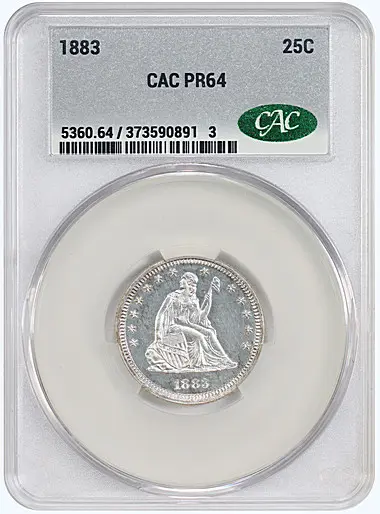
On August 16, DLRC sold a CACG Proof 64 1883 Liberty Seated quarter for $1,700.
GreatCollections had sold a PCGS Proof 64 example without a CAC sticker for $981.20 on February 8.
However, the comparison did not end there.
On June 17, Stack’s Bowers sold an NGC Proof 65 1883 quarter without CAC approval for $1,464.
In other words, the CACG Proof 64 not only surpassed another Proof 64. It also brought more than the cited non-CAC Proof 65.
The Philadelphia Mint produced only 1,039 Proof quarters in 1883. The coin contains 90% silver and 10% copper. It weighs 6.30 grams and measures 24.3 mm.
That low Proof production gives the comparison additional weight.
Collectors already view these late Liberty Seated Proofs through a quality-conscious lens.
A Modest but Clear Premium for an 1832 Half Cent
DLRC added an earlier American copper coin on August 23.
The firm sold an 1832 half cent graded CACG AU58 for $425.
One week earlier, on August 16, GreatCollections had sold a PCGS AU58 1832 half cent without a CAC sticker for $343.
The price gap looks smaller than several other August examples. Still, it points in the same direction.
The Philadelphia Mint struck 154,000 half cents in 1832. The copper coin weighs 5.44 grams and measures 23.5 mm.
More importantly, the half cent belongs to a denomination that disappeared from American commerce in 1857. Even collectors who never assemble the full series often want one strong example for a type set.
Heritage Auctions: The 1909 VDB Lincoln Cent Steals the Show
Heritage provided perhaps the most eye-catching group of August comparisons.
The headline coin carried one of the most recognizable dates and designs in American numismatics.
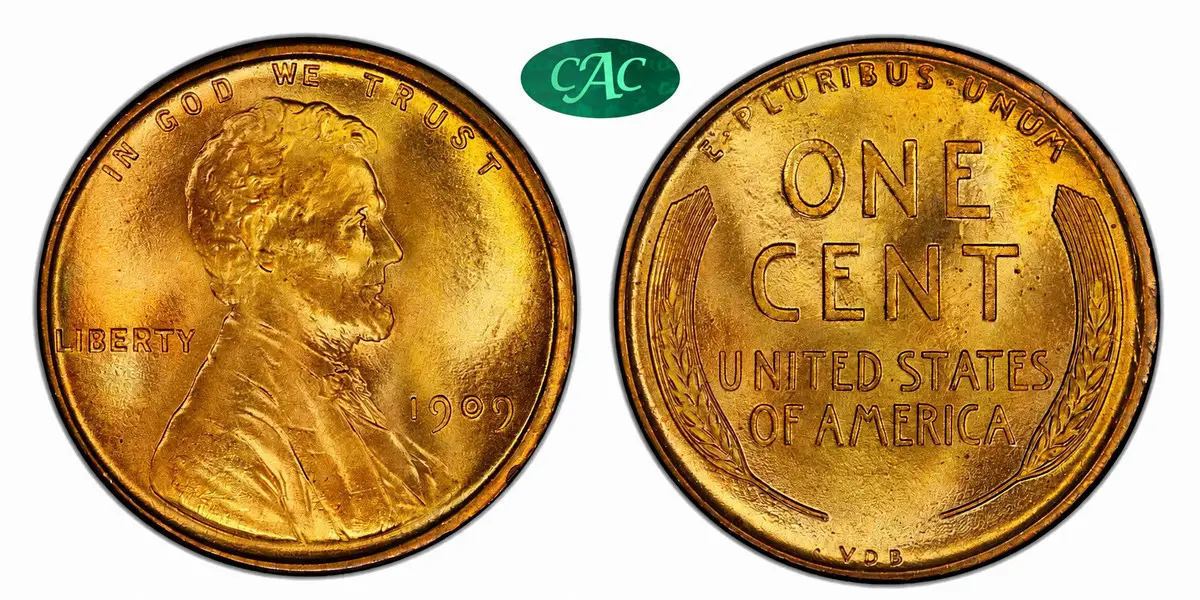
On August 17, Heritage sold a 1909 VDB Lincoln cent graded PCGS MS67 Red with CAC approval for $4,636.
That description matters. This coin was a business strike in MS67 RD, not a Proof.
Heritage sold four other PCGS MS67 RD 1909 VDB cents without CAC stickers during August. They brought $1,006.50 on August 11, plus $1,069.94, $1,037, and $1,006.50 on August 4.
Then, on August 30, GreatCollections sold another PCGS MS67 RD 1909 VDB cent without a CAC sticker for $1,380.50.
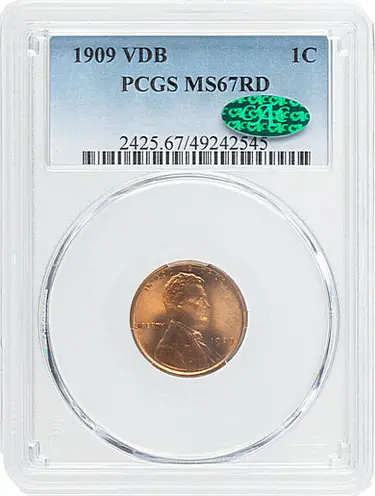
All six coins in this comparison carried the same PCGS MS67 numerical grade and the full Red color designation.
Yet the CAC-approved example brought more than three times the price of any of the cited non-CAC coins.
Heritage confirms the August 17 coin as PCGS MS67 Red with CAC approval and records its $4,636 result. The Philadelphia Mint struck 27,995,000 1909 VDB cents. The bronze composition contains 95% copper with the balance in tin and zinc, and each coin weighs 3.11 grams.
The backstory also gives this issue enormous collector appeal.
Victor David Brenner’s Lincoln cent debuted in 1909 and became the first regular-issue U.S. coin to feature an identifiable historical American. Brenner placed his prominent V.D.B. initials at the bottom of the reverse. Their size quickly created controversy, and the Mint removed them.
That short production window turned the 1909 VDB into one of the hobby’s best-known first-year coins.
At MS67 RD, collectors move beyond merely owning the date. They compete for preservation, color, luster, and eye appeal. August showed just how aggressively that competition can affect price.
Two Oregon Trail Halves, Two Prices, Consecutive Lots
Heritage offered an unusually useful comparison on August 24.
The company sold two PCGS MS66 1936 Oregon Trail Memorial half dollars in consecutive lots.
The CAC-approved coin brought $497.76.
The coin without a CAC sticker realized $317.20.
Because the coins appeared back-to-back in the same auction, the comparison removes at least some of the timing and venue differences that complicate many auction comparisons.
The Philadelphia Mint struck only 10,006 Oregon Trail half dollars in 1936. The issue contains 90% silver and 10% copper, weighs 12.5 grams, and contains about 0.3617 troy ounce of silver. Heritage confirms those specifications for the CAC-approved lot.
The Oregon Trail series also ranks among the most visually distinctive classic U.S. commemoratives. Its covered wagon and Native American imagery immediately connect the coin to the mythology and history of westward expansion.
A Flying Eagle Cent Breaks Past $14,000
Heritage saved another major comparison for August 31.
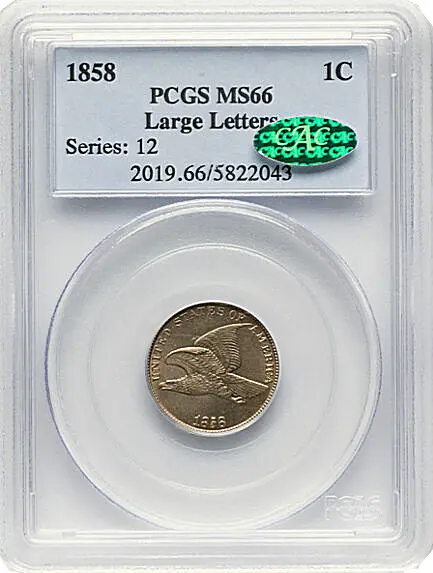
A CAC-approved PCGS MS66 1858 Large Letters Flying Eagle cent realized $14,030.
Just over a month earlier, on July 28, GreatCollections had sold a PCGS MS66 1858 Large Letters cent without a CAC sticker for $6,875.
The Heritage result therefore exceeded the earlier comparison by more than $7,000.
The Flying Eagle cent represents one of the great transitional experiments in U.S. coinage.
The Mint reduced the cent from the large copper format to a smaller copper-nickel coin in the 1850s. James B. Longacre’s flying eagle design lasted only briefly before the Indian Head cent replaced it.
For 1858, collectors distinguish Large Letters and Small Letters varieties by the spacing in AMERICA. The Philadelphia Mint struck 24.6 million cents that year across the varieties. The coin uses an 88% copper and 12% nickel alloy and measures about 19 mm.
Heritage described the CAC-approved MS66 as sharply struck with strong luster and reported only a small number of numerically finer certified pieces when it cataloged the coin.
Stack’s Bowers: Wartime Steel and Two Classic Proofs Close August
Stack’s Bowers closed August with three comparisons covering very different corners of the U.S. market.
One involved a wartime coin that nearly every collector knows. The other two involved high-grade Proofs from the classic era.
Same Grade, Successive Lots, and a $2,928 Difference
On August 31, Stack’s Bowers sold two PCGS MS68 1943 steel cents in successive lots.
The CAC-approved coin brought $5,612.
The example without a CAC sticker realized $2,684.
Therefore, the CAC-approved cent brought more than twice as much.
Few American coins tell their story as quickly as the 1943 steel cent.
World War II created an urgent demand for copper. As a result, the Mint turned to zinc-coated steel for the regular cent in 1943. Philadelphia alone produced 684,628,670 pieces.
The wartime cent weighs only 2.70 grams and measures 19 mm. Its steel core and zinc coating create an appearance unlike any traditional bronze Lincoln cent.
At MS68, however, the issue enters a very different market. Collectors demand exceptional surfaces and original brilliance from a coin whose composition proved vulnerable to spotting, corrosion, and discoloration.
Against that background, a $5,612 result becomes much more than the price of a “common” 1943 cent.
A 1936 Buffalo Nickel Proof Reaches $3,172
Also on August 31, Stack’s Bowers sold a CAC-approved 1936 Buffalo nickel graded Brilliant Proof 67 for $3,172.
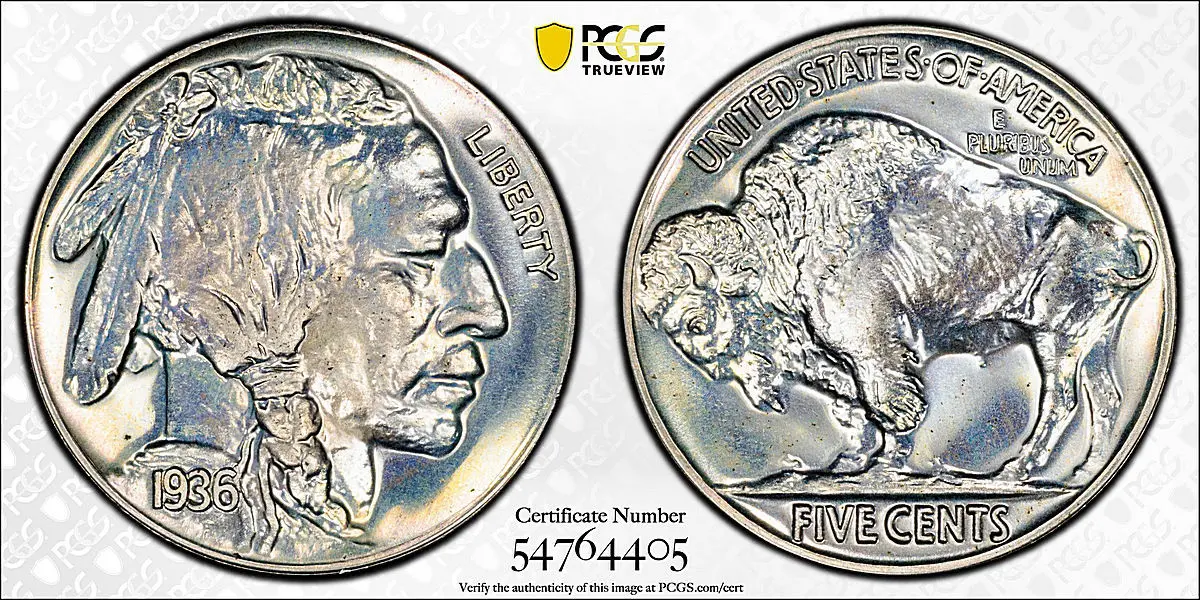
Heritage had sold an NGC Brilliant Proof 67 without a CAC sticker for $2,379 on July 18.
Earlier in the year, Heritage sold a PCGS Brilliant Proof 67 without CAC approval for $2,684 on January 15.
The 1936 Proof Buffalo nickel carries special importance because the Mint resumed Proof coinage for collectors during the year.
For the Brilliant Proof issue, the Philadelphia Mint produced only 4,420 coins. Each contains 75% copper and 25% nickel, weighs 5 grams, and measures 21.2 mm. James Earle Fraser created the design.
That tiny Proof production, combined with the popularity of the Buffalo nickel, gives high-grade examples a natural collector base.
An 1895 Barber Dime Nearly Doubles Its May Comparison
Finally, Stack’s Bowers sold a CAC-approved Proof 67 1895 Barber dime for $3,416 on August 31.
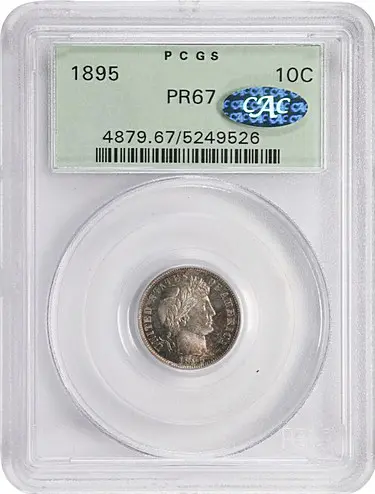
The firm cataloged the coin as JD-1, Rarity-4, and housed in a PCGS old green holder.
Heritage had sold a PCGS Proof 67 1895 dime without a CAC sticker for $1,830 on May 2.
The original market comparison estimates that values for these coins had risen by roughly 5% between May and August. Even after allowing for that estimated market movement, the difference remained substantial.
The Philadelphia Mint struck only 880 Proof Barber dimes in 1895. Charles E. Barber designed the coin. It contains 90% silver and 10% copper, weighs 2.50 grams, and measures 17.9 mm.
That combination of low Proof production, superb preservation, an older PCGS holder, and CAC approval gave advanced bidders several reasons to take notice.
What Do the August CAC Auction Results Really Tell Us?
The temptation with comparisons like these is to calculate a “CAC premium” and stop there.
The market does not work that simply.
A certification label cannot make two physically different coins identical. Moreover, exceptional toning can matter. So can strike, freshness, provenance, holder generation, photography, auction placement, and two determined bidders who want the same coin.
Therefore, CoinWeek would not treat every price difference as value created solely by a CAC sticker or CACG holder.
However, dismissing the pattern would make equally little sense.
August produced significant differences across four major auction houses. The coins ranged from a half cent struck during Andrew Jackson’s presidency to a Bicentennial Eisenhower dollar. They included copper, nickel, silver, and steel. They also covered circulated, Mint State, and Proof grades.
Most importantly, several comparisons matched the same numerical grade.
The 1976-S Eisenhower dollars did. The 1923 Peace dollars did. The 1909 VDB cents did. The 1936 Oregon halves did. The 1858 Flying Eagle cents did. The two 1943 steel cents even appeared in successive lots at the same auction.
That does not establish one universal percentage premium.
Instead, it shows something more useful.
At the upper end of today’s certified coin market, many buyers appear willing to pay substantially more when they believe an independent quality review separates one coin from others carrying the same numerical grade.
For collectors, that may be the biggest story behind these August results.
The number on the holder still matters.
Increasingly, however, the market keeps asking another question:
Which coin deserves the number most?
Coin Specifications at a Glance
| Coin | Composition | Weight | Diameter | Mintage |
|---|---|---|---|---|
| 1976-S Silver Eisenhower Dollar | 40% silver-clad | 24.59 g | 38.1 mm | 11,000,000 |
| 1869 Three-Cent Nickel | 75% copper, 25% nickel | 1.94 g | 17.9 mm | 1,604,000 |
| 1923 Peace Dollar | 90% silver, 10% copper | 26.73 g | 38.1 mm | 30,800,000 |
| 1883 Proof Liberty Seated Quarter | 90% silver, 10% copper | 6.30 g | 24.3 mm | 1,039 Proofs |
| 1909 VDB Lincoln Cent | 95% copper, 5% tin and zinc | 3.11 g | 19.0 mm | 27,995,000 |
| 1832 Half Cent | Copper | 5.44 g | 23.5 mm | 154,000 |
| 1892 Columbian Exposition Half Dollar | 90% silver, 10% copper | 12.50 g | 30.6 mm | 950,000 |
| 1936 Oregon Trail Memorial Half Dollar | 90% silver, 10% copper | 12.50 g | 30.6 mm | 10,006 |
| 1858 Large Letters Flying Eagle Cent | 88% copper, 12% nickel | 4.67 g | 19.0 mm | 24,600,000* |
| 1943 Lincoln Steel Cent | Zinc-coated steel | 2.70 g | 19.0 mm | 684,628,670** |
| 1936 Brilliant Proof Buffalo Nickel | 75% copper, 25% nickel | 5.00 g | 21.2 mm | 4,420 Proofs |
| 1895 Proof Barber Dime | 90% silver, 10% copper | 2.50 g | 17.9 mm | 880 Proofs |
* The 1858 Flying Eagle cent mintage covers the date as a whole, not only the Large Letters variety.
*The 1858 cent mintage covers the date rather than only the Large Letters variety.



Olá tenho no meu acervo que juntei praticamente a vida toda; Coleção Completa e outras Repetidas Moedas ONE CENT DOLLAR LINCOLN NO MINT MARK PROOF AND ERRORS Raras Usadas de 1909 até Final da série 2025 incluindo Comemorativas 2009 Agora quero vender pra quem oferecer mais
Hello I have a wheat penny 1943 silver. And I also have a penny with like seven president heads on it
Just starting my coin collection I now am at a stand still. I am looking for someone to work with to confirm what I think is worth saving. I live in Hudson Wi and would like to connect with someone in the area
That Columbus Expo looks sweet.
Queen Elizabeth
Queen Elizabeth 1957
I have old US coins for sale but in Yaounde the capital of Cameroon my WhatsApp number is 650760004
I’ve been collecting coins since my grandmother died and left me some beautiful pieces. They are all over 100 years old and I really don’t know what they are worth and what to do with them.
Who could I talk to about getting a coin appraised or even put it up for auction 1943 steel no mint excellent condition 6768 I believe 704-963-6022 thanks
I have a 1943 with the 3 lower the the 194 double die as well
Also have others that I know are worth money including nickels, and quarter’s, half dollar and gold dollar