


A mintmark can change a coin’s value in an instant. In some cases, one small letter turns a common coin into a four-figure rarity. For example, as of April 2, 2026, PCGS lists a 1916 Mercury dime at about $9 in G-4, while a 1916-D starts at about $1,650 in the same grade. That kind of gap explains why counterfeiters still target mintmarks so aggressively.
Unfortunately, counterfeiters have forged, altered, and tampered with mintmarks for decades. Thankfully, collectors can still catch many of these problems with careful study. A loupe, a trained eye, and a few reliable diagnostics often make the difference.
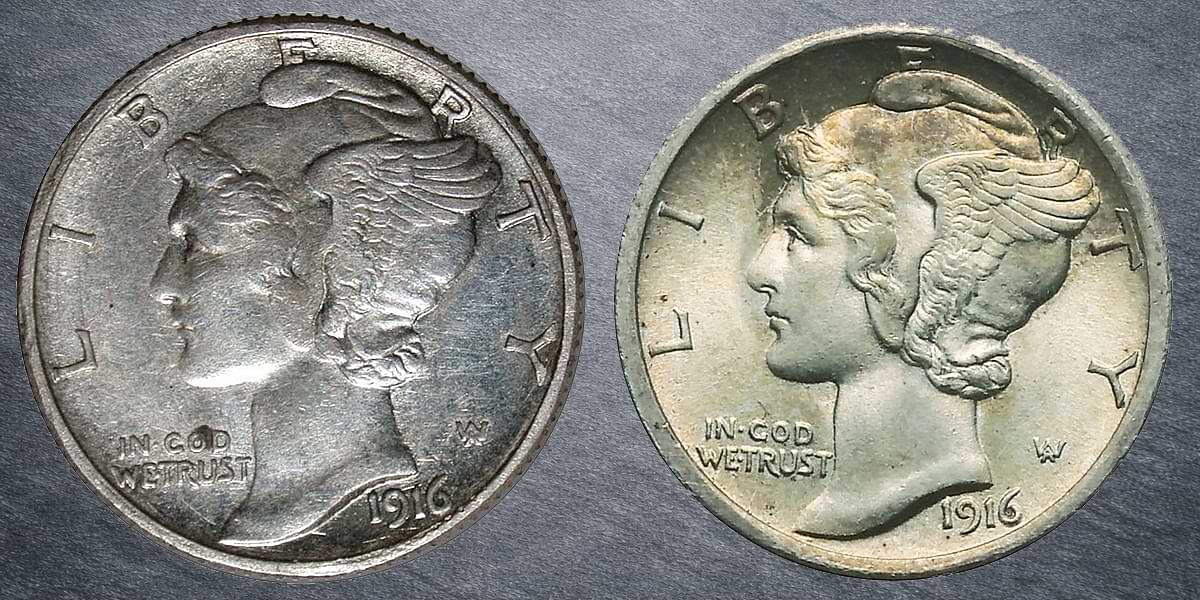
Start With the 1916-D Mercury Dime
The 1916-D Mercury dime offers one of the best lessons in mintmark authentication. PCGS notes that a genuine 1916-D carries a boxy, squared-off mintmark with a triangular opening inside the “D.” The mintmark stands tall. It looks crisp. It also shows the correct shape and placement. Just as important, the issue came from only four reverse dies. Two show repunching on the mintmark, while two do not. Once you learn those shapes and positions, you can reject many bad pieces quickly.
Some Rarities Matter Because the Mintmark Is Missing
Now turn to the opposite problem. Some coins become rare because they lack a mintmark they should have. The 1922 No-D Strong Reverse Lincoln cent stands as the classic example. In 1922, only the Denver Mint struck Lincoln cents, and it produced 7.16 million pieces. PCGS and NGC both confirm that point. PCGS also estimates that about 15,000 examples of the 1922 No-D Strong Reverse survive across all grades.
The variety came from a minting mishap, not from an intentionally low mintage. Heavy die stress and extensive polishing erased the “D” from the obverse die. At the same time, the Mint paired that obverse with a replacement reverse, which left the reverse unusually bold. That chain of events created the famous 1922 No-D Strong Reverse cent that collectors chase today.
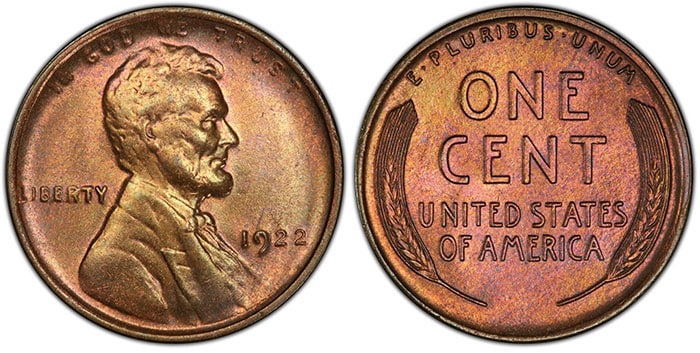
Know the Diagnostics on a Real 1922 No-D Strong Reverse
Counterfeiters often tool the “D” off an ordinary 1922-D cent and try to pass it as the rare No-D variety. However, the genuine coin shows a distinct group of diagnostics. The obverse looks weak overall. The “L” in LIBERTY touches the rim. The “TY” in LIBERTY looks stronger than “LIBER.” The words “IN GOD WE” look weaker than “TRUST.” Also, the second “2” in the date looks stronger than the first. Finally, the reverse must look strong. If the reverse looks soft or mushy, collectors should step back and study the coin much more closely.
PCGS breaks 1922-D cents into three groups: standard 1922-D, Weak D, and No D Strong Reverse. That distinction matters because many collectors still confuse the Weak D pieces with the much more valuable Strong Reverse coin. The Strong Reverse remains the key target. Therefore, authentication matters.
Embossed Mintmarks Create a Different Kind of Problem
Missing mintmarks create one problem. Added mintmarks create another. Yet embossed mintmarks may fool buyers most easily because the alteration rises from inside the coin itself. Collectors started seeing this trick in the late 1970s and early 1980s, especially on coins with thick edges and mintmarks near the rim. Buffalo Nickels fit that profile. Morgan dollars do, too.
Take the 1889-S Morgan dollar as an example. Many collectors would not stop at first glance. Some dealers might miss it, too. Yet the market has already seen altered 1889 Morgan dollars with embossed “S” mintmarks. CoinWorld documented one such coin and explained that the altered piece started life as an 1889 Philadelphia Morgan dollar.
What Is an Embossed Mintmark?
An embossed mintmark pushes up from inside the coin. Counterfeiters create it by drilling a tiny hole through the coin’s edge beneath the area where the mintmark should appear.
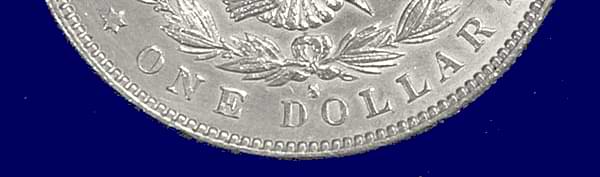
Then they use a specialized hand tool, often described as plier-like, with the mintmark cut into one jaw and padding on the other. They place the tool inside the drilled opening. Next, they squeeze metal upward from within the coin. After that, they fill the access hole, often with a soft material such as lead, and then sand or sculpt the repair to imitate the original edge. The process takes patience and very fine tools, the sort many collectors compare to dental instruments.
Check the Edge Before You Trust the Mintmark
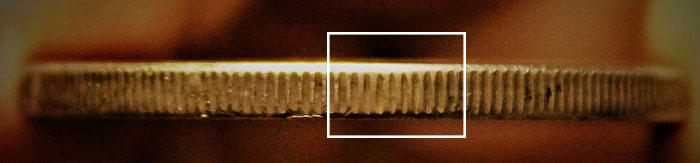
That leads to the most important defense. Inspect the edge. Always inspect the edge. On a suspect coin, look for breaks in the reeding or disruptions in a plain edge. In the altered 1889-S Morgan dollar discussed by CoinWorld, the reeding below the embossed “S” showed a different depth and appearance. CoinWeek’s counterfeit-detection article makes the same point and adds a useful diagnostic: a genuine 1889-S Morgan dollar should show 186 or 187 reeds. The fake did not.
Specialists can go farther. They can often spot a mismatch in luster and surface texture before they even reach the edge. CoinWorld notes that Philadelphia-struck 1889 Morgan dollars show different luster from San Francisco coins of the same year. So, if the obverse looks like a Philadelphia piece but the reverse shows an “S,” the coin deserves a much closer look.
Why Mid-Range Semi-Keys Still Attract Counterfeiters
The biggest danger does not always sit in the five-figure key dates. Of course, buyers will scrutinize an 1889-CC Morgan dollar. Recent dealer listings place PCGS AU50 examples around $9,150 to $9,562, and recent auction records show AU50 pieces selling from about $6,600 to $7,800. Most collectors expect trouble there.
However, mid-range semi-keys often slip under the radar. The 1889-S Morgan dollar carried a mintage of 700,000 pieces, and CoinWorld correctly describes it as scarce rather than truly rare. Even so, it still commands more money than a routine Philadelphia example. Recent PCGS AU50 dealer listings show 1889-S pieces around $161, while NGC’s March 2026 guide places circulated 1889 Philadelphia dollars around $67 to $82. That spread may not shock a buyer. Still, it can easily tempt a counterfeiter.
That is exactly why these coins matter. Many buyers give a mid-range coin a quick glance and move on. Meanwhile, a skilled alteration can slip through. Collectors and grading rooms have seen enough of these fakes over time that nobody should dismiss them as one-off curiosities.
Knowledge Still Wins
In numismatics, knowledge protects your money. It protects your collection, too. So learn the correct mintmark shape. Learn the placement. Study the edge. Count reeds when the series demands it. Compare luster and strike. Most of all, buy from reputable dealers who inspect coins carefully before they offer them for sale.
Embossed mintmarks represent only one class of alteration. Still, they show how far a counterfeiter will go for the right price gap. Collectors who understand these diagnostics stand a much better chance of catching trouble before it reaches the collection tray.




Wonderfull information added knowledge and raises suspicion of all older coins as altered
Good information to know if collecting coins. Thanks
Thank you for the interesting article.
Great information on the altered coins.
Interesting. People counterfeit everything of value these days. Probably as far back as collecting things of value and currency.
I had not heard of the embossed method of creating a counterfeit mint mark. Quite intriguing.
Great articles. I am much better informed on the details to look for when buying a suspected counterfeit coin
great article on altered coins
Very good information to the novice collector thank you
I didn’t know about this, but it’s good to learn. I’m saving this article and checking my coins, as I find it interesting to see how far people will go, and also very useful! Thanks for sharing!
Good read
As always, knowledge is power
Great article. I’I’ll keep it for future reference.
Great info. Thanks for sharing.
I learn something new about coin collecting everyday. I wasn’t aware of the embossing of coins.
I heard that the Iranians counterfitted the US Hundred dollar bills so well that the mint couldn’t tell the difference so they left them in circulation.
Great article. If I were a younger man with much better eyesight, it would be more helpful. As it is, I prefer to buy third-party graded coins. A little easier selling them, too. But we should keep in mind, everyone makes mistakes, so best to examine all coins, encapsulated or not.
This is really great information! Thank you so much!
Very helpful information. The tip about checking the edges was new to me.
This was very interesting. As a novice I had very little knowledge of this. Gonna have to reevaluate my extensive wheat penny collection.
Learning about counterfeit mintmarks and what to look for.
Learning about counterfeit mintmarks and what to look for when purchasing older coins,
I always read the counterfeit articles to learn something new as I prefer to buy raw coins. I would like to see more of these articles as counterfeit coins are found.
If they spent their powers on good instead of evil the world would be a better place. Good article!
This is very cool information to the novice collector. Thank you !
Good general summary.
always deal with a credible source.
Scoundrels gotta ruin collecting for the rest of us.
Good to know. Good luck on the coin giveaway everybody!
Thank you to you as well
The ingenuity behind some of these alterations is honestly a little frightening. It’s remarkable how many different ways scammers have found to make a common coin appear valuable, and increasingly difficult for collectors to know every trick to watch for. Articles like this are a great reminder of just how important education and careful examination have become in this hobby.