by Mike Diamond for CoinWeek…
A defaced die is one whose design has been ground off, melted, or removed by a milling machine. This procedure is ordinarily applied to dies that have been pulled from service, usually because of wear or breakage. After that, the dies are either discarded or melted down.
A canceled die is somewhat different because its design is interrupted by one or more grooves cut into the surface (Coin World, May 8, 2017). Mints sometimes cancel dies when the design becomes obsolete. The dies can then be placed in archival storage.
Defaced and canceled dies are unsuitable for striking coins, so when they are used for this purpose, it’s the result of backroom shenanigans.
Over the past 20 years, Egypt has become my only source for coins struck by defaced dies.

My first encounter with an Egyptian coin struck with defaced dies was in the form of an overstrike.
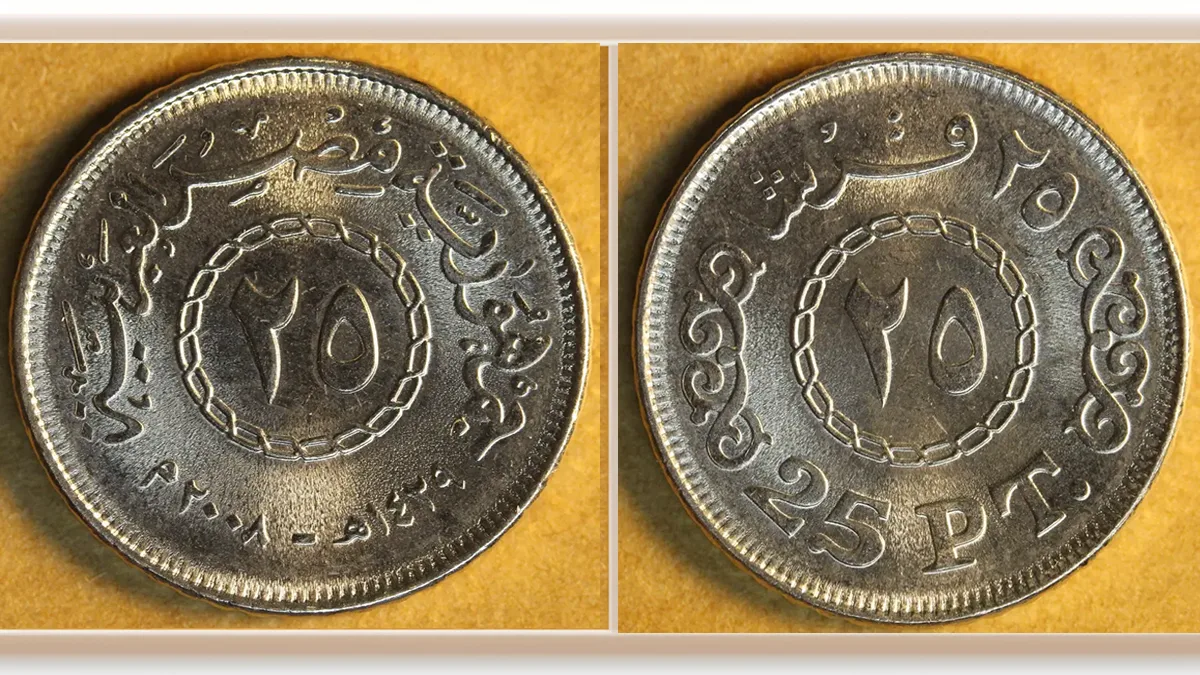
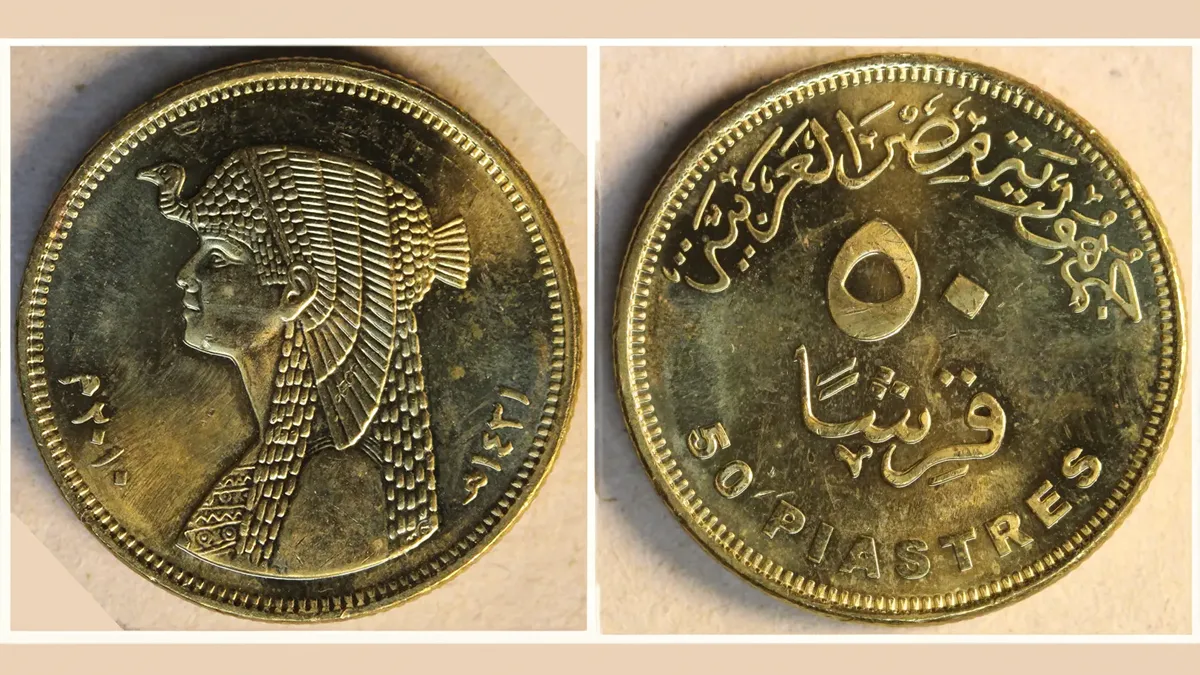
This 80% off-center Egypt 25 Piastres (2008 – 2025) was overstruck by a defaced 2010 50 piastres dies inside a 50 piastres collar (Coin World, May 12, 2014). The host coin’s composition (nickel-plated steel) and weight (4.48 grams) match that of a normal 25-piastre coin. A 50-piastres coin is composed of brass-plated steel and weighs 6.5 grams.
The narrow reeds of the 50-piastres denomination are seen at the tip of the off-center strike and the opposite pole. Only here did the host coin come into contact with the working face of the much larger 50-piastres collar. The rest of the host coin’s edge is smooth, as expected of any off-center strike.
The 50 piastres dies failed to contact the struck tab of the 25 piastres coin because the tab was thinner than the minimum die clearance.
However, the thickness of the host coin’s unstruck portion exceeded the minimum die clearance, explaining the secondary die contact in this area.
The 50 piastre reverse die was rotated approximately 120 degrees counterclockwise relative to the obverse die (medal rotation ↑↑ is standard). This is unsurprising since the mint workers responsible for this intentional error would not have been concerned with precisely lining up the two nearly effaced designs.
A few months ago, I encountered an eBay seller with a seemingly endless supply of defaced die overstrike Egyptian coins. Easily mistaken for vandalized coins, my past experiences allowed me to recognize their true nature. I purchased 23 of them in the hope of detecting some meaningful patterns. All but one specimen consisted of a 25-piastres coin overstruck by a pair of defaced 50-piastres dies. The defaced die pair used for the previous coin was also used for these specimens. All share the same pattern of grinding marks and all show the same remnants of the 50 piastres design (with accommodations made for variations in striking pressure). However, the die rotation was inconsistent, as shown by the two examples photographed for this article. This could mean that one die was loose or that the overstrikes were produced on an interrupted schedule, with the same two dies removed and re-installed several times.
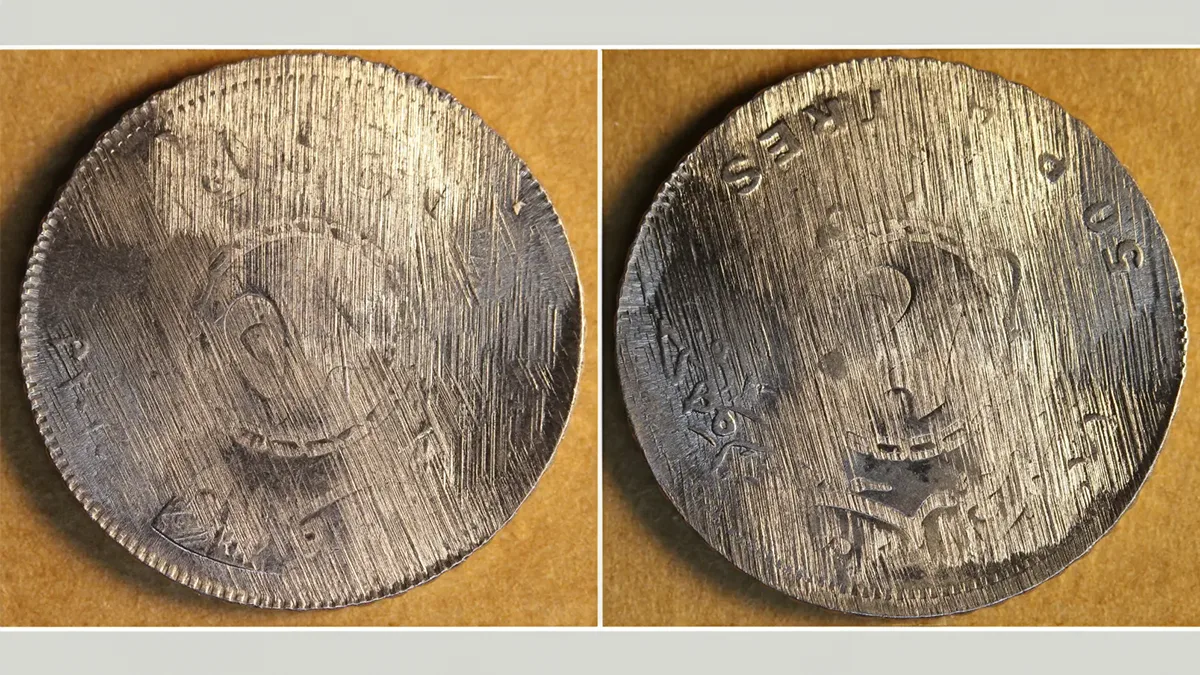
Twenty 50p/25p overstrikes show the wide reading of a normal 25-piastres coin. The remaining two 50p/25p overstrikes have a largely smooth edge interrupted by a short arc of narrow 50 piastres reeding. These two host coins were presumably broadstruck (struck out-of-collar). The pole that acquired a secondary arc of 50 piastres reeding was closer to the 50p collar than the rest of the coin.
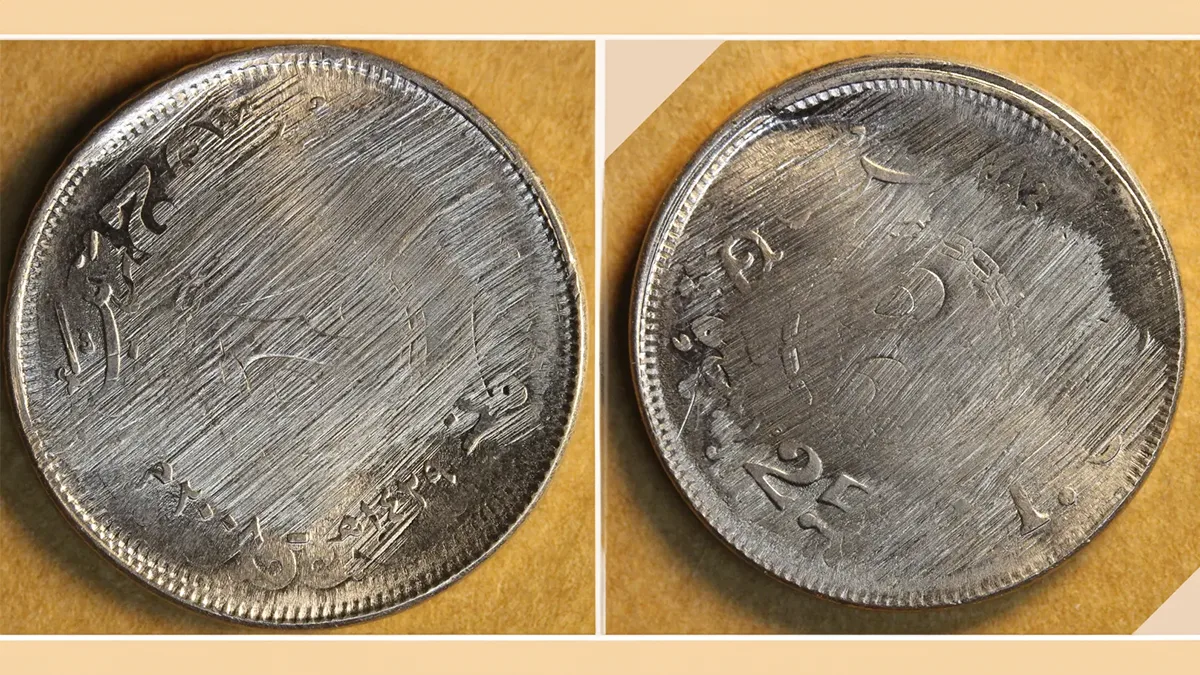
Ten coins show a short arc of 50 piastres reeding lying on top of or replacing the wider 25 piastres reeding. Ten other coins show only 25 piastres reeding. These were either perfectly centered within a 50-piastres collar (so there was no secondary collar contact), or they were struck outside a 50-piastres collar (secondarily broadstruck).
As far as I can tell, all the host coins originally had a standard 25-piastres design. None of the host coins appear to represent planchets struck by defaced 25-piastres coin dies. This was something I needed to check for because the outlier among my sample of 23 turned out to be a 25 piastres coin overstruck by defaced 2008 25 piastres dies. The first strike was presumably normal except for the presence of a partial collar error. The second strike (the one delivered by defaced dies) failed to generate secondary reeding, suggesting that it was a broadstrike.

A second pattern of defacement is seen in the double-struck 50 piastres coin (2007 – 2024) shown here. Enough of the design is present to determine that it was struck by two reverse dies (a “two-tailed” mule). While the first strike occurred within a 50-piastres collar, the second strike was a broadstrike, with no movement between strikes.
Instead of the coarse grinding marks seen in the 50p/25p and 25p/25p overstrikes, the surface of these two defaced dies was quite smooth. In both dies, the denticles were left largely or entirely untouched. This may have been intentional, the result of a focus on the central design and surrounding alphanumerics, or a consequence of the denticles being protected by a small degree of die convexity. Rather gratuitously, one of the reverse dies was canceled by someone using a vibrating engraver to carve three narrow channels intersecting in the die face’s center. I don’t know if the cancellation marks preceded or followed the removal of the design (Coin World, December 31, 2018).
The seller that provided this specimen had other 50 piastres planchets struck by identical dies or at least dies defaced and canceled in the same fashion. He also offered planchets belonging to other denominations that were struck by dies bearing an identical pattern of destruction, including, I believe, a 25-piastre planchet.
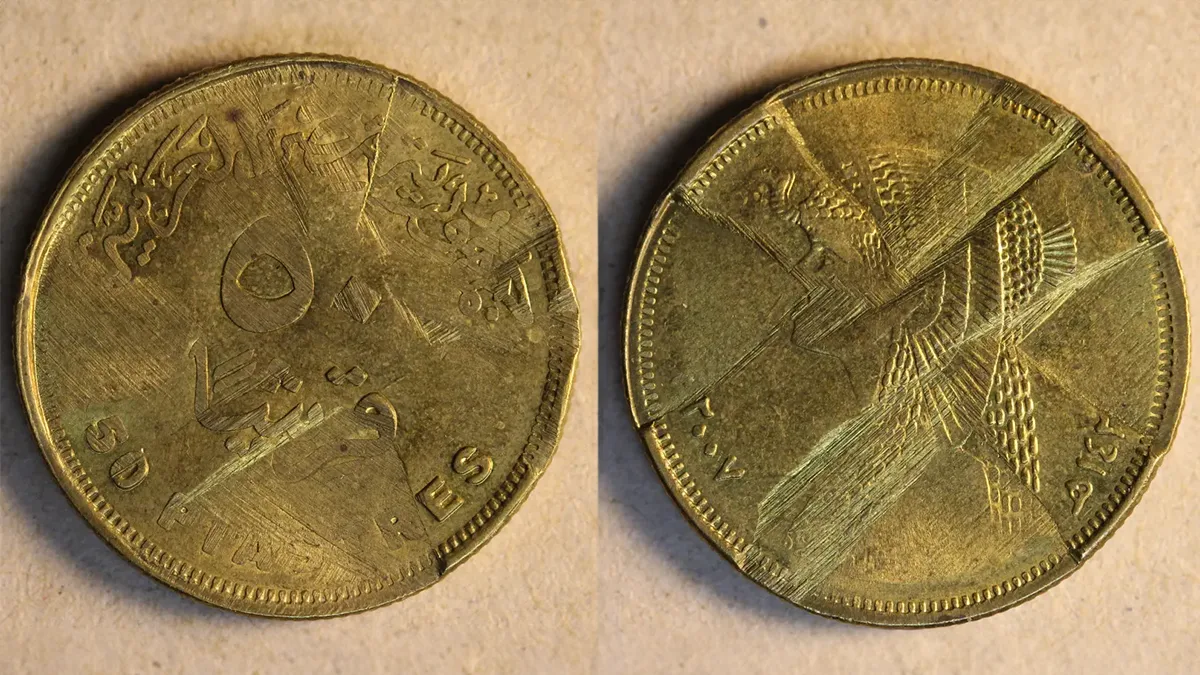
Often offered alongside unambiguous defaced die errors are 50 piastre coins that have been crushed by cancellation dies. A cancellation die is quite distinct from a canceled die. The former is a cylinder whose working face carries a nonsense design, a cancellation symbol or phrase, a regular pattern of grooves or indentations, or a flat, featureless surface.
At no point does the die carry a standard design. The illustrated specimen consists of a 2007 50-piastres coin crushed by a pair of flat dies into which a series of broad valleys were carved that show thin, longitudinal grinding marks. The flat surface of each cylinder crushed the coin’s original design, while the valleys themselves helped preserve the original design by virtue of their depth and the resulting reduced effective striking pressure. None of these coins were struck within a collar during the cancellation strike.
Uniformly flat, featureless cancelation dies have been used to mash down other Egyptian coins, primarily ringed bimetallic 1-pound coins (Coin World, June 30, 2014).