By Jack D. Young, Early American Coppers (EAC), and the Dark Side Group ……
To start this latest installment of Fun With Fakes, here’s an ad from the Anti-Counterfeiting Education Foundation (ACEF):

The ad brings a question to my mind: What makes two Morgan Dollars stamped COPY “legal to own counterfeits”?
It is my understanding that for a coin to be considered a “counterfeit” there needs to be the element of “intent to deceive”. In the book Cash in Your Coins — Selling the Rare Coins You’ve Inherited (3rd Ed., 2019), author Beth Deisher, Executive Director of the ACEF, offers this definition:
“An exact or nearly exact replica coin, note, or other object intended to deceive or defraud.”
In fact, “intent to deceive” is a term used in federal counterfeiting law.
The Hobby Protection Act (HPA), signed into law on November 29, 1973, and amended in 2014, is designed to protect collectors against deceptive reproductions and the manufacture of imitation collectible items. It requires reproductions and imitations of coins and political items manufactured after the date of enactment to be marked as copies or with the date of manufacture.
One could question if these were “coined” prior to 1973 and the HPA, but in this case that is a moot point, as both come from a foreign nation not subject to enforcement of American laws, and “advertised as genuine. Only after they were purchased and determined to be not genuine were they stamped with a COPY punch. The manufacturer DID NOT put the COPY stamp on them before selling them. In fact, they were stamped with a punch made for and donated to ACEF for use as a public service that ACEF will offer during the ANA’s World Fair of Money (WFOM) in August.”
So, the intent makes them “counterfeit”, and even though both coins are counterfeit, they are legal to own now because they have been properly marked COPY in accordance with the Hobby Protection Act, according to the ACEF.
Now to the stars of this article: several Gallery Mint Museum (GMM) “replicas” listed as genuine in several current venues. These “coins” initially were properly marked with COPY, never intended to deceive, and were advertised as privately issued replicas of genuine coins. They would be counterfeit if they were not marked COPY or, as illustrated in this article, altered with the intention to sell as genuine.
And the first one and the eBay listing:
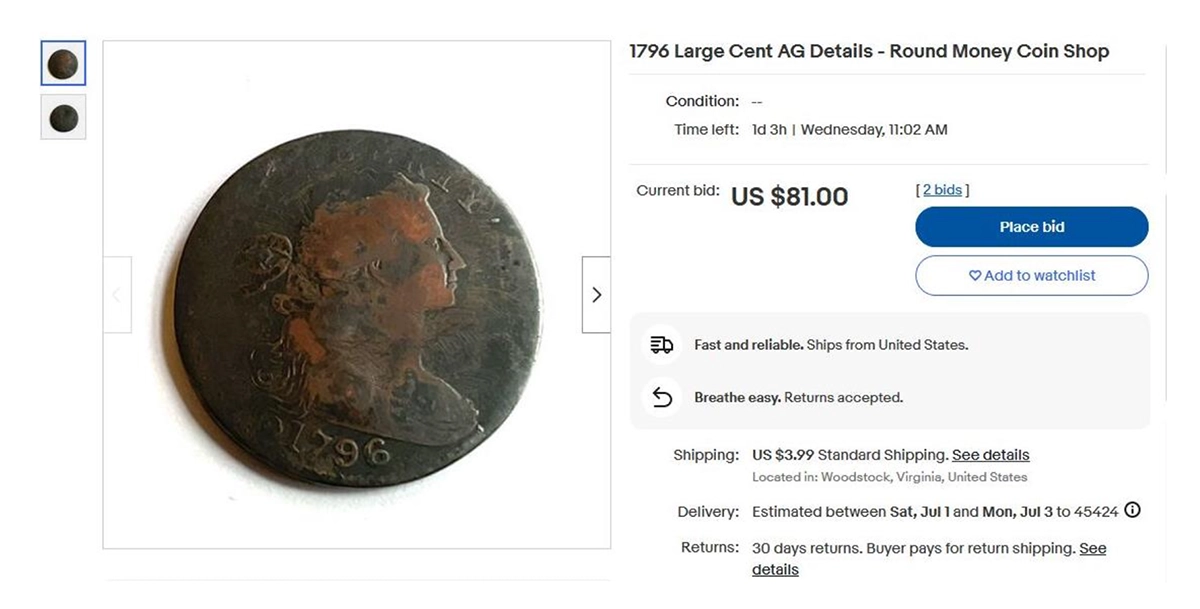
This one is listed as an AG Details large cent – so the apparent intent to sell as genuine makes it a counterfeit, even though it started as a Gallery Mint replica. As I always say in my CoinWeek articles, attribution is the first step towards authentication.
Unfortunately, this example does NOT match any known 1796 Draped Bust Large Cent variety, but nicely matches one of the documented Gallery Mint specimens.

And the reverse comparison; this reverse was mutilated and there is no trace of COPY visible:

Another example shows a subtler approach by the counterfeiters.

And the obverse and reverse comparison images. Again, not an attributable genuine variety but it might look good to a less-experienced collector.


What better way to cover up that pesky COPY than with a large counterstamp?
And a second example, this one artificially worn down to achieve the same result.
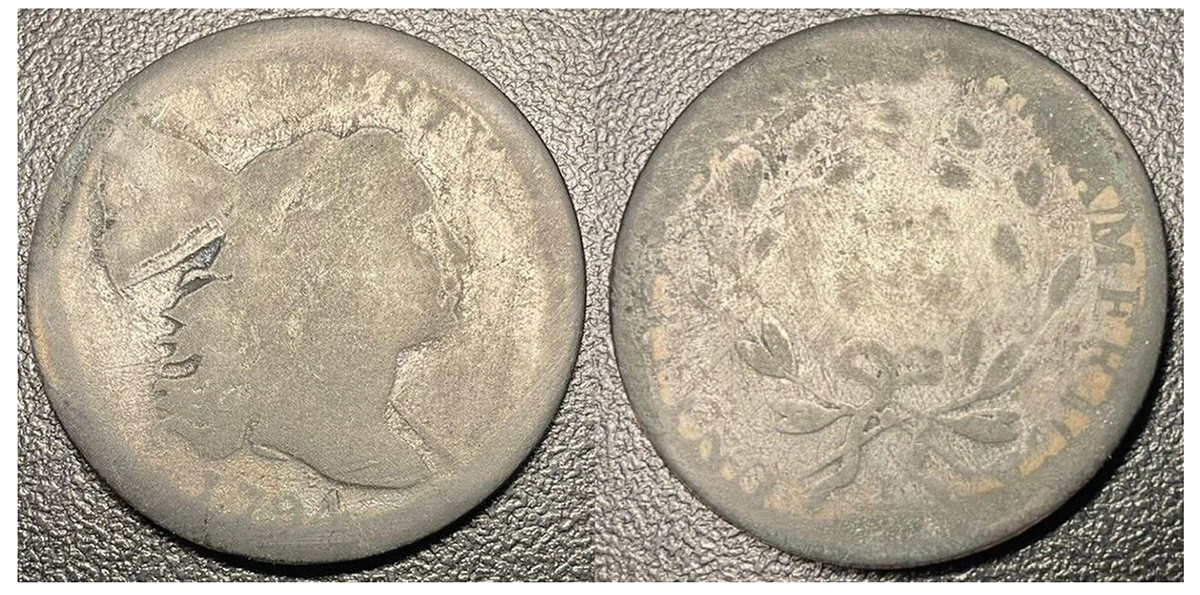
Continuing with the artificially worn-down theme is this apparent 1793 Half Cent. A dealer asked opinions on this one.

And the reverse; no hint of COPY or much design detail left!

The dealer did not intend to deceive, but someone earlier likely did.
And one more worn Gallery Mint counterfeit, this time a 1796 Draped Bust Quarter, another previously listed on eBay.

And the reverse comparison images – notice the most worn area of the subject example is strategically where COPY should be.
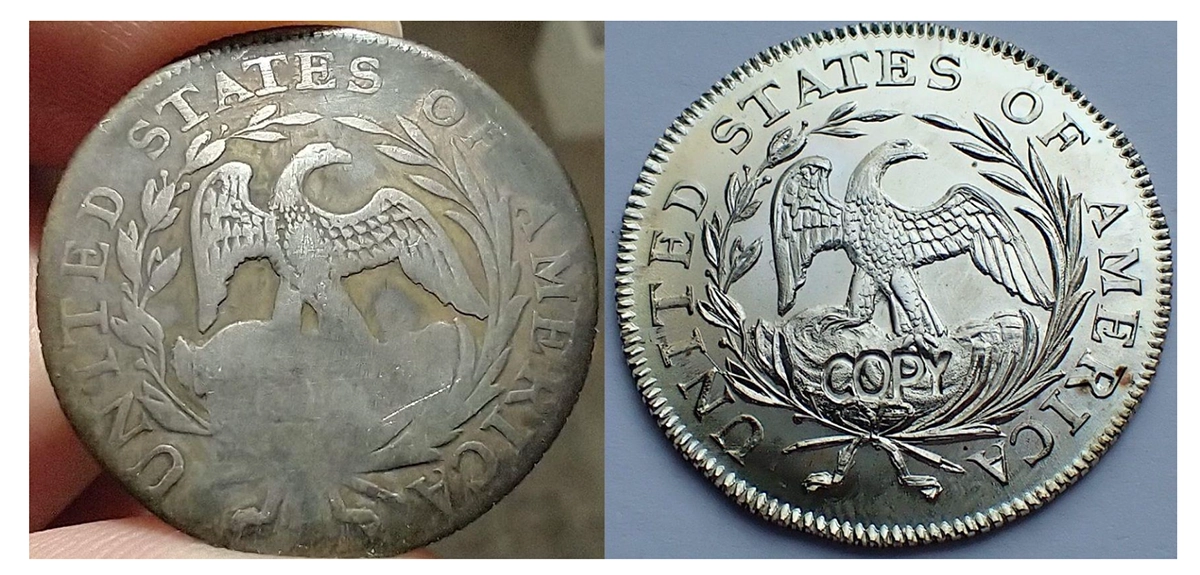
The following example is from my collection – a perfectly good example of the Gallery Mint’s 1793 Wreath Cent with COPY prominently displayed as designed. Not attributable as a genuine variety of Wreath Cent, it does demonstrate the skill used to make these replicas, including a “vine and bars” edge.
A little artificial wearing and we have the potential for another dangerous counterfeit.

“1793” Gallery Mint Wreath large cent- author’s
And the “twist” (there’s always a twist), there appears to be no limit to the types of counterfeits we have documented, including copies of Gallery Mint replicas without COPY stamped into the design and offered for sale on the ‘Bay.
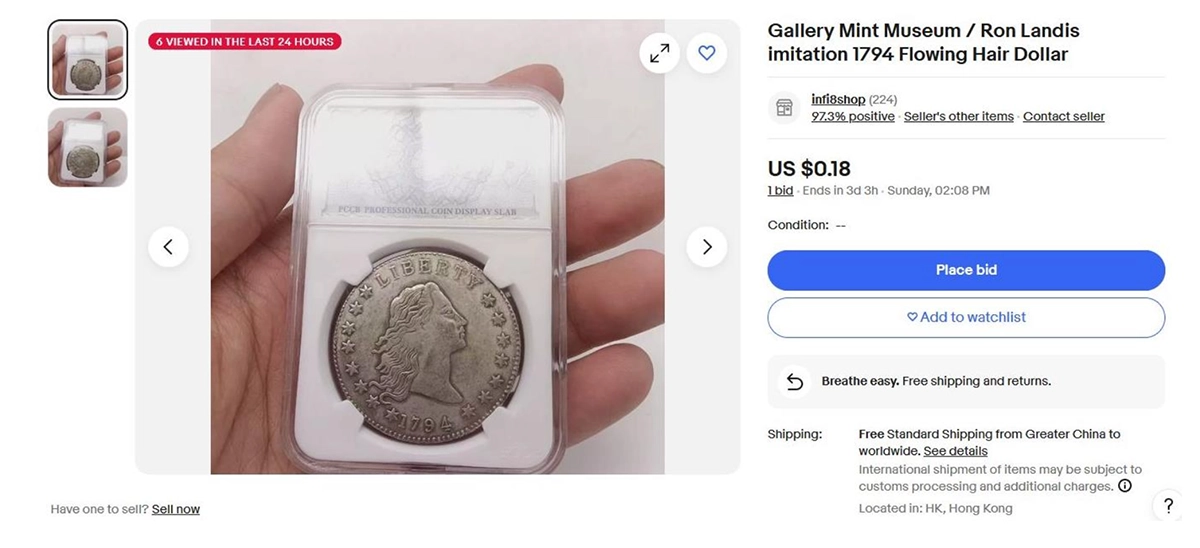
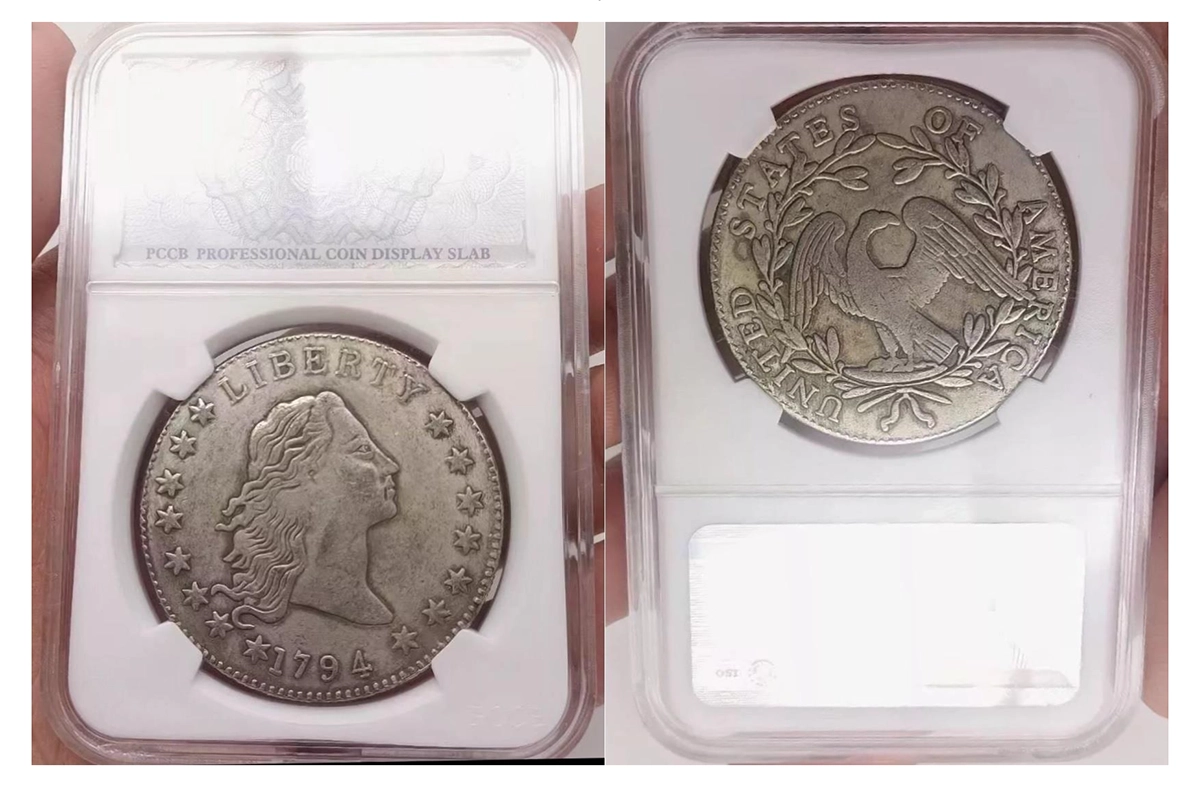

I have it on good authority from the man responsible for the true GMMs that this is not one of his. These have also been seen in fake third-party grading service slabs and offered for sale as genuine coins.
And so, another level of counterfeit is seen in the marketplace and hobby – and another reminder to stay vigilante out there!
Best,
—Jack
MORE Articles on Counterfeit Coins by Jack D. Young
* * *