


Knowing what your coins are worth gives you control.
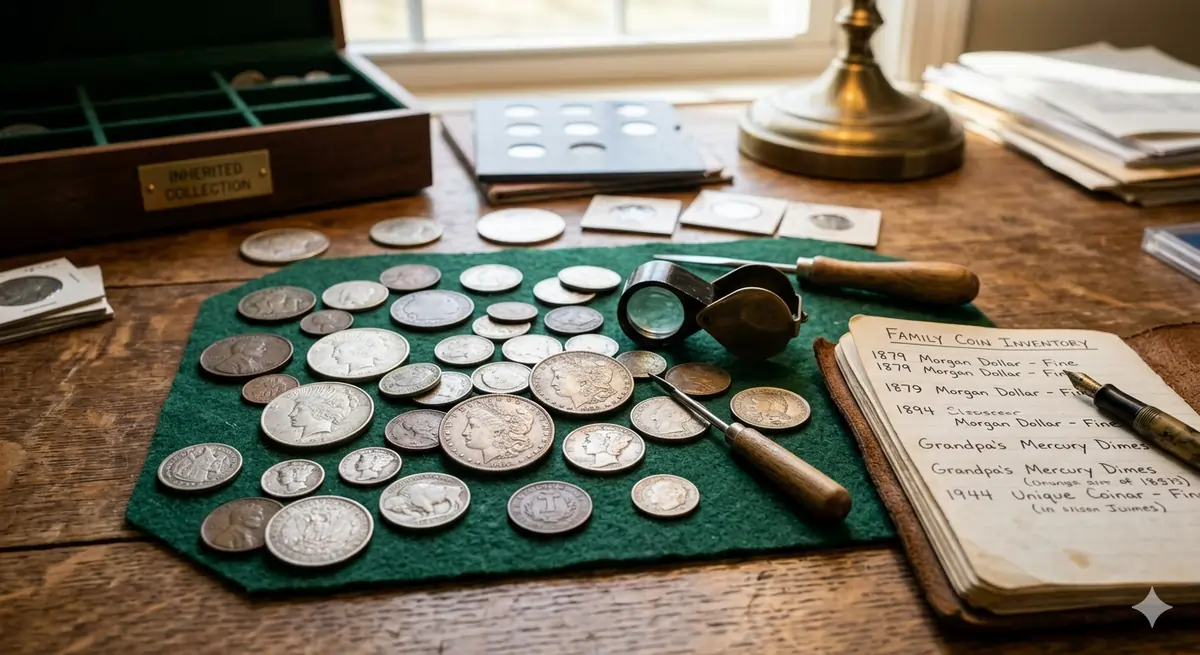
That matters whether you inherited a collection, opened a safe-deposit box, found a forgotten shoebox, or built a cabinet one coin at a time. A good appraisal can help you sell with confidence. It can also help with insurance, estate planning, or a simple decision to hold.
Today, collectors no longer need to start at a local coin shop. Online coin appraisal services now give owners several ways to get a professional or informal opinion from home. Still, not every option serves the same purpose.
Some services offer quick photo-based valuations. Others focus on full collections. Auction houses may help when the coins justify a major sale. Meanwhile, online forums can give fast feedback, but not formal documentation.
Here is how each route works.
Why a Professional Coin Appraisal Matters
A coin’s value rarely comes from one factor.
Metal content matters. So do rarity, mintage, grade, eye appeal, demand, and historical importance. In some cases, a tiny mintmark or die variety can change the entire story.
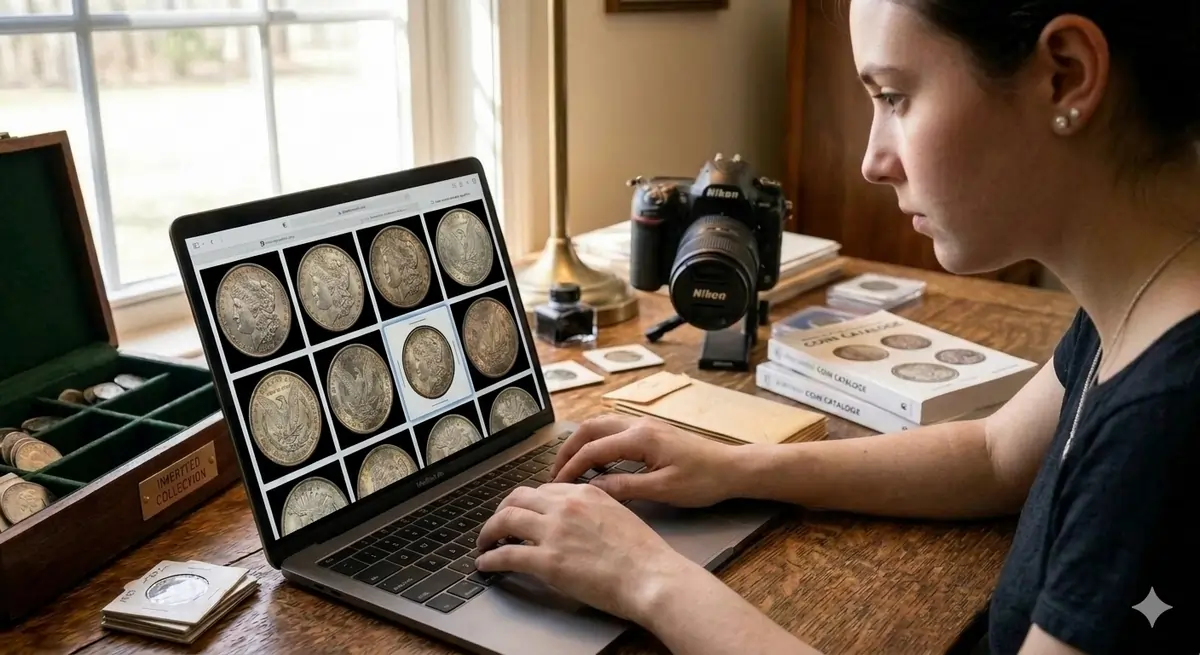
That is why a price guide only starts the conversation. Auction records help, too. However, neither one sees your actual coin. A professional numismatist looks at the whole picture. That includes condition, authenticity risk, market timing, and comparable sales.
In short, an appraisal can answer the question that matters most: what do I really have?
That answer can support several decisions. You may need coverage for insurance, or you may need a value for an estate. You may want a tax professional to review a charitable donation. Or, you may simply want to avoid selling a scarce coin for common-coin money.
However, use the right kind of appraisal for the job. A casual online estimate does not carry the same weight as a formal written appraisal from a qualified expert. For tax, legal, or insurance needs, confirm the exact documentation required before you rely on any valuation.
1. ValueMyStuff: Fast Online Appraisals for Individual Coins
ValueMyStuff offers online appraisals across many collecting categories. That includes coins, paper money, medals, and related collectibles.
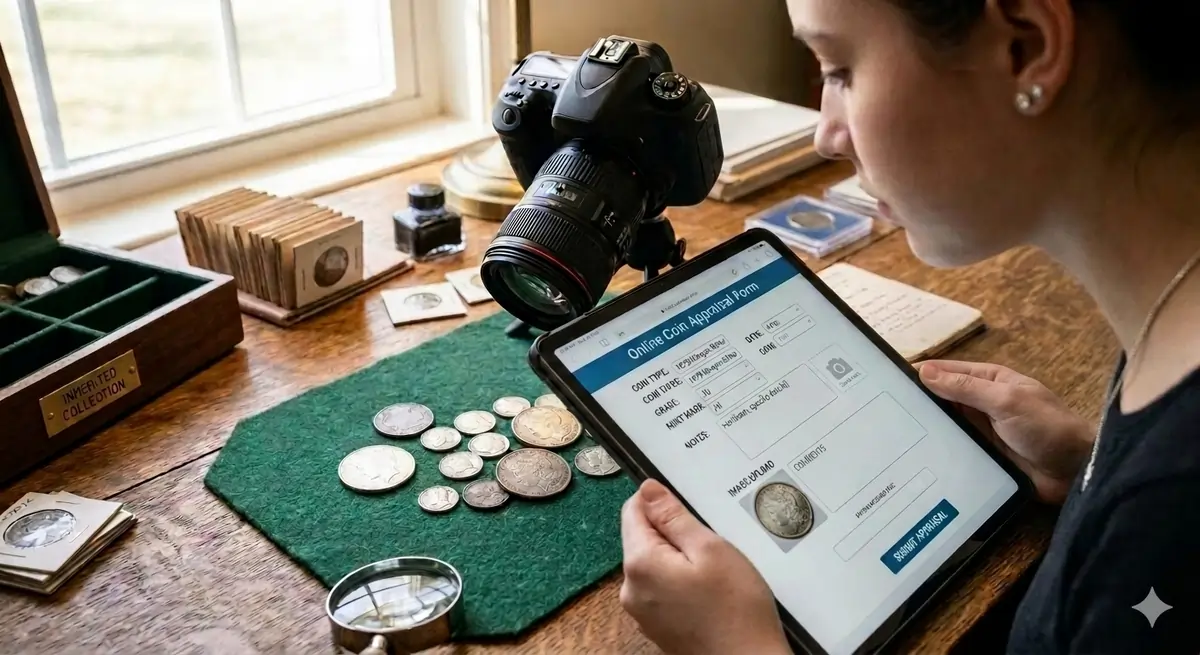
The process stays simple. You upload photos. Then you add details, such as date, mintmark, size, weight, source, and visible markings. An expert reviews the submission and provides a written appraisal. ValueMyStuff advertises a 24- to 48-hour turnaround, with pricing that starts at $28 per appraisal credit.
That speed gives ValueMyStuff a clear place in the market.
It works well when you have one coin, one medal, or a small group of items. It also helps when you do not know whether you own a coin, token, medal, or exonumia item. Since the platform covers many collecting fields, it can sort mixed material more easily than a narrow service.
However, the model has limits.
First, the service charges per appraisal. Therefore, the cost can rise quickly if you submit a large estate or many lower-value coins. Also, the appraisal depends on the quality of your photos. A sharp image can reveal a date, mintmark, and surface problems. Yet it may not capture luster, hairlines, altered surfaces, or subtle cleaning.
For rare coins, that matters. A single grade point can change the value by hundreds or thousands of dollars. So, for valuable coins, treat a photo-based appraisal as a strong first step. Then consider a second opinion or an in-hand review.
2. Coinfully: A Free Online Appraisal Route for Collections
Coinfully promotes a free online coin appraisal service. It focuses on people who want to understand a collection before they sell, insure, or organize it.
The process begins with photos or an inventory. Coinfully’s team reviews the material and provides a documented valuation. The company states that it charges no appraisal fee and places no obligation on the owner to sell.
That makes the service attractive for inherited collections.
Many non-collectors face the same problem. They own a box of coins but do not know what to show, what to keep, or what to ignore. Coinfully’s model aims at that moment. It can review single coins, but it appears especially useful for larger groups, estates, bullion holdings, and mixed U.S. coin collections.
The company also states that its documentation can help with insurance, legal, estate, and sale decisions. As always, owners should confirm requirements with their insurer, attorney, estate representative, or tax adviser. Different situations require different documentation.
Coinfully also presents itself as a no-pressure appraisal option. If the owner decides to sell, the company says it can provide insured shipping and payment after verification. If the owner does not sell, the appraisal still helps them understand the collection.
However, the same photo-based caution applies.
An online review can identify many coins and estimate market value. Still, a final opinion on authenticity and grade may require physical inspection. That becomes especially important with early U.S. copper, key-date silver, rare gold, high-grade coins, altered coins, and counterfeit-prone issues.
Coinfully also focuses mainly on the U.S. market. So, collectors with highly specialized world, ancient, or medal collections may want to compare the result with a specialist in that field.
3. Numismatic Auction Houses: Best for Important Coins and Major Collections
Major numismatic auction houses serve a different role.
They do not just estimate value. They also connect consignors with competitive bidders. That distinction matters.
A major auction house can make sense when you have rare coins, certified high-end pieces, important paper money, or a collection with strong market potential. Firms such as Heritage Auctions and Stack’s Bowers Galleries maintain specialist teams. These experts handle rarities, varieties, die states, pedigrees, and market records every day.
The process usually starts online. You submit photos, descriptions, certification numbers, and an inventory if you have one. Then the firm reviews the material. If the coins qualify, the auction house may provide pre-sale estimates. Those estimates function as market-based opinions tied to expected auction performance.
This route offers several advantages.
- First, auction specialists understand the high end of the market. They often know which coins need a major sale, which coins belong in a specialized session, and which pieces may benefit from promotion.
- Second, auction estimates draw from actual realized prices. That gives the valuation a market anchor.
- Third, competitive bidding can help rare and desirable coins exceed a private offer. A fresh-to-market rarity with strong images, good cataloging, and the right audience can perform well.
However, auction houses do not fit every collection.
They often focus on coins that meet minimum value levels. As a result, they may decline common material or suggest another path. Also, the timeline can stretch. Submission, consignment, cataloging, auction placement, sale, settlement, and payment may take weeks or months.
Fees also matter. Sellers should review commission terms, reserves, insurance, photography, shipping, and payout schedules before signing a consignment agreement. Buyer’s premiums can also affect bidding behavior, even though the seller does not pay that fee directly.
For major coins, an auction house can provide the deepest market exposure. For an everyday accumulation, a faster appraisal option may make more sense.
4. Online Coin Forums: Fast Feedback, but Not Formal Appraisal
Online coin communities can help identify coins quickly.
Collectors use forums such as CoinTalk, the PCGS message boards, the NGC Coin Collectors Chat Boards, Reddit’s coin communities, and Facebook collecting groups to ask basic value and identification questions. These groups can offer surprising insight, especially when several experienced collectors respond.
The process is simple. You post clear photos. Then you add the date, mintmark, denomination, weight, size, and any known history. Good images of both sides matter. So do close-ups of mintmarks, edges, and unusual details.
Forum feedback can arrive within minutes or hours. Often, several members will weigh in. One person may identify a variety. Another may notice environmental damage. A third may point to recent auction records.
That collective knowledge has value.
However, forum opinions remain informal. They do not replace a written appraisal and they do not satisfy insurance, estate, or tax requirements. Also, opinions vary in quality. Some commenters have deep experience. Others guess.
Privacy also matters. Do not post your address, storage details, complete estate information, or anything that could identify where valuable coins sit. For expensive coins, share only what people need to help.
Online forums work best as a first read or a second opinion. They can help you avoid obvious mistakes. They can also tell you when a coin deserves professional review.
How To Choose the Right Online Coin Appraisal
The best online coin appraisal method depends on your goal.
If you need a quick informal opinion, start with a forum. It costs nothing. It also gives you several viewpoints.
If you need a fast written appraisal for one or two items, a paid platform such as ValueMyStuff can help. It offers speed and documentation.
If you have an inherited collection or a group of U.S. coins, Coinfully offers a free appraisal route with no stated obligation to sell.
If you own high-value rarities or a collection that belongs in a public sale, contact a major numismatic auction house. The process takes longer, but the market exposure may justify the wait.
Still, owners should remember one rule: purpose determines paperwork.
An insurance appraisal, estate appraisal, tax appraisal, auction estimate, dealer offer, and forum opinion do not mean the same thing. Each one answers a different question. Therefore, ask what the document covers before you rely on it.
How To Prepare Coins for an Online Appraisal
Preparation can improve the result.
First, do not clean your coins. Cleaning can lower value and may make authentication harder. Next, photograph each coin in good light. Use a steady camera. Capture both sides. Then include the edge if the coin looks unusual or valuable.
Also, write down basic facts. List the denomination, date, mintmark, metal if known, certification company, grade, and any holder number. If the collection came through a family estate, note that history. Provenance can matter, especially with older collections.
For larger groups, create a simple inventory. Separate U.S. coins, world coins, bullion, proof sets, paper money, medals, and tokens. This saves time. It also helps the appraiser spot the best material faster.
Finally, keep expectations realistic. Most coins do not turn into windfalls. Yet some do. The point of an appraisal is not to chase hype. The point is to replace uncertainty with knowledge.
The Bottom Line
An online coin appraisal can turn a confusing box of coins into a clear plan.
Sometimes that plan leads to a sale, and sometimes it leads to insurance. It simply tells a family which coins deserve care and which ones carry only modest value.
Either way, knowledge changes the owner’s position. It prevents rushed decisions. It reduces the risk of underpricing. Moreover, it helps collectors and heirs understand the story behind the metal.
That story may begin with silver content or a date on a coin. But often, it ends somewhere more meaningful: with a better decision.




This is a vey helpful article. I have coins that I inherited from my father and I had no idea where to start. Thank you!
A lot of good information
Really good Information for People that have no Idea what they are worth! I like it!