Hannakuh Rins from the Evening of Sun, Dec 14, 2025 to Mon, Dec 22, 2025
Few symbols in world numismatics carry the emotional, religious, and historical weight of the menorah. Long before it became the emblem of the modern State of Israel, the menorah stood at the center of Jewish ritual life and national identity.
While Hanukkah itself commemorates events of the second century BCE, its themes, rededication, resistance, and religious survival, resonate powerfully through Jewish coinage from antiquity to the present day.
Although no ancient coin explicitly names Hanukkah, the holiday’s story and symbolism are inseparable from the coins struck by Jewish authorities during moments of independence and revolt. In later centuries, modern mints would finally issue coins that directly celebrate Hanukkah by name, transforming an ancient narrative into contemporary numismatic art.
This article explores Hanukkah-themed modern coins and, more importantly, the ancient Jewish coins featuring the menorah, tracing how metal became a medium for memory, faith, and defiance.
Hanukkah and the Origins of Jewish Coinage
Hanukkah commemorates the Maccabean Revolt (c. 167–160 BCE), when Jewish rebels led by the Hasmonean family defeated the Seleucid Greeks and rededicated the Temple in Jerusalem. This period marks the re-emergence of Jewish political sovereignty after centuries of foreign domination.
Significantly, it was also during the Hasmonean era that the first large-scale Jewish coinage appeared.
Hasmonean Coins (c. 140–37 BCE)
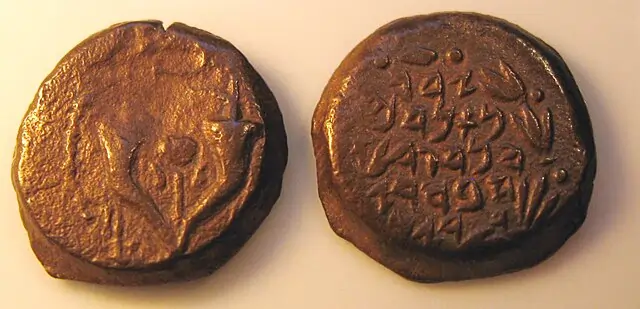
The Hasmonean rulers, descendants of the Maccabees, issued bronze prutot bearing Hebrew and Paleo-Hebrew inscriptions. These coins avoid human portraits, adhering to Jewish aniconic tradition, and instead display symbolic imagery such as:
- Cornucopiae (symbolizing abundance)
- Anchors
- Stars and floral devices
While no unequivocal menorah appears on Hasmonean coins, these issues remain foundational. They represent the political success celebrated by Hanukkah and establish the visual language that later Jewish coinage would expand upon.
The Menorah Enters Jewish Coinage
The menorah, the seven-branched candelabrum of the Temple, becomes numismatically visible only after the destruction of the Second Temple. Paradoxically, its appearance on coins coincides with loss, exile, and revolt.
The First Jewish–Roman War (66–70 CE)
During the Great Revolt against Rome, Jewish authorities struck silver shekels and bronze coins proclaiming “Freedom of Zion” and “Year Two/Three of the Redemption of Israel.”
These coins emphasize Temple vessels, chalices, palm branches, and ritual objects, rather than explicit menorahs. Nonetheless, they establish a crucial precedent: coins as instruments of Jewish national messaging.
Some rare and debated bronze issues may contain stylized menorah-like forms, but the evidence remains inconclusive. As such, mainstream scholarship stops short of identifying a definitive menorah on First Revolt coinage.
The Bar Kokhba Revolt: The Menorah in Metal
If one series stands above all others in the context of Jewish symbolism, it is the coinage of the Bar Kokhba Revolt (132–135 CE).
Historical Context
Led by Simon bar Kokhba, this revolt represented the last major Jewish attempt to restore sovereignty in Judea. Coinage played a central role in that effort.
Rather than striking entirely new blanks, Bar Kokhba’s administration overstruck Roman coins, deliberately erasing imperial images and replacing them with Jewish symbols.
Menorahs on Bar Kokhba Coins
Several bronze issues unmistakably depict the seven-branched Temple menorah, often alongside:
- A lulav and etrog
- Architectural motifs associated with the Temple
- Paleo-Hebrew inscriptions such as: “שמעון” (Shimon) and “לחרות ירושלם” (“For the Freedom of Jerusalem”)
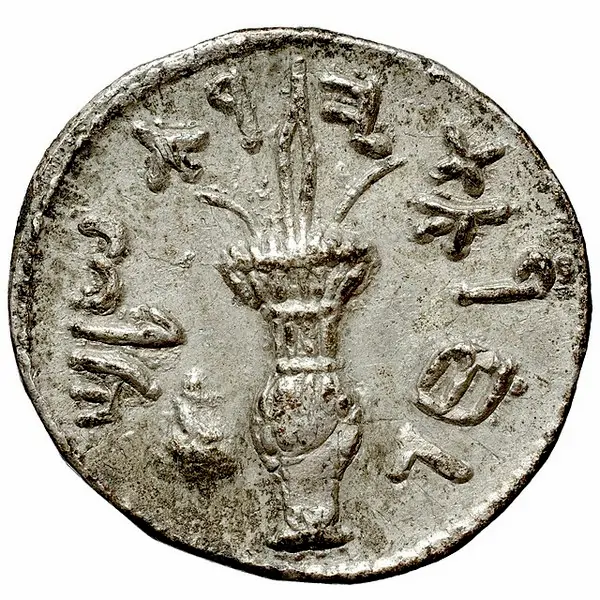
These coins are the earliest universally accepted depictions of the menorah on Jewish coinage.
Their meaning is unmistakable. The menorah symbolized not only the lost Temple but also the hope of its restoration. In this way, Bar Kokhba coinage visually channels the same themes later celebrated by Hanukkah: resistance to religious oppression and the reclaiming of sacred space.
Rome Strikes Back: The Menorah on Roman Coins
Ironically, the next major appearance of the menorah on coinage comes from Rome itself.
Judaea Capta Coinage (Post-70 CE)
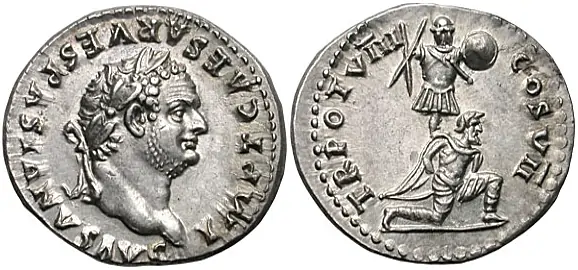
After suppressing the First Jewish Revolt and destroying the Temple, Rome issued a vast series of “Judaea Capta” coins. These depict:
- Mourning Jewish captives
- Roman victory imagery
- References to the conquered province
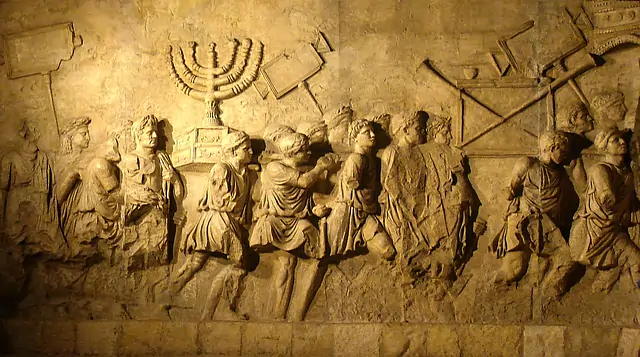
While most Judaea Capta coins do not show the menorah, later Roman art, most famously the Arch of Titus, depicts Roman soldiers carrying the Temple menorah in triumph.
Some Roman provincial coins and medallions echo this imagery, reinforcing the menorah’s historical form and confirming its centrality as a Jewish symbol recognized throughout the empire.
From Antiquity to the Modern State of Israel
After nearly two millennia, Jewish sovereignty returned in 1948—and with it, Jewish coinage.
The Menorah Reclaimed
Modern Israeli coins deliberately reference ancient models. The emblem of the State of Israel itself is based on the Arch of Titus menorah, reframed as a symbol of survival rather than defeat.
Early Israeli prutot, agora, and commemoratives frequently feature menorahs, linking modern independence to ancient resilience.
Fig 5
Modern Hanukkah-Themed Coins
Only in the modern era do coins explicitly celebrate Hanukkah by name.
Israeli Hanukkah Commemoratives
The Israel Mint and the Bank of Israel have issued numerous Hanukkah medals and collector coins featuring:
- Eight-branched hanukkiyot
- Dreidels
- Olive oil motifs
- Inscriptions referencing the Festival of Lights
These pieces are legal tender or official medals, depending on issue, and are aimed squarely at collectors.
Why These Coins Matter
Hanukkah coins, ancient and modern, occupy a unique place in numismatics. They are not merely collectibles. They are historical documents, theological statements, and political declarations struck in metal.
Ancient menorah coins remind us that even in defeat, Jewish communities asserted identity through symbols that could not be erased. Modern Hanukkah coins, by contrast, celebrate continuity and renewal.
Together, they form a narrative arc spanning more than 2,000 years.
Final Thoughts
Coins do not merely circulate wealth. At their best, they circulate memory. From the Hasmoneans to Bar Kokhba, from Roman triumphs to Israeli independence, the menorah’s appearance on coins tells a story of faith enduring under pressure.
That story, at its core, is the story of Hanukkah.