A 1981 Photograph Changes the Story of Rare Buffalo Nickel Patterns
An old auction photograph has changed the reported history of a $122,000 set of 1912 Buffalo nickel electrotrials. The pieces themselves were genuine. The problem concerned which pair actually appeared in a 1981 auction.
On September 1, Stack’s Bowers Galleries sold two experimental Fraser pieces for $122,000. Then, another pair arrived for the firm’s November auction. A comparison with the 1981 catalog showed that the September examples did not match the older photographs.
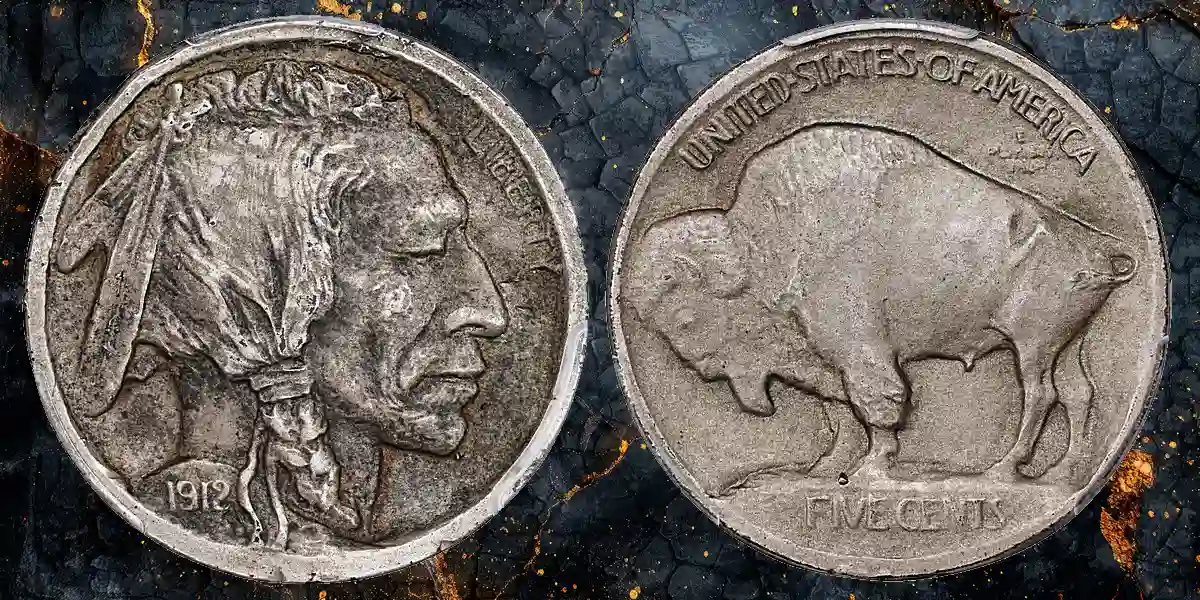
The November examples do, according to Stack’s Bowers. Moreover, their documented history reaches back to the estate of James Earle Fraser, the sculptor who created the Buffalo nickel.
On November 17, 2026, Stack’s Bowers will offer this second pair as Lot 2025 during Rarities Night. The discovery adds a new chapter to the story of an American coinage classic.
Before the Buffalo Nickel, Fraser Needed to Win Over Washington
In 1912, Americans knew the five-cent piece as the Liberty Head nickel. Chief Engraver Charles E. Barber’s design had served the nation since 1883. However, Treasury Secretary Franklin MacVeagh wanted a fresh direction.
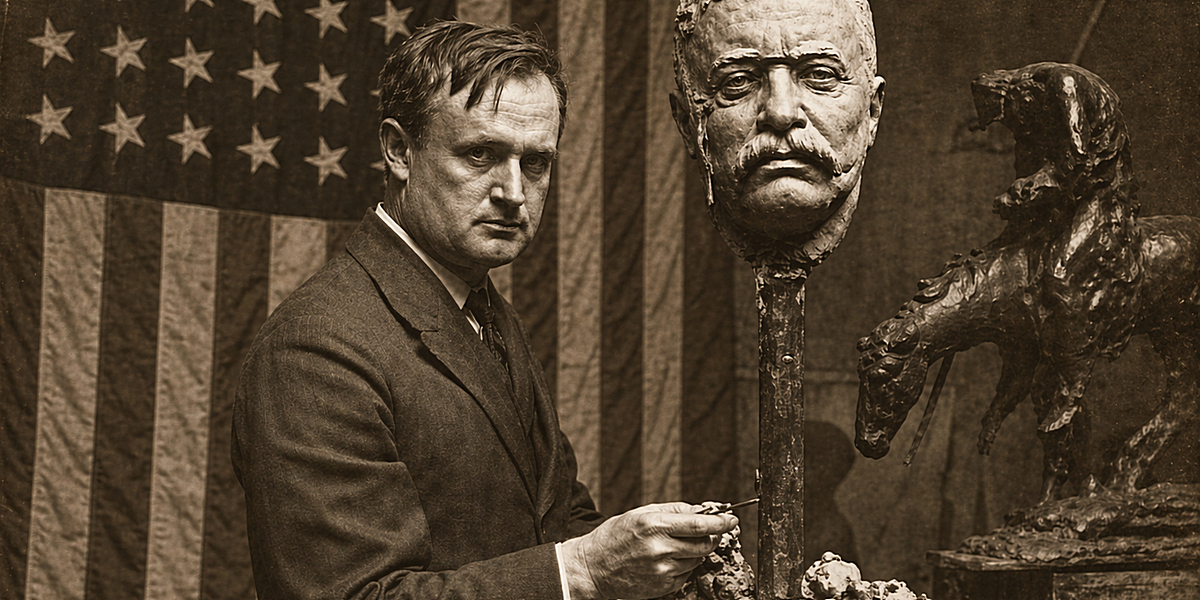
James Earle Fraser offered one. Instead of another classical portrait, he proposed a Native American on the obverse and an American bison on the reverse. The result would give the five-cent piece a distinctly American identity.
Yet Fraser still faced a practical challenge. A large sculptural model might impress an artist, but Treasury officials needed to picture the design on a small coin. For that reason, presentation became central to his campaign.
Rather than wait for the U.S. Mint to strike traditional pattern pieces, Fraser enlisted the Medallic Art Company. The firm reduced his preliminary models to coin size and made thin metal shells through an electroforming process. Workers reinforced the shells with tin or type metal. They could also plate or color the surfaces to suggest the look of nickel.
Numismatic researcher Roger W. Burdette documented this approach in his 2007 book, Renaissance of American Coinage: 1909-1915. The electrotypes helped Fraser hold MacVeagh’s attention and avoid the delays of conventional Mint patterns. Later, Burdette told Stack’s Bowers, “We sometimes forget how radical the Buffalo nickel was back then.”
That distinction matters. These 1912 Buffalo nickel electrotrials are genuine artifacts of the design process, but they are not struck U.S. Mint coins. Their somewhat soft details reflect Fraser’s early sketch models, not circulation wear.
Two Pieces Show What Fraser Had Not Yet Decided
The November lot contains one experimental obverse and one experimental reverse. Each piece shows a design on only one side. Collectors call this format uniface. As a result, the two pieces provide separate views of Fraser’s developing design.
The Obverse: A Portrait Before the Final Details
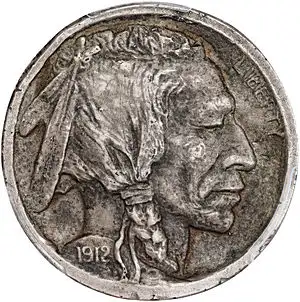
The obverse carries the references Judd-C1912-1 and Pollock-5165. It weighs 3.62 grams, or 55.9 grains.
Fraser’s Native American portrait already resembles the familiar Buffalo nickel. However, the date uses smaller digits, and the artist’s distinctive F initial does not appear.
Together, those details reveal a design that Fraser had not yet finalized.
The piece has a generally charcoal-gray appearance, with some light carbon buildup.
The Reverse: A Buffalo With Different Lettering
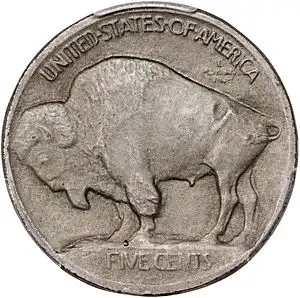
The companion reverse, Judd-C1912-2 and Pollock-5170, weighs 4.13 grams, or 63.8 grains.
Its bison anticipates the 1913 Type I Buffalo nickel. Yet several clues distinguish this early version. The words FIVE CENTS use smaller letters.
Hyphens separate the words in UNITED STATES OF AMERICA, while the final circulating design uses periods. Meanwhile, E PLURIBUS UNUM appears in very small lettering. Fraser also revised minor details of the animal.
In contrast, the reverse shows a lighter pewter-olive-gray color. Like the obverse, it has a plain edge and a surface treatment that suggests nickel coinage.
PCGS has authenticated both pieces as Genuine and placed them in separate holders. Importantly, neither carries the MS-64 grade of the different pair that sold in September.
A 1981 Certificate Helps Establish the Trail
The pair’s documented history begins with the estate of James Earle and Laura Gardin Fraser. Laura was a distinguished sculptor in her own right. Later, the pieces passed through Fred Weinberg and Numismatics Ltd., according to the auction provenance.
In July 1981, Bowers and Ruddy Galleries offered them in its William R. Sieck Collection sale. There, the obverse appeared as Lot 2420, and the reverse appeared as Lot 2422.
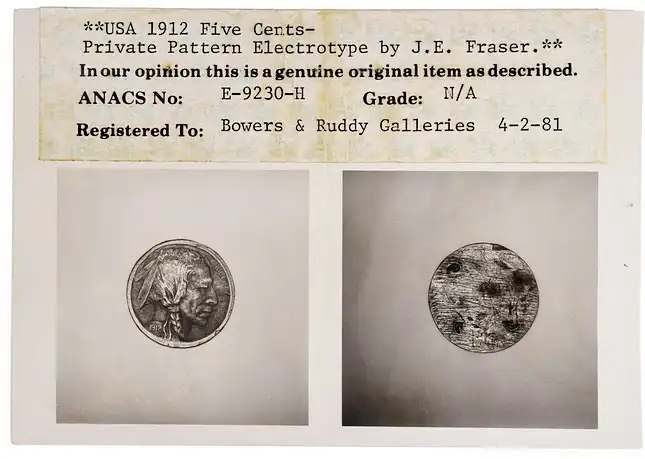
Another piece of evidence survives alongside the obverse. ANACS issued Photo Certificate No. E-9230-H on April 2, 1981, and registered it to Bowers and Ruddy Galleries. Notably, the certificate identifies the piece as an original private pattern electrotype by Fraser.
Today, the pair comes to auction from the Charles “Cheech” Litman Collection. Together, the estate history, 1981 auction record, and contemporary certificate give collectors an unusually informative paper trail.
The $122,000 Sale and a New Provenance Discovery
Stack’s Bowers sold another two-piece set of 1912 Fraser electrotrials as Lot 2048 during its September 1, 2026, Summer Global Showcase Rarities Night session. PCGS graded that set MS-64, and bidders pushed the final price to $122,000, including the buyer’s premium.
However, the arrival of the Litman pair led the auction house to revisit the earlier set’s history. Specialists compared the pieces with photographs from the July 1981 Bowers and Ruddy catalog.
The images did not match the examples from the September sale. As a result, Stack’s Bowers corrected the earlier attribution to the 1981 auction. The November pair matches the documented 1981 appearances instead.
Importantly, the finding does not call the earlier electrotrials’ authenticity into question. Rather, it identifies which physical pieces actually passed through the 1981 sale. For rare patterns, such distinctions can shape the historical record for generations.
According to Stack’s Bowers, the buyer of the $122,000 set subsequently donated it to a museum. Therefore, the firm considers the November pair a particularly scarce opportunity for private collectors.
The Nickel Finally Reached America’s Pockets
Fraser ultimately won approval for his new five-cent design, although the path to production brought further resistance. The Hobbs Manufacturing Company argued that its coin-testing equipment might struggle with the proposed nickel. After months of disagreement, MacVeagh directed the Mint to proceed.
The Buffalo nickel entered circulation in 1913. However, its reverse soon required a change. On the original Type I coin, FIVE CENTS appeared on a raised mound beneath the bison. Because the lettering stood so high, everyday use wore it down too quickly.
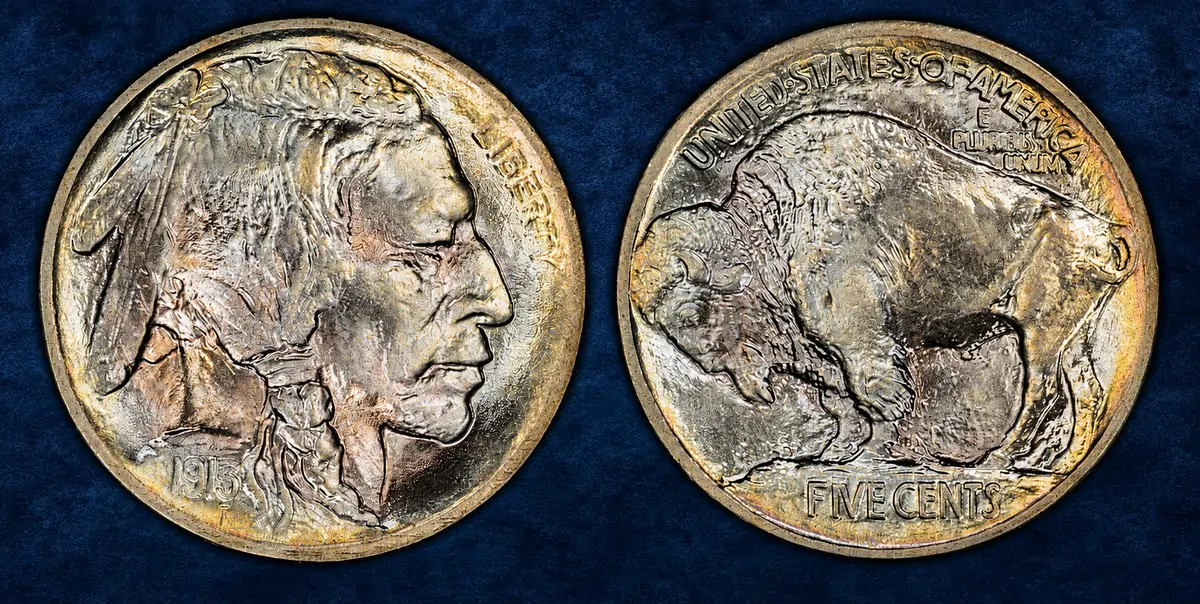
Consequently, Chief Engraver Barber modified the reverse that same year. The Type II design moved the denomination into a protected, recessed area. The Buffalo nickel continued through 1938.
Regular Buffalo nickels weigh 5.00 grams, measure 21.2 millimeters in diameter, and contain 75% copper and 25% nickel. These earlier electrotrials differ in both purpose and construction. They belong to Fraser’s studio experiments, not the Mint’s circulation coinage.
Why These 1912 Buffalo Nickel Electrotrials Matter
Most collectors meet the Buffalo nickel as a finished design, often with a worn date and a familiar bison. By contrast, these electrotrials take the story back to the moment when Fraser still needed to make his case.
He used small metal models to show Treasury officials what the future might look like. More than a century later, auction specialists used old photographs to clarify the identity of those models.
For advanced Buffalo nickel collectors, the November pair offers a direct link to Fraser’s creative process. Equally important, the corrected ownership history shows why careful provenance research still matters.
1912 Buffalo Nickel Electrotrial Specifications
Obverse: Judd-C1912-1; Pollock-5165; 3.62 grams (55.9 grains); smaller date numerals; no designer’s initial; charcoal-gray surfaces.
Reverse: Judd-C1912-2; Pollock-5170; 4.13 grams (63.8 grains); smaller FIVE CENTS lettering; hyphens in the national legend; tiny E PLURIBUS UNUM; pewter-olive-gray surfaces.
Both pieces: James Earle Fraser design; Medallic Art Company electrotrials; white metal; plain edges; uniface format; PCGS Genuine certification in two individual holders. The lot includes the 1981 ANACS obverse photo certificate.
Auction: Stack’s Bowers Galleries, November 2026 Showcase Auction, Session 2: Rarities Night; November 17, 2026, at noon Pacific Time; Lot 2025.
View the offering: Stack’s Bowers Galleries, Lot 2025.