War in the Middle East. Rising oil prices. Stubborn inflation. These conditions often send investors searching for the safety of gold.
Yet on Friday, October 30, the precious metal moved in the opposite direction.
Gold fell below $4,000 an ounce as investors confronted an uncomfortable reality. The same geopolitical uncertainty that supports gold’s reputation as a safe haven can also drive inflation higher. Consequently, the Federal Reserve may have little choice but to maintain high interest rates or raise them again.
Early Friday, spot gold dropped to $3,980.40 an ounce, a decline of 1%, according to Reuters. December gold futures fell to $3,991.10. Moreover, gold touched its lowest level since July 17.
With an October decline of approximately 4.3% at the time of the report, gold faced its second consecutive monthly loss.
However, the most important story isn’t simply gold’s retreat below $4,000. It’s the unusual combination of forces driving investors away from the metal.
When War and Inflation Work Against Gold
Gold’s relationship with geopolitical conflict has never been as straightforward as many investors assume.
Wars create uncertainty. Investors often respond by buying gold to protect their wealth. However, military conflicts can also disrupt energy supplies, raise transportation costs, and accelerate inflation.
The continuing conflict involving Iran has heightened those risks.
An attack on a tanker in the Strait of Hormuz underscored the vulnerability of a vital international shipping route. Meanwhile, rising crude oil prices put oil on course for a fourth consecutive monthly gain.
Higher energy costs can spread through the economy. Businesses pay more for transportation and production. Consumers face higher fuel bills. Eventually, those costs can influence broader inflation.
For gold, this creates a difficult situation.
Investors may want bullion as protection against uncertainty. However, persistent inflation also encourages the Federal Reserve to maintain higher borrowing costs.
Gold pays no interest or dividends. Therefore, rising interest rates can make government bonds and other interest-bearing investments more attractive.
In this environment, the inflationary consequences of war can outweigh gold’s traditional safe-haven appeal.
The Federal Reserve Has a Growing Inflation Problem
Fresh economic data added another challenge for precious metals.
On October 29, the Bureau of Economic Analysis reported that the Personal Consumption Expenditures (PCE) price index increased 0.5% in September.

Over the previous 12 months, the index climbed 3.6%.
Meanwhile, core PCE inflation, which excludes food and energy, increased 0.3% for the month and 3.1% over the year.
Both annual measures remain above the Federal Reserve’s 2% inflation target.
The economy also showed surprising strength. According to the BEA’s advance estimate, U.S. gross domestic product grew at a 3.4% annual rate during the third quarter, up from 2.2% in the second quarter.
Together, these figures give the Fed additional reasons to remain cautious about inflation.
On October 28, Federal Reserve Chair Kevin Warsh and his colleagues maintained the federal funds rate target at 3.75% to 4%.
However, the Federal Open Market Committee’s decision revealed growing concern about inflation.
Two policymakers, Lisa Cook and Beth Hammack, voted for a quarter-point interest rate increase.
The Fed ultimately held rates steady by a 10-2 vote. Nevertheless, the dissent demonstrated that further tightening remains a serious possibility.
For gold investors, the prospect of another rate increase in December represents a significant obstacle.
How the Artificial Intelligence Selloff Reached Gold
The latest pressure on bullion also came from an unlikely source: Wall Street’s artificial intelligence boom.
Technology stocks have attracted enormous investment as companies expand data centers, computing capacity, and supporting infrastructure.
However, investors have begun questioning how quickly those investments will produce meaningful financial returns.
Alphabet, Google’s parent company, became the center of those concerns.
Following disappointing quarterly results and worries about massive capital expenditures, Alphabet shares plunged 12.6% on Thursday, October 29. The selloff helped push the Nasdaq Composite down 1.4%.
The connection to gold may seem distant. Nevertheless, financial markets rarely operate in isolation.
ANZ analysts have warned that broad equity-market liquidations can create additional selling pressure across commodities.
When investors need cash to cover losses or reduce risk, they sometimes sell assets that remain relatively liquid. Gold can become one of those sources of cash.
As a result, a market crisis can temporarily push gold prices lower rather than higher.
This distinction matters. Investors may still consider gold a long-term defensive asset, even while short-term financial pressures force them to reduce their holdings.
Silver, Platinum, and Palladium Face Steeper Losses
Gold wasn’t alone in Friday’s downturn.
Silver suffered an even sharper decline. By the morning Reuters market update, spot silver had fallen 3.6% to $50.50 an ounce.

Platinum dropped 3% to $1,443.69, while palladium declined 2.5% to $981.31.
All three metals faced both weekly and monthly losses.
Unlike gold, silver, platinum, and palladium also depend heavily on industrial consumption. Consequently, concerns about economic growth and investment spending can introduce additional price pressures.
Silver occupies a particularly interesting position. Investors value it as a precious metal, but manufacturers also rely on it for electronics, electrical equipment, and other industrial applications.
Therefore, changing expectations for industrial demand can influence silver prices even when investors remain interested in precious metals.
The latest declines demonstrate that uncertainty can affect each metal differently.
China Finds Opportunity as Gold Approaches $4,000
Not every buyer views gold’s retreat as a reason to sell.
In China, lower prices have encouraged renewed interest among households and longer-term investors.
 Bloomberg reported on October 27 that Chinese gold buying had strengthened as bullion prices softened.
Trading volume in the Shanghai Gold Exchange’s Au99.99 contract reached the equivalent of approximately 430 metric tons during the previous week, its highest level since April.
Unlike leveraged futures contracts, this exchange product requires full payment and physical delivery.
That activity points to continuing interest in physical gold despite the broader financial-market correction.
For some buyers, a declining gold price represents an opportunity to accumulate metal at lower cost.
Nevertheless, Chinese demand has not eliminated short-term volatility. The $4,000 level remains an important market reference rather than a guaranteed price floor.
Copper Sends a Different Signal About Global Demand
The technology sector’s troubles have also affected copper.
Investors previously anticipated substantial copper demand from expanding data centers, electrical grids, and artificial intelligence infrastructure.
However, questions about the profitability of those investments have introduced uncertainty into the industrial metals market.
Interestingly, physical copper demand in China remains strong.
The Yangshan copper import premium climbed above $200 per metric ton during the week, reaching a record in data extending back to 2017.
The premium measures the additional price Chinese importers pay above international benchmark prices to obtain physical copper supplies.
Its sharp increase suggests that immediate physical demand remains firm despite nervousness in financial markets.
This contrast highlights an important distinction across commodity markets. Investor sentiment can weaken even when industrial consumers continue competing for available metal.
What Gold Below $4,000 Means for Bullion Coin Buyers
For CoinWeek readers, changes in the spot gold price have direct implications for the physical coin market.
However, the spot price represents only one part of a bullion coin’s purchase price.
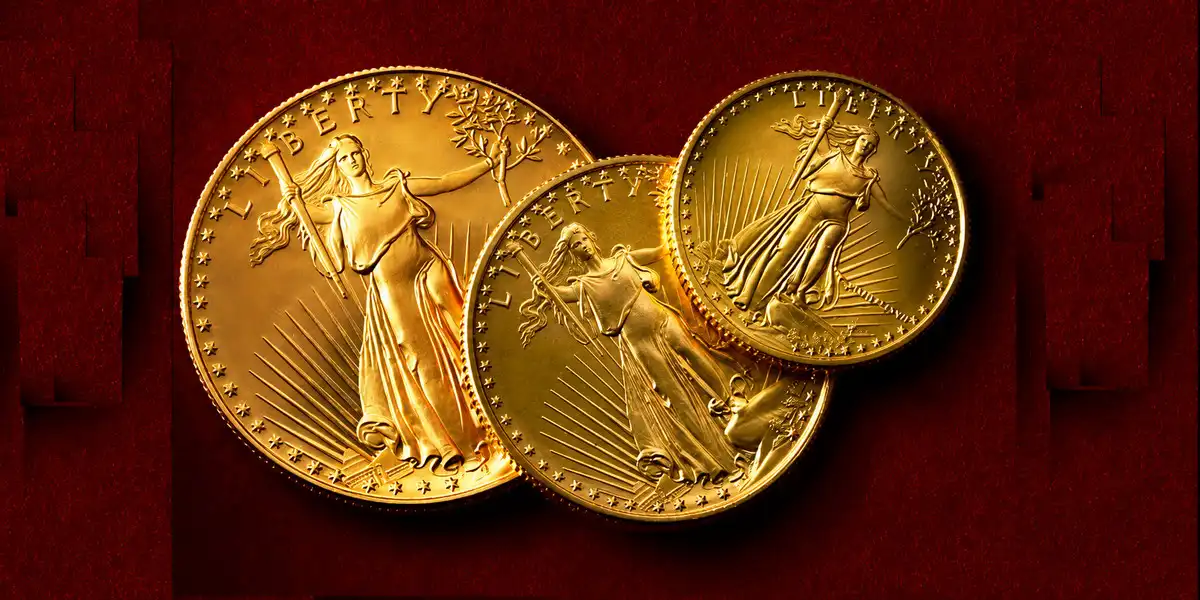
A one-ounce American Gold Eagle contains one troy ounce of pure gold within its durable 22-karat alloy. Meanwhile, the American Gold Buffalo contains one troy ounce of .9999 fine, 24-karat gold.
Both coins provide direct exposure to gold’s intrinsic metal value.
However, dealers also factor in distribution costs, product availability, market premiums, and buying and selling spreads.
The United States Mint distributes bullion coins through authorized purchasers rather than selling them directly to retail customers.
Consequently, a $40 decline in spot gold does not automatically produce an identical reduction in the retail price of every one-ounce gold coin.
Additionally, collectible gold coins may carry numismatic premiums that reflect rarity, condition, and collector demand.
Those premiums can behave differently from the underlying bullion market.
Therefore, physical gold buyers should examine both spot prices and actual dealer quotations when evaluating the market.
The Next Test for Gold: Inflation or Safe-Haven Demand?
Gold enters the final two months of 2026 facing several competing forces.
Inflation remains elevated. The Federal Reserve continues to weigh tighter monetary policy. Meanwhile, geopolitical tensions threaten energy supplies, and uncertainty surrounding artificial intelligence spending has unsettled financial markets.
On the other side of the equation, Chinese physical demand continues to provide an important source of buying interest.
Investors will now watch Treasury yields, oil prices, additional inflation reports, and the Federal Reserve’s December 8-9 policy meeting.
For now, the $4,000 threshold remains a closely watched dividing line between buyers looking for value and investors concerned about additional losses.
Gold’s long-standing role as a store of wealth has not disappeared. However, the current correction offers a reminder that even the world’s most recognized safe-haven asset must compete with interest rates, liquidity demands, and changing investor expectations.
The central question is no longer whether uncertainty supports gold.
It is whether the inflation and interest-rate consequences of that uncertainty will continue to outweigh the demand for financial protection.