


What Are Regulated Gold Coins?
Before the United States Mint struck gold coins, Americans relied on foreign gold, trusted local standards, and the marks of respected silversmiths.
Long before Americans carried U.S. gold coins, merchants faced a daily problem.
They needed reliable money. Yet they often handled coins from many countries. Spanish, Portuguese, Brazilian, French, and English coins all moved through early American commerce.
However, each coin carried its own weight, fineness, and local value. As a result, trade could turn into a test of trust.
That challenge created one of the most fascinating fields in early American numismatics: regulated gold coins.
Foreign Gold Filled America’s Money Gap
In colonial America, money never worked as neatly as modern collectors might expect.
Each colony used its own monetary conventions. In addition, colonies set their own tender laws and coin ratings. A Spanish piece of eight, for example, could hold one value in New England and another in New York or Charleston.
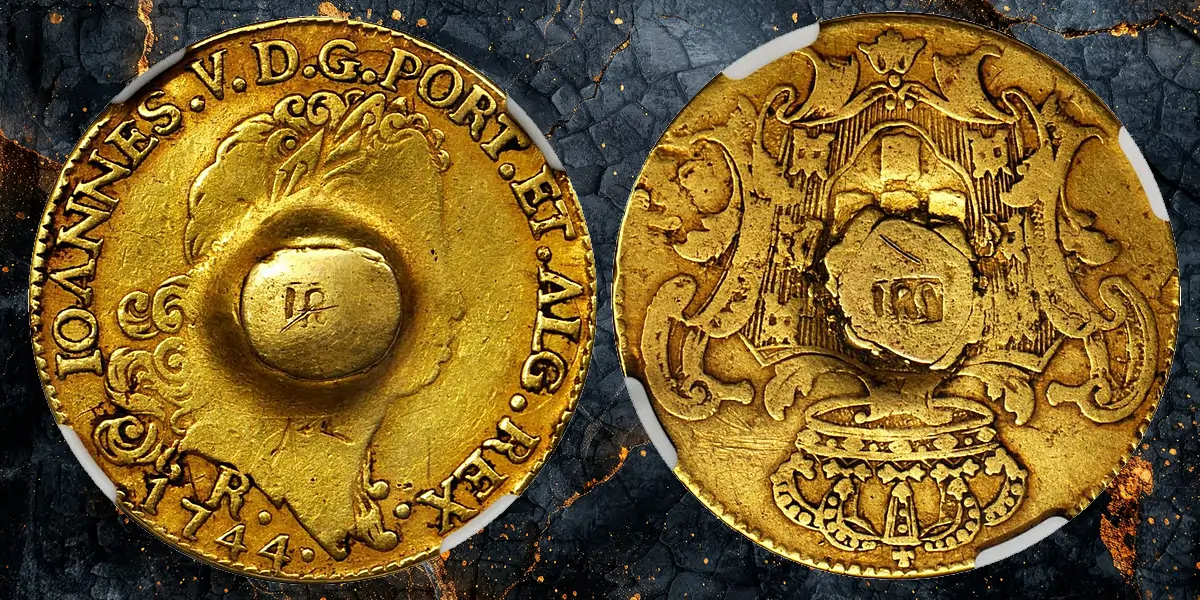
Meanwhile, hard money remained scarce. Gold and silver coins entered the colonies through trade. Many came from Spain, Portugal, France, England, and Portuguese Brazil.
Therefore, Americans used what commerce provided.
Portuguese-Brazilian gold played an especially important role. So did Spanish doubloons, Spanish pistoles, French Louis d’ors, English guineas, and other European and Latin American gold coins. Researchers have identified these types among regulated gold pieces.
Still, merchants faced a serious problem. They could not easily test every gold coin at the counter.
A coin might look sound. Yet it could weigh too little. It could also fall short in fineness. In a cash economy, that difference mattered.
Why Early America Needed Regulators
Before, during, and after the American Revolution, a practical solution emerged.
Goldsmiths and silversmiths began to “regulate” foreign gold coins.
These craftsmen did not create official U.S. coins. Instead, they adjusted foreign gold to local weight standards. Then they marked the coin with their own hallmark.
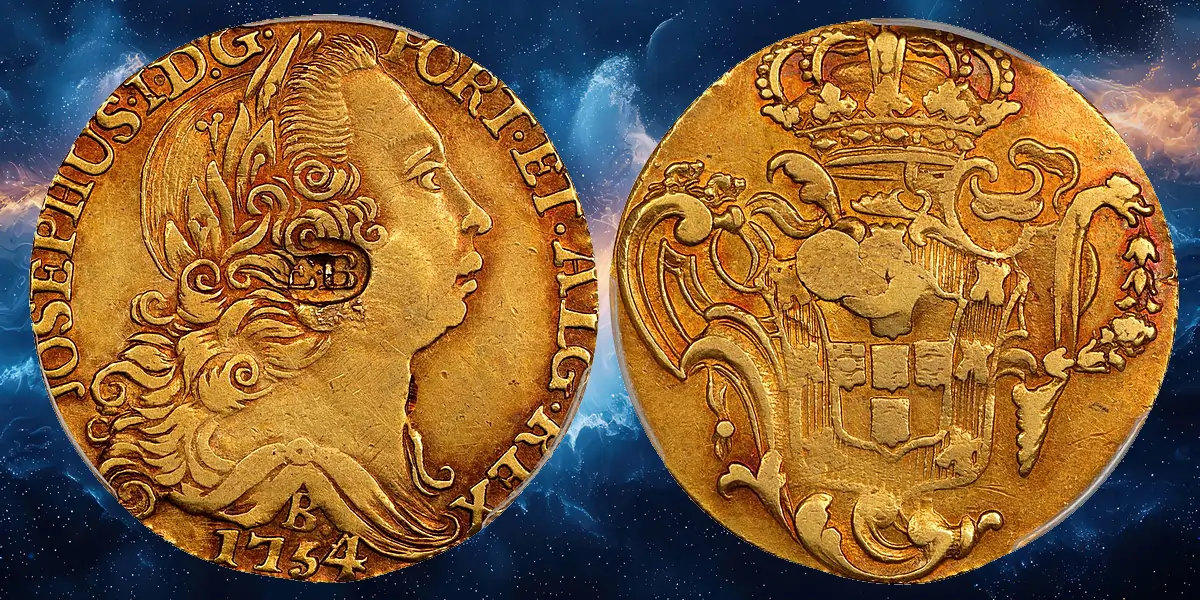
That mark mattered.
It told merchants that a respected local craftsman had checked the coin. It also told buyers that the regulator stood behind the coin’s value.
In effect, a regulator turned uncertain foreign gold into trusted local money.
How Regulated Gold Coins Worked
The process required skill, judgment, and reputation.
First, the regulator weighed the coin against the local standard. Then he examined the gold.
If the coin weighed too little, he drilled into it. Next, he added gold in the form of a plug. This raised the coin to the required weight.
However, some coins weighed too much. In that case, the regulator clipped or filed the edge. He removed only enough metal to meet the accepted standard.
Finally, he stamped the coin with his personal silversmith mark.
These marks matched the punches used on silver cups, teaspoons, sugar bowls, cream jugs, and other pieces of fine silver. So, the same hallmark that guaranteed a silver object also guaranteed a gold coin.
That personal guarantee explains why these coins fascinate collectors today.
Normally, holes, plugs, clips, and counterstamps hurt a coin’s value. Yet regulated gold coins follow different rules. The alterations tell the story.
Ephraim Brasher and the EB Hallmark
No American regulator carries more numismatic fame than Ephraim Brasher.
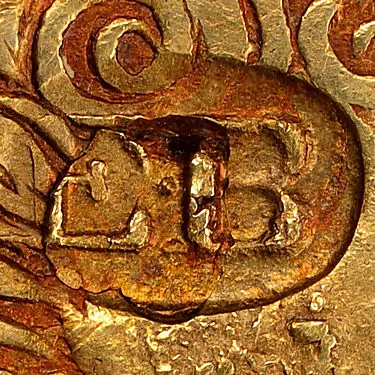
Brasher worked as a New York goldsmith and silversmith after the British left New York in 1783. He also lived near George Washington and counted him as a friend. Stack’s Bowers describes Brasher as perhaps the most prolific regulator of the era.
Today, collectors know Brasher for the legendary Brasher Doubloon. They also know him for his bold EB hallmark.
That EB mark appears on some coins he regulated. In those cases, the hallmark served as more than a signature. It acted as a public statement of trust.
Brasher’s reputation helped the coin circulate.
As a result, his regulated pieces now rank among the most desirable objects in early American numismatics.
Other Respected Regulators
Brasher did not work alone.
Other respected metalsmiths also regulated coins for commerce. William Hollingshead and Thomas Underhill among them. John Burger also played a major role in New York.
Burger worked close to Brasher in Lower Manhattan. Stack’s Bowers notes that both men belonged to the New York Gold and Silversmiths Society. Their marks sometimes appear on the same coin, much like stamps in a passport.
These men occupied trusted positions in their communities. Therefore, merchants accepted their marks.
That trust explains why regulated gold coins could move through commerce even though the host coins came from foreign mints.
Congress Tried to Bring Order
After independence, the United States still lacked enough domestic coinage.
So, Congress allowed certain foreign gold and silver coins to pass current as money. The 1793 law set legal-tender rates for specified coins, including gold coins of Great Britain, Portugal, France, Spain, and Spanish dominions.
Congress revisited the issue in 1806. That law again set rates for foreign gold and silver coins. It also required the Secretary of the Treasury to arrange annual assays at the Mint.
These laws show why foreign coins remained so important. The young nation needed money before the Mint could supply enough U.S. coinage.
The U.S. Mint Changed the Story
Congress established the United States Mint through the Coinage Act of 1792. The law created a national mint in Philadelphia. It also authorized copper, silver, and gold denominations.
However, the Mint did not solve the problem overnight.
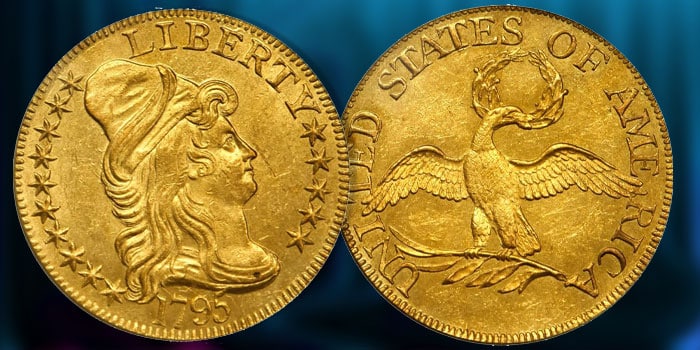
The Mint delivered its first circulating coins in 1793. Gold coinage began later. According to the U.S. Mint, the half eagle and eagle debuted in 1795. The quarter eagle followed in 1796.
Even then, early U.S. gold coins did not always stay in circulation. The Mint notes that U.S. gold coins often left circulation because market conditions encouraged export and melting.
Still, the arrival of federal gold coinage reduced the need for regulated foreign gold.
Over time, many regulated coins entered the melting pot. Their gold became bullion or new coinage. That destruction helps explain their rarity today.
The End of Foreign Coins as Legal Tender
The final legal break came in 1857.
On February 21, 1857, Congress passed “An Act relating to Foreign Coins and to the Coinage of Cents at the Mint of the United States.” Section 3 repealed prior acts that made foreign gold or silver coins legal tender for debts.
The same law also directed certain Spanish and Mexican fractional coins to the Treasury and Mint system for recoinage.
With that act, Congress ended the long legal role of foreign coins in U.S. commerce.
By then, regulated gold already belonged to an earlier age. Yet that age shaped American money.
Why Collectors Prize Regulated Gold Coins Today
Regulated gold coins tell a uniquely American story.
They connect foreign mints, colonial trade, Revolutionary-era money shortages, local craftsmen, and the rise of the U.S. Mint.
They also carry names that matter.
Famous collectors and numismatists included regulated gold coins in major cabinets. These collectors included Louis Eliasberg, John J. Ford Jr., and Virgil M. Brand.
Today, surviving examples attract attention for several reasons:
- First, they remain rare. Many pieces disappeared through melting.
- Second, they show visible evidence of early American commerce. Their plugs, clips, files, and counterstamps reveal how people solved real monetary problems.
- Finally, they connect collectors to individual craftsmen. A hallmark like Brasher’s EB does not feel anonymous. It points directly to a person, a city, and a moment in American history.
That is why regulated gold coins matter.
They are not damaged foreign coins. Instead, they are artifacts of trust.
A Related Note on Silver Counterstamps
Gold regulation focused mainly on weight and value. However, silver counterstamps also played major roles in other places.
For example, Britain faced a severe silver shortage in 1797. The Bank of England bought Spanish silver 8 reales, countermarked them with the head of George III, and reissued them at 4 shillings 9 pence.
This example shows a broader truth. When official coinage fell short, governments, banks, and merchants often adapted existing coins.
In early America, regulated gold coins became one of the most important examples of that adaptation.
Regulated Gold Coins Preserve a Foundational Era
Regulated gold coins preserve a crucial chapter in U.S. numismatic history.
They show how Americans conducted business before federal coinage could meet demand. They also show how much commerce depended on trust.
A merchant might not know every foreign coin. Yet he could know Ephraim Brasher’s EB mark. He could know William Hollingshead’s mark. He could know Thomas Underhill’s mark.
Therefore, a silversmith’s punch could turn foreign gold into accepted money.
That small mark still speaks today.
It tells collectors that early America did not wait for a perfect monetary system. Instead, merchants and metalsmiths built one coin at a time.


Very interesting article on regulated gold coins
Any gold coin is a good coin.
Wish I had money enough to buy gold.
The countermarks and stamps are what really make these coins cool.
Interesting article.
Id love to own some graded old gold.
This is a facinating article. Lots of history.
great info thanks
Quite interesting!
We still have this problem today. I sometimes find Canadian coins when I get change in U.S.
Regulation makes ir Real.
Very cool.
Pretty smart
How interesting!
Another great educational article. Keep them coming !!
I learn so much from CoinWeek!
Great insight into how regulation, acceptance, & needed standardization came into being. Capitalism at work! Thank you.
cool
Had never heard of regulated coins – thanks for the history lesson!
Just like the Chinese chop marks on the silver trade dollars of the 1800s!
Love the history lesson.
Interesting historical article.
Thanks for the informative article!
My coin collection sucks! I have zero gold coins to my name.
I really enjoy reading about history and what people did to help solve problems they encountered
Noice!
Nice looking coins, and interesting story
Another fascinating piece of U.S. history that we were never taught about.
Thanks for educating us Coin Week!
I’m curious. How was fineness determined in the 18th century?
Love the unique articles and history lessons. The gold coins are beautiful.
Visiting these articles ALWAYS teach me new historical knowledge I lacked. Thank you!
All U.S. Large Cent copper rounds were made in Britain & then shipped in wooden kegs to the Philadelphia Mint to then be made into coins.
I learn something new every time I read an article here, Thanks for the history lesson.
Another great history lesson about our early coinage. Thanks for the lesson!
learned something new – regulated coinage in early colonial US history
piece of early American history I never knew – interesting
Very interesting. I did not know there were many gold coins in circulation before the US started to mint our own coins.
Americana – can’t go wrong as an investment and a proud to have piece