

America’s Cent Era Is Ending After 232 Years, But Collectors Haven’t Seen the Last Cent
For 232 years, the United States Mint struck one-cent coins for American commerce.
That remarkable run has already ended.
Now Congress may make the change permanent.
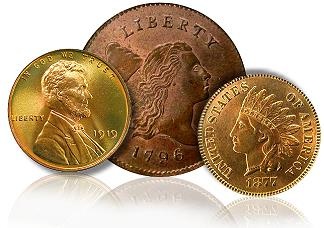
On September 14, 2026, the U.S. House of Representatives passed the Common Cents Act, H.R. 10167, by voice vote. The legislation would formally end production of circulating pennies, establish federal rules for rounding cash transactions, and give the Treasury Department authority to test a potentially less expensive composition for the nickel.
For coin collectors, however, the story has an important twist.
The cent itself would not disappear.
Existing cents would remain legal tender. Moreover, the United States Mint could continue striking one-cent coins as numismatic products. That means one of America’s oldest denominations could survive as a collector coin even after its role in everyday commerce fades away.
From America’s First Circulating Coin to Its Latest Retirement
Few American denominations can match the cent’s historical reach.
The Coinage Act of April 2, 1792, created the United States Mint and authorized a copper cent worth one-hundredth of a dollar. Then, on March 1, 1793, the fledgling Philadelphia Mint delivered 11,178 copper cents.
Those 1793 Chain Cents became the first circulating coins delivered by the new federal Mint.
They looked nothing like today’s Lincoln cent.
The original cent contained so much copper that it measured larger than a modern quarter. Its reverse displayed a chain of 15 links. Public criticism quickly pushed the Mint toward a wreath design instead.

Yet the denomination endured.
The cent survived changes in size, metal, design, minting technology, and purchasing power. It carried the Indian Head design of James Barton Longacre.
Then, in 1909, Victor David Brenner‘s portrait of Abraham Lincoln transformed the cent again.
The Lincoln cent became a fixture of American pocket change.
In 2010, the Mint introduced the current Union Shield reverse. Artist Lyndall Bass designed it, while U.S. Mint sculptor-engraver Joseph Menna sculpted the design.
Its 13 vertical stripes symbolize the states joined in one union.
Then came November 12, 2025.
The Last Circulating Cent Was Already Struck
Congress did not stop the presses.
The Treasury Department had already done that.
On November 12, 2025, the United States Mint held a ceremonial striking event at the Philadelphia Mint. United States Treasurer Brandon Beach struck the final circulating one-cent coin.
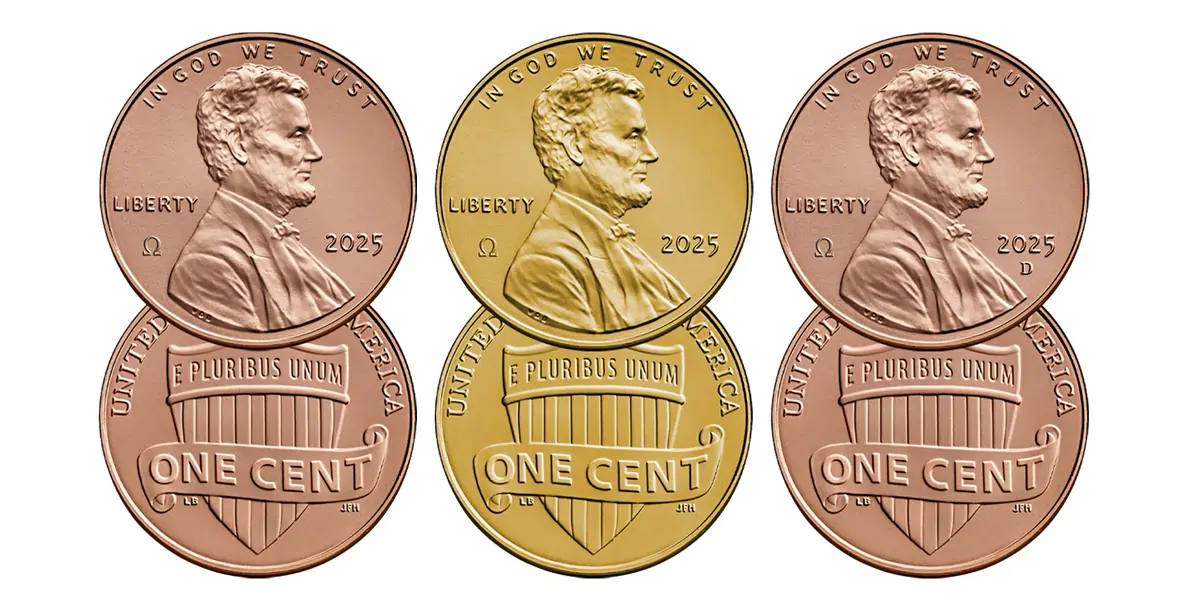
That ceremony officially closed a 232-year production run for the circulating cent.
The economic case had become increasingly difficult to ignore.
According to Treasury, the cost of producing one penny had climbed from 1.3 cents to 3.69 cents during the previous decade. Treasury projected about $56 million in immediate annual material savings after suspending production.
In fiscal year 2024 alone, the Mint produced and shipped about 3.2 billion pennies. Pennies represented roughly 57% of total circulating coin production that year.
Production volume could no longer overcome the economics. Every new cent cost several times its face value to manufacture.
Treasury therefore suspended circulating-cent production under its existing statutory authority.
The Common Cents Act would go much further. It would write the end of general-circulation penny production into federal law.
What the Common Cents Act Actually Does
Representatives Lisa McClain of Michigan and Robert Garcia of California introduced H.R. 10167 on August 27, 2026. The House then passed it under suspension of the rules on September 14.
The bill directs the Treasury Secretary to stop producing one-cent coins for general circulation.
However, it specifically allows the Mint to continue producing cents for sale as numismatic items.

It also preserves the legal-tender status of cents already minted and issued before enactment. In other words, Americans would not wake up one morning with worthless jars of pennies.
That distinction matters.
The proposed law would end the penny’s production for circulation, not erase the denomination from U.S. monetary history.
Indeed, the Mint already sells collectible cents in 2026. The Semiquincentennial Lincoln cent carries the dual date 1776 ~ 2026 and appears in annual collector sets even though the Mint no longer produces pennies for general circulation.
How Cash Rounding Would Work
The hardest practical question has always been simple: what happens to prices that end in one, two, three, four, six, seven, eight, or nine cents?
H.R. 10167 creates a federal framework.
When exact change cannot be provided, the bill allows a cash transaction ending in 1, 2, 6, or 7 cents to round down to the nearest five cents.
Amounts ending in 3, 4, 8, or 9 cents may round up.
A cash transaction totaling exactly one or two cents could round up to five cents. The legislation also permits businesses to round in the customer’s favor.
However, the rules apply to the final transaction total, including taxes, or to the amount of change due. They do not require merchants to change individual item prices.
More importantly, electronic transactions remain exact.
The bill excludes payments made by credit card, check, electronic transfer, gift card, money order, and similar noncash methods.
Cash wages receive additional protection. If an employer chooses to round a cash payment to an employee, the employer must round up to the nearest five cents. An employer that pays the exact amount does not need to round at all.
The Nickel Could Change, Too
The penny receives the headlines, but collectors should watch another provision closely.
The Common Cents Act could change the composition of the five-cent coin.
Today’s nickel contains 75% copper and 25% nickel. It weighs 5.00 grams and measures 21.21 mm in diameter.
H.R. 10167 would allow Treasury to use a coin with an inner layer of zinc and an outer layer of nickel. Such a coin could weigh between four and six grams.
However, Treasury could adopt the alternative only after testing shows that it reduces production costs and, as far as practicable, causes minimal problems for machines designed to accept coins.
That provision could become highly significant for numismatists.
A composition change has often created clear dividing lines within U.S. coin series. The 1943 steel cent and the copper-plated zinc cent introduced in 1982 offer obvious examples.
Therefore, any future nickel composition change could create another distinct subtype for collectors.
Congress Also Wants to Know Who Could Be Hurt by the Change
The legislation recognizes another problem.
Not everyone pays electronically.
Within 90 days after enactment, the Federal Reserve Board would need to publish a strategic plan covering penny orders, deposits, commercial coin terminals, and possible disruptions to the coin-distribution system.
Treasury would also study how penny shortages and cash rounding affect low-income communities, older consumers, debanked people, and unbanked or underbanked individuals.
The legislation calls for recommendations to Congress if that review identifies harmful effects.
The Federal Reserve would then issue additional progress reports at prescribed intervals.
Congress Has Been Working on This for Months

The September vote did not emerge from nowhere.
An earlier House version, H.R. 3074, passed by voice vote on July 14, 2026. The Senate later passed its own Common Cents Act, S. 1525, by unanimous consent on August 7.
McClain and Garcia subsequently introduced H.R. 10167 on August 27. The new measure includes the penny provisions, rounding framework, Federal Reserve reporting requirements, consumer-impact review, and authority for an alternative nickel composition.
The House approved that bill on September 14.
However, H.R. 10167 is not yet law as of September 15, 2026. The Senate must still act on the House-passed measure, or Congress must otherwise resolve the legislation between the two chambers, before a final bill can go to the President.
That distinction makes headlines claiming Congress has already permanently abolished the penny premature.
The Cent Is Dead, and Yet It Isn’t
For collectors, this may become one of the strangest endings in American coinage history.
The Mint has already struck its last circulating penny.
Yet pennies remain legal tender.
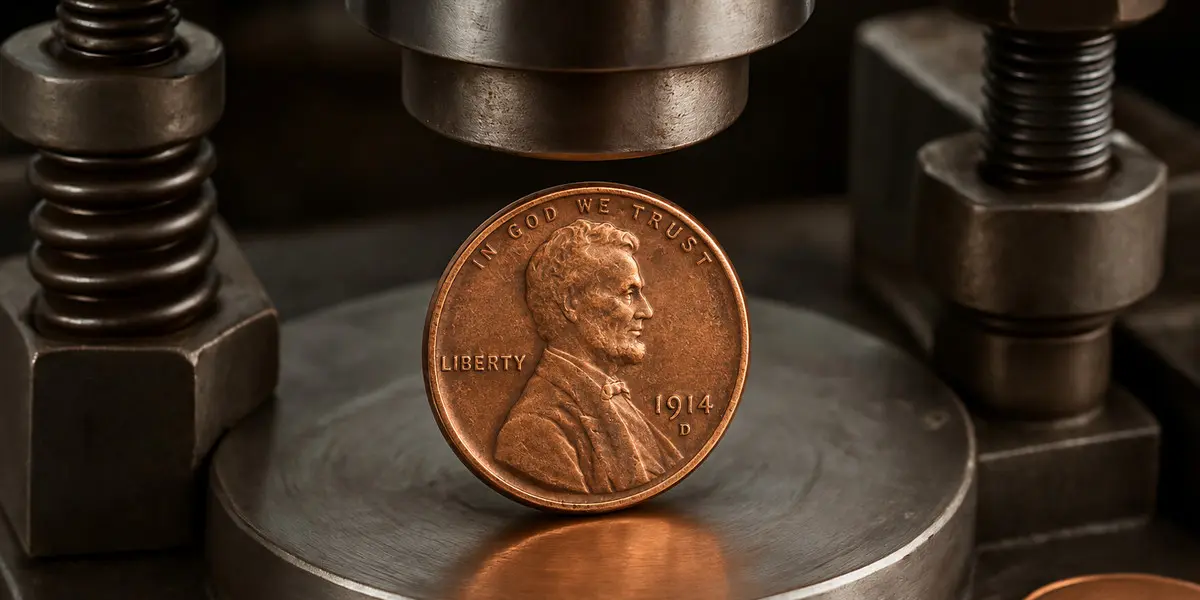
Billions remain in commerce and private holdings. Treasury says financial institutions may continue accepting deposits, while the Federal Reserve will continue recirculating available cents for as long as practicable.
Meanwhile, the Mint continues striking collectible Lincoln cents.
So the denomination that began with an enormous copper Chain Cent in 1793 may not vanish at all.
Instead, it could undergo something far more unusual.
After 232 years as everyday money, the American penny may complete its transformation from pocket change into a coin produced primarily for collectors.
That would give the one-cent coin a final chapter few collectors could have imagined when the first 11,178 federal cents left the Philadelphia Mint in March 1793.
Lincoln Cent Specifications

- Denomination: One Cent
- Composition: 97.5% zinc, 2.5% copper
- Weight: 2.50 grams
- Diameter: 19.05 mm
- Thickness: 1.52 mm
- Edge: Plain
- Obverse: Abraham Lincoln
- Obverse Designer: Victor David Brenner
- Reverse: Union Shield
- Reverse Designer: Lyndall Bass
- Reverse: Sculptor Joseph Menna
- Circulating Production: Ended November 12, 2025
- Legal Tender Status: Remains legal tender
- Collector Production: Continues in limited numismatic products
- Specifications: United States Mint.

The mint really does need to make a cheaper nickel to save money.
If the government would stop treating us regular citizens like a personal ATM our currency may actually have a value…
Thanks for the official update on pennies. The question is What to do with all of the pennies that we have and are still out there. Will nickels be next?
@Ed Mooney: As the story notes: “… pennies remain legal tender … financial institutions may continue accepting deposits, while the Federal Reserve will continue recirculating available cents for as long as practicable.” In other words, you can keep using cents in ordinary commerce for the foreseeable future.
Eliminating the nickel would be problematic for the gradeschool reason that 25 isn’t a multiple of 10. Back in 2015 the Royal Canadian Mint looked into the feasibility of eliminating that nation’s 5¢ coin and found that it would actually complicate change-making. If the nickel were eliminated, transactions would require many more dimes and fewer quarters. Moreover, unless totals were rounded to the nearest dime some amounts could only be transacted via a swap of appropriate denominations.
Guess it’s time to start collecting pennies!
Coppah Whoppah!
I’ve collected selected pennies from 1900, precious examples from all mints since I was 12 years old when I became a USA citizen, very proud of my collection including the 1776-2026 penny honoring our 250th anniversary, Lincoln was a great man!