


The Secret 1964 Kennedy Half Dollar That Sold for $156,000
Few American coins carry the emotional weight of the 1964 Kennedy Half Dollar.
The United States Mint created it at extraordinary speed. Congress changed federal law to authorize it. Americans stood in long lines to buy it. Then, almost immediately, the public pulled the new coins from circulation.
Yet the story goes far beyond a silver memorial coin.
The first Proof version carried a distinctive hair treatment that the Mint quickly changed. Collectors now call that variety the Accented Hair Kennedy Half Dollar. Meanwhile, a tiny group of mysterious 1964 Special Mint Set coins appeared decades later. The Mint never offered such sets to the public.
One of those special strikes sold for $156,000.
Together, these coins tell one of the most dramatic stories in modern United States numismatics.
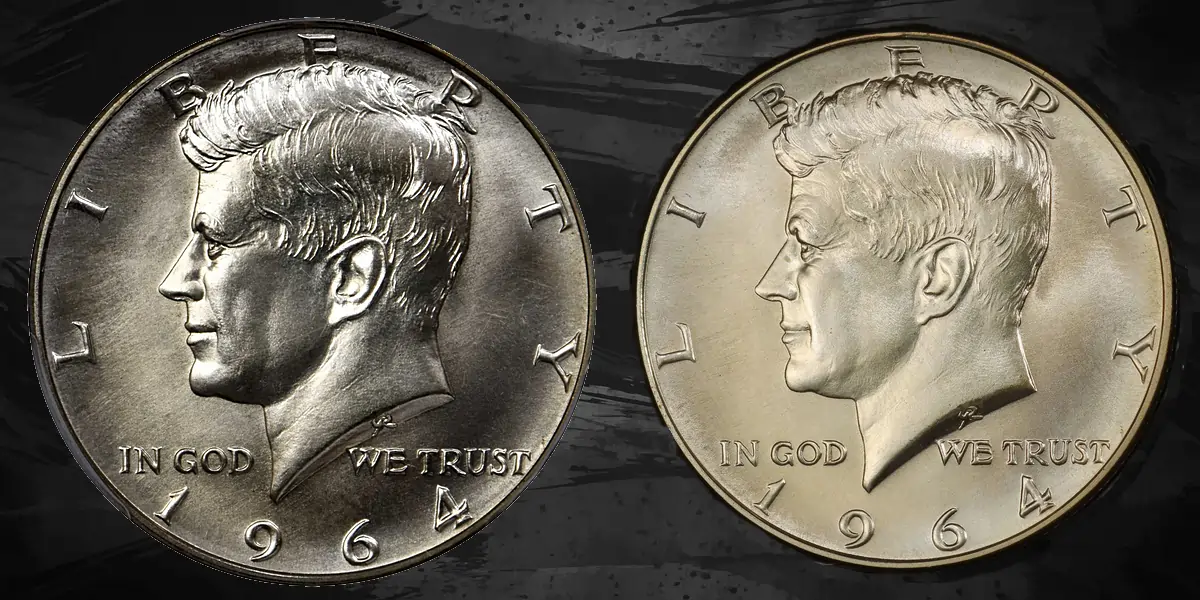
A National Tragedy Creates a New American Coin
President John F. Kennedy died after an assassin shot him in Dallas, Texas, on November 22, 1963.
The nation immediately searched for ways to honor its slain president. Within hours, United States Mint Director Eva Adams discussed a Kennedy coin with Chief Engraver Gilroy Roberts.
Officials considered the quarter, half dollar, and silver dollar. However, First Lady Jacqueline Kennedy favored the half dollar. That choice allowed the Washington Quarter to remain unchanged. It also ended the Franklin Half Dollar series after only 16 years.
Federal law normally protected a coin design from replacement for 25 years without congressional approval. The Franklin Half Dollar had entered production in 1948. Therefore, the Treasury could not simply remove Benjamin Franklin from the coin.
Congress acted quickly.
President Lyndon B. Johnson approved Public Law 88-256 on December 30, 1963. The law specifically replaced the Franklin Half Dollar with a silver 50-cent coin bearing Kennedy’s likeness.
Only 38 days had passed since Kennedy’s death.
Gilroy Roberts and Frank Gasparro Race Against Time
The Mint did not have time for a normal coin-design competition. Instead, its engraving staff adapted artwork that already carried presidential approval.
Gilroy Roberts used the left-facing Kennedy portrait that he had created for Kennedy’s presidential inaugural medal. Assistant Engraver Frank Gasparro adapted the medal’s reverse, which drew its imagery from the Presidential Seal.
This decision saved critical time. It also gave the new coin an official and dignified appearance.
Roberts placed Kennedy’s portrait at the center of the obverse. The inscription LIBERTY curves around the upper border. The motto IN GOD WE TRUST crosses the field, while Kennedy’s neck separates the words GOD and WE. The date appears below.
Gasparro’s reverse features a heraldic eagle with a shield across its chest. The eagle holds an olive branch and a group of arrows. A ring of 50 stars surrounds the central device. Clouds, rays, and stars fill the background.
The design remains one of the most intricate reverses on a circulating American coin.
Where and When the First Kennedy Half Dollars Appeared
The Philadelphia and Denver Mints held simultaneous ceremonial first strikes on February 11, 1964.
The Treasury released the new Kennedy Half Dollar to the public on March 24.
Demand exploded.
The Treasury Department offered 70,000 coins through its Washington, D.C., cash window. Buyers quickly exhausted the supply. Banks in Boston and Philadelphia also ran out, even after limiting the number that each customer could purchase.
The coins rarely reached cash registers.
Instead, Americans saved them as memorials. Families placed them in drawers, jewelry, albums, and safe-deposit boxes. Some people had never collected coins before. However, they wanted a permanent reminder of the fallen president.
The Mint had expected strong demand. Still, officials underestimated the scale of public interest.
Philadelphia eventually struck 273,304,004 business-strike halves. Denver produced another 156,205,446. Together, the two facilities struck 429,509,450 circulation coins dated 1964.
The Philadelphia Mint also produced 3,950,762 Proof examples for collector sets.
The Only 90% Silver Kennedy Half Dollar
The 1964 Kennedy Half Dollar contains 90% silver and 10% copper. It weighs 12.5 grams and contains approximately 0.3617 troy ounce of silver.
No other regular Kennedy Half Dollar shares that composition.
Congress passed the Coinage Act of 1965 as rising silver prices and widespread coin shortages disrupted the nation’s monetary system. The law removed silver from the dime and quarter. It also reduced the half dollar’s silver content from 90% to 40%.
The Mint used the 40% silver composition for circulation-strike Kennedy halves dated 1965 through 1970. Beginning in 1971, it adopted a copper-nickel clad composition for standard production.
Therefore, the 1964 issue stands alone as a one-year silver type.
Its precious-metal content also helped drive it from circulation. As silver became more valuable, people saved or melted older coins. The Kennedy half had already attracted sentimental hoarding. Its silver value gave the public another reason to keep it.
The Accented Hair Kennedy Half Dollar
The first major collectible variety appeared before most Americans ever saw the new coin.
Early 1964 Proof Kennedy halves show stronger hair detail above and behind Kennedy’s ear. Collectors call these coins the Accented Hair variety.
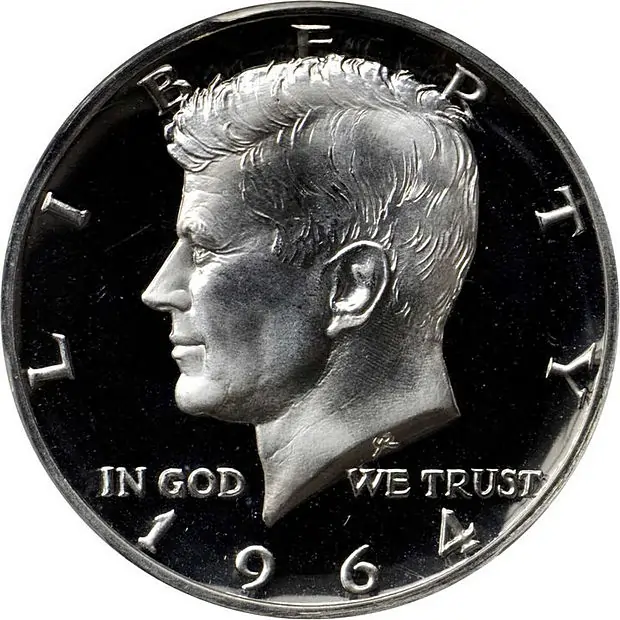
The Mint used this portrait only during the early phase of Proof production. Later Proof dies carried a modified, smoother hairstyle.
Numismatic tradition links the change to Jacqueline Kennedy’s review of the design. However, collectors should treat some parts of that familiar story with caution. The historical record confirms that Mrs. Kennedy reviewed the portrait and took a close interest in its appearance. Still, no surviving Mint document conclusively states how many Accented Hair Proofs the Mint struck or identifies every reason behind the die modification.
For that reason, estimates such as “the first 50,000” or “the first 100,000” should not appear as established mintage figures.
No official Accented Hair mintage survives.
How to Identify an Accented Hair Proof
Collectors should first confirm that the coin is a Proof.
The Accented Hair variety belongs to the 1964 Proof issue. It does not describe a normal Philadelphia or Denver business strike.
Proof coins usually show reflective fields, sharply defined details, and surfaces prepared for sale in collector sets. However, haze, fingerprints, cleaning, or decades of storage can reduce their original brilliance.
Next, examine two key obverse diagnostics.
Strong Hairlines Above Kennedy’s Ear
Look directly above Kennedy’s ear.
The Accented Hair portrait shows several deeply engraved, sharply separated strands. These lines create a heavier and more pronounced patch of hair.
On the later Normal Hair portrait, this area appears softer and more orderly. The deepest strands disappear or show a smoother treatment.
Collectors sometimes examine the wrong area. Normal Kennedy halves also contain engraved hairlines. Therefore, the presence of hair detail alone does not confirm the variety.
The Missing Serif on the Letter I
The easiest secondary diagnostic appears in LIBERTY.
Examine the lower-left side of the letter I. On the Accented Hair obverse, the lower-left serif appears missing or sharply truncated.
On the Normal Hair Proof, the serif appears more complete.
This diagnostic often provides a clearer answer than the hair itself, especially when haze or toning obscures the portrait.
Reverse Diagnostics
Most Accented Hair Proofs pair with the early reverse hub. On this reverse, Gasparro’s FG initials show an early-style letter G. Collectors can also study the relationship between the reverse rays and nearby stars.
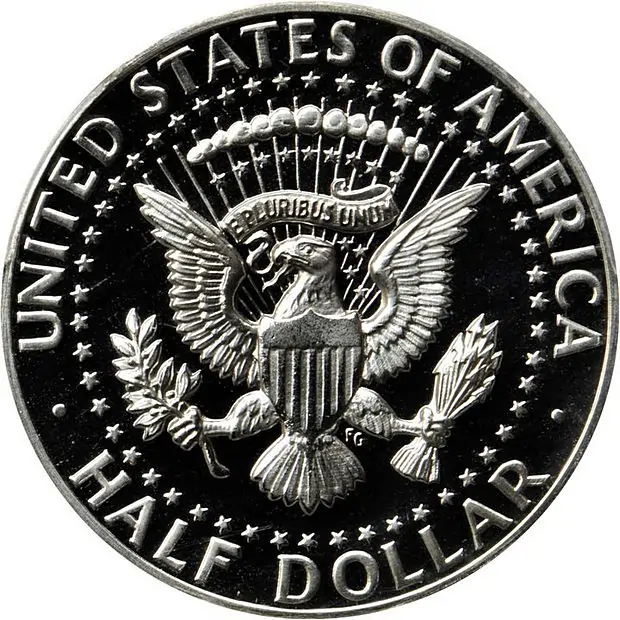
However, reverse details should support the attribution rather than replace the obverse diagnostics. Different die marriages and later hub combinations can create confusion.
For most collectors, the best identification sequence remains simple:
- Confirm that the coin is a Proof.
- Study the deep hairlines above the ear.
- Check the missing lower-left serif on the I in LIBERTY.
- Use the reverse only as supporting evidence.
NGC recognizes the Accented Hair coin as a separate Proof variety, while PCGS also lists Cameo and Deep Cameo examples within its attribution system.
Why Accented Hair Kennedy Halves Matter
The Accented Hair variety captures the final stages of a rushed design process.
It represents the first Proof interpretation of Roberts’ Kennedy portrait. It also gives collectors a visible link to the private review and rapid revisions that occurred before the coin’s national release.
Most examples remain obtainable. However, sharply contrasted Cameo and Deep Cameo coins become much scarcer at higher grades.
Dark or frosted devices must contrast strongly against mirrored fields to earn those designations. Hairlines, spots, haze, and contact marks can quickly limit a Proof’s grade.
Therefore, collectors should not judge an Accented Hair coin by the variety alone. Surface quality, contrast, originality, and eye appeal still determine much of its market value.
What Is a Special Mint Set Coin?
The Mint suspended normal Proof Set and Uncirculated Mint Set production during the national coin shortage.
Instead, it sold Special Mint Sets for 1965, 1966, and 1967.
SMS coins occupied a middle ground between Proofs and business strikes. The Mint gave them more careful preparation than ordinary circulation coins. However, they usually lacked the deeply mirrored fields found on traditional Proofs.
The 1965 SMS had an issue price of $4. The Mint placed its coins in the same type of flexible plastic packaging previously used for Proof Sets.
However, the Mint did not announce, package, or sell a 1964 Special Mint Set.
That fact makes the surviving 1964 special strikes so mysterious.
The Enigma of the 1964 SMS Kennedy Half Dollar
A small number of 1964 coins display surfaces and striking characteristics unlike ordinary business strikes or Proofs.
They show unusually sharp details. Their rims appear square and carefully formed. Their surfaces often carry a smooth satin texture. Die-polishing lines appear across the fields, yet the coins lack the strong mirrors of conventional Proofs.
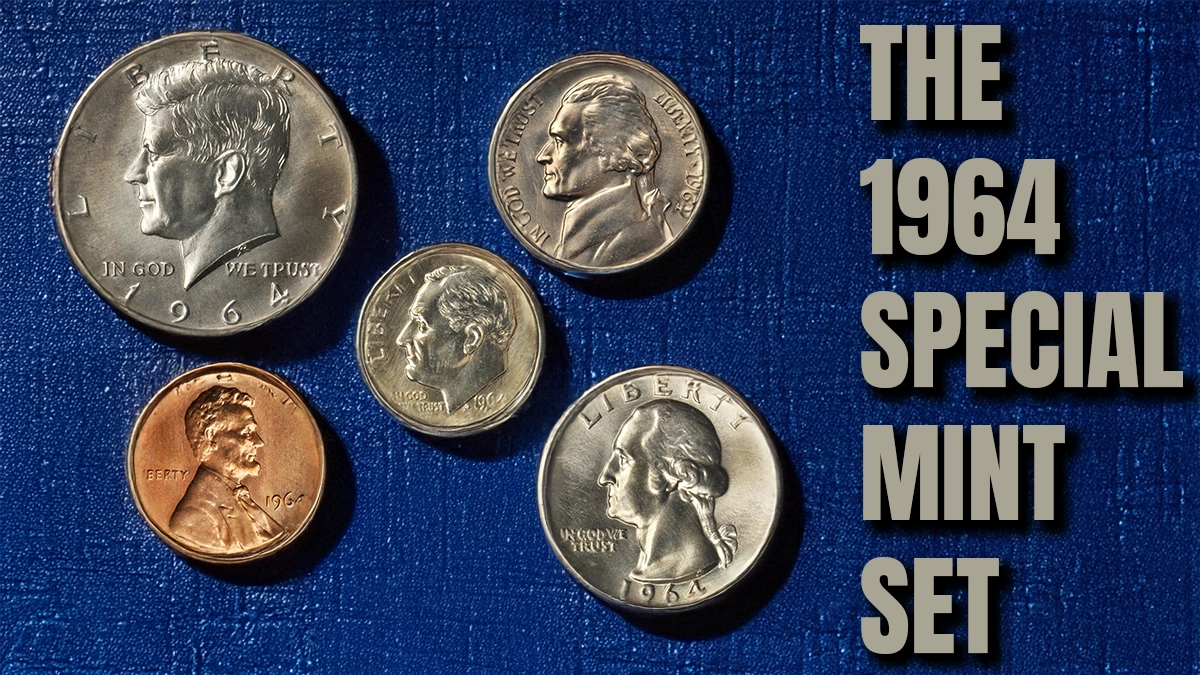
They also show few contact marks. That lack of damage suggests careful handling after striking.
Special strikes exist for all five 1964 denominations:
- Lincoln cent
- Jefferson nickel
- Roosevelt dime
- Washington quarter
- Kennedy half dollar
However, the half dollar ranks as the rarest coin in the group.
Experts generally believe that only slightly more than a dozen 1964 SMS Kennedy halves survive. Yet the exact number remains difficult to determine. Resubmissions and grading-service crossovers can inflate published populations.
Where Did the 1964 SMS Coins Come From?
The coins first entered the market through Stack’s auctions in the early 1990s.
Stack’s offered groups of five coins from the estate of New York dealer Lester Merkin. These groups contained one coin of each denomination, although some included an ordinary Kennedy half instead of a special strike.
The coins did not appear in official Mint packaging. Instead, Stack’s presented them in individual plastic holders.
Their earlier history remains uncertain.
Researchers have long suspected a connection to former Mint Director Eva Adams. However, no conclusive chain of ownership proves that Adams personally removed, owned, or distributed every coin.
Stack’s Bowers has stated that the Merkin coins can likely trace back to Adams. PCGS also describes a possible connection to either Adams or another Mint employee. That language matters. The Adams provenance remains a strong theory, not a settled fact.
Smithsonian Coins Add an Important Clue
Research into the Smithsonian Institution’s National Numismatic Collection provides a possible explanation for the unusual finish.
A memorandum dated April 3, 1964, stated that certain contemporary coins held by the Smithsonian represented first strikes selected under a special arrangement with Eva Adams.
Researchers later examined the Smithsonian’s 1964 Philadelphia coins. Nine of the 10 pieces showed characteristics associated with the so-called 1964 SMS coinage. Those nine coins included one Kennedy half and two examples of each lower denomination.
The remaining Kennedy half appeared to be a normal circulation strike.
This evidence does not fully explain the privately held coins. However, it proves that the Mint selected specially prepared or specially handled 1964 coins for presentation purposes. It also gives the 1964 SMS designation a stronger historical foundation than surface appearance alone.
How to Identify a 1964 SMS Kennedy Half Dollar
A genuine 1964 SMS Kennedy half should display a combination of characteristics.
First, the strike should appear unusually sharp. Kennedy’s hair, facial features, and lettering should show strong definition. Reverse details should also appear crisp.
Second, the surfaces should carry a satin-like texture. They should not show the standard frosty cartwheel luster of a normal Mint State coin.
Third, the fields should lack the deep reflectivity of a Proof.
Fourth, the rims should appear unusually square and sharp.
Finally, the surfaces often show extensive die-polishing lines but relatively few handling marks.
No single characteristic proves that a coin belongs to this rare group. Altered surfaces, polished dies, strong business strikes, and impaired Proofs can mislead collectors.
For that reason, anyone who believes they own a 1964 SMS Kennedy half should seek authentication from a major grading service. The difference between a normal coin and a genuine special strike can amount to more than $100,000.
The Stack’s Bowers SP68 That Sold for $156,000
The most famous public sale of a 1964 SMS Kennedy Half Dollar occurred on August 20, 2019.
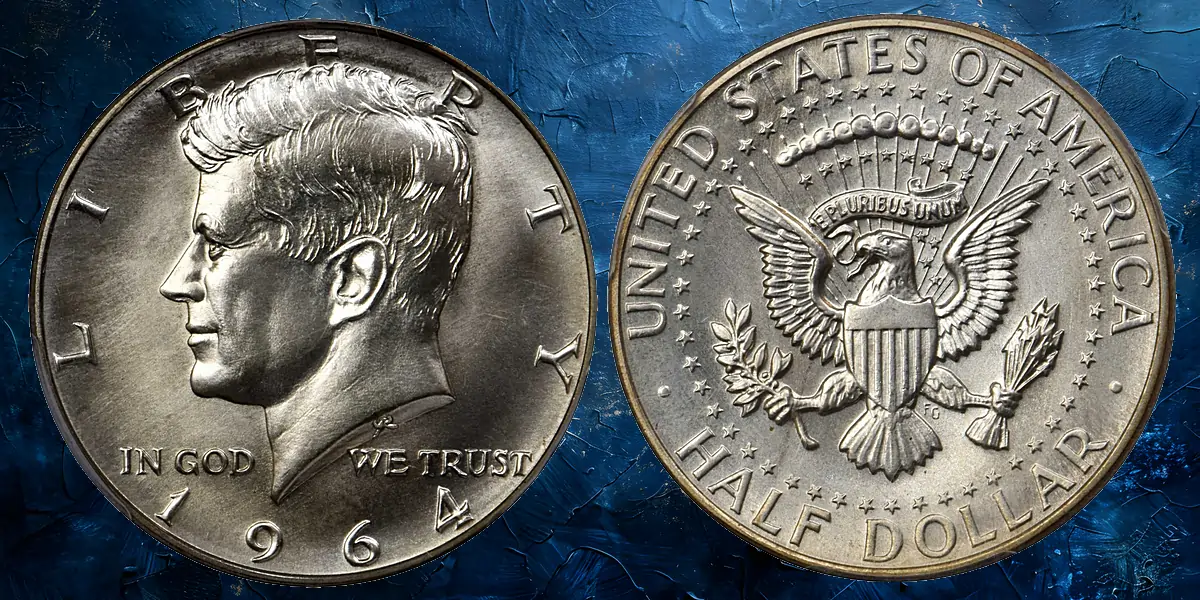
Stack’s Bowers Galleries offered the coin as Lot 5231 during its Rarities Night auction at the American Numismatic Association World’s Fair of Money.
PCGS graded the coin SP68.
It sold for $156,000. At the time, Stack’s Bowers called the result a record for the most valuable non-error modern United States coin sold at auction.
The coin combined several traits that advanced collectors value.
It belonged to a mysterious, unofficial issue that ranked near the top of the certified population. It also represented the key special strike in one of America’s most widely collected modern series.
The result transformed the market’s view of the 1964 SMS half. The coin no longer looked like an obscure modern anomaly. Instead, it took its place among the major rarities of postwar American coinage.
The Finest-Known 1964 SMS Kennedy Half Dollar
The $156,000 Stack’s Bowers coin ranks among the finest known examples. However, it does not currently hold the highest PCGS grade.
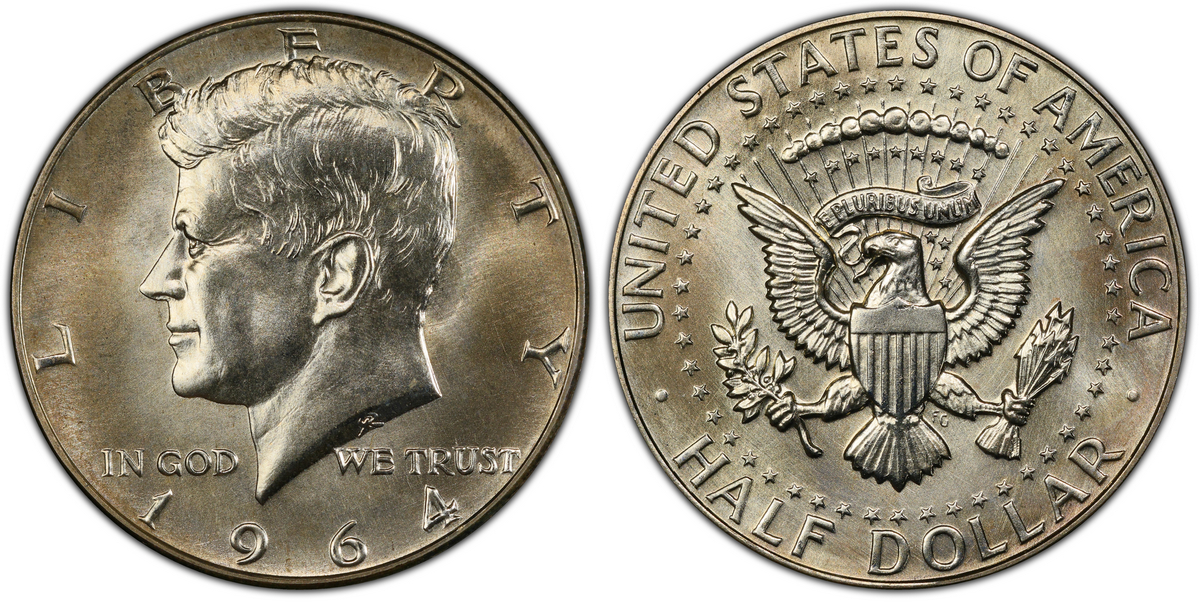
PCGS now lists one SP69 as the finest certified 1964 SMS Kennedy Half Dollar. Several SP68 coins rank immediately below it.
The SP69 belongs to a long-held collection that includes an exceptional five-coin 1964 SMS set. Heritage Auctions reported in 2025 that the coin remained unlikely to appear at auction in the near future.
Therefore, the Stack’s Bowers SP68 still holds the published auction record for the issue at $156,000. However, the privately held SP69 occupies the top position in the PCGS condition census.
That distinction makes the SP68 sale even more important. It provides the clearest public measure of demand for a coin whose finest example may remain unavailable for years.
The Finest Business-Strike 1964 Kennedy Half Dollars
Collectors should distinguish the SMS rarity from ordinary circulation strikes.
The finest certified Philadelphia business strikes reach MS68 at NGC. One example earned the additional NGC Star designation for exceptional eye appeal.
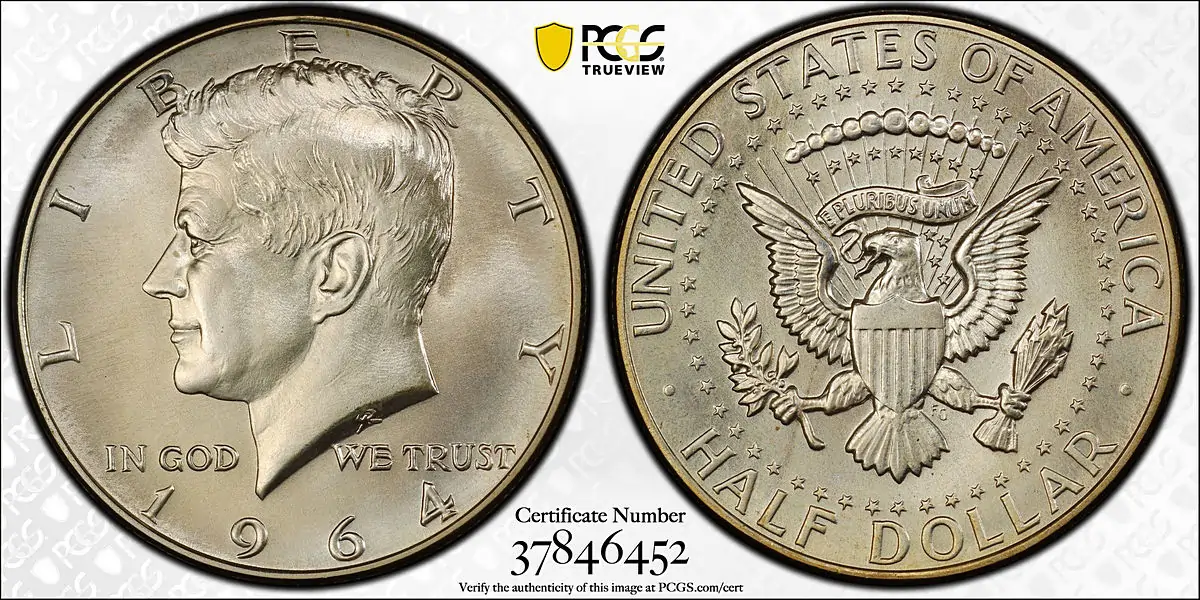
Heritage Auctions sold that 1964 Kennedy Half Dollar graded NGC MS68★ for $57,600 in May 2024.
That price shows how strongly condition affects the market.
The Philadelphia Mint struck more than 273 million ordinary 1964 Kennedy halves. Yet production marks, bag contact, weak details, spotting, and friction eliminated nearly all of them from consideration at the MS68 level.
A coin can be common by mintage and still become a major rarity in extraordinary condition.
Why Ordinary 1964 Kennedy Halves Rarely Reach the Top Grades
The Mint produced the coins quickly and in enormous numbers.
Freshly struck halves fell into bins and bags. The heavy coins struck one another during storage and transportation. Kennedy’s cheek and the open fields became especially vulnerable to marks.
Many saved coins also suffered from poor storage. PVC residue, album toning, fingerprints, haze, and careless cleaning damaged countless pieces.
As a result, typical uncirculated examples remain plentiful. Superb Gems do not.
Collectors searching for a premium business strike should focus on Kennedy’s cheek, jaw, and neck. They should also inspect the fields in front of the portrait. On the reverse, the shield and surrounding fields often reveal contact marks.
Original luster also matters. A coin with blazing cartwheel luster and clean surfaces can stand apart from thousands of ordinary examples.
Collecting the 1964 Kennedy Half Dollar Today
The issue offers an entry point for almost every budget.
A circulated 1964 half carries a base value tied to its silver content. However, silver prices change constantly. Collectors should calculate melt value by multiplying the current silver price by approximately 0.3617 troy ounce.
Uncirculated Philadelphia and Denver coins remain accessible. Proofs also offer an affordable way to own the first year of the design.
From there, collectors can pursue several advanced paths.
They can build a set of Philadelphia and Denver business strikes, can add standard and Accented Hair Proofs. They can seek Cameo or Deep Cameo contrast and can study doubled dies, repunched mintmarks, and other varieties.
At the highest level stands the 1964 SMS Kennedy Half Dollar.
That coin transforms a familiar silver half into a modern American rarity.
A Memorial Coin That Became a National Keepsake
The 1964 Kennedy Half Dollar succeeded because Americans did not treat it like ordinary money.
They treated it as a memorial.
The Mint created the design in a matter of weeks. Congress changed the law. Jacqueline Kennedy helped select the denomination. Gilroy Roberts and Frank Gasparro adapted presidential medal designs under immense pressure.
Then the public completed the story.
Americans removed the coins from circulation almost as soon as they arrived. That nationwide act of remembrance preserved millions of examples. It also helped turn the half dollar from a working denomination into a collector-focused coin.
Meanwhile, the Accented Hair Proof preserves the design’s earliest form. The mysterious SMS coins reveal a hidden layer of Mint experimentation or presentation-strike production. Finally, the $156,000 Stack’s Bowers result proves that the greatest modern rarities do not always begin with low mintages.
Sometimes, rarity begins with a coin that was never supposed to exist.
1964 Kennedy Half Dollar Specifications
- Denomination: Half Dollar
- Date: 1964
- Mint facilities: Philadelphia and Denver
- Composition: 90% silver, 10% copper
- Weight: 12.5 grams
- Approximate silver weight: 0.3617 troy ounce
- Diameter: Approximately 30.6 to 31 millimeters
- Edge: Reeded
- Obverse designer: Gilroy Roberts
- Reverse designer: Frank Gasparro
- Philadelphia business-strike mintage: 273,304,004
- Denver business-strike mintage: 156,205,446
- Proof mintage: 3,950,762





Good article I have many 64s but not that one.
Very interesting story! Cool coin.
Have a lot of Kennedy halves including a few ‘64 silvers. Guess I will pass them on to family.
Great article on a complicated topic.
If I have any of those coins what should I do
Very informative article as always. I go to banks and ask for halves every chance I get. Usually, I only get a few rolls, but I occasionally find silver in them. There was one time I received a roll’s worth of 40% and 1 90% in only 10 rolls of halves.
A great article! I’ve been aware of the 1964 SMS halves for a long time but never knew that the other four denominations had been struck as well. It’s not unreasonable to posit a connection to Mint Director Eva Adams given her deep involvement with coinage, but as noted all we can do at this point is speculate.
In a related vein, I’ve often wondered whether the half might have remained a circulating coin if two decisions had gone in a different direction:
– if the JFK design had only been struck as a one-year commemorative with Ben Franklin returning in 1965 AND
– if western states and the precious-metals lobby hadn’t refused to support the Coinage Act of 1965 unless at least one denomination still contained silver.
Awesome! I’m a Kennedy collector so this article was a fascinating bit of origin story for my favorite coin! Thanks…
Now I have to go back and check my unopened rolls ? gee … ok maybe .
Excelente artículo! Quiero como detalle adicional, decir que en el sms de 1964 es importante revisar si tiene un rayo cortado por las estrellas y la letra G si la serifa.
Por otro lado, comenta que tengo 2 set de 1964 y que por lo que he averiguado, tiene un error de transición de troqueles, es decir, el anverso normal y el reverso de un half dollar accented hair. Saludos.