


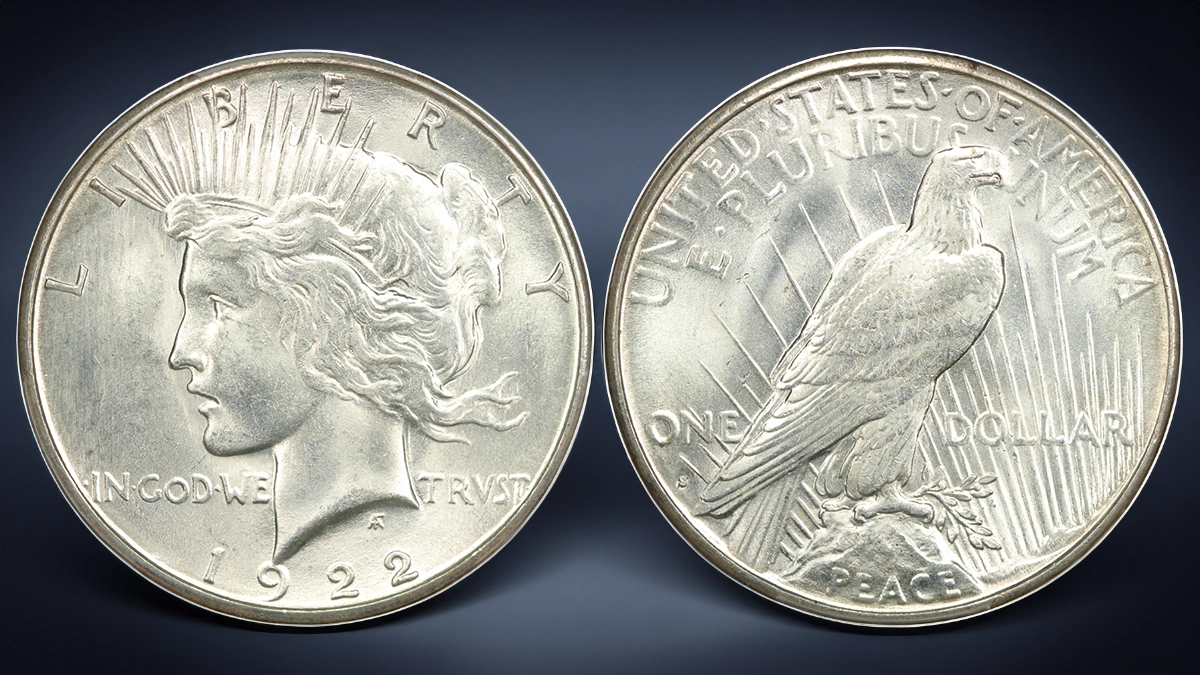
The basic principles of coin grading rank among the most important skills collectors must learn at the beginning of their numismatic journey. Without question, the ability to grade coins accurately protects both your collection and your wallet. However, mastering this skill does not happen overnight.
Instead, grading develops gradually. As collectors study more coins, patterns begin to emerge. Over time, repeated exposure reveals which issues matter most, and which details deserve less attention. Some grading challenges stem from a coin’s original characteristics. Others result from decades of handling, storage, cleaning, or alteration by collectors and dealers.
Naturally, beginners make mistakes. We all misjudge condition at first, and we all overemphasize the wrong factors early on. For that reason, this guide highlights the exact elements professional graders prioritize. By focusing on what truly affects grade, and ignoring what does not, you can improve faster and avoid costly errors.

Why Learning to Grade Coins Matters
Two factors ultimately determine a coin’s value: rarity and condition. At the highest levels of the hobby, competition becomes fierce. Only a limited number of elite coins survive, and collectors bid aggressively for the finest known examples.
Meanwhile, for most collectors, the interaction between rarity and condition determines both the purchase price and resale value. Simply put, better condition usually means higher demand.
When you understand coin grading, you protect your money. Although most collectors rely on third-party grading services (TPGs), those opinions, while valuable, never tell the full story. In fact, this has been true since the beginning of the TPG era. That reality explains why the phrase “buy the coin, not the holder” remains just as relevant today as it was decades ago.
Understanding the Subjectivity of Coin Grading
Even professional graders do not always agree. As a result, third-party grading services rely on multiple graders and a finalizer to ensure consistency with their standards.
At first, grading a single coin may take several minutes. That’s normal. Beginners have not yet developed the pattern recognition skills professionals use to identify common trouble spots instantly. Moreover, every coin series presents unique challenges. What affects a Morgan Dollar, for example, may not apply to a Lincoln Cent.
Because of differences in metal, size, age, and striking methods, professional graders store vast amounts of specialized knowledge. Fortunately, collectors build this expertise naturally by studying coins firsthand and applying consistent best practices.

Creating the Right Environment for Grading Coins
Before you can grade accurately, you must control your environment. Fortunately, a few simple steps make a significant difference.
Lighting
Proper lighting matters more than most collectors realize. Despite modern trends, a single 75–100 watt incandescent bulb in a table lamp remains the gold standard. Ideally, grade coins in a dark room with only one light source.
This setup allows light to interact naturally with the coin’s surface. As a result, subtle flaws, wear, and contact marks become easier to see.
Magnification
Most collectors benefit from magnification. The ideal range falls between 5x and 7x. Avoid excessive magnification, however. Coin grading depends on eye appeal, not microscopic perfection.
A Hastings Triplet loupe offers the best performance. Its three bonded lenses eliminate edge distortion and provide excellent clarity. Expect to spend $50–$150 for a quality example.
How to Hold a Coin
Human skin oils damage coins quickly. While gloves help, they are often impractical. Instead, always hold coins by the edges only.
How to View a Coin
Start with a naked-eye inspection of both obverse and reverse. Then, hold the loupe close to your eye and bring the coin into focus. Study focal areas first, then the surrounding fields and rim.
Rotate the Coin
As you inspect the coin, gently wobble and rotate it. This technique reveals contact marks, wear, and planchet flaws that remain hidden when viewed straight on.
Remember the Third Side
Collectors often forget the rim, but they shouldn’t. Rim damage can lower a coin’s grade dramatically. That said, no coin ever upgraded because of a pristine rim.

Proper Coin Storage Protects Value
Grading knowledge means little without proper storage. Store coins in temperature-controlled, low-humidity environments. Keep them away from chemicals and avoid PVC flips, which break down and leave corrosive residue.
Additionally, avoid long-term storage near paper products. As paper ages, it releases sulfur, methane, and carbon dioxide, all harmful to coin surfaces.
Key Grading Terms Every Collector Should Know
Coin Features
- Device: Raised or incuse design elements, including portraits, lettering, dates, and mintmarks.
- Field: The flat surface surrounding devices, often showing die flow lines.
- Focal Area: The area your eye naturally notices first. These areas carry the most grading weight.
Coin Classifications
- Business Strike: Coins produced for circulation.
- Proof: Coins struck multiple times with specially prepared dies. Proof describes how a coin was made, not its grade.
Coin Conditions on the Sheldon Scale
Coins use the 70-point Sheldon Scale.
- Mint State (MS60–MS70): Uncirculated business strikes showing no wear.
- Circulated (PO01–AU58): Any coin with wear.
- Proof (PR60–PR70): Unimpaired Proof coins.
- Impaired Proof (PR01–PR58): Proofs that show wear or damage.
How Grading Services Determine Final Grades
Coin grading remains subjective, even among experts. As a result, two grading philosophies dominate the industry: technical grading and market grading.
Technical grading follows strict standards. Market grading, however, considers what buyers will accept. This distinction explains why some lightly impaired coins receive Mint State grades while attractive AU coins sometimes sell for more.
Additionally, many coins have been cleaned, conserved, or altered over the years. Minor alterations may still receive numerical grades. However, excessive work usually results in a details grade.
Because grading involves judgment, resubmissions occur frequently. CAC entered the market to help standardize opinions between services, but even CAC does not always align with every expert.
As a collector, expect to disagree with grading services occasionally. In fact, many collectors judge their coins more harshly than professionals.
Not all coins with the same grade are equal.
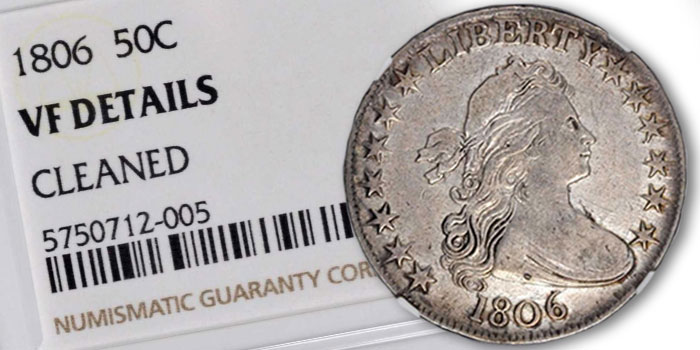
How Graders Weight the Obverse, Reverse, and Rim
Although coins have three sides, graders do not treat them equally.
Generally speaking:
- 75% of the grade comes from the obverse
- The reverse can only lower the grade
- The rim matters primarily when damage exists
- This weighting reflects market realities, even if grading manuals don’t state it explicitly.
How Coin Metal Affects Survivability
Metal composition plays a major role in grading outcomes.
- Gold and silver strike well but wear quickly.
- Nickel and copper-nickel alloys resist wear but often strike weakly.
- Copper reacts immediately, leading to natural color changes.
- Silver and nickel tone over time, sometimes attractively, sometimes not.
Importantly, spotting on gold or silver affects eye appeal but not technical grade.

The Four Pillars of Coin Grading
When grading Mint State and Proof coins, professionals focus on four elements:
- Contact Marks: Fewer marks mean higher grades.
- Strike: Fully struck coins command premiums.
- Luster: Strong luster separates great coins from average ones.
- Eye Appeal: The most subjective, but often the most valuable, factor.
Strike Designations Collectors Should Know
Certain series receive strike designations:
- Full Bell Lines (FBL) – Franklin Half Dollars
- Full Steps (FS) – Jefferson Nickels
- Full Bands / Full Split Bands (FB/FSB) – Mercury Dimes
- Full Torch (FT) – Roosevelt Dimes
- Full Head (FH) – Standing Liberty Quarters
These designations can dramatically impact value.
Learn to Grade Coins—And Learn From Mistakes
Collectors and investors alike benefit enormously from learning how to grade coins. Even a basic understanding can save thousands of dollars over time.
Mistakes will happen. However, reviewing many coins, and learning from each misstep, sharpens your skills. The key is simple: don’t repeat the same mistakes twice.
In numismatics, knowledge compounds. And few skills pay greater dividends than learning how to grade coins correctly.




Very helpful article. How about a follow-up showing the various grades of one type of coin, and what makes the difference?
Grading is so needed but has to be so hard to do. Thanks for the article very helpful.
Grading is definitely subjective. A while back, a group of us sent in some of the S-minted AWQs for bulk grading (we cherry picked the best 7 out of each of our rolls). We were rather disappointed to see that only like a third managed a 66, while the rest were below that, and we were further disappointed to see 67-graded examples on a certain auction site with way more contact marks, especially in the fields, than our sub-66 ones. Looking back on it, I can only think that maybe the grader didn’t like the strikes, or such, but the fields were clean and the luster was great, so I still don’t know what we weren’t seeing that the grader was.
I agree, it can be very subjective and sometimes might take multiple submissions to get the grade you want, which is a frustrating exercise in using too much time and money. I think part of the problem is that the sheer volume of coins being sent in for grading likely creates an environment where graders must make decisions in a matter of seconds – mistakes are bound to happen.
Thanks for sharing and being detailed in how to grade a coin.
Very informative article about grading coins.
Very interesting and concise information
Interesting article. Thank you!
I once met the late, great Chuck Zink who gave me a copy of his book “Correct Grading of Morgan Silver Dollars” which he said he wrote because there was no standardized grading criteria being used back in his day. I’m not sure when he wrote it but that edition he gave me had a Numismatics Values Inc copywrite date of 1984.
Another excellent educational article. Keep them coming.
Good to know, thank you!
Anyone serious about coin collecting should understand the basics of coin grading, but understand that real coin grading involves more than just a physical inspection and a guess as to it’s value.
Nice looking coins
Nice article for a sometimes controversial subject. Thanks.
I did not know that 75% of the grade comes from the obverse — thank you.
A very helpful article. I usually compare my coins to a TPG that offers examples of coins in every grade. While not perfect, it’s helpful to have something I can compare coins to.
Very interesting
Very informative article especially regarding the grading services for me. I do wish the services would point out any defects that reduce a coin’s grade.
So Whitman’s blue folders have been ruining our coins on purpose?
Very interesting
This was SO interesting, and enlightening. Candidly, I really didn’t know almost anything about the grading process. This was great!
Great article
Great article on grading
Interesting article. Having seen a great number of slabbed coins it seems that frequently their graders are often off the mark.
Well written article on grading coins. I bookmarked this article for future reference. Still learning about coins and grading.
Coin grading being subjective is absolutely true.
awesome article
Having been involved in the hobby and business of numismatics for more than 60+ years, I can honestly state that there is actually very little consistency when it comes to third-party grading. That’s why you see coins with the exact same grade bring vastly different amounts of money in an auction.
The subjectivity of grading has always bothered me. There shouldn’t be different standards for different coins, as referenced for Morgans and cents in the article. The same standards should apply across all, not specific qualifiers for certain series.
Thanks for the interesting article! Coin grading is very subjective, I wonder if we’ll ever have AI grade coins in the future.
Helpful hints. Thank you!
A nice review of grading
Learning to grade should be an absolute basic skill. I always bye the coin, not the holder!!
Very informative.
Thanks for the interesting article!
Why do you keep making me learn.
I don’t know why but I like it. My eyes will be a little more attentive to the coins I look at from here on.
Thanks
I would like to know how they determined a coin was cleaned. Microscope? What if it was carried for a while?
Not all graded coins are MS
Always wondered how that worked.
Very interesting article. I have been thinking about getting a coin I have graded and always wondered how they went about it.
Helpful and imformative article. Thanks
Learning to grade coins is something I really need to learn how to do.
It is nice to have a grade 70 but the market is getting carried away with grading.
While I don’t think most coins need to be graded, I do think it is important for collectors to be able to estimate a grade on their own. I picked up a copy of the ANA Grading Standards book and look through it with coins in hand to practice. I also like to look at the coins I have graded and compare to the grading standards book. Look at enough coins, and grading standards, and eventually you will be able to give a rough estimate of the coin grade as you recognize the emerging themes of coins in those grades. I always appreciate when the coin grading companies post “guess the grade” pics and videos on social media – it is good practice!
Tremendous article with so much information. I also would find a follow-up with photos for comparisons of grading.
Very educational artical
I especially found the weighted section interesting. I would like to read a detailed article on proof like and dmpl coins and how to determine if a coin qualifies for thise designation. I always found it frustrating that some dates of Morgan dollars while being obviously PL have difficulty from the tpg getting the designation.
Very informative article
Thanks
A very interesting article.