A $1.3 Million Continental Dollar Had a Secret. Science Found It.
New Whitman book by Robert L. Rodriguez uses cutting-edge science, experimental minting, and historical detective work to challenge longstanding beliefs about one of America’s most controversial numismatic artifacts.
What if the greatest secret of the 1776 Continental Dollar lies beneath its surface?
For generations, collectors have studied its famous sundial, Revolutionary-era inscriptions, and 13 interlocking rings. Yet the origin of this legendary piece remains uncertain. Was it an early American coin, a proposed currency issue, or a medal produced in Europe?
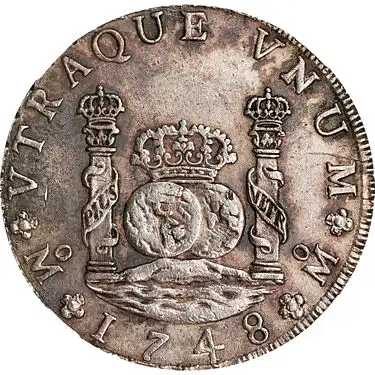
Now, researchers have uncovered remarkable new physical evidence. Using advanced X-ray technology, scientists identified a 1748 Spanish 8 reales from the Mexico City Mint beneath the design of a rare silver Continental Dollar.
The discovery plays a central role in The Continental Dollar: A Journey of Discovery, a new book by collector and researcher Robert L. Rodriguez. Whitman-CDN Publishing announced the book during America’s 250th anniversary year.
Rodriguez combines modern physics, historical investigation, and experimental coin production to examine a mystery that has challenged numismatists for generations.
The 1776 Continental Dollar: A Coin Without a Clear Origin
The Continental Dollar carries some of the most recognizable symbols of America’s founding.
Its obverse features a sundial, the Latin inscription FUGIO, meaning “I fly,” and the familiar phrase MIND YOUR BUSINESS. These elements reflect Benjamin Franklin’s imagery on Revolutionary-era Continental Currency.
Meanwhile, the reverse presents 13 interlocking rings representing the original colonies. At its center, the inscription WE ARE ONE expresses the unity that the emerging nation needed to achieve independence.
However, the Continental Dollar has one major problem: No surviving Continental Congress record directly authorizes its production.
For decades, researchers treated the pieces as possible experimental coins or substitutes for paper Continental Currency. Most surviving examples consist of pewter. Far fewer exist in silver or brass.
Then, historical research challenged that interpretation.
In 2018, numismatists Erik Goldstein and David McCarthy presented evidence suggesting that the pieces originated in Europe around 1783 as privately produced commemorative medals. Colonial Williamsburg now catalogs several examples under that approximate date.
Other specialists disagree. John Kleeberg, Q. David Bowers, and Rodriguez have defended interpretations that support an earlier American origin.
Even Paul Revere questioned the traditional attribution. In a February 21, 1790, letter to British scientist Richard Watson, Revere explained that he had never encountered pewter money struck in America despite making inquiries.
Consequently, the date 1776 on the Continental Dollar does not, by itself, establish its actual date or place of manufacture.
For more background, see CoinWeek’s earlier examination of the Continental Dollar controversy.
Scientists Look Beneath Four Rare Silver Continental Dollars
Rather than rely exclusively on historical documents, Rodriguez approached the problem through the coins themselves.
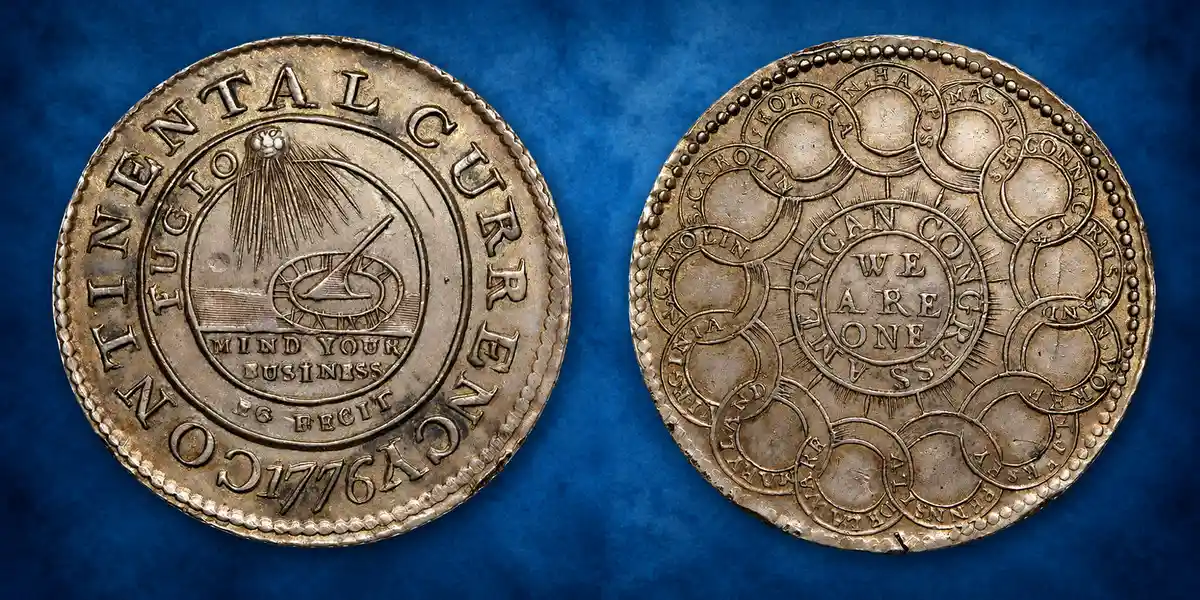
His six-year Continental Dollar Project assembled specialists in numismatics, physics, metallurgy, statistics, and minting technology. According to the project’s announcement, the investigation involved approximately $7 million in rare coins and related material.
The team then secured access to all four known silver Continental Dollars.
At Argonne National Laboratory’s Advanced Photon Source synchrotron, researchers applied X-ray micro-diffraction technology to examine evidence beneath the visible designs.
Over two years, scientists conducted 437 hours of scanning.
Their work revealed traces of the earlier coins that served as host planchets for the silver Continental Dollars.
One result proved especially important.
Researchers conducted five scans totaling 80 hours on the silver Continental Dollar known as the Warshaw specimen. Their analysis identified its underlying coin as a 1748 Spanish 8 reales from the Mexico City Mint.
Rodriguez credited Argonne scientist Dr. Wenjun Liu for his critical role in the investigation.
The discovery also revisited a much older numismatic claim.
Decades earlier, collector and researcher John J. Ford, Jr. had identified evidence suggesting that silver Continental Dollars used Spanish milled dollars as their underlying planchets. A 1987 Stack’s auction description repeated that interpretation.
However, researchers lacked the technology to investigate the hidden designs systematically.
Now, advanced X-ray analysis has supplied much stronger physical evidence.
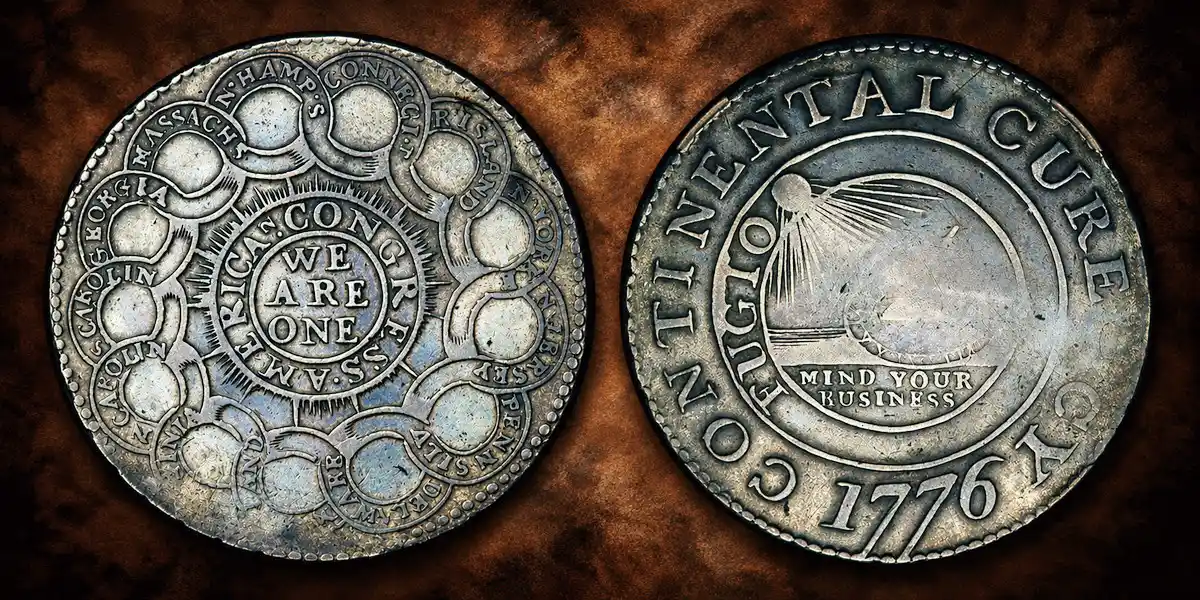
The Warshaw specimen also attracted substantial market attention. On June 25, 2026, Heritage Auctions sold the NGC VF35, CAC-approved silver Continental Dollar for $1,312,500.
That remarkable price underscores the rarity and importance collectors place on these historic pieces.
Can a 1748 Spanish Dollar Help Solve a 250-Year Mystery?
The discovery establishes an important fact about the manufacture of the silver Continental Dollars. At least one example carries the underlying design of a specifically identifiable Spanish colonial coin.
However, the finding does not independently prove that workers struck the Continental Dollar design in 1776.
An engraver could have reused an older Spanish coin years after its original manufacture. Therefore, researchers must combine the physical evidence with die studies, historical records, and manufacturing analysis before reaching broader conclusions.
Rodriguez believes those combined findings warrant a reassessment of earlier theories.
As he explains, his conclusions draw on science, statistics, direct observation, and reverse engineering.
The distinction matters. The new evidence provides more information about how the pieces came into existence. The debate over who produced them, where, and when remains a separate historical question.
Recreating the Continental Dollar: 112 Experimental Strikes
Rodriguez also wanted to understand how 18th-century workers could have manufactured the Continental Dollars.
To investigate, he collaborated with minting specialist Dan Carr at the Moonlight Mint.
Together, the researchers produced 112 experimental Continental Dollar pieces in four different metals. They also varied the striking conditions to explore the manufacturing characteristics of the originals.
These experiments gave the team another way to evaluate competing theories.
For example, differences in metal behavior, striking results, and other observable characteristics can help researchers assess the techniques that original minters may have used.
The project then combined those observations with statistical modeling, archival evidence, and the scientific findings from Argonne.
This approach marks an important departure from studies that depended mainly on surviving documents and the visible details of pewter examples.
Rodriguez hopes the resulting research will encourage other numismatists to examine the evidence and continue the investigation.
Robert Rodriguez Brings a Collector’s Passion to Scientific Research
Rodriguez has spent years assembling and studying some of America’s most important early numismatic material.
His Resolute Americana Collection includes an exceptionally comprehensive assemblage of Continental Dollars. The collection brings together major rarities, different metallic compositions, and important die varieties.
CoinWeek readers may remember Rodriguez from a 2017 CoinWeek IQ interview with then-NGC Chairman Mark Salzberg. During that conversation, he discussed his collection and the unusual challenges surrounding the Continental Dollar series.
Today, his collecting interests extend beyond Continental Dollars to Colonial American coinage, early United States issues, ancient coins, and medals.
He also serves as a Fellow and Trustee of the American Numismatic Society. In 2022, his financial support helped establish the Society’s Resolute Americana Chair of American Numismatics, which supports research into the monetary history of the Americas.
Additionally, Rodriguez belongs to the American Numismatic Association, Colonial Coin Collectors Club, Early American Coppers, Medal Collectors of America, and U.S. Mexican Numismatic Association, among other organizations.
His commitment extends beyond acquiring important coins. He regularly shares his collection to encourage numismatic education and a deeper understanding of American history.
A New Whitman Book Challenges Longstanding Assumptions
In The Continental Dollar: A Journey of Discovery, Rodriguez brings together the findings of this multidisciplinary investigation.
Numismatic researcher and author Leonard Augsburger contributes the foreword. He praises Rodriguez for approaching the controversy with fresh eyes and pursuing evidence beyond traditional documentary sources.
The richly illustrated volume includes detailed coin photography, scientific images, charts, archival material, and findings from the team’s experiments.
Moreover, the book explains the technologies and research methods behind the investigation, making its evidence accessible to collectors interested in early American monetary history.
Rodriguez also draws attention to the underlying scientific challenge. The most important clues do not necessarily appear on a coin’s visible surfaces.
His investigation demonstrates how modern technology can revisit assumptions that earlier generations of numismatists lacked the tools to test.
Why the Continental Dollar Still Matters in 2026
The timing gives Rodriguez’s book special significance.
In 1776, the American colonies declared independence and began forging a new national identity. Continental Currency helped finance that struggle, while its designs communicated ideas about time, responsibility, unity, and self-government.
The Continental Dollar preserves those same powerful symbols.
Yet collectors still cannot agree on whether the surviving pieces represent an early American monetary experiment or a later European interpretation of the Revolution.
That uncertainty makes the new research especially compelling.
Two hundred and fifty years after the Declaration of Independence, scientists can examine details that earlier researchers could only speculate about.
The discovery of a 1748 Spanish coin beneath a silver Continental Dollar provides an important piece of evidence. However, the larger historical questions still invite investigation.
The date 1776 tells us what appears on the Continental Dollar. The challenge is determining when, where, and why someone struck it.
Rodriguez’s new book offers collectors an opportunity to follow the evidence and reconsider one of early American numismatics’ most enduring controversies.
Book Details and Availability
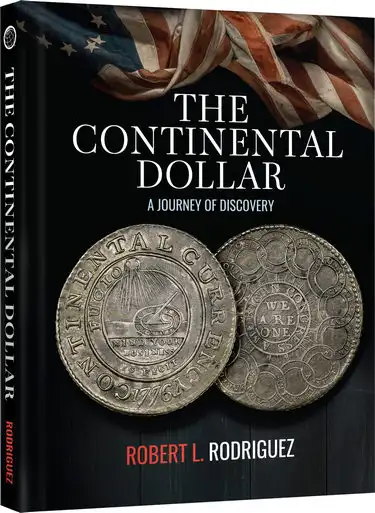
Robert L. Rodriguez
- Title: The Continental Dollar: A Journey of Discovery
- Author: Robert L. Rodriguez
- Publisher: Whitman-CDN Publishing
- Edition: First Edition
- Publication Date: October 22, 2026, according to the publisher’s announcement
- Format: Hardcover, 288 pages
- ISBN: 978-0-7948-5574-1
- Retail Price: $69.95
Whitman lists the book on its website. The publisher also identifies Amazon, eBay, bookstores, authorized distributors, and select numismatic retailers as sales outlets.
Readers can find additional information about the book, along with Whitman’s coin folders, albums, reference publications, and collecting supplies, at Whitman.com.