


The $18.9 Million Lesson: Why the Greatest Coins Need a Great Story
Rarity and condition can make a coin valuable. However, history, beauty, pedigree, and a remarkable story can turn a coin into a numismatic legend.
That distinction helps explain why some coins attract extraordinary demand while others, despite greater rarity, remain far less famous.
Collectors often focus on mintage, grade, and population reports. Those numbers matter. Still, they do not tell the whole story.
Some of the most desirable coins in American numismatics became famous because they connect directly to presidents, kings, shipwrecks, treasure hunters, courtroom battles, and turning points in American history.
In many cases, the story becomes as important as the coin itself.
The Coin That Sold for Nearly $19 Million
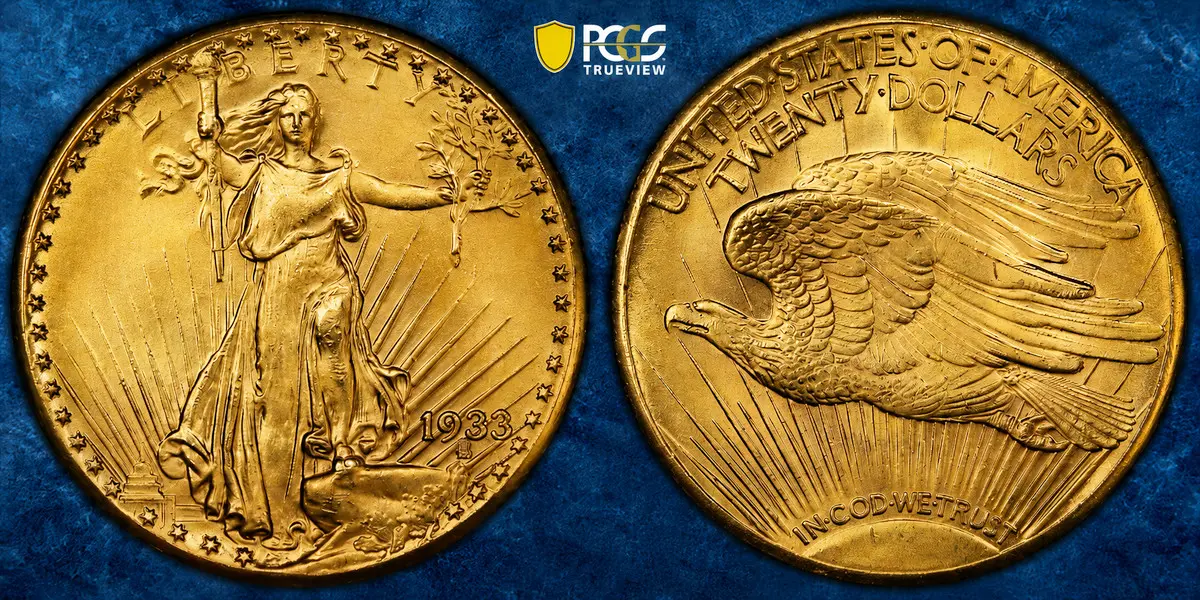
Few coins illustrate that better than the 1933 Saint-Gaudens Double Eagle.
On June 8, 2021, ‘s sold the famous privately owned example for $18,872,250. The result set the auction record for a coin.
The Philadelphia Mint struck 445,500 Double Eagles dated 1933. However, the government never released them into normal circulation. Authorities later ordered almost the entire mintage melted.
Yet a small number escaped.
One example eventually entered the collection of King Farouk of Egypt. Decades later, British coin dealer Stephen Fenton brought that coin to New York.
Then the story took a dramatic turn.
In 1996, Secret Service agents seized the coin during an undercover operation at New York’s Waldorf-Astoria hotel. Federal litigation followed.
A 2001 settlement finally allowed that specific 1933 Double Eagle to enter private ownership legally.
Sotheby’s sold the coin in 2002 for $7.59 million.
Nearly two decades later, designer and collector Stuart Weitzman revealed himself as the owner. He then consigned the coin to Sotheby’s, where it realized $18.87 million in 2021.
The larger 1933 Double Eagle story also includes the discovery of 10 additional examples by the Langbord family. That discovery triggered years of legal battles over ownership.
Then, in 2024, the privately owned 1933 Double Eagle appeared on Pawn Stars. During the episode, Rick Harrison offered $25 million for the coin. The owner declined.
Rarity certainly matters.
However, the 1933 Double Eagle became a global numismatic icon because of everything that happened after the Mint struck it.
The 1907 High Relief Double Eagle Proves Rarity Is Not Everything
The United States series includes coins that rank as major rarities but lack a powerful story.
Meanwhile, other coins survive in much larger numbers yet remain near the top of collector want lists.
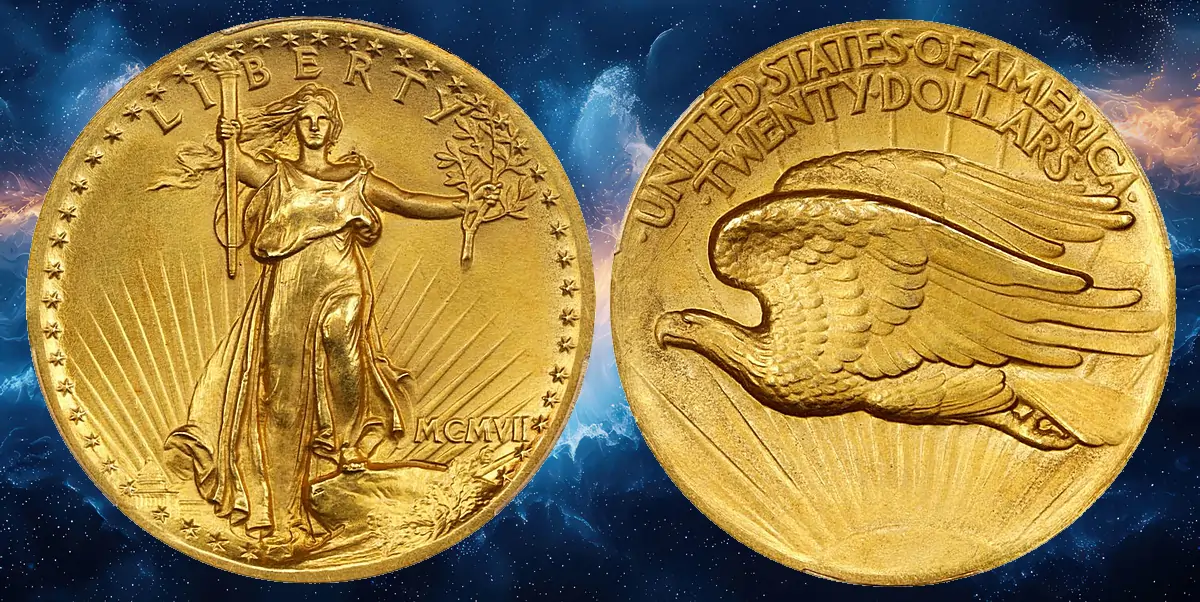
The 1907 High Relief Saint-Gaudens Double Eagle provides one of the best examples.
Published mintage figures generally list 12,367 pieces, although archival research has produced several different totals. More importantly, collectors saved many examples.
Thousands survive today.
As a result, collectors can regularly find High Relief Double Eagles in major auctions, dealer inventories, and advanced collections.
Yet demand remains intense, and the reason goes far beyond rarity.
President Theodore Roosevelt wanted American coinage to rival the artistic achievements of ancient Greece. Therefore, he turned to Augustus Saint-Gaudens, one of America’s most celebrated sculptors.
Roosevelt and Saint-Gaudens discussed redesigning the cent, $10 Eagle, and $20 Double Eagle.
Saint-Gaudens ultimately created the designs for the Eagle and Double Eagle. His proposed cent never reached production.
However, turning Saint-Gaudens’ sculptural vision into practical coinage created enormous technical problems. The artist wanted dramatic relief. Roosevelt supported that approach. The Mint’s production equipment did not.
Mint workers had to strike many High Relief Double Eagles multiple times to bring up the design properly. That slowed production and made the process impractical for mass coinage.
The Mint eventually lowered the relief and replaced the Roman-numeral date with Arabic numerals.
Still, the original High Relief version became one of the great artistic achievements in American coinage.
It combines presidential ambition, artistic genius, Mint technology, and remarkable beauty. That story continues to drive demand more than a century later.
Coins Put History in Your Hands
Collectors often describe coins as “history in your hands.”
The phrase works because coins survive.
People rarely discarded objects that represented money. Governments melted enormous quantities and turned them into new coins. However, enough survived to carry their history into the present.
That gives collectors a physical link to earlier civilizations.
Ancient Greek coins preserve images of gods, rulers, and civic symbols. Roman emperors used coins to promote military victories, political legitimacy, religion, and imperial authority.
Follow coinage across centuries and a larger historical pattern emerges.
- Civilizations rise.
- Borders change.
- Empires disappear.
- Economic systems evolve.
- The coins remain.
American coinage tells the same kind of story.
The 1792 Half Disme Connects Directly to Thomas Jefferson
American numismatic history began long before the federal government opened the United States Mint.
The Massachusetts Bay Colony authorized silver coinage in 1652. The famous Pine Tree Shilling became one of the best-known issues from that early period.
Then came the birth of federal coinage.
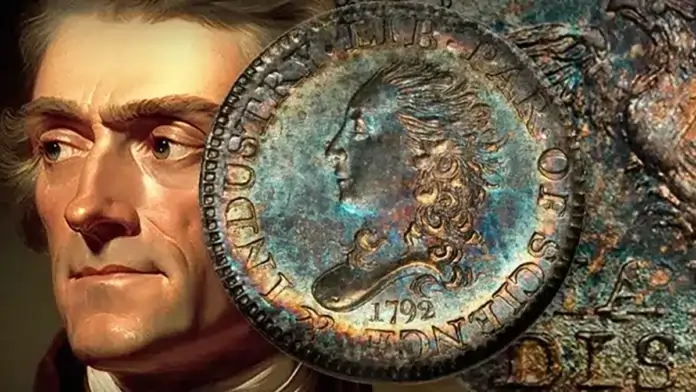
The 1792 Half Disme provides one of the strongest surviving links to America’s founding generation. Thomas Jefferson played a direct role in the coin’s production and distribution.
On July 11, 1792, Jefferson recorded delivering $75 to the Mint for coinage. Two days later, on July 13, he recorded receiving 1,500 half dismes of the new coinage. Jefferson’s account records also indicate that he soon spent many of the coins while traveling from Philadelphia toward Monticello.
That detail gives the Half Disme extraordinary historical immediacy.
It does not merely come from the founding era. One of the nation’s most important Founders actually carried and spent examples.
The early American monetary system depended heavily on coins and foreign specie.
Paper money already existed in America. Colonial notes, Continental Currency, and private banknotes had circulated before and after the Revolution. However, the United States had not yet developed the nationwide federal paper-currency system that emerged during the Civil War era.
Therefore, metallic money played an essential role in daily commerce.
Congress also defined the dollar through statutory weights of precious metal. Money and metal maintained a direct relationship.
America’s Expansion Appears in Its Coinage
The nation’s westward expansion also left a clear numismatic record.
The California Gold Rush transformed American coinage.
Congress authorized both the Gold Dollar and the $20 Double Eagle in 1849 as massive quantities of California gold entered the economy. Those new denominations made it easier to convert newly mined gold into money. Coinage therefore became a direct reflection of economic expansion.
That relationship continues today.
For America’s 250th anniversary in 2026, the United States Mint introduced special Semiquincentennial designs and features across circulating and collectible coinage.
Once again, American coins document a national milestone.
Shipwreck Coins Turn History Into Collectibles
Even relatively common coins can become highly desirable when they carry an extraordinary story.
Shipwreck coins provide some of the strongest examples.
Collectors continue to seek coins recovered from the SS Central America, SS New York, SS Republic, and SS Yankee Blade. The coins offer something ordinary examples cannot. Documented history.
The SS Central America sank during a hurricane in 1857 while carrying enormous quantities of California Gold Rush treasure.
The disaster claimed hundreds of lives. It also removed a major shipment of gold from the financial system at a critical moment. The loss helped intensify the financial Panic of 1857. More than a century later, treasure hunters located the wreck and recovered remarkable quantities of gold coins and ingots.
Those coins now carry two stories. First came the California Gold Rush. Then came the shipwreck and recovery.
That combination gives them tremendous collector appeal.
The Atocha Proved Treasure Stories Never Die
The same principle applies to treasure hunter Mel Fisher and the Nuestra Señora de Atocha.
The Spanish galleon sank in 1622 near the Florida Keys. Fisher spent 16 years searching for its treasure.
Then, on July 20, 1985, his team located the ship’s main treasure deposit. The discovery included silver bars, coins, gold, jewels, and other artifacts.
Decades later, the Atocha remains one of the most famous treasure discoveries in modern history. The appeal extends far beyond the intrinsic value of the recovered material. Collectors want a direct physical connection to the adventure.
That same desire fuels demand for famous American coin hoards.
The Redfield Hoard Created a Collecting Phenomenon
Collectors still pursue Redfield Hoard silver dollars, GSA Carson City dollars, and Wells Fargo Double Eagles.
The Redfield Hoard provides a particularly strong example.
LaVere Redfield accumulated a vast quantity of silver dollars at his Reno, Nevada, home. After his death in 1974, his heirs discovered roughly 400,000 silver dollars.
A-Mark purchased the hoard for $7.3 million in 1976.
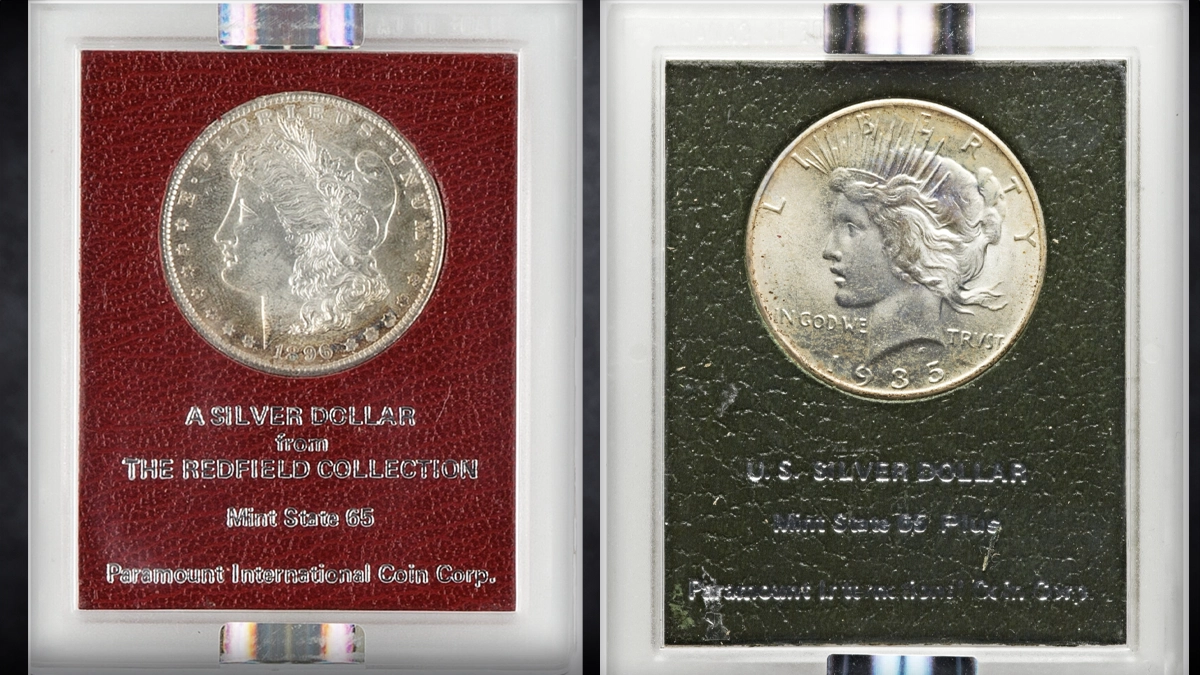
Many of those coins later entered the marketplace in distinctive Paramount holders. An individual Morgan or Peace Dollar from the Redfield Hoard may look similar to another example of the same date and grade. However, the documented connection to one of America’s most famous coin hoards gives it an added layer of appeal.
The pedigree changes the experience of ownership.
Famous Pedigrees Can Add Real Value
Pedigree also influences the value and desirability of individual rare coins.
Many collectors prefer a coin that once belonged to a famous numismatist or legendary collection. Early Large Cent specialists take pedigrees especially seriously. They often trace the ownership histories of important coins through generations of collectors.
Names such as Clapp, Eliasberg, Ford, Pittman, and Bass carry enormous weight in American numismatics.
A great pedigree does more than provide bragging rights. It connects today’s owner with some of the most important collectors in hobby history.
As a result, coins with documented and prestigious pedigrees often attract stronger bidding than otherwise comparable pieces with little recorded ownership history. The process continues today.
Major collections now being assembled may someday create pedigrees that future collectors pursue just as aggressively.
Why Story Matters When Buying Rare Coins
None of this means rarity and condition do not matter.
They matter enormously.
- Grade affects value.
- Population affects value.
- Mintage affects value.
However, those numbers explain only part of a coin’s appeal.
- History matters.
- Beauty matters.
- Pedigree matters.
- Mystery matters.
- Sometimes scandal matters.
A coin recovered from the ocean floor carries something that an identical non-shipwreck example cannot duplicate.
A coin once owned by a legendary collector creates another form of connection.
Meanwhile, a coin linked to presidents, kings, treasure hunters, government seizures, legal battles, or turning points in American history can transcend numismatics entirely.
Collectors should keep that in mind when making purchase decisions.
Value involves much more than rarity and grade.
- Markets change.
- Price guides change.
- Population reports change.
- Great stories endure.
And the coins with the best stories will likely remain among the coins collectors want most.


Not too bad I learn more everyday
Beautiful.
Wow