


“How Much Is My Coin Worth?”
The Question Every Collector Asks—and Why the Answer Is Complicated
By CoinWeek
The most common question in our inbox is simple on its face:
“How much is my coin worth?”
Unfortunately, the answer is rarely simple.
At first glance, the question seems straightforward. However, as with most things in numismatics and in life, the reality quickly becomes more complicated. So, let’s begin with a fundamental truth that often surprises people.

Every legal tender coin has a value equal to its stated denomination. That is the baseline. In fact, sometimes the honest answer really is, “You have a circulated Bicentennial Quarter. It’s worth 25 cents.”
Naturally, this is almost never the answer people want, especially when the question is inspired by something they read online.
Old Does Not Automatically Mean Valuable
The United States Mint has struck circulating coinage since 1792. Because of that long history, Americans have always encountered old coins in everyday use.
For example, in 1857, when Congress discontinued the half cent and large cent, people were still finding 18th-century coins in circulation. At that point, the earliest U.S. coins were only 64 years old.
Today, if you find a Lincoln Wheat Cent or a stray silver coin in change, chances are high that it’s older than that.

So, does a coin become more valuable just because it’s old?
Yes—but not simply because it’s old.
Metal Value: The First Step Beyond Face Value
Take the Lincoln Wheat Cent as an example. Its value does increase over time, but not because of nostalgia. Instead, the increase starts with metal content.
According to Coinflation, every pre-1982 copper Lincoln Cent contains about 2.65¢ worth of copper at current melt values. That means even the most worn example exceeds face value based on metal alone.
However, that copper value is only the beginning. To move beyond it, other factors must enter the equation.
Why Condition Drives Coin Value
Above all else, condition has the greatest impact on a coin’s market value.
Coins are struck from dies, and as those dies strike tens, or even hundreds, of thousands of pieces, they wear down. A coin struck early in a die’s life shows sharp details and clean surfaces. In contrast, a coin struck late may lack definition or display die cracks, even if it never circulated.
Because of this, collectors generally prefer coins struck from fresh, high-quality dies. That said, some classic series attract specialists who collect die varieties and die states, which can complicate matters further.

Unfortunately, inexperienced collectors often confuse post-mint damage with mint errors or varieties. Therefore, before assuming you’ve found something special, it’s essential to understand how coins are made and to consult reliable reference guides.
A Common Coin, a Wide Range of Prices
Consider a 1930 Lincoln Cent in Mint State that still shows much of its original red color. Despite its eye appeal, and despite being nearly a century old, this coin remains common.
Why? Because the Mint struck 157,415,000 examples.
Uncirculated pieces remain plentiful today, even though you would never find one in circulation at this grade. If you did encounter a 1930 cent in change, it would almost certainly be worn, brown, and possibly damaged.
In that condition, Whitman’s Guide Book lists a value of about 35¢, although examples routinely sell for around $1 on eBay.
As preservation improves, so does value. In high Mint State, that same coin might sell for $20 to $30.
The difference between a coin’s face value (or melt value) and what collectors will pay is known as its numismatic value. Price guides help estimate this value, but they represent retail expectations, not guarantees.
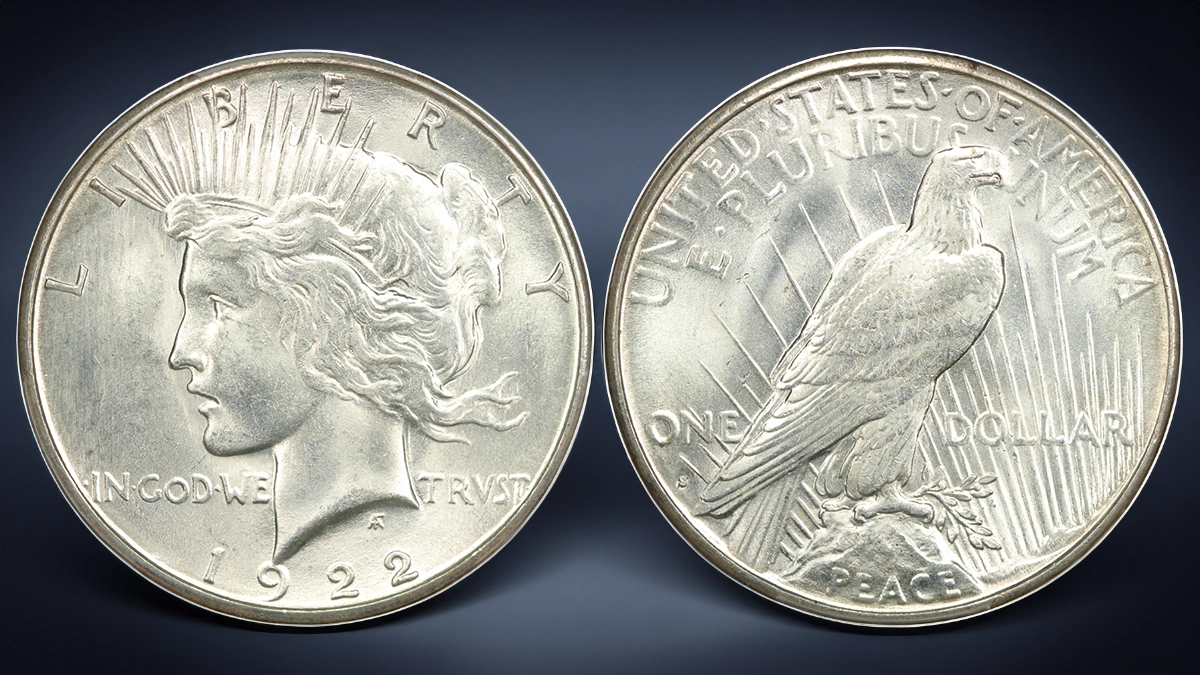
Scarcity: The Other Half of the Equation
Condition alone does not explain price differences. Scarcity also plays a crucial role—and it works in two distinct ways.
Absolute Scarcity
First, there is absolute scarcity, which comes down to how many coins were made.
Compare the 1996-D Roosevelt Dime, with a mintage of 1.4 billion, to the 1996-W Roosevelt Dime, which saw just 1,457,000 pieces struck. Even though most 1996-D dimes entered circulation, the sheer volume guarantees that Mint State examples will always outnumber the 1996-W.
The reason is simple: the 1996-W dime was available only in the 1996 U.S. Mint Uncirculated Coin Set, and collectors saved many of them from the start.

Conditional Rarity
Second, there is conditional rarity.
As a rule, the better a coin’s condition, the fewer examples survive. Take the 1794 Liberty Cap Cent. Many exist in low grades, but only a handful survive in Mint State. As a result, competition for top-tier examples becomes intense, while lower-grade coins trade quietly.
For older coins, published population data helps clarify conditional rarity. For modern coins, however, submission patterns, collector interest, and potential investment returns heavily influence how many coins get graded.
Even so, one principle remains consistent: Superb Gem coins with minimal marks are always scarcer than average examples.
One Last, and Critical, Reality Check
By now, one thing should be clear: a coin’s value depends on many factors, not just its date and grade.
We also haven’t discussed dealer bids and wholesale value, and that’s where expectations often collide with reality.
A dealer bid represents what a dealer is willing to pay, often sight-unseen. Dealers usually share these bids privately within the trade, although some publish them for popular coins. Occasionally, a dealer chasing a hot item will bid above published price-guide levels, which often lag behind the market.
More often, however, dealers buy coins over the counter from collectors. In those cases, they base offers on recent sales, factoring in risk, overhead, and profit margin.
As a result, a fast-selling coin brings stronger offers than one likely to sit in inventory. Collectors sometimes feel disappointed by dealer offers, but when working with a reputable professional, the price usually reflects market reality, not opportunism.
The Bottom Line
So, how much is your coin worth?
The honest answer depends on metal value, condition, scarcity, demand, and market timing. Understanding those factors won’t just help you price your coins, it will also make you a better, more confident collector.
And that, ultimately, is worth more than any quick answer ever could be.
* * *





Love this article
Thanks for the useful information!
Good article, helps make things a little clearer.
Nice explanation
very interesting info
Interesting.
I enjoyed the article and agree with the various reasons for a coins value. The perfect example of demand driving value is in the current give away. Both coins are silver, decent size, and extremely low mintage. Combined they total less than half of the 1909 S VDB . The difference is DEMAND . Thank you
I enjoyed the article and agree with all of the conditions that form a coin’s value. Especially demand. The 2 coins in the current give away are both silver , high grade, extremely low mintage ( combined they are less than half of the 1909 s vdb) . I believe that the demand is the main reason a small copper coin has such a higher value
Interesting read….
While, can’t speak to every coin’s values, mostly it pertaining to conditions
Of coins, and year? But, now they’ve stopped the penny in circulation and
Production, think those wheat pennies, would take a boost, maybe not
Much as someone hoped, but still slightly above previous value’s.
As, to other coinage, like articles say, metal values, but still thinking
A marketable hobby to keep looking for a odd prospect or something
Turned up in change !!!