


By CoinWeek
United States commemorative coins occupy a unique position in American numismatics. Congress alone authorizes them. Federal legislation defines their purpose, approves their designs, and controls their production. The United States Mint does not initiate commemorative programs independently and never has.
Beginning in 1892, the United States Congress approved more than 100 commemorative coin programs over the next 133 years. Production surged early, collapsed under abuse, and later returned in a modernized form. Collectors divide this history into two distinct chapters: the Classic Commemorative Era (1892–1954) and the Modern Commemorative Era (1982–present).
This article examines the original era, an ambitious, chaotic, and artistically rich period that still defines how collectors think about commemorative coinage.
Defining the Classic Commemorative Era
The Classic Commemorative Era spans 62 years, from 1892 through 1954. During this period, the Mint struck commemoratives exclusively in gold and silver. Silver half dollars and gold dollars dominate the series, but Congress also authorized quarter dollars, $2.50 quarter eagles, and the largest gold coins ever produced by the United States: $50 pieces weighing nearly three ounces of gold.
Congress typically granted distribution rights to private exposition committees and civic organizations. These groups set prices, controlled marketing, and often manipulated supply. This structure encouraged speculation, fostered abuse, and ultimately destroyed congressional confidence in the program. Yet it also produced one of the most diverse and artistically ambitious bodies of coinage in U.S. history.
Artists Who Defined the Series
Classic commemoratives showcase medallic art at its highest level. Many designs came from sculptors whose work shaped American public art in the early 20th century, including Robert Aitken, Chester Beach, Gutzon Borglum, James Earle Fraser, Laura Gardin Fraser, Jo Mora, and Frank Vittor.
At their best, these coins rival, and sometimes surpass, regular-issue U.S. designs of the same era.
Four Phases of the Classic Commemorative Era
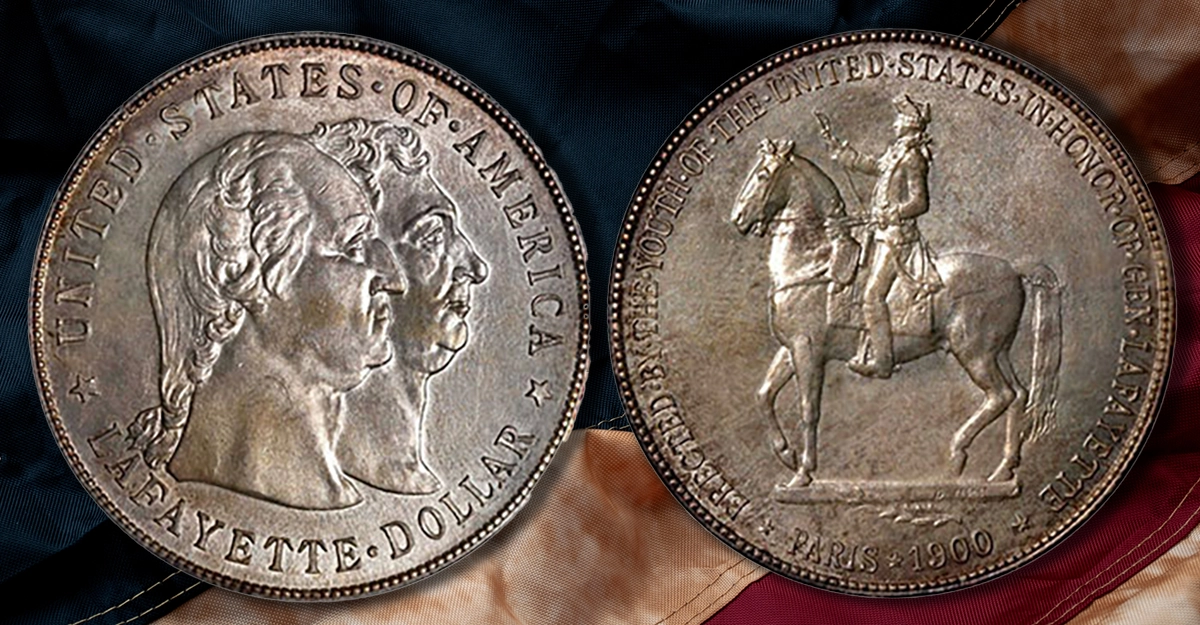
The Foundational Years, 1892–1918
American commemorative coinage began with spectacle and confidence. The 1892–1893 Columbian Half Dollars and the 1893 Isabella Quarter debuted at the World’s Columbian Exposition in Chicago, marking the first time the United States struck legal-tender coins specifically to honor a historical event.
Gold issues soon followed, including multiple gold dollars and, in 1915, the landmark Panama-Pacific series celebrating completion of the Panama Canal. The massive $50 gold coins, struck in both round and octagonal formats, remain among the most technically impressive coins ever produced by the Mint.
- 1892-1893 Columbian Half Dollar – Provost | Gast
- 1893 Isabella Quarter – Provost
- 1900 Lafayette Silver Dollar
- 1903 Louisiana Purchase, Jefferson Gold Dollar
- 1903 Louisiana Purchase, McKinley Gold Dollar
- 1904-1905 Lewis and Clark Gold Dollar
- 1915-S Panama-Pacific Exposition Half Dollar
- 1915-S Panama-Pacific Gold Dollar
- 1915-S Panama-Pacific Quarter Eagle
- 1915-S Panama-Pacific $50 Gold
- 1916-1917 McKinley Gold Dollar
- 1918 Lincoln Half Dollar
The Roaring Twenties, 1920–1928
After World War I, commemoratives returned with a narrower focus. Half dollars dominated production, with only two notable gold exceptions: the 1922 Grant Gold Dollar and the 1926 Sesquicentennial Quarter Eagle. Many issues celebrated state anniversaries, while others reflected the politics of memory, including the controversial Stone Mountain Half Dollar.
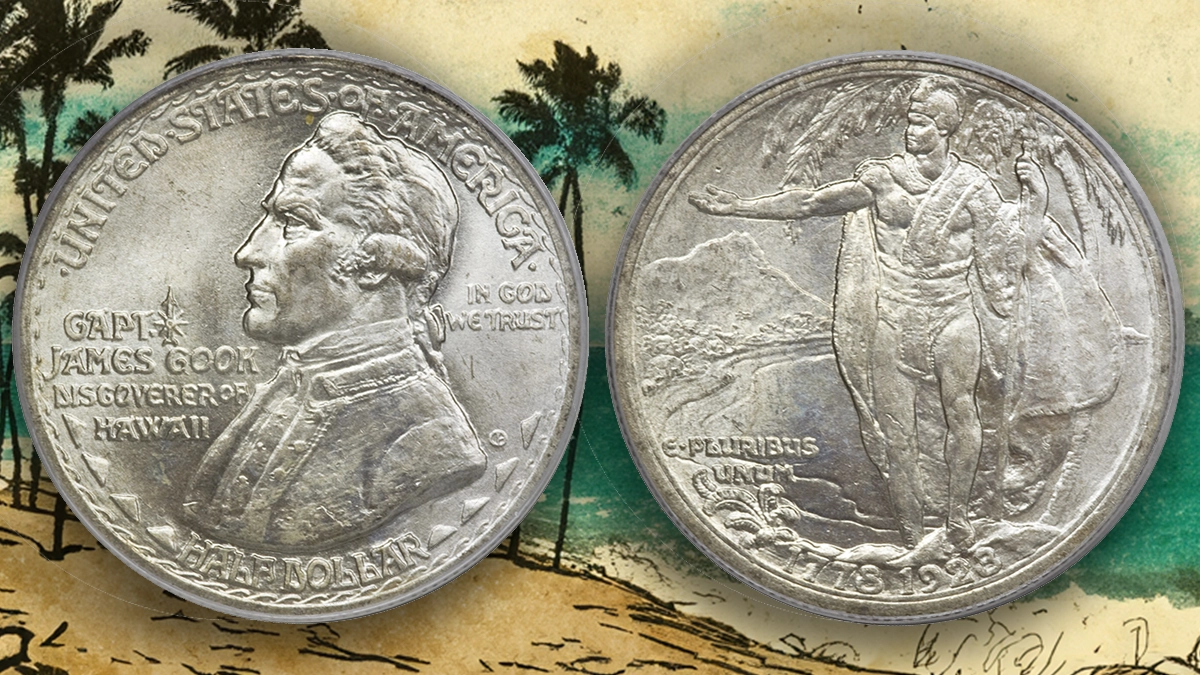
This decade introduced the multi-year commemorative program. Laura Gardin Fraser’s Oregon Trail Half Dollar delivered exceptional artistry but also previewed the practices, repeated issues, mintmark variations, and manufactured scarcity, that would destabilize the series in the 1930s.
- 1920 Maine Half Dollar
- 1920-1921 Pilgrim Half Dollar
- 1921 Alabama Half Dollar
- 1921 Missouri Half Dollar
- 1922 Grant Half Dollar
- 1922 Grant Gold Dollar
- 1923-S Monroe Half Dollar
- 1924 Huguenot Half Dollar
- 1925 Lexington Half Dollar
- 1925-S California Half Dollar
- 1925 Stone Mountain Half Dollar – Brothers | David T. Alexander
- 1925 Vancouver Half Dollar
- 1926, 1928, 1933, 1934, 1936, 1937-1939 Oregon Trail Half Dollar
- 1926 Sesquicentennial Half Dollar
- 1926 Sesquicentennial Quarter Eagle
- 1927 Vermont Half Dollar
- 1928 Hawaiian Sesquicentennial Half Dollar
Boom and Bust, 1934–1938
The Great Depression reshaped commemorative coinage. After a brief hiatus, production resumed following the election of Franklin Delano Roosevelt, whose administration initially welcomed programs that stimulated economic activity.
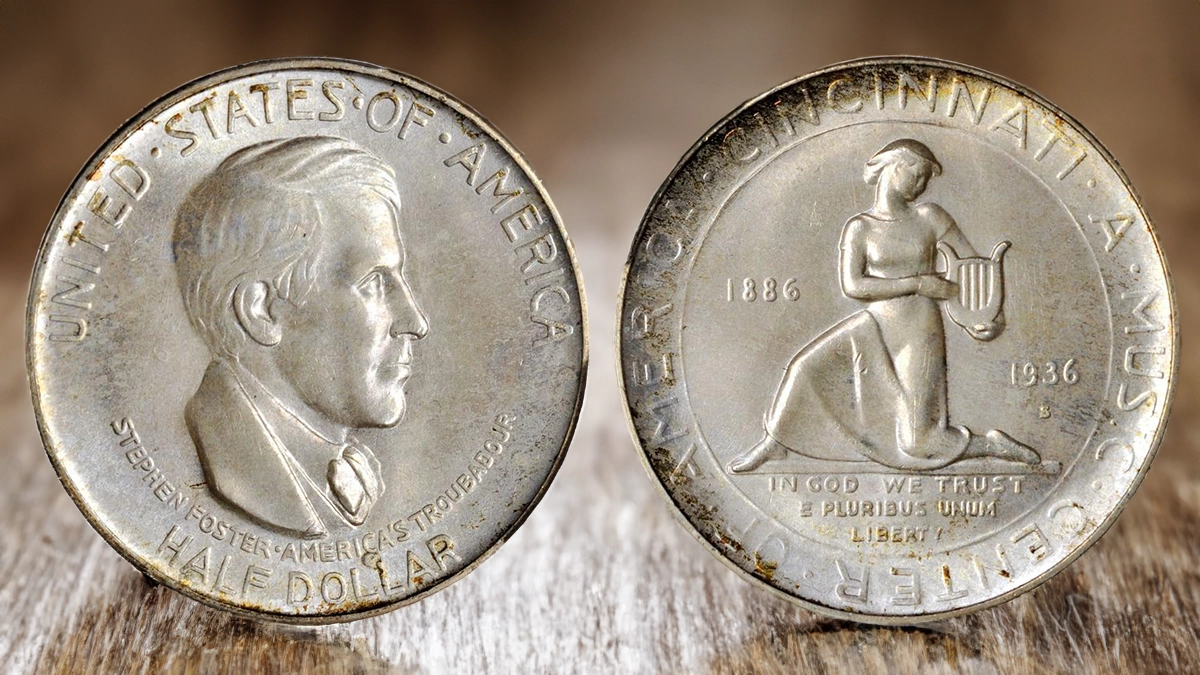
Congress approved a flood of commemoratives. Promoters split mintages among Philadelphia, Denver, and San Francisco to create artificial rarities. Collector demand exploded, then collapsed. Design quality remained high, Gettysburg, Antietam, Norfolk, and Connecticut stand among the era’s finest, but trust evaporated. By decade’s end, Roosevelt urged Congress to halt commemorative authorizations altogether.
- 1934-1938 Boone Half Dollar
- 1934 Maryland Half Dollar
- 1934-1938 Texas Half Dollar
- 1935-1939 Arkansas Half Dollar
- 1935 Connecticut Half Dollar
- 1935-S – 1936-D San Diego Half Dollar
- 1935 Hudson Half Dollar
- 1935 Spanish Trail Half Dollar
- 1936 Albany Half Dollar
- 1936-S Bay Bridge Half Dollar
- 1936 Bridgeport Half Dollar
- 1936 Cincinnati Half Dollar – P | D | S
- 1936 Cleveland Half Dollar
- 1936 Columbia Half Dollar
- 1936 Delaware Half Dollar
- 1936 Elgin Half Dollar
- 1936 Gettysburg Half Dollar – Guess the Grade
- 1936 Long Island Half Dollar – Mike Byers on rare Galvano
- 1936 Lynchburg Half Dollar
- 1936 Norfolk Half Dollar
- 1936 Rhode Island Half Dollar
- 1936 Robinson Half Dollar
- 1936 Wisconsin Half Dollar
- 1936 York Half Dollar
- 1937 Antietam Half Dollar
- 1937 Roanoke Half Dollar
- 1938 New Rochelle Half Dollar
The Final Chapter, 1946–1954
After World War II, commemoratives returned only briefly. The Iowa Half Dollar appeared once and sold cleanly. The Booker T. Washington Half Dollar, struck continuously from 1946 through 1951, revived the worst habits of the 1930s and later morphed into the Washington–Carver Half Dollar. Tens of thousands remained unsold for years.
Following the 1954 P-D-S issues, President Dwight D. Eisenhower vetoed a proposed New York tercentenary commemorative. Congress never reversed course. The Classic Commemorative Era ended quietly.
- 1946 Iowa Half Dollar
- 1946-1951 Booker T. Washington Half Dollar – Booker T. on the Tarmac (Morgan and Walker)
- 1951-1954 Washington Carver Half Dollar
Collecting Classic Commemoratives: Strategy, Not Speculation
Classic commemoratives reward intentional collecting. Their history makes one truth unavoidable: strategy matters more here than in almost any other U.S. series.
Most successful collectors begin with a silver type set, one example of each design. This approach captures the full artistic and historical range of the era while avoiding the excesses that plagued the series. A complete silver type set contains 50 coins, a manageable goal that eliminates the need to chase mintmarks or redundant multi-year issues. In today’s market, many silver commemoratives remain available in MS63 to MS65 for roughly $250 to $500 per coin, making this strategy both practical and historically faithful.
Condition matters, but appearance matters more. Two coins with identical grades can look radically different. Collectors who succeed long term focus on original surfaces, strong luster, and honest toning rather than numerical labels. Certification provides liquidity and protection, but eye appeal ultimately determines desirability.
More Considerations….
Gold commemoratives demand even greater selectivity. Gold dollars and quarter eagles offer strong designs and historical importance without extreme cost. The $50 gold pieces exist in a separate category entirely, with prices that begin in the six-figure range. Most collectors either exclude them entirely or treat them as aspirational trophies rather than core components of a set.
Mintmark collecting remains tempting, and historically problematic. Many Classic Era abuses stem directly from mintmark manipulation. Unless a collector pursues registry competition or focused research, mintmark chasing usually adds expense without adding meaning or historical insight.
The same caution applies to “low mintage” claims. Most classic commemoratives were sold directly to collectors and saved from the outset. Attrition remains minimal. Outside of the $50 gold coins and a few presentation strikes, no classic commemorative qualifies as rare in an absolute sense. Survival rates, not mintage figures, tell the real story.
Finally, auctions serve as the best classroom. Even passive observation reveals how originality, strike quality, and surface preservation separate exceptional coins from ordinary ones. Landmark collections assembled by advanced collectors demonstrate that true quality commands enduring respect, even in a volatile market.
Investment Realities
Classic commemoratives resist easy investment narratives. They remain vulnerable to promotion and market cycles, and prices have never fully recovered from the speculative excesses of the early 1980s, when firms such as First Coinvestors aggressively marketed the series.
That said, elite coins still perform. Exceptional examples have realized strong prices at auction, particularly from world-class collections assembled by advanced collectors such as Gregg Bingham and Bruce Scher. Many feel the finest known silver commemorative set remains the celebrated J&L Collection.
Why Classic Commemoratives Endure
Classic commemorative coins reflect America’s aspirations, contradictions, and excesses more clearly than any other U.S. series. They combine first-rate artistry with legislative politics, regional pride, and unchecked speculation, sometimes all on the same coin.
For collectors who value history, design, and context over hype, the Classic Commemorative Era remains one of the most rewarding pursuits in American numismatics. Thoughtful strategy, not speed or speculation, unlocks its full potential.
Happy Collecting!




Great article and very useful advice on how to collect these historic coins.
What a lovely article. Thank you for sharing
Interesting coin.
Very beautiful coins and commemorative groups of history