By Charles Morgan and Hubert Walker for CoinWeek Notes …..
Commemorative coins, popularly referred to as “commemoratives”, are special legal tender coins typically produced to mark anniversaries, noteworthy events, individuals, groups, and organizations. Importantly, each of these collectibles is created and defined solely by federal legislation and not by the whims of the United States Mint. Starting in 1892, Congress has authorized over one hundred multi-coin commemorative programs over the last 132 years – with a long gap in production between 1954 and 1982. Numismatists and collectors divide the field of U.S. commemorative coins into two separate “sets” depending on (among other things) differing aesthetic, legislative, and technological factors: the Classic Commemorative Era and the Modern Commemorative Era.
The Classic Commemorative Era spans 62 years from 1892 to 1954. During this period, commemoratives were struck exclusively in gold and silver, with the silver half dollar and gold dollar formats being the most common. Beyond these two denominations, commemorative quarter dollars, $2.50 quarter eagles, and $50 gold coins were also issued.
Distribution during the Classic Era was often done by event organizers or “committees” formed to market the coins. Such a system was highly susceptible to corruption and abuse, and in time this would doom the series.
Of the many features of the Classic Era that make this category so interesting to collectors is the sheer variety of themes and styles in the coinage. Many commemorative issues feature designs from some of America’s finest medallic artists, including Robert Aitken, Chester Beach, Gutzon Borglum, James Earle and Laura Gardin Fraser, Jo Mora, and Frank Vittor.
When it comes to classic commemorative coins, we break the era down into four periods. The first period spans the first 26 years of the series and is the most diverse in its offerings. Here you find the 1892-1893 Columbian Half Dollar and the 1893 Isabella Quarter, the first commemorative coins struck by the United States, both issued to mark the World’s Columbian Exposition held in Chicago, Illinois. A small number of gold dollar issues, including two designs honoring slain President William McKinley, were issued during this period, as was a landmark five-coin set released to commemorate the completion of the Panama Canal.
Commemorative coins issued during the 1920s mark the second chapter of the classic commemorative story. Many of the coins issued during this decade marked significant state anniversaries. Two coins were struck to commemorate the U.S. Sesquicentennial, while one controversial coin was issued as a sop to “Lost Cause” revisionists.
The 1930s saw the commemorative coin boom take flight. After President Herbert Hoover’s April 20, 1930 veto of a bill that would have authorized the production of half dollars to commemorate that Gadsden Purchase, commemorative coin production was dormant for three years. This moratorium ended with the election of President Franklin Delano Roosevelt, who was, at least at first, eager to sign off on any legislative proposal that spurred economic activity.
As a result, more commemorative coins were issued during this period than at any other time in United States history. The excitement surrounding these releases reached its peak in 1935-36. So, too, did the abuse. As scores of new collectors entered the hobby, promoters exploited their enthusiasm by deploying various schemes, including creating low-mintage “rarities” by splitting production between the three mints. Many of these coins found legislative support from New Deal Democrats in Congress, often to the dismay of their Republican colleagues. Some of these coins were distributed with altruistic intent. Others, like the 1935 Spanish Trail Half Dollar, the 1936 Cincinnati Half Dollars, and the 1938 New Rochelle Half Dollar were mired in controversy upon release. By the decade’s end, Roosevelt had seen enough and urged Congress to suspend the practice of authoring commemorative coin programs.
Roosevelt would remain president until late into World War II, dying on April 12, 1945, at just 63 years of age. Through the remainder of his terms following the release of the New Rochelle, no new commemorative coins were issued. Following the conclusion of the war, Congress did not reverse course to authorize the production of coins to celebrate the peace, as it had done with the Peace Dollar in 1921. Instead, the next commemorative coin issues to be released celebrated the life of Booker T. Washington and the centennial of Iowa’s statehood.
The Iowa commemorative sold well and was a one-and-done affair, but the worst abuses of the 1930s manifested in the Booker T. Washington issue, struck continuously from 1946 to 1951, when it morphed into the anti-communist Washington-Carver Half Dollar. The collecting public was largely disinterested in this exploitative issue, and by the end, the rights to market the coins fell on two of the industry’s leading dealers and even they had difficulty moving the coins.
After the P-D-S release of the 1954 Washington-Carver Half Dollars, and President Eisenhower’s veto of a bill authorizing half dollars to mark the tercentenary of the founding of New York, no additional commemorative coins would be struck until the circulating Bicentennial issues of 1975-76. It wasn’t for a lack of trying, however. Several proposals were brought to Congress in the intervening years, including coins to commemorate the U.S. Air Force Academy; lumberjacks; Colonel Sylvanus Thayer, founder of the U.S. Military Academy at West Point; the nation’s first oil well; the founding of Denver, Colorado; and Michigan copper mining. To each, Congress reacted with a firm “no.”
Collecting (and Investing?) in Classic Commemorative Coins
The variety and aesthetic quality of many commemorative coins produced during this period make it a worthwhile area for any collector. Anyone who can afford between $250 and $500 per coin will find many silver issues in this series available in grades between MS63 and MS65.
Some choose to stick with the silver issues and obtain only one example per design, which simplifies the hunt and eliminates the need to seek out low-mintage mintmarked issues or park thousands of dollars into redundant multi-year programs and offers a set construction that’s an even 50 coins.
The gold series is usually collected as an 11-coin set since the $50 gold pieces start at about $100,000 each.
Investing in commemorative coins is a much more problematic pursuit to recommend.
For starters, commemoratives are highly susceptible to promotion and market manipulation. Their low original mintages are often used to suggest that they are rare, and historically, most of the major literature published on the topic was the work of authors either directly involved in their sale or influenced editorially by those that were. For a long time, dealers had all the leverage, but the rise of third-party grading companies in the 1980s–and the introduction of the internet to the general public in the ’90s–began a process of improving transparency regarding commemorative survival rates and condition that continues to this day. In truth, outside of the $50 gold coins and the occasional presentation strike, there are no rare classic commemorative issues in an absolute sense, and as these coins were largely sold as souvenirs or directly to collectors, most issues did not attrit the way a circulating coin issue does.
Additionally, the price performance of classic commemoratives is shaky at best and largely has not recovered from its early 1980s run when companies like First Coinvestors heavily marketed them.
During the certified coin era, many exceptional examples of each design have made appearances at auction, which has attracted the attention of serious collectors like Gregg Bingham (a former NFL linebacker) and Bruce Scher, both of whom assembled ultra-high-end sets that realized large prices at auction. The current (and likely all-time) finest is the J&L Collection, which can be viewed at the link.
United States Commemorative Coins in Their Infancy: 1892-1918
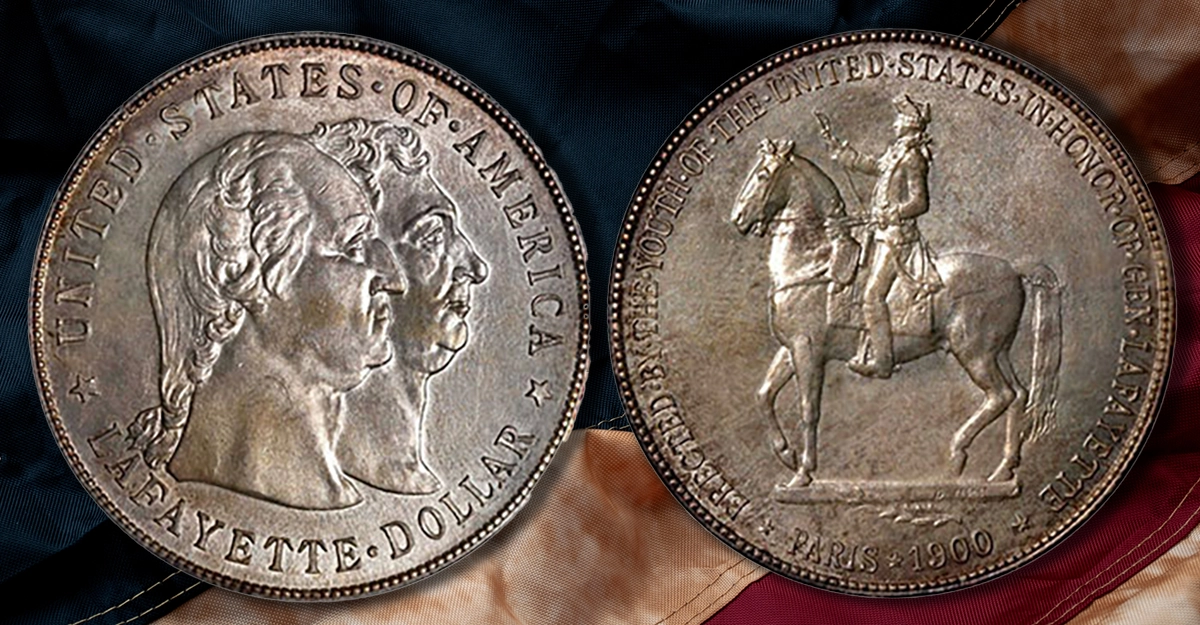
The Columbian Half Dollar kicks off American commemorative coinage with two issues released in 1892 and 1893. 1892 also marked the first year of the Barber Half Dollar design, the regular coinage issue. Interestingly, the Philadelphia Mint struck more Columbian commemorative half dollars than halves of the Barber type. Because of their large mintages, the Columbian coins are some of the most commonly encountered commemoratives in circulated condition. Also sold at the World’s Columbian Exposition was America’s first commemorative quarter, featuring the imagined likeness of Spain’s Queen Isabella.
Collectors of classic commemorative gold will find much to work with during this period, including the stopper Pan-Pac $50 Round and Octagonal gold slugs. For those skipping these two issues, the gold dollars and the Pan-Pac $2.50 gold coin featuring Columbus astride a hippocampus are highlights.
- 1892-1893 Columbian Half Dollar – Provost | Gast
- 1893 Isabella Quarter – Provost
- 1900 Lafayette Silver Dollar
- 1903 Louisiana Purchase, Jefferson Gold Dollar
- 1903 Louisiana Purchase, McKinley Gold Dollar
- 1904-1905 Lewis and Clark Gold Dollar
- 1915-S Panama-Pacific Exposition Half Dollar
- 1915-S Panama-Pacific Gold Dollar
- 1915-S Panama-Pacific Quarter Eagle
- 1915-S Panama-Pacific $50 Gold
- 1916-1917 McKinley Gold Dollar
- 1918 Lincoln Half Dollar
The Roaring Twenties: 1920-28
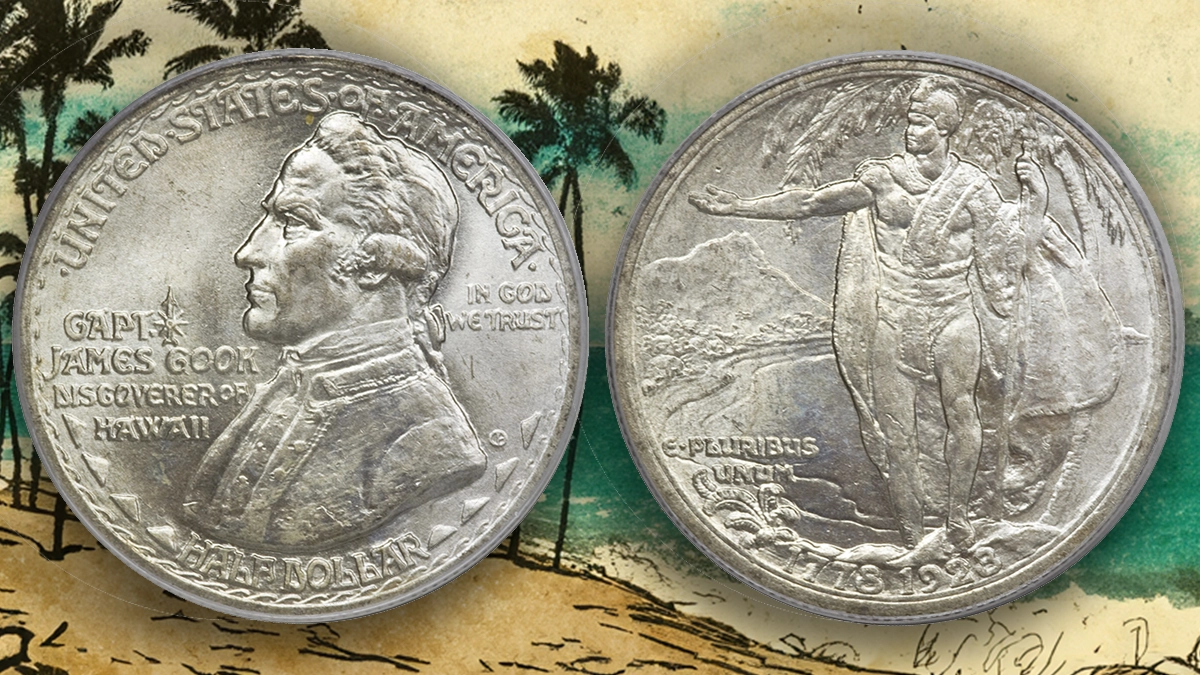
Whereas commemoratives were struck in several denominations from 1892 through 1918, issues struck from 1920 onward primarily come in the half dollar format, the exceptions being the 1922 Grant Gold Dollar and the 1926 Sesquicentennial Gold Quarter Eagle. The aforementioned Grant design and Laura Gardin Fraser’s Oregon Trail design are series design highlights, even though the latter was a multi-year, multi-mintmark issue, a harbinger for the type of abusive commemorative programs that would crash the series by the end of the ’30s.
- 1920 Maine Half Dollar
- 1920-1921 Pilgrim Half Dollar
- 1921 Alabama Half Dollar
- 1921 Missouri Half Dollar
- 1922 Grant Half Dollar
- 1922 Grant Gold Dollar
- 1923-S Monroe Half Dollar
- 1924 Huguenot Half Dollar
- 1925 Lexington Half Dollar
- 1925-S California Half Dollar
- 1925 Stone Mountain Half Dollar – Brothers | David T. Alexander
- 1925 Vancouver Half Dollar
- 1926, 1928, 1933, 1934, 1936, 1937-1939 Oregon Trail Half Dollar
- 1926 Sesquicentennial Half Dollar
- 1926 Sesquicentennial Quarter Eagle
- 1927 Vermont Half Dollar
- 1928 Hawaiian Sesquicentennial Half Dollar
Boom and Bust: Classic Commemorative Coins of the 1930s
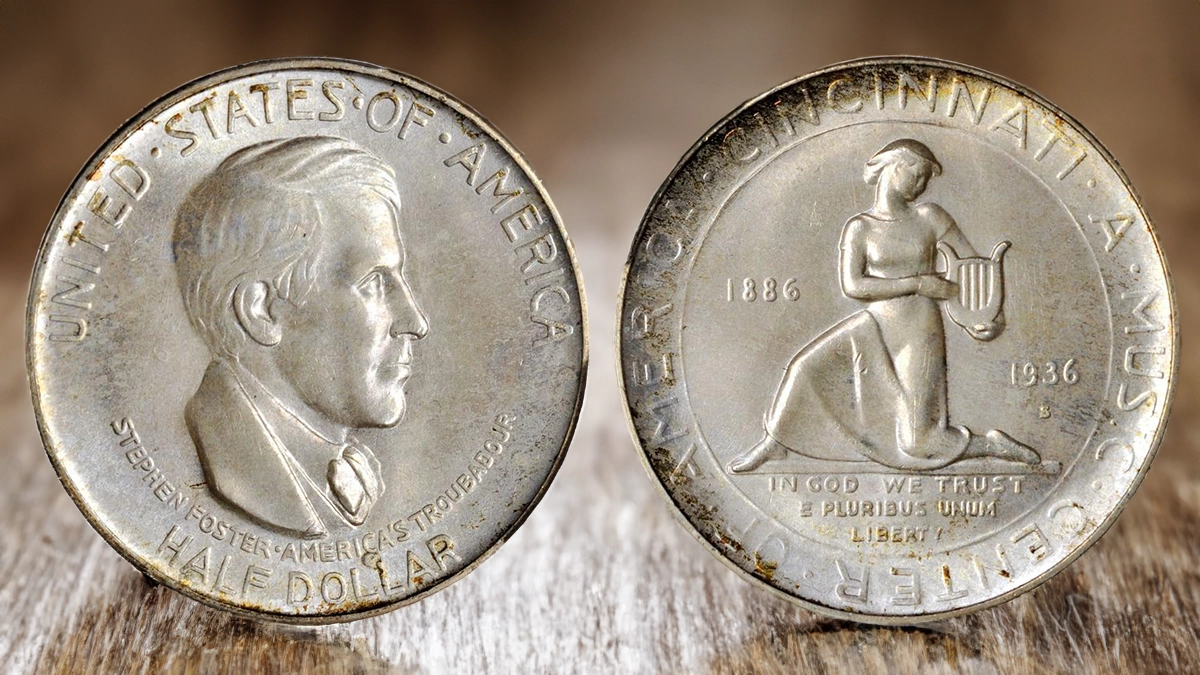
Commemorative coinage resumed in 1934, following the election of President Roosevelt. The Roosevelt Administration’s annoyance with the continual flood of commemorative coin bills climaxed by the end of the decade, when it pushed Congress to enact legislation to end the practice. From an aesthetic perspective, the 1930s offered collectors many outstanding designs, including the Gettysburg and Antietam halves, the Norfolk Half Dollar, and the Connecticut Half Dollar.
- 1934-1938 Boone Half Dollar
- 1934 Maryland Half Dollar
- 1934-1938 Texas Half Dollar
- 1935-1939 Arkansas Half Dollar
- 1935 Connecticut Half Dollar
- 1935-S – 1936-D San Diego Half Dollar
- 1935 Hudson Half Dollar
- 1935 Spanish Trail Half Dollar
- 1936 Albany Half Dollar
- 1936-S Bay Bridge Half Dollar
- 1936 Bridgeport Half Dollar
- 1936 Cincinnati Half Dollar – P | D | S
- 1936 Cleveland Half Dollar
- 1936 Columbia Half Dollar
- 1936 Delaware Half Dollar
- 1936 Elgin Half Dollar
- 1936 Gettysburg Half Dollar – Guess the Grade
- 1936 Long Island Half Dollar – Mike Byers on rare Galvano
- 1936 Lynchburg Half Dollar
- 1936 Norfolk Half Dollar
- 1936 Rhode Island Half Dollar
- 1936 Robinson Half Dollar
- 1936 Wisconsin Half Dollar
- 1936 York Half Dollar
- 1937 Antietam Half Dollar
- 1937 Roanoke Half Dollar
- 1938 New Rochelle Half Dollar
Postwar U.S. Commemorative Coins: 1946-54
Commemorative coinage resumed following the close of World War II. While commemoratives were struck continuously from 1946 to 1954, this period serves as a coda for an era of United States coin design that started at the close of the 19th century. The Iowa Half Dollar is an inoffensive and cheap entry into the series, as are the multi-year Booker T. Washington and Washington-Carver Half Dollars. The latter languished for years, as wholesalers found few takers for tens of thousands of unsold coins.
- 1946 Iowa Half Dollar
- 1946-1951 Booker T. Washington Half Dollar – Booker T. on the Tarmac (Morgan and Walker)
- 1951-1954 Washington Carver Half Dollar
* * *
Further Reading
The Highly Collectible and History Packed Gold Commemorative Coin Series
Rare Gold Coins for Less than $5,000 Each, Part 2: Commemorative One-Dollar Gold Pieces
Great Ships on American Coinage
Is the Classic Commemorative Coin Market Sunk?
* * *